An abandoned vehicle is more than just an eyesore; it’s a liability, a space hog, and a potential hazard for any San Diego property manager or HOA. Dealing with these unwanted cars can feel complicated, especially when you’re unsure about the legal steps and who ultimately foots the bill. Understanding the process for abandoned vehicle removal in San Diego helps you clear your property efficiently and legally.
What counts as an abandoned vehicle in San Diego
Identifying an abandoned vehicle is the first step in addressing the problem. In San Diego, as in the rest of California, certain criteria define when a car qualifies as abandoned, whether it’s on public streets or private property. Understanding these definitions is crucial for property managers and HOAs to ensure they follow the correct legal procedures.
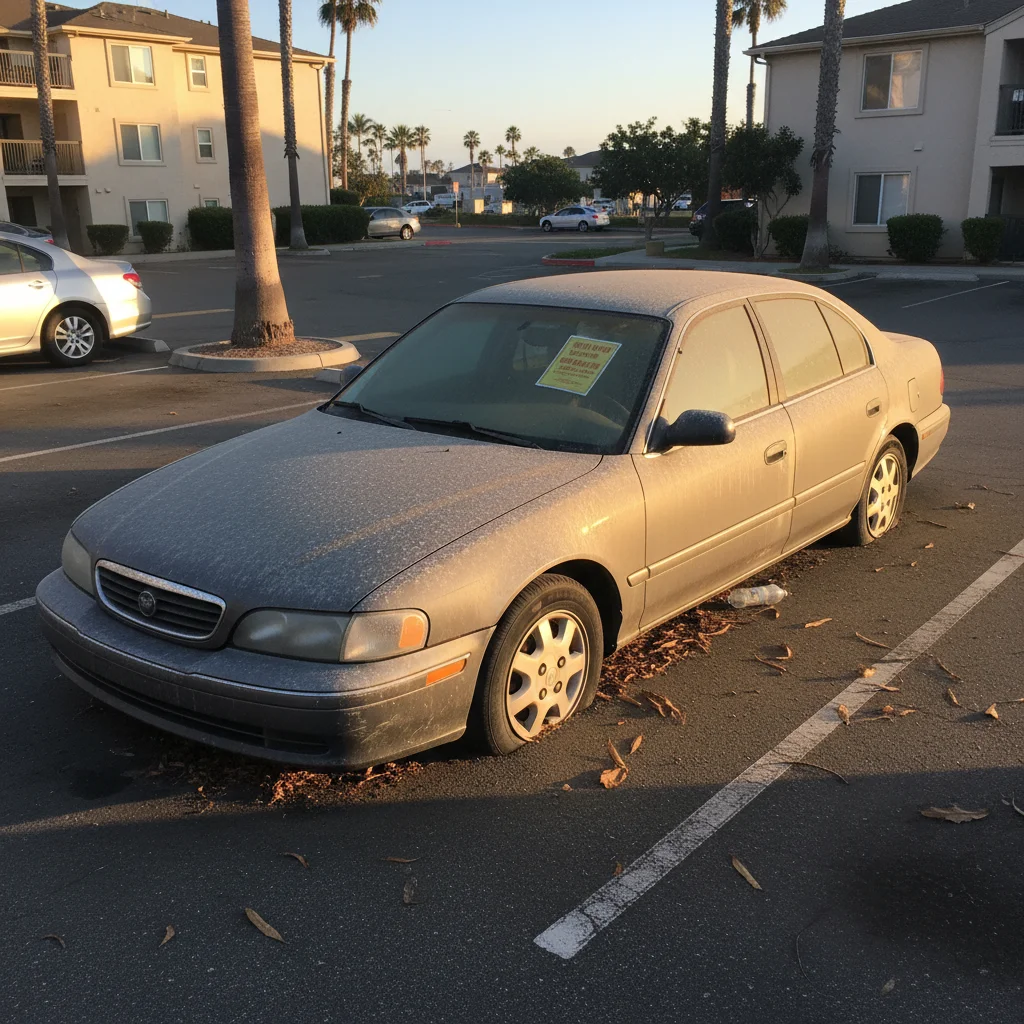
On public streets, the City of San Diego typically considers a vehicle abandoned if it hasn’t moved for 72 consecutive hours. Beyond this timeframe, tell-tale signs often include flat tires, missing license plates or registration tags, expired tags, accumulation of dust or debris, and visible damage or missing parts. For vehicles on private property, the definition often centers on unauthorized parking or extended periods of disuse, usually without the property owner’s or manager’s consent. California Vehicle Code (CVC) Section 22658 sets out the conditions under which a vehicle can be removed from private property. It lists four alternative grounds: compliant signage posted at all entrances, a notice of parking violation issued 96 or more hours earlier, an inoperable vehicle 24 or more hours after local traffic law enforcement is notified, or a lot improved with a single-family dwelling. You need one of the four, not all of them.
Even a car that looks like it’s just been forgotten can cause problems. It can attract vandalism, create safety concerns, or simply take up valuable parking space. For private property owners, distinguishing between a temporarily neglected vehicle and one truly abandoned is important for avoiding legal issues during the removal process. If you’re a property manager dealing with cars showing these signs, you’re likely facing an abandoned vehicle situation that requires action.
Reporting it: city, HOA, or private property paths
The path you take to report an abandoned vehicle in San Diego depends entirely on where the car is located. Public property and private property have distinctly different legal frameworks and reporting mechanisms. Knowing the right route saves you time and ensures a lawful removal.
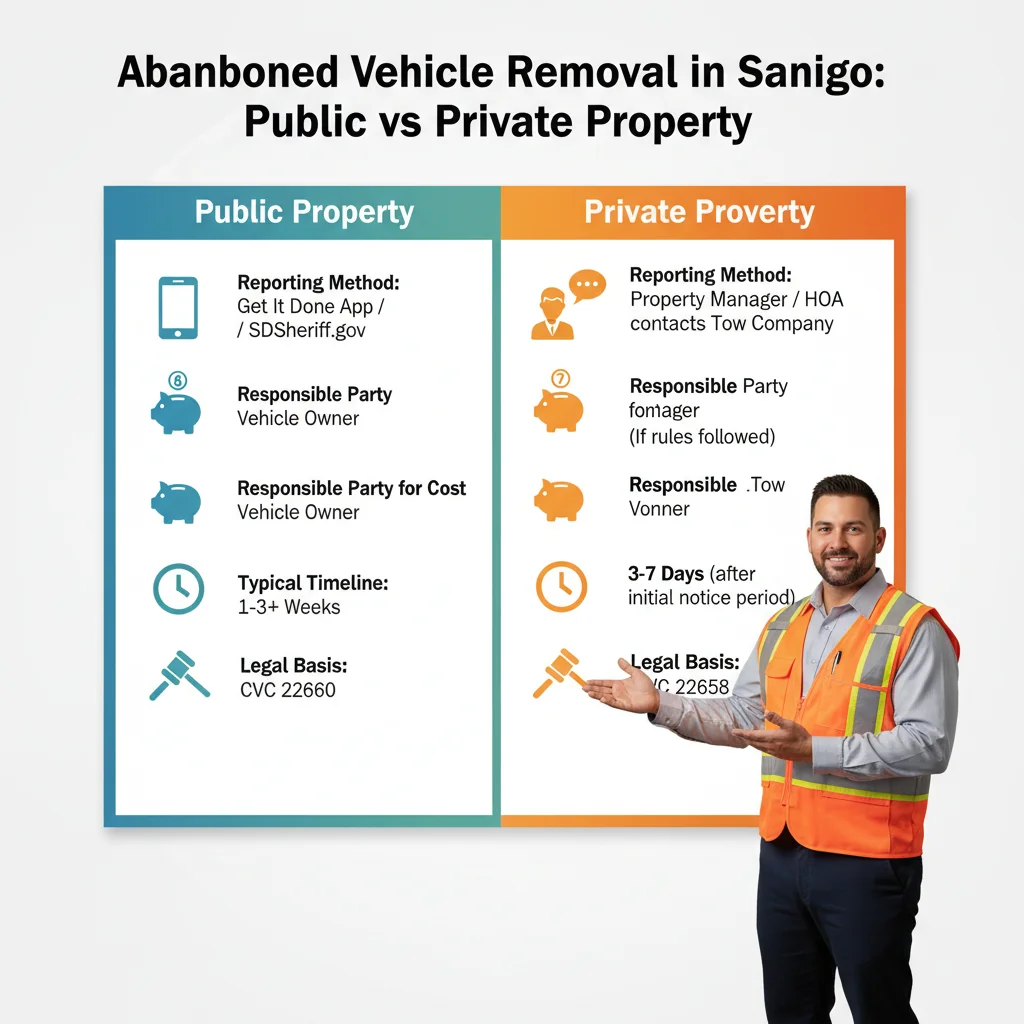
If an abandoned vehicle is on a public street or in a public parking lot within the City of San Diego, residents and property managers should report it directly to the city. The most efficient way to do this is often through the City of San Diego’s “Get It Done” application or website. This system allows you to submit a service request, including location details and photos. For areas outside the immediate city limits but within San Diego County’s unincorporated regions, the San Diego County Sheriff’s Department handles abandoned vehicle reports. You can find information about their program on their official website, sdsheriff.gov. Keep in mind that public agencies often have a notification period, such as 72 hours, before they can initiate a tow, allowing the owner a chance to move the vehicle.
For abandoned vehicles on private property, such as apartment complexes, commercial lots, or HOA-managed communities, the responsibility for initiating removal falls to the property owner or manager. This process requires careful adherence to California Vehicle Code 22658 regulations. For most properties the practical route is compliant signage posted in plain view at all entrances, which is a ground on its own with no waiting period attached. Where signage isn’t in place, the two timed grounds are a notice of parking violation issued 96 or more hours earlier, or an inoperable vehicle missing a major part, 24 or more hours after you notify local traffic law enforcement. Those clocks attach to those specific grounds, not to registration status. Local ordinances can add steps, so check your city’s. Once you have a ground and written authorization, Quick Tow SD can dispatch a licensed tow operator to perform the private property towing. We understand the specifics of CVC 22658 private property towing and can guide you through the necessary documentation to ensure a legal tow.
Who pays for the tow (the owner, not you, in most cases)
One of the primary concerns for property managers and HOAs when facing an abandoned vehicle is the cost of removal. Fortunately, in most situations where proper legal procedures are followed, the financial burden for the tow and associated storage fees falls squarely on the vehicle’s owner, not the property owner.
California Vehicle Code 22658 is designed to protect private property owners from having to pay for the removal of unauthorized vehicles. When Quick Tow SD dispatches a licensed tow operator for an abandoned vehicle removal service, they will typically place a lien on the vehicle for the towing and storage costs. This means the vehicle owner must pay these fees directly to the towing company to retrieve their car. If the owner doesn’t claim the vehicle within a specified period (usually 30 days in California), the towing company can then sell the vehicle to recover their costs.
However, there’s a critical caveat: property managers and HOAs must meticulously follow all legal requirements. This includes having proper, clearly visible signage posted at all entrances to the private property, detailing towing policies and the contact information of the towing company. It also involves providing adequate notice to the vehicle owner, if identifiable, or placing a notice on the vehicle itself before the tow. Failure to comply with CVC 22658’s specific provisions could potentially shift liability for towing and storage fees onto the property owner. It’s also important to differentiate between a simple abandoned vehicle and a true “junk car.” For vehicles that are essentially scrap and unlikely to be reclaimed, our junk car removal service can still apply, following the same lien process. A professional towing company will confirm these details and ensure all regulations are met before any tow is executed, protecting your interests.
How long the process actually takes
The timeline for abandoned vehicle removal in San Diego can vary significantly based on whether the vehicle is on public or private property, and how diligently the process is managed. Property managers and HOAs should set realistic expectations for how long it takes to clear an unwanted car from their premises.
For vehicles on public streets, the process is often slower. Once a report is made to the City of San Diego’s “Get It Done” program or the San Diego County Sheriff’s Department, it typically enters a queue. Authorities usually need to verify the vehicle’s status, post official notices, and allow a mandatory waiting period, often 72 hours, before a tow can be authorized. After this, dispatching a municipal tow service can still take additional time due to workload and resource availability. From initial report to actual removal, this public process can easily extend from several days to a few weeks, depending on the specifics of the case and current departmental backlogs. Property managers relying on city services for public street-adjacent issues should factor in this longer waiting period.
In contrast, the process for abandoned vehicles on private property, while still requiring legal steps, can be more direct and potentially quicker once initiated by the property owner. After identifying the vehicle and confirming all CVC 22658 signage requirements are met, you can contact Quick Tow SD, which dispatches licensed tow operators. The company will guide you through the necessary documentation, which often includes completing a “Declaration of Abandonment” or a similar authorization form. If you’re relying on signage there’s no statutory waiting period. If you’re relying on one of the timed grounds, it’s 96 hours from a parking violation notice, or 24 hours from notifying law enforcement about an inoperable vehicle. Once this notice period expires and all paperwork is in order, Quick Tow SD can often dispatch a tow truck promptly for the physical removal. While the preliminary steps take time, the actual tow itself can be performed on the same day the final authorization is given.
What HOAs and property managers should put in writing
To ensure a smooth, legal, and cost-free (for you) abandoned vehicle removal, HOAs and property managers in San Diego must diligently document every step. Having clear, written policies and records is your best defense against potential legal challenges and helps streamline the towing process.
First and foremost, establish clear and comprehensive vehicle policies within your HOA bylaws or property management agreements. These documents should explicitly define what constitutes an abandoned vehicle on your property, the notice periods that will be given, and the consequences of non-compliance, including towing at the owner’s expense. Make sure these policies are regularly communicated to all residents, tenants, and visitors. This proactive communication helps prevent issues and educates everyone on your property’s rules.
Secondly, you need thorough physical documentation. California Vehicle Code 22658 requires specific signage at all entrances to private property where vehicles might be towed. These signs must clearly state that unauthorized vehicles will be towed, include the contact information of the towing company, and specify any hours or conditions under which towing will occur. You should also maintain detailed records of any notices placed on an abandoned vehicle itself. This includes the date and time the notice was posted, the reason for the notice, and the deadline for removal. Photos of the vehicle, its condition, the posted notice, and the surrounding signage can be invaluable evidence. Finally, always have a formal written agreement with a reputable private property towing service like Quick Tow SD. This agreement should outline the terms of service, responsibilities of both parties, and confirm adherence to all state and local towing regulations. This comprehensive documentation protects your property from liability and ensures a compliant removal process.
When to call us
When an abandoned vehicle creates a persistent problem on your San Diego private property, it’s time to call in the professionals. Property managers and HOAs need an experienced towing service to ensure a legal and efficient removal process, avoiding costly mistakes. Call us at (858) 923-5787 for a same-day estimate.