Discovering an unfamiliar vehicle completely blocking your driveway in San Diego can be incredibly frustrating. It’s a common nuisance that leaves many property owners wondering about their rights and the legal steps they can take. You want the obstruction gone quickly, but it’s essential to act correctly to avoid legal pitfalls.
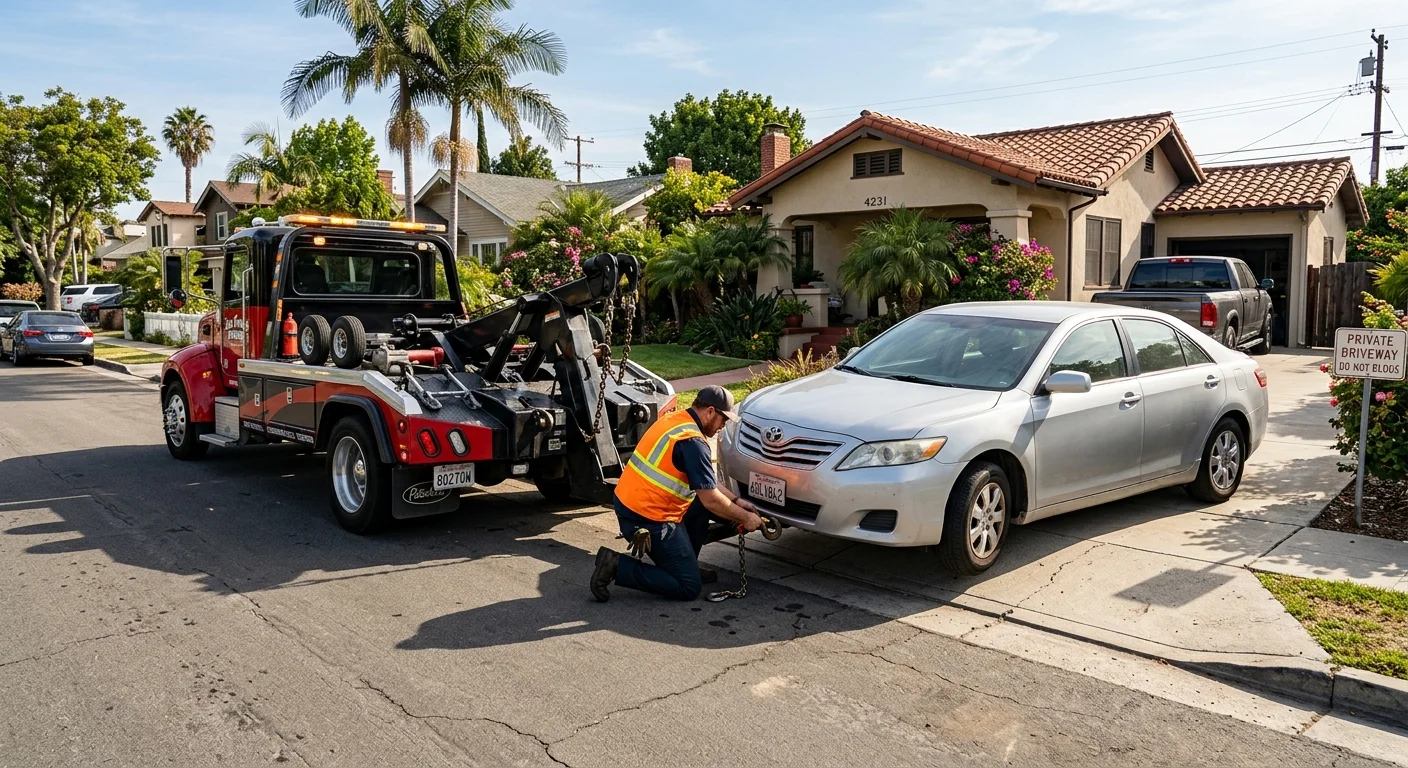
Who to call if someone is blocking your driveway in San Diego depends on where the car is sitting. If it is on the public street across your driveway, that is a police matter: call the San Diego Police non-emergency line at (619) 531-2000 and ask for a parking enforcement response. If the vehicle is on your private property, on the driveway itself or in your assigned space, the police will not initiate the removal and you arrange the tow yourself with a licensed company, following CVC 22658. Do not call a tow truck first in the street case, and do not call the police expecting them to tow off your own property.
This guide walks through the legal process for each of those, your responsibilities as the property owner, and the state laws that protect you. If your question is the narrower one of whether the car counts as blocking at all, the apron, a partial overhang, a car across the sidewalk, that is answered in what actually counts as blocking a driveway in California.
First, is it actually illegal to block a driveway in San Diego?
Yes. Stopping or parking in front of a public or private driveway is prohibited under California Vehicle Code (CVC) Section 22500(e), and that covers a partial block as well as a full one; the companion guide on what counts as blocking works through the apron, overhangs, shared driveways, and red curbs in detail. Which law governs the removal depends on where the car is sitting. If it’s blocking your driveway from the public street, removal is a police matter: CVC 22651(d) lets an officer have a vehicle towed when it blocks a private driveway and can’t practically be moved along the street. If the vehicle is on your private property itself, CVC Section 22658 is the law that governs how you can have it removed. For a residential property, like your home in San Diego, those are the two frameworks that matter.
The law recognizes that driveways are essential access points. An obstructed driveway prevents you, emergency services, or deliveries from entering or exiting your property. This isn’t just an inconvenience; it’s a direct violation of your property access rights. The intent of CVC 22658 is to give property owners a way to restore access when the vehicle is on their property. While the San Diego Police Department generally doesn’t get involved in initiating a private property tow, they can verify if a vehicle is indeed violating parking laws if you call their non-emergency line. However, the onus for arranging the tow usually falls on the property owner working with a licensed towing company.
The legal steps you must take before calling a tow truck
Before you pick up the phone to call a tow truck, there are specific legal steps you must follow to ensure a lawful tow. Failing to adhere to these can leave you, the property owner, liable for damages or illegal towing. California Vehicle Code 22658 provides clear guidelines for private property towing.
Here’s what you need to do:
- Determine if the vehicle is occupied: If the vehicle is occupied by a person, you must first ask the driver to move the vehicle. If they refuse or fail to comply within a reasonable amount of time (generally considered around 15 minutes), then you can proceed with arranging a tow.
- Verify it’s private property: Ensure the vehicle is actually sitting on your private property, not on the public street across your driveway entrance. If it’s on the street or public right-of-way, a private property tow doesn’t apply. Call the police non-emergency line instead and they can handle the removal under CVC 22651(d).
- No signs required for single-family homes: For a lot improved with a single-family dwelling, California law doesn’t require posted “no parking” signs before an unauthorized vehicle on the property can be towed. That exemption is its own ground for removal under CVC 22658(a)(4). This is a crucial distinction for homeowners in San Diego. For commercial or multi-unit residential properties, sign requirements are much stricter. You can learn more about specific requirements in our detailed article on CVC 22658 private property towing.
- Be ready to sign a written authorization: CVC 22658 requires written authorization from the property owner or an authorized agent before the vehicle is moved. A reputable tow company will bring the form and walk you through it. That paperwork is part of what protects you if the tow is ever disputed.
- Contact law enforcement (optional but recommended): While police typically won’t dispatch a tow for private property issues, calling their non-emergency line (619-531-2000) to report the vehicle can create a record. This record can be helpful if there are any disputes later on. They can also verify if the vehicle is stolen.
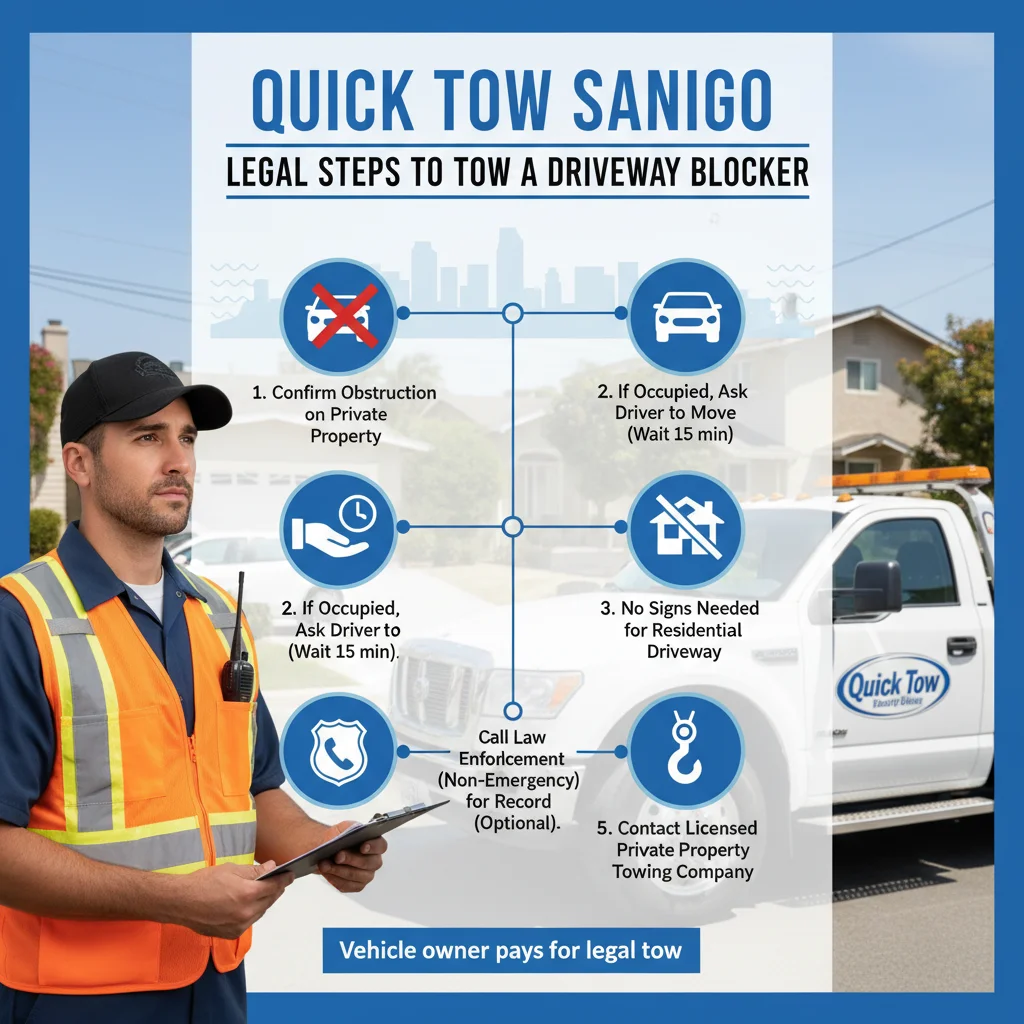
Once these steps are clear, you’re ready to contact a licensed and reputable towing company specializing in private property towing.
Who pays for the tow when a car blocks your driveway?
One of the most common questions property owners have is about the cost. When a vehicle is legally towed from your private property because it was blocking your driveway, the vehicle owner is responsible for all towing and storage fees. As the property owner requesting the tow, you should not incur any charges. This is a critical protection under California law for property owners.
Licensed towing companies are aware of these regulations and operate accordingly. They will typically hold the vehicle until the owner comes to retrieve it and pays the accumulated fees directly to the tow yard. This arrangement ensures that you, the homeowner, aren’t burdened financially for someone else’s illegal parking.
However, it’s vital that you follow all legal steps precisely. If the tow is deemed illegal because proper procedures weren’t followed (e.g., you didn’t ensure it was truly blocking your driveway, or you towed from a commercial property without proper signage), then you, the property owner, could be held liable for the towing and storage costs, and potentially even damages to the vehicle. This is why choosing a reputable tow company and understanding your obligations is so important.
How to find a qualified private property towing company
When you’re dealing with an illegally parked vehicle, you need a towing company that understands California’s private property towing laws, especially CVC 22658. Not all tow companies specialize in this area, and choosing the wrong one can lead to complications. In San Diego, Quick Tow SD is an experienced and reliable choice for these situations.
Here’s what to look for:
- Licensing and insurance: Ensure the company carries adequate insurance. A legitimate company will be transparent about this.
- Experience with CVC 22658: Confirm they are familiar with and strictly adhere to California Vehicle Code Section 22658 for private property towing. This ensures the tow is performed legally, protecting you from liability.
- Local reputation: Choose a company with a strong local reputation in San Diego. Online reviews and testimonials can give you a good idea of their reliability and customer service.
- 24/7 availability: Illegally parked cars don’t just appear during business hours. A company offering 24/7 service means they can respond whenever you need them.
- Clear communication: They should clearly explain the process, what information they need from you, and their estimated arrival time.
At Quick Tow SD, we specialize in private property towing services. We understand the urgency and frustration of a blocked driveway and are equipped to handle these situations promptly and professionally.
What information you’ll need to provide the tow operator
Once you’ve chosen a qualified towing company, they’ll need specific information to legally and efficiently remove the vehicle blocking your San Diego driveway. Having these details ready when you call will expedite the process.
Here’s a checklist of what you’ll typically need to provide:
- Your full name and contact information: The tow operator will need to confirm you are the property owner or an authorized agent.
- The exact location of the vehicle: This includes your street address, cross streets, and any specific landmarks that help identify the precise spot of the blocked driveway.
- Description of the illegally parked vehicle:
- Make and model: (e.g., Honda Civic, Ford F-150)
- Color:
- License plate number and state: This is crucial for the tow company to properly document the vehicle for impoundment.
- Proof of property ownership or authorization: The tow operator will likely ask for verification that you own or manage the property. This could be a property deed, a utility bill in your name, a rental agreement, or a valid driver’s license showing the address. This is a critical step to ensure a legal tow.
- Confirmation that the vehicle is blocking the driveway: You’ll need to confirm that the vehicle is indeed obstructing access to your driveway. The tow operator may ask you to confirm this again upon arrival.
- Any interaction with the driver (if applicable): If you spoke with the driver and they refused to move the vehicle, briefly explain the situation.
Providing accurate and complete information helps the tow operator act quickly and ensures that all legal requirements for private property towing are met. This protects both you and the towing company.
What not to do: avoiding conflict and illegal towing
When a car is blocking your driveway, it’s easy to let frustration take over. However, reacting improperly can escalate the situation or even make you liable for damages. Here’s what you should absolutely avoid doing:
- Don’t confront the vehicle owner or driver: Engaging in a confrontation can quickly turn hostile. It’s safer and more effective to let the legal process unfold through a licensed towing company.
- Don’t attempt to move the vehicle yourself: Trying to push, pull, or otherwise move an unauthorized vehicle can result in injury to yourself or damage to the vehicle, leaving you responsible.
- Don’t damage the vehicle: Keying, slashing tires, or causing any other damage to the vehicle is illegal and can lead to criminal charges or civil lawsuits against you. Even if the car is parked illegally, it’s still the property of another individual.
- Don’t block the vehicle in: While tempting to prevent them from leaving, blocking the vehicle in with your own car can create a greater public nuisance, block traffic, and could potentially make you liable.
- Don’t call a tow company that promises to tow without proper verification: Be wary of any company that suggests they can tow a vehicle without you providing proof of ownership or without confirming the legal grounds for removal. A legitimate company will always follow the letter of CVC 22658. An illegal tow can result in significant penalties and liability for the property owner.
Following these “don’ts” ensures that you handle the situation safely, legally, and without unnecessary stress. Stick to the outlined legal steps and rely on professionals like Quick Tow SD to resolve the problem.
When to call us
When you find a car blocking your San Diego driveway, and you’ve confirmed it’s sitting on your property and parked there without permission, it’s time to call in the professionals. Quick Tow SD specializes in legal, efficient private property towing services. We’re here to help you regain access to your property without hassle or worry about legal compliance.
Call us at (858) 923-5787 for a same-day estimate.