Flatbed vs wheel-lift towing: which is safer?
Both are legitimate tow methods, but the wrong one can wreck your car. Here's which method belongs on which vehicle, and when to refuse a wheel-lift.
What you'll learn
- When a wheel-lift is fine (and saves you money)
- Which vehicles must always go flatbed (AWD, EV, lowered, damaged)
- What "drive-wheels-up" wheel-lift towing means and when it is safe
- Why some tow operators push wheel-lift even when flatbed is correct
- How to spot a tow operator about to do the wrong thing
Step by step
- Ask: is the vehicle AWD, 4WD, electric, or hybrid? → Flatbed.
- Ask: is the vehicle lowered, modified, or low-clearance? → Flatbed.
- Ask: is a wheel or the suspension damaged? → Flatbed.
- Ask: is this a long-distance tow (over 30 miles)? → Flatbed is safer.
- Otherwise: a wheel-lift with the drive wheels off the ground is generally safe for standard FWD or RWD vehicles under 30 miles.
- When in doubt, ask for a flatbed. Drivetrain repair after a bad wheel-lift usually costs more than the tow difference.
If you have a Tesla, Rivian, Lucid, Mustang Mach-E, or any EV: check the owner's manual, then ask the operator. Some manuals allow wheel-lift plus dollies under stated limits. A wheel-lift on the drive wheels can destroy motors. This brand does not set a house EV policy.
The short answer
Flatbed is safer for most modern vehicles. Wheel-lift can be fine for older two-wheel-drive sedans on short hauls. Ask the operator for both numbers if both methods are safe. This page does not publish a San Diego rate card. Drivetrain repair after a bad wheel-lift is usually far more expensive than the difference on the tow.
How each method actually works
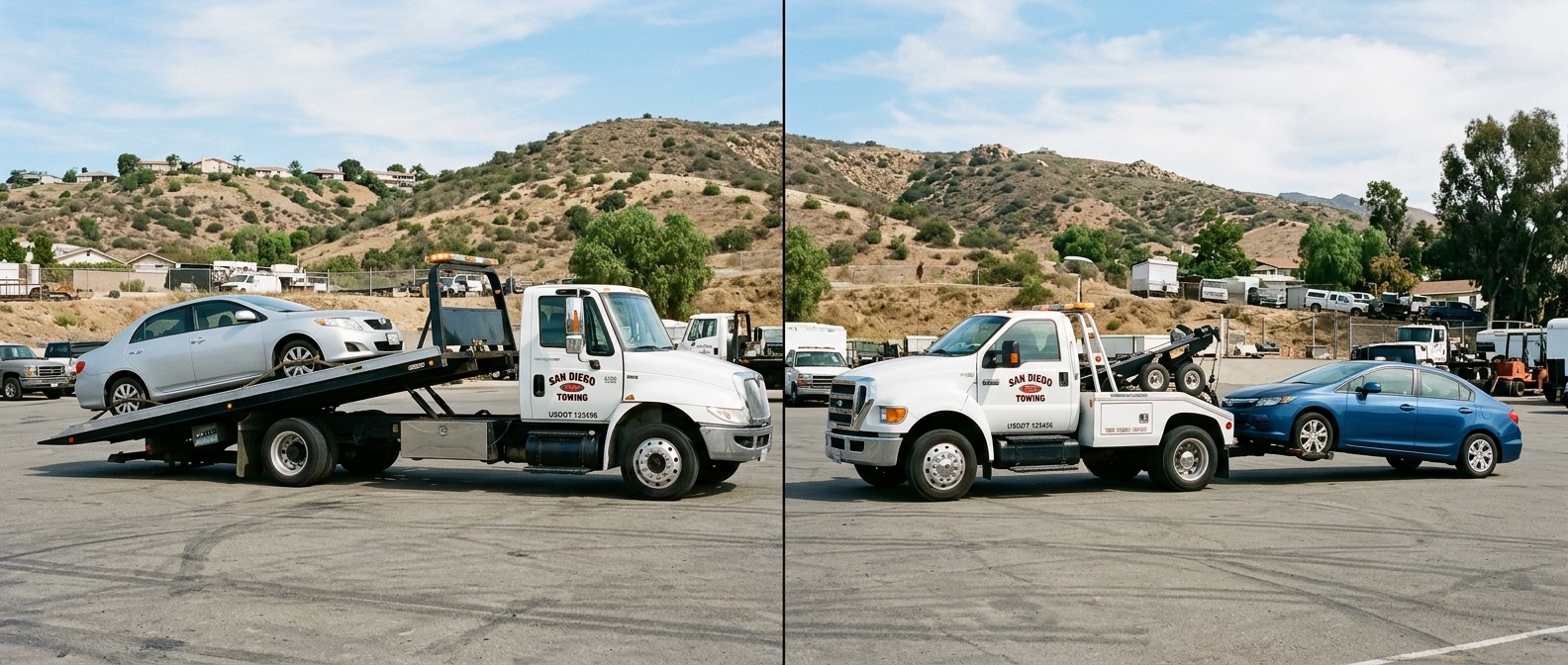
Flatbed (rollback) towing uses a hydraulic-tilt deck that lowers to ground level. The disabled vehicle is winched up the ramp and secured with four soft-strap tie-downs at the wheels. All four wheels leave the road. Nothing drags. No part of your drivetrain spins during transport.
Wheel-lift towing uses a hydraulic yoke that slides under two of the vehicle's wheels (front or rear) and lifts them off the ground. The other two wheels stay on the road and roll behind the tow truck like a trailer. The drive wheels - the wheels that send power - must be the ones lifted off the ground, or the tow will damage the drivetrain.
The Quick Tow SD vehicle-by-vehicle rule
| Vehicle type | Typical method | Why |
|---|---|---|
| Front-wheel-drive sedan (Civic, Corolla, Accord, Camry) | Wheel-lift OK for short hauls; flatbed for over 30 miles | Drive wheels go up, rear wheels roll free |
| Rear-wheel-drive sedan (older BMW, Mustang, 240SX) | Wheel-lift with rear wheels up, OR flatbed | Same logic, drive wheels up |
| All-wheel-drive (Subaru Outback, BMW xDrive, Acura SH-AWD, every modern Audi) | Flatbed only | Wheel-lift damages center differential and transfer case |
| 4WD truck/SUV (F-150 4x4, Tacoma, Wrangler, 4Runner) | Flatbed; OR wheel-lift only with both axles disconnected | Transfer case damage risk; most operators flatbed by default |
| Any electric vehicle (Tesla, Rivian, Lucid, Cybertruck, Hummer EV, Mach-E, Lightning) | Ask the operator; many manuals want a flatbed | Drive motors can be destroyed if drive wheels roll; some manuals allow dollies |
| Plug-in hybrid (Prius Prime, Volt, Pacifica Hybrid) | Flatbed only | Same drive-motor concern as full EVs |
| Lowered, modified, or sports car (lowered Civic, Type R, Supra, GT-R, 911) | Flatbed only | Approach angle on a wheel-lift will scrape front lip and undertray |
| Exotic / classic / collector (Ferrari, Lambo, vintage Corvette, restored 911) | Flatbed - covered trailer on request | Cannot risk paint, body, or suspension damage |
| Damaged vehicle (collision, flat tire, broken suspension, locked-up wheel) | Flatbed | Wheel-lift requires functional rolling wheels on the un-lifted axle |
EV manufacturer towing specs (verbatim sources)
- Tesla (Model S, 3, X, Y, Cybertruck): "Tesla vehicles must be transported on a flatbed truck. Tesla vehicles must never be transported with the wheels on the ground." (Tesla Owner's Manual)
- Rivian (R1T, R1S): Flatbed transport required. Manual procedure documented for moving without ignition power.
- Lucid (Air): Flatbed required. Lucid Service can dispatch a flatbed via Lucid Connected Services.
- Ford Mustang Mach-E, F-150 Lightning: Flatbed required. Ford Roadside dispatches flatbed-equipped operators.
- Chevy Bolt, Blazer EV, Silverado EV: Flatbed required.
- Hyundai Ioniq 5/6, Kia EV6/EV9, Genesis GV60: Flatbed required.
- BMW iX, i4, i5: Flatbed required.
- VW ID.4, Audi e-tron, Porsche Taycan: Flatbed required.
If a tow operator offers to wheel-lift any of the above, refuse the service and call another operator. The drivetrain damage is your problem to pay for - the operator's release form usually transfers that liability to you.
The 5 most common towing-method mistakes
- Wheel-lift on an AWD vehicle "because it's just five miles." A short haul can still damage a transfer case. The repair usually costs more than you save on the tow.
- Wheel-lift on an EV without checking the manual. Same class of failure, often a worse repair bill. Ask the operator before the wheels roll.
- Wheel-lift on a lowered car. The lift can scrape the front lip and undertray.
- Allowing wheel-lift after a collision when a tire or wheel is damaged. The damaged wheel cannot safely roll behind the tow truck. The wheel separates from the hub mid-tow. Always flatbed after a collision.
- Believing the operator who says "wheel-lift is fine for your car" without checking your manual. Tow operators are not all equally trained. Your owner's manual is the final word. If the manual says flatbed, demand flatbed.
Cost differences in San Diego
Ask the operator for a written number for wheel-lift versus flatbed on that pin. This page does not publish a 2026 rate table, night surcharge, or EV upcharge.
California regulations on towing methods
California does not specifically mandate flatbed vs. wheel-lift by vehicle type at the statute level. The operator is responsible for choosing a safe method. CVC 27907 requires tow trucks to be equipped to safely move the vehicle being towed. CHP rotation contracts in San Diego County require operators to carry both wheel-lift and flatbed equipment to handle the range of vehicles dispatched.
If your vehicle was damaged because the operator chose the wrong method, you have grounds for a claim against the operator's commercial insurance (minimum $750,000 combined single-limit liability is required for licensed CA tow operators).
When wheel-lift IS the right call
- FWD sedan that needs to move 5-10 miles to a shop
- RWD vehicle where the rear wheels can be lifted (drive wheels off the ground)
- Tight residential parking where a flatbed cannot maneuver - the operator may wheel-lift out to a wider street, then transfer to flatbed for the long-haul portion
- Apartment parking structure with low overhead clearance - flatbeds need 12+ feet; wheel-lifts fit at 9 feet
- Quick repo or out-of-fuel relocation where the vehicle was running normally before the call
How to ask your tow operator the right question
When you call any operator (including Quick Tow SD), give the dispatcher these four data points in this order:
- Your vehicle's year, make, model, and trim (the trim tells us if it's AWD, sport package, lowered).
- Whether it's a hybrid or electric vehicle (this is the most important data point).
- What happened - mechanical failure, flat tire, collision, ran out of fuel, dead battery.
- Your location and where you want it towed.
A competent dispatcher will tell you which method they're sending and why. If the dispatcher offers wheel-lift on an EV or AWD vehicle, that's a flag - call another operator.
Why Quick Tow SD defaults to flatbed
Ask the operator whether they are bringing a flatbed or a wheel-lift. AWD, EVs, and damaged cars usually need a flatbed. Wheel-lift is for the cars that can take it. The operator who accepts decides the method for that vehicle.
Rather have a pro handle it?
Towing and roadside help across San Diego County. The line takes calls 24/7.
Keep learning.
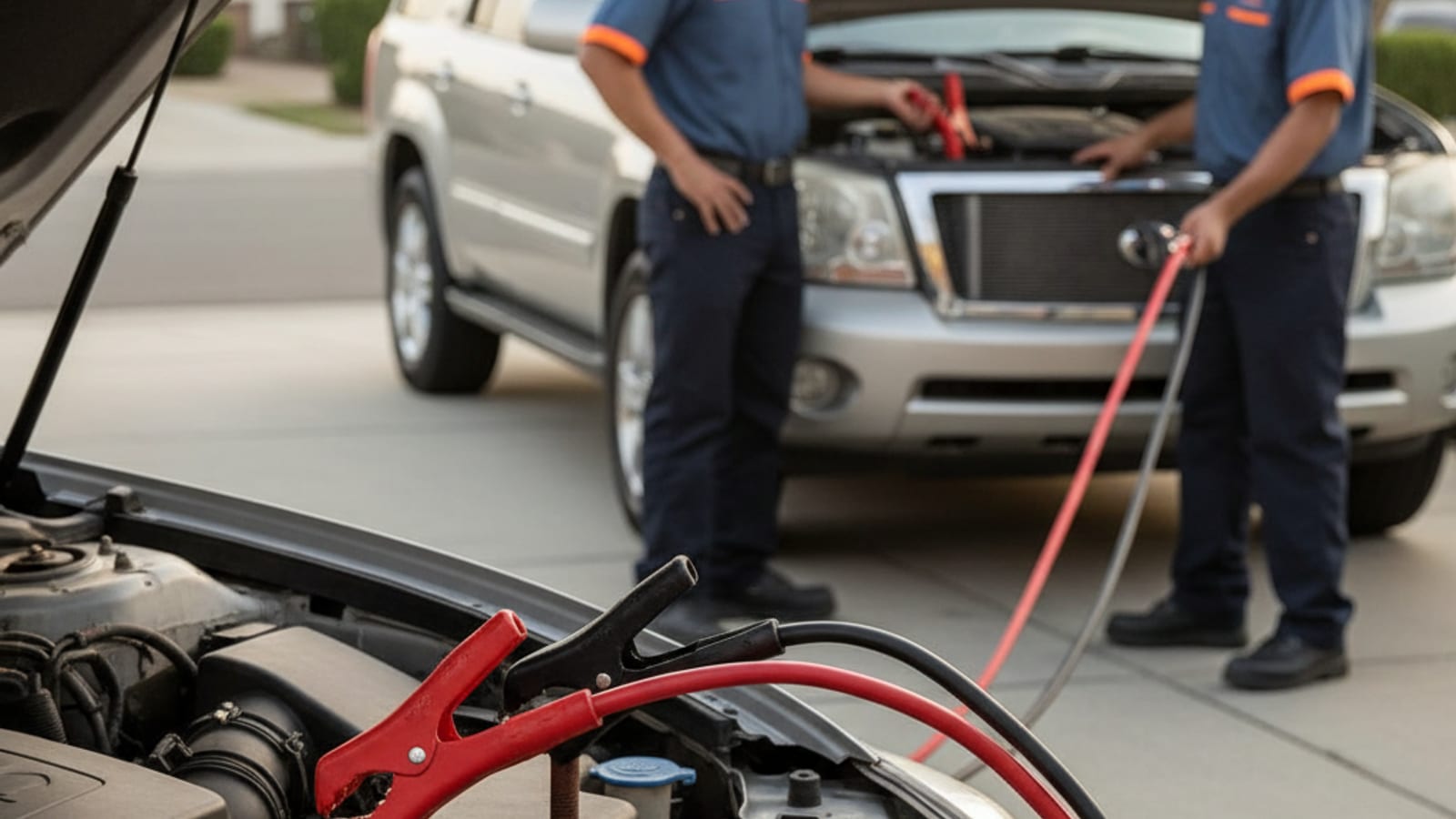
Jump-start a dead battery safely
Jumper cables are simple until you hook them wrong. Do it right and you'll avoid sparks, ruined electronics, and a tow you didn't need.
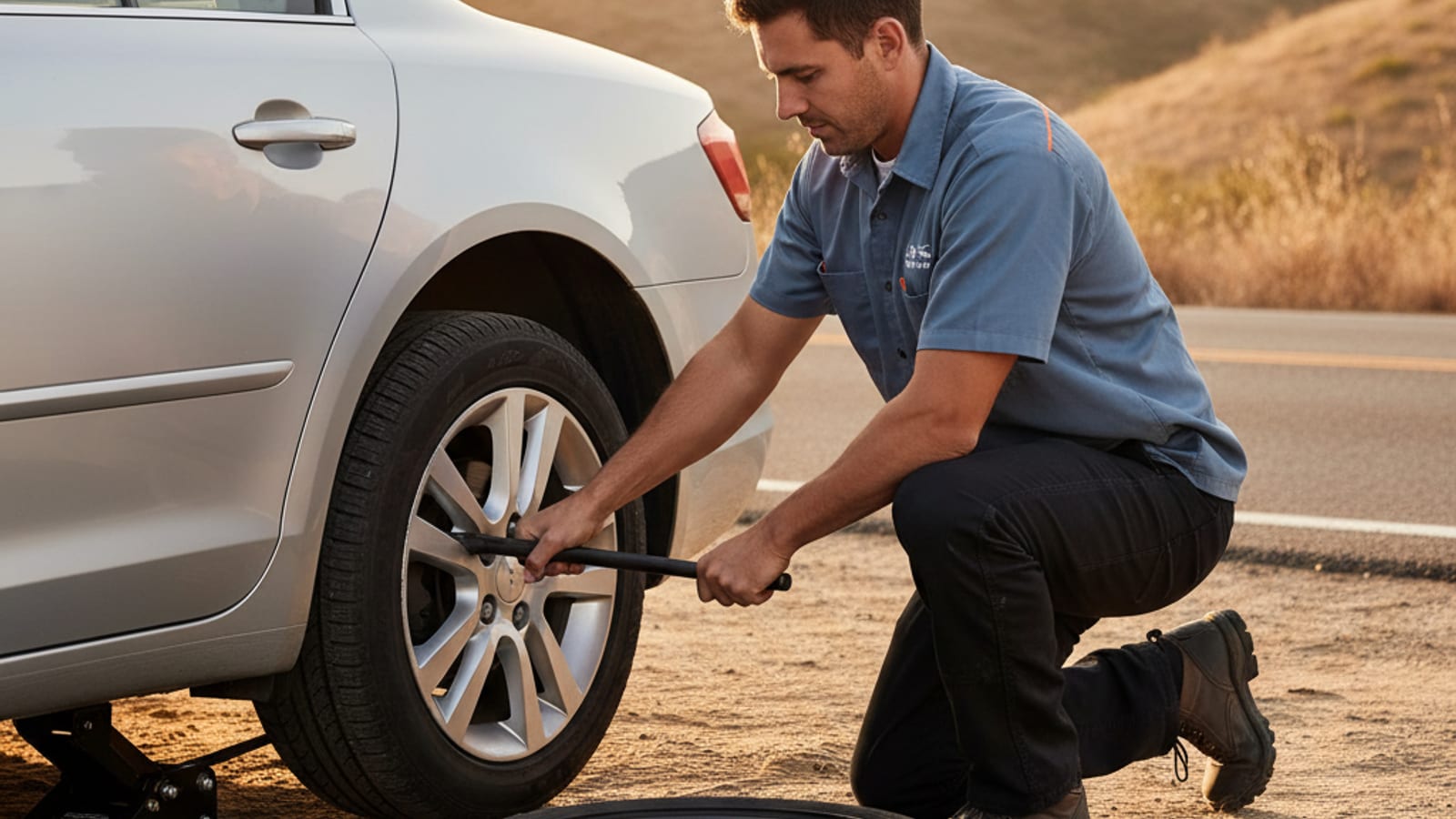
Change a flat tire on the side of the road
First decide if you have a safe, firm, level place to work. If not, stay belted unless there is fire or smoke, and call for help.
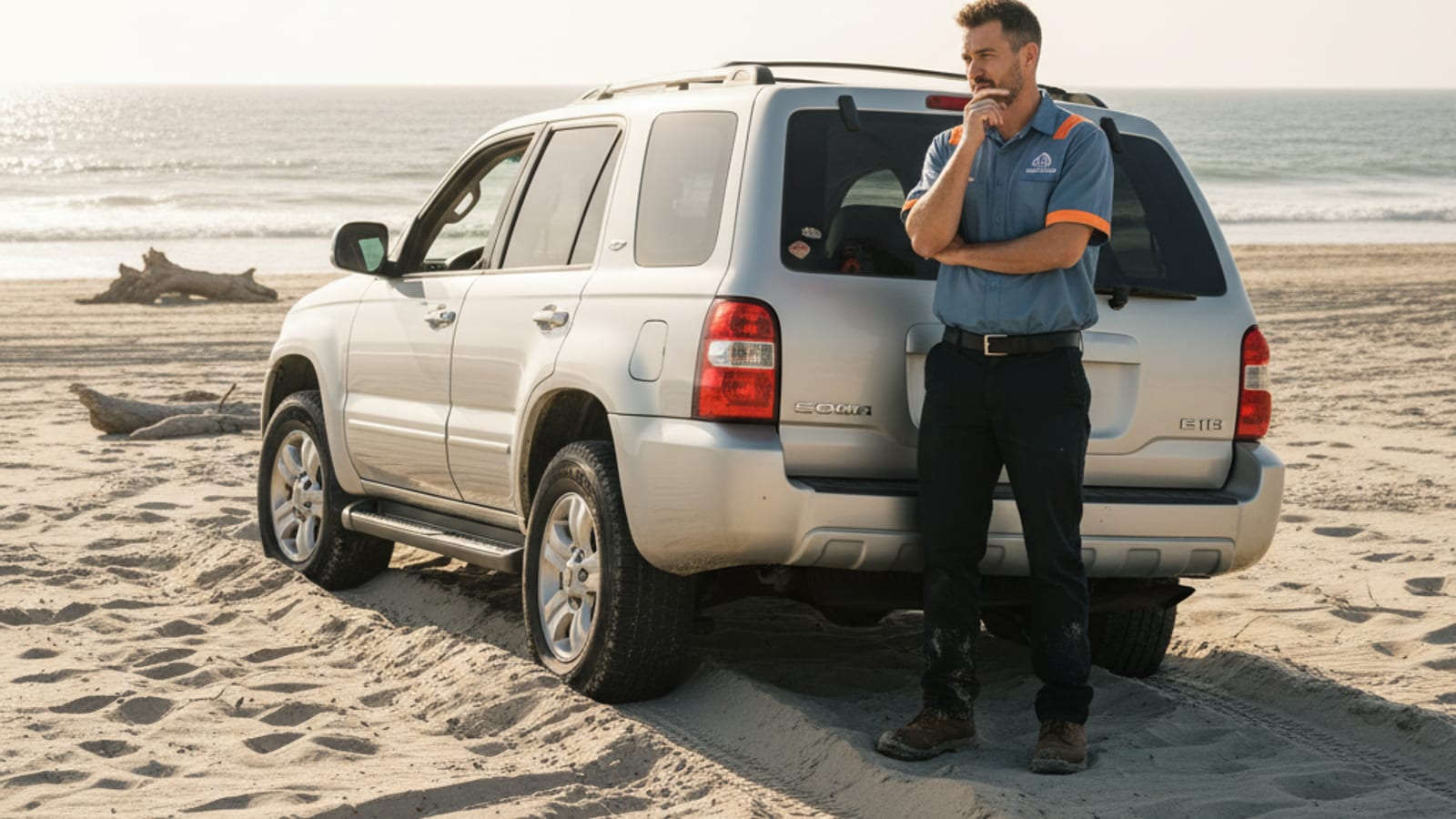
What to do when stuck in sand or mud
Ocean Beach, Fiesta Island, and the Carrizo Badlands eat vehicles weekly. The first thing to do is stop making it worse.