Your car is stopped, and you know it needs special care, a tow that keeps all four wheels off the ground. Whether it’s an all-wheel-drive SUV, a classic car, or just a vehicle you want handled with maximum safety, you’re looking for a flatbed. The next immediate question is always the same: what is this going to cost?
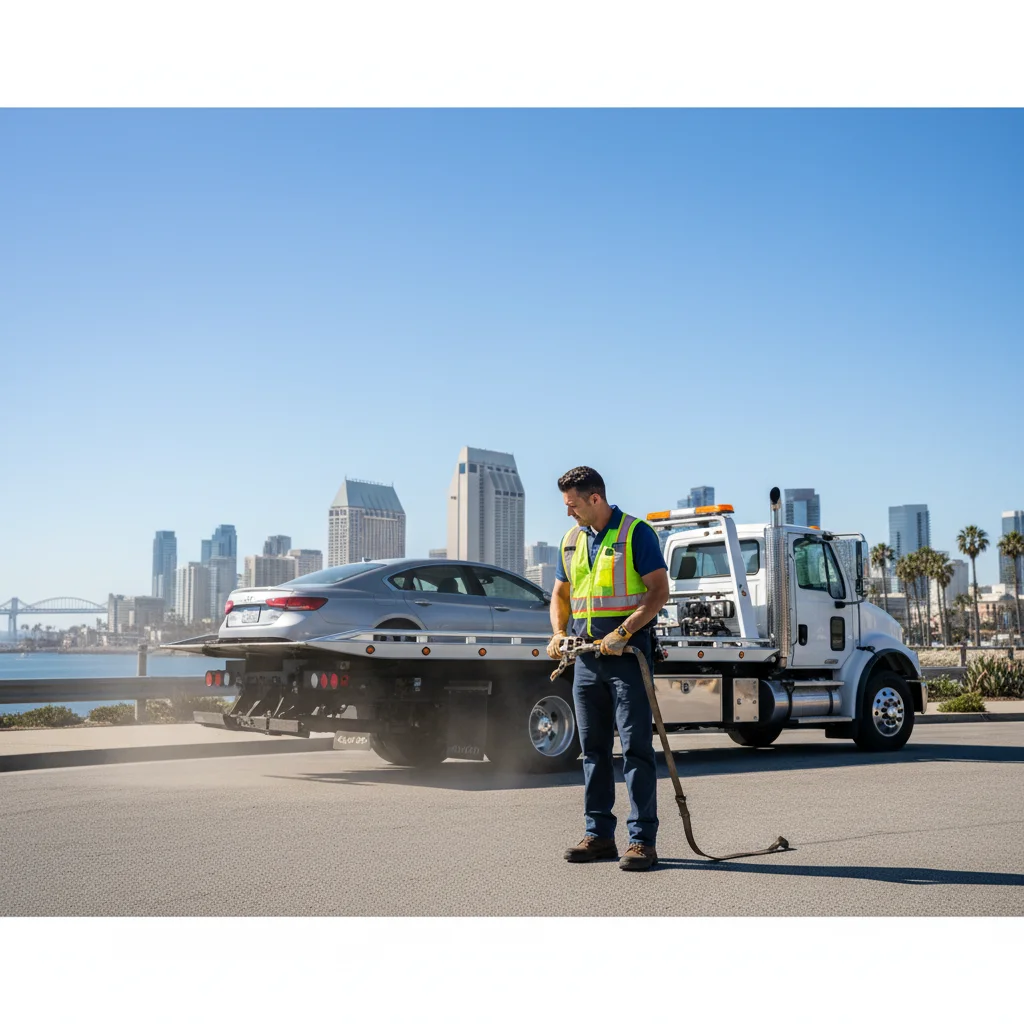
Getting a straight answer on towing prices can be frustrating. Many companies are hesitant to give real numbers over the phone. We believe in transparency. This guide breaks down the actual, all-in flatbed towing cost in San Diego County for 2026, so you can understand your bill before you even make the call.
What a flatbed tow actually costs in San Diego (2026 numbers)
Let’s get right to the numbers. In San Diego, the average cost for a standard flatbed tow during business hours breaks down into two main parts. Expect to pay a base hookup fee plus a per-mile charge for the distance your vehicle is transported.
Here are the typical price ranges you can expect in 2026:
- Hookup Fee: $125 – $250
- Per-Mile Rate: $5 – $9 per mile
The hookup fee is a fixed charge that covers dispatching the truck and the skilled labor of loading your vehicle. The per-mile rate applies only to the distance your car is on the truck, from the pickup point to the drop-off location.
Let’s look at a few common San Diego towing scenarios to see how this plays out:
-
Short Tow (5 miles): A tow from a parking lot in Mission Valley to a mechanic in Kearny Mesa.
- Hookup Fee: ~$150
- Mileage (5 miles x $7/mile): $35
- Estimated Total: $185
-
Medium Tow (15 miles): Your AWD vehicle breaks down in La Jolla and needs to be towed home to Chula Vista.
- Hookup Fee: ~$175
- Mileage (15 miles x $7/mile): $105
- Estimated Total: $280
-
Longer Tow (30 miles): An accident on the I-15 near Escondido requires a tow to a specific collision center in Downtown San Diego.
- Hookup Fee: ~$200
- Mileage (30 miles x $7/mile): $210
- Estimated Total: $410
These are baseline estimates for standard vehicles during regular business hours. For a broader look at pricing for different types of tows, our guide on how much a tow truck costs in San Diego offers more examples. Factors like vehicle size, time of day, and location can adjust the final price.
Hookup fee vs per-mile rate: how the bill is built
Understanding your towing invoice means knowing what each line item represents. A professional towing bill isn’t just one arbitrary number; it’s a calculation based on specific services rendered. The two foundational components are the hookup fee and the per-mile rate.
The Hookup Fee
This is the base rate for the service. It’s a fixed cost you’ll pay even if you’re only going one mile. The hookup fee covers several operational costs for the towing company:
- Dispatch and Travel: The cost of sending a certified driver and a multi-ton truck to your location.
- Labor: The 15-30 minutes of skilled work it takes to safely assess your vehicle, position the truck, and winch your car onto the flatbed without causing damage.
- Equipment: Wear and tear on the truck’s hydraulic bed, winch, and safety straps.
- Insurance: Commercial liability insurance that protects your vehicle while it’s in our care.
Think of it as the “service call” fee. It’s why a cheap flatbed tow truck service often advertises a low per-mile rate but has a standard or even high hookup fee. Always ask for both numbers.
The Per-Mile Rate
This is the variable part of your bill. The clock starts ticking, so to speak, once your car is fully loaded and secured on the flatbed. It stops when the truck arrives at your destination. This rate covers the fuel, driver’s time, and vehicle maintenance for the distance traveled with your car in tow.
When you call for a quote, provide the exact pickup and drop-off addresses. This allows the dispatcher to give you a precise total that includes both the hookup fee and the calculated mileage charge, leaving no surprises. For a complete picture of general towing expenses, see our primary post on the average tow cost in San Diego.
Why flatbed costs more than wheel-lift (and when it’s worth it)
You may notice that flatbed towing rates are consistently higher than those for traditional wheel-lift or hook-and-chain towing. There are solid reasons for this price difference, and understanding them helps clarify why it’s often a non-negotiable, necessary expense.
First, the equipment itself is more expensive. A flatbed tow truck is a more complex and costly piece of machinery than a standard wheel-lift truck. The hydraulic systems, larger chassis, and maintenance needs contribute to a higher operating cost, which is reflected in the service price. They also consume more fuel.
Second, the process is more labor-intensive. Safely loading a vehicle onto a flatbed requires more time and precision from the operator than simply hooking up the drive wheels. This is especially true for lowered vehicles, luxury cars, or cars damaged in an accident, where improper loading could lead to further damage.
So, when is the extra cost of flatbed towing absolutely worth it?
- All-Wheel Drive (AWD) & 4x4 Vehicles: Towing these vehicles with their drive wheels on the ground can severely damage the transmission and drivetrain. A flatbed is the only method that keeps all four wheels off the ground.
- Luxury, Exotic, and Classic Cars: For high-value vehicles, a flatbed eliminates any risk of suspension stress, bumper scrapes, or transmission wear. It’s peace-of-mind insurance.
- Low-Clearance Vehicles: Sports cars and modified vehicles can’t be towed with a wheel-lift without scraping the front bumper or undercarriage.
- Accident Recovery: If a car has significant wheel or axle damage, it can’t roll safely. A flatbed is required to lift the entire vehicle off the road.
- Motorcycles: A flatbed with proper motorcycle chocks and straps is the most secure way to transport a bike without risking it tipping over.
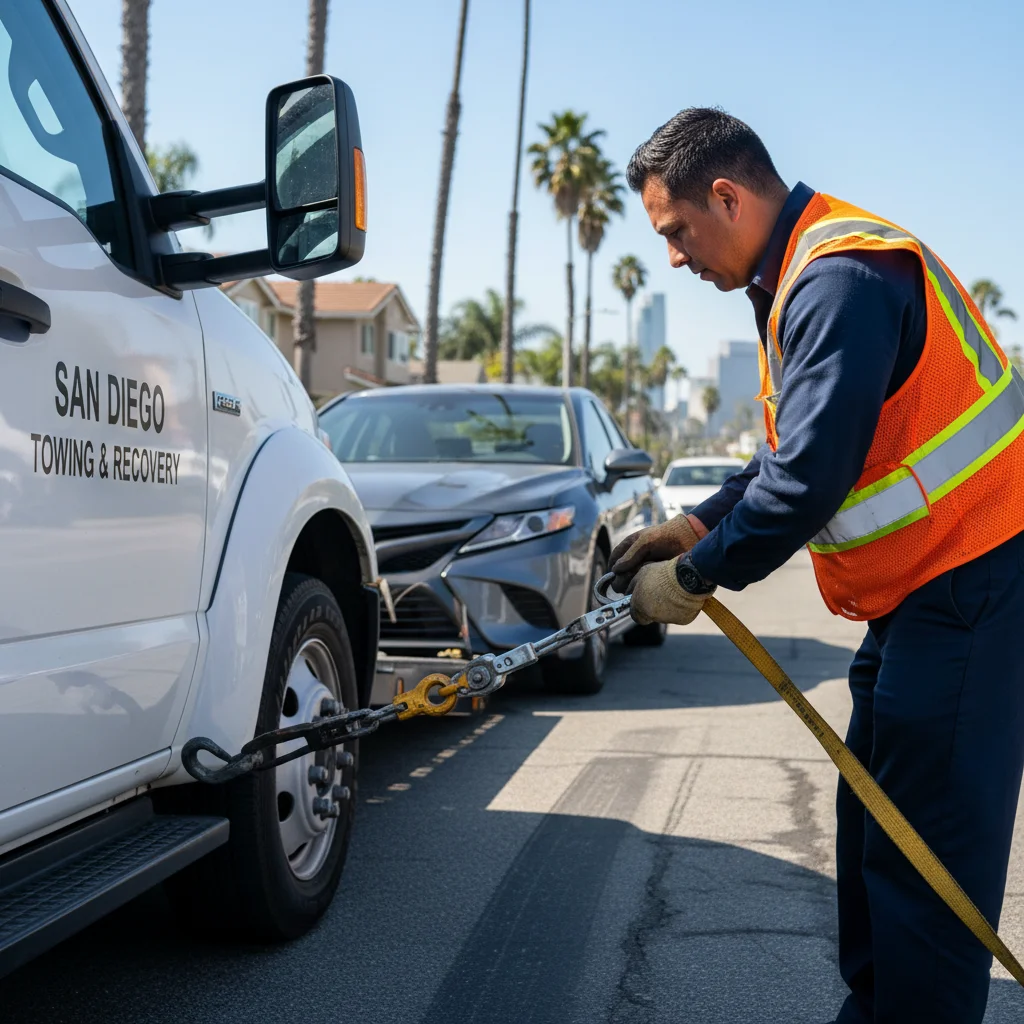
After-hours, weekend, and freeway surcharges
The quote you get at 2 PM on a Tuesday will likely be different from the one you get at 2 AM on a Saturday. Towing is a 24/7 business, but providing service outside of standard hours or in difficult situations often involves surcharges. Being aware of these potential fees helps you understand the total cost.
- After-Hours Fee: Most towing companies have an after-hours surcharge for calls placed late at night, typically between 8 PM and 6 AM. This flat fee, often ranging from $50 to $150, compensates the driver for working non-standard hours.
- Weekend & Holiday Surcharges: Similar to the after-hours fee, some companies add a surcharge for services on Saturdays, Sundays, and major holidays like Thanksgiving or Christmas. Always ask if weekend rates are different.
- Freeway & Impound Surcharges: Towing a vehicle from the shoulder of a busy freeway like the I-5 or SR-94 is significantly more dangerous than towing from a quiet residential street. Some companies may add a small fee to cover the increased risk and time required. Similarly, if your tow involves retrieving a car from an impound lot, there may be an extra fee to cover the administrative time and waiting involved.
- Difficult Recovery (Winching): If your vehicle is not on a flat, accessible surface, stuck in a ditch, mud, or a tight parking garage, it may require winching before it can be loaded. This is a separate service and is typically billed at an hourly rate on top of the towing fees.
When you call for a tow, be as specific as possible about your location and the time of day to get the most accurate quote.
What insurance covers and what comes out of pocket
Many drivers have some form of roadside assistance through their auto insurance policy, but the level of coverage can vary dramatically. It’s important to know what your policy includes before you need it, as it can significantly affect your out-of-pocket flatbed towing cost.
Most standard insurance policies do not include roadside assistance by default; it’s an optional add-on. If you have it, your coverage typically works in one of two ways:
-
Mileage or Cost Limit: The most common type of coverage will pay for a tow up to a certain limit. This could be a specific mileage (e.g., “up to 15 miles”) or a dollar amount (e.g., “up to $100”). If your flatbed tow from Carlsbad to National City exceeds that limit, you are responsible for paying the difference. For a $250 tow, a $100 coverage limit still leaves you with a $150 bill.
-
Tow to the “Nearest Repair Facility”: Some policies specify that they will only cover the cost of towing to the closest qualified mechanic. If you want your car towed to your preferred mechanic across town or back to your home, you will have to pay the extra mileage yourself.
The payment process also differs. Some insurers have a network of “approved providers” they can dispatch and pay directly. In other cases, you may have to pay the full amount to the towing company upfront and then submit the receipt to your insurance company for reimbursement.
Our advice: If you’re in a safe location, take five minutes to call the roadside assistance number on your insurance card. They can explain your coverage limits and dispatch a truck for you. If you’re in an emergency situation and need help immediately, call a trusted local company directly and worry about the reimbursement later.
Red flags on a flatbed quote
When you’re stuck on the side of the road, you’re in a vulnerable position. Unfortunately, some tow operators take advantage of this. Knowing the signs of a dishonest or unprofessional towing company can save you from being overcharged or having your vehicle damaged.
Here are some red flags to watch out for when getting a quote:
- No Clear Pricing: If a dispatcher is evasive and won’t give you a clear hookup fee and per-mile rate, hang up. Phrases like “The driver will tell you when he gets there” or “It just depends” are major warnings. A professional company can provide a very accurate estimate based on your location and destination.
- Refusal to Provide a CA Number: All legitimate tow trucks operating in California must have a “CA Number” issued by the California Highway Patrol displayed on their vehicle. If the company can’t provide this or their motor carrier permit number, they may not be properly licensed or insured.
- “Cash Only” Demands: While some smaller operators may prefer cash, a complete refusal to accept credit cards is a red flag. It may indicate a business that isn’t operating above board. All professional services should offer multiple payment options.
- Excessively High Pressure: If the dispatcher or driver is pressuring you to make a decision immediately or trying to upsell you on services you don’t need, be cautious.
- An Unmarked Truck Arrives: The tow truck that shows up should be clearly branded with the company’s name and phone number. An unmarked, generic truck is a sign of a potentially unlicensed operator.
A trustworthy towing company will provide a clear, itemized quote over the phone and a professional, branded truck with a courteous driver.
When to call us
When your vehicle needs the safe, damage-free transport that only a flatbed can provide, you need a clear quote from a company you can trust. Whether you’re dealing with an AWD sedan, a classic car, or an accident scene, our team is equipped and ready to help anywhere in San Diego County.
Call us at (858) 923-5787 for a same-day estimate.