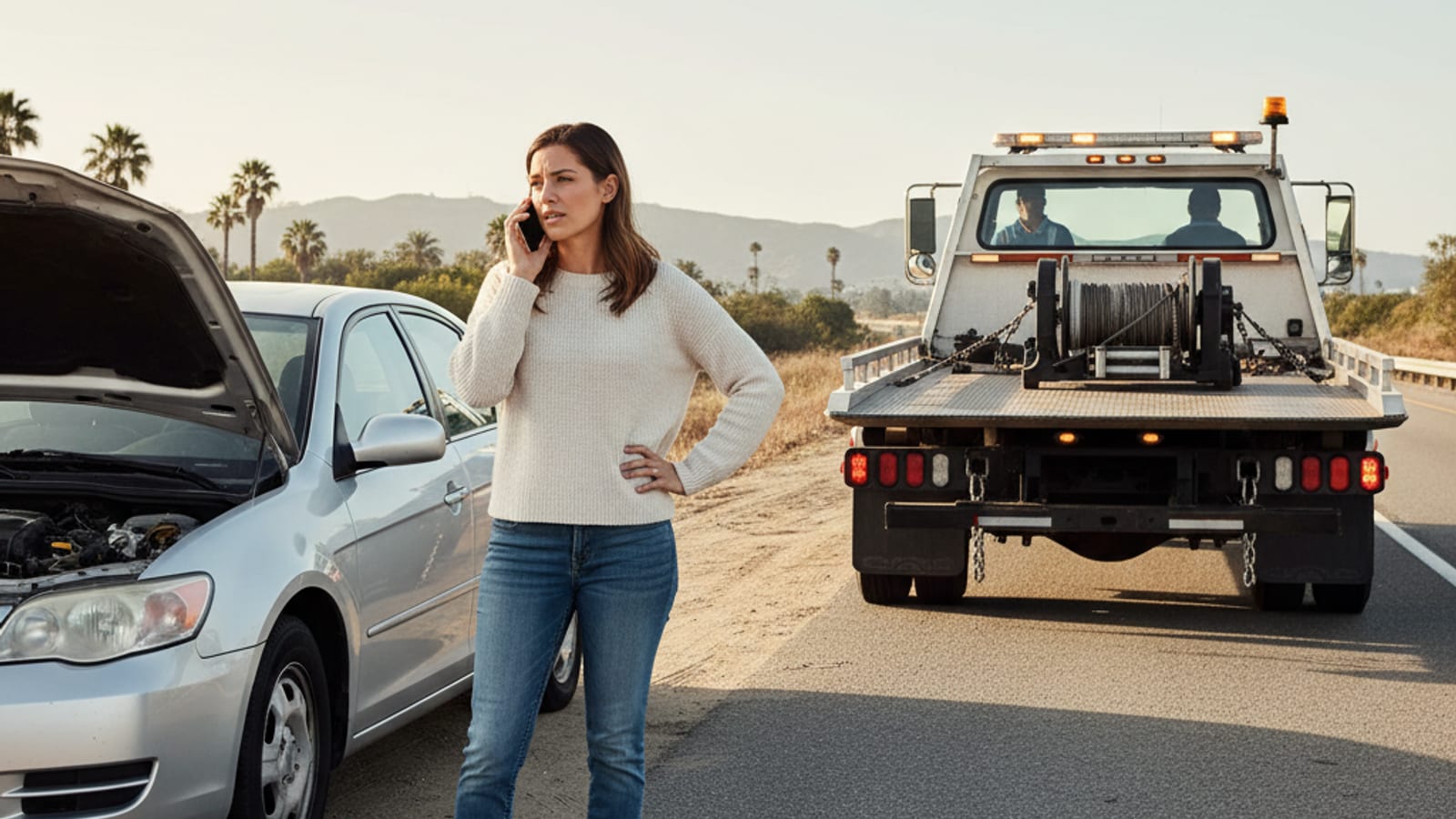
A tow in San Diego is not one market with one price. If you called for help, the independent operator who accepts the job quotes that vehicle and that route. If the car was taken from a lot or after a police hold, different statutes and local rate schedules can apply. Mixing those two is how people search “how much does a tow cost” and land on an impound rights page, or a quote page that never mentions storage.
This URL is the broad San Diego cost question: what kind of tow is this, who sets the number, and what to ask before you agree. The tow cost calculator is a route-planning estimate, not the operator’s quote. Situation pages such as how much a tow truck costs by vehicle and distance go deeper on those narrower inputs. They are not a second “full” version of this answer.
Two price systems, not one
Consensual towing. You (or someone you authorize) ask for a move. The operator sets the price. Ask for one total that names the vehicle, pickup, drop, truck type, and whether after-hours or recovery work is already inside it. If they will not quote before rolling, you still have a choice of operator. Call Quick Tow SD at (858) 923-5787; the line takes calls 24/7 and matches you with an independent licensed operator who can take the job.
Nonconsensual towing and storage. Private-property tows from lots open to the public, and many police/impound holds, are not a shopping quote. The San Diego Police Department’s “Know Your Towing Rights” page (citing CVC 22651.07, 22658, and 22953) is about those rules inside the City of San Diego. Among the points on that page: a storage facility must give an itemized invoice; it is unlawful to charge more than the rates specified by law enforcement in the area for that kind of tow; the facility must accept valid credit cards; personal property can be retrieved during normal business hours without first paying the tow; and if you return before the truck has left the lot, the driver must release the vehicle (a drop fee of up to half the regular tow fee may still be pursued). That page is not a menu of consensual breakdown prices.
If your question is a police yard bill, use the impound cost guide and the live City/agency schedule for that hold. Do not treat a roadside quote as an impound invoice, or the other way around.
What actually moves a consensual quote
Operators do not all bundle miles the same way. Some fold a first stretch into a hook charge. Some quote one total. “How much per mile” is the wrong first question until you know how this operator prices this route.
The inputs that usually change the number:
- Vehicle and condition. Size, weight class, whether it rolls, steers, and brakes, and any damage or low ground clearance.
- Pickup and drop. Driveway versus freeway shoulder versus sand or a stall that needs a winch. Distance and access both matter.
- Equipment the manufacturer and the scene require. AWD, EV, lowered, or damaged vehicles often need a particular transport method. That is a manufacturer and condition question, not a rule that a flatbed is the only safe truck for every one of those cars. Give year, model, drivetrain, and damage. The operator who accepts the work chooses equipment they can use legally and safely. Read flatbed towing and wheel-lift towing for method-specific inputs, not a universal ranking.
- When the call happens. Overnight, weekend, and holiday work can sit on a different line of an operator’s sheet. Ask whether the total you hear already includes it.
- Storage, only if the car will sit. Daily storage is a separate clock from the tow. On a nonconsensual City tow, the rights page above is the starting point. On a consensual drop at a shop you chose, ask that shop’s storage terms separately.
Motorcycle, heavy wrecker, accident recovery, and long-distance work are different jobs. They take different trucks and more scene time. They should be quoted as their own totals, not as “a car tow plus a little.”
What this page will not invent
There is no statewide consensual price list. Published “average” dollars age badly and vary by company. Quick Tow SD does not set operator rates. Dollar bands on other Quick Tow pages are planning ranges until the operator quotes this job. Use them to ask better questions, then take the written or stated total for this call.
AAA, insurer roadside, and warranty tows: call the plan first if you already have one. Included miles, call limits, waiting periods, and what you pay after the cap are in that plan’s current terms, not in a guess here. If the job exceeds the plan, you may owe the operator the difference.
How to get a number you can use
Describe year, make, model, drivetrain, whether it rolls, where it is, and where it needs to go. Ask:
- Is this one total, and what is inside it?
- Which truck are you sending, and why?
- Is after-hours already included?
- If I am not on scene when you arrive, what happens?
For a route you can plan, run the calculator so you see how distance and equipment inputs change an estimate. Then get the operator’s quote for the real addresses.
If you are comparing companies, red flags when choosing a tow company is the checklist. Distance examples such as 10 miles explain hook-plus-mileage math when that is how a given operator bills. They do not replace this page’s split between consent and impound.
Frequently asked questions
How much does a tow cost in San Diego?
For a breakdown you asked for, the cost is the operator’s total for this vehicle and route, quoted before the truck rolls. There is no single county price. Impound and private-property tows are billed under the rules that apply to that hold, not that shopping quote.
Does towing cost more at night or on weekends in San Diego?
It can. Some operators add an after-hours line. Hearing it on the call and inside the total is the fair version. Hearing it at the drop is not. Ask before anyone rolls.
How much does AAA towing cover?
Whatever your current membership says: tier, miles, call count, and waiting periods. Read the Auto Club documents or ace.aaa.com for the product you hold. This page will not invent Classic/Plus/Premier mile caps.
What’s the difference between a hook fee and the total?
Some operators advertise a base hook that includes a first stretch of miles, then bill extra distance. Others quote one number. The useful figure is the total for this job. If they will only talk “per mile” with no bundle and no destination, you do not have a quote yet.
Can I dispute a tow bill in California?
For a consensual job, start with the quote you were given and the invoice. For private-property tows in the City of San Diego, SDPD’s rights page points to itemized invoices, rate caps tied to local law-enforcement schedules, CVC 22651.07, and remedies that can include Small Claims Court (that page cites claims up to $12,500) or a suit for damages that can reach four times the towing and storage fees under CVC 22658(j)(1). That is not legal advice. Match the process to whether the tow was consensual or not.
What’s the cheapest honest tow I can get?
Usually a short local move of a passenger vehicle that rolls, steers, and brakes, during ordinary hours, with a quoted total. A number far below everyone else is often the setup for a second number at the drop. Affordable towing in San Diego is the budget-and-bait page; this page stays on the consent vs impound split.
Need a quote for a breakdown in San Diego County? Call (858) 923-5787. The operator who accepts the work sets the price and the arrival estimate for that location.