The moments after an accident are chaotic and stressful. One minute you’re driving, the next your car is damaged, perhaps undrivable, and a tow truck is on its way. If your vehicle has just been towed from an accident scene in San Diego, you’re likely wondering what happens next and how to get your life back on track.
The two types of post-accident tows: police-ordered vs. your choice
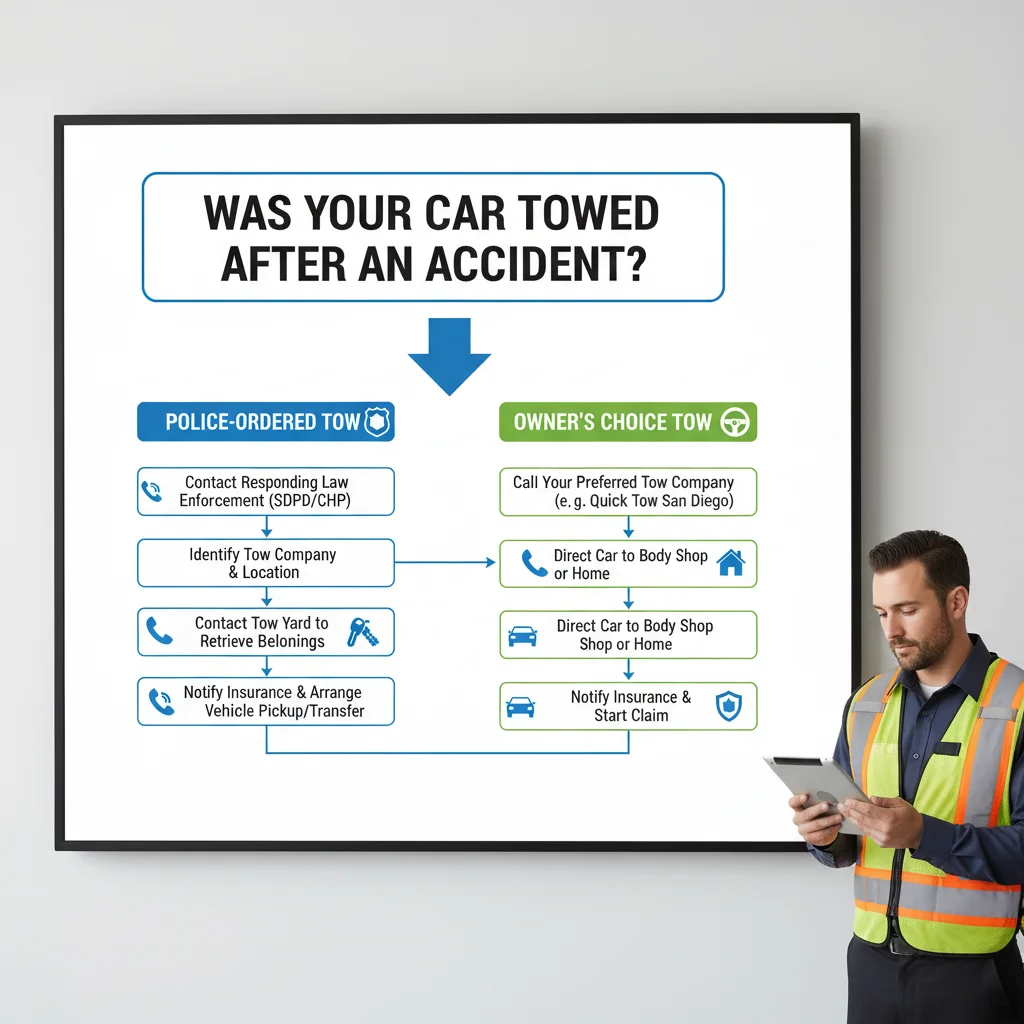
Understanding how your car got towed is the first step in knowing what happens next. There are primarily two scenarios for post-accident towing:
-
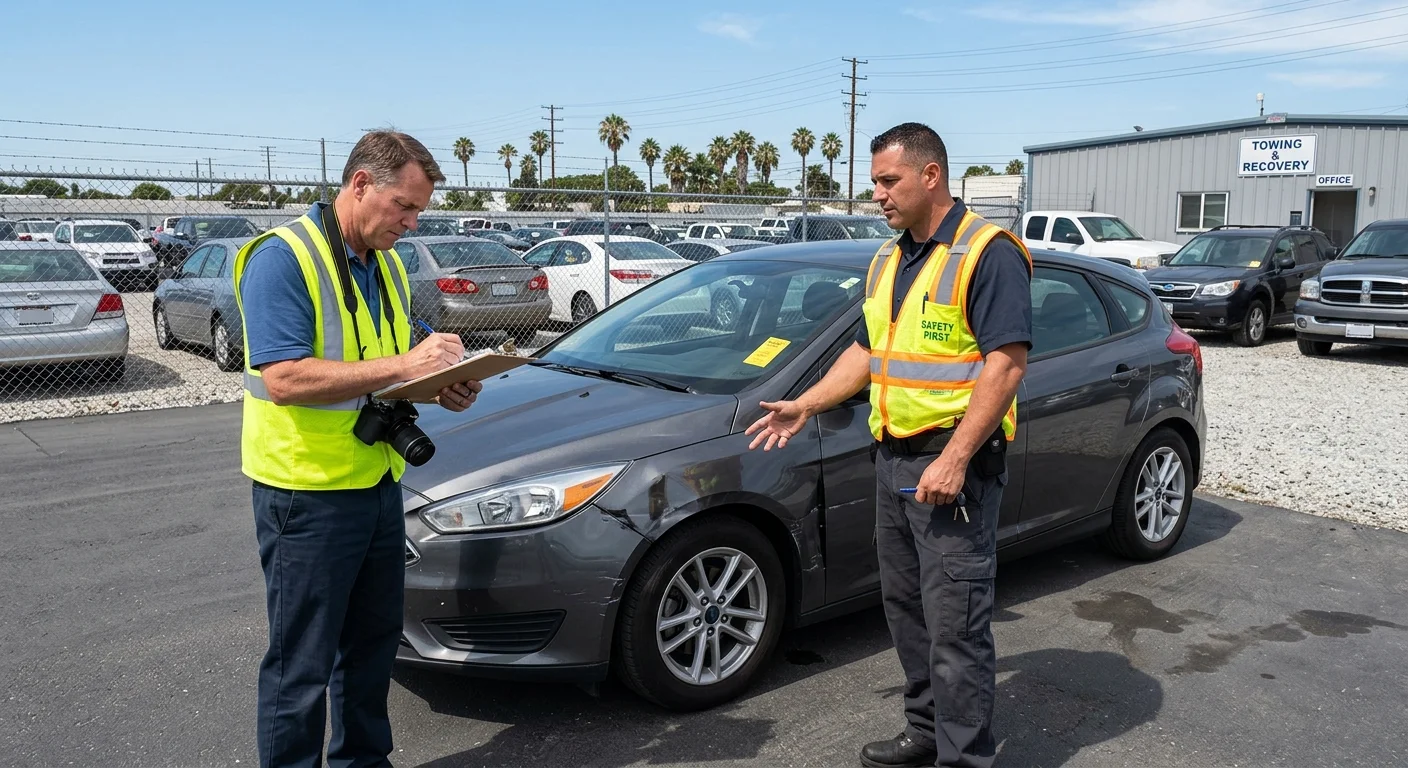
Police-Ordered Tow: When an accident is severe, involves injuries, blocks traffic, or requires extensive investigation, law enforcement will often call a tow. In San Diego, this could be the San Diego Police Department (SDPD) for city streets or the California Highway Patrol (CHP) for freeways. They usually dispatch a tow company from an approved rotation list. In these cases, you typically don’t have an immediate choice in the tow company or the initial destination. Your car will go to a designated tow yard or impound lot. This ensures the scene is cleared quickly and safely, but it means you’ll need to follow up with the authorities to locate your vehicle.
-
Your Choice Tow: If the accident is minor, if the police deem the car safe to move, or if you’re simply moving it from private property after a fender bender, you can often call your own tow truck. This gives you control to direct your vehicle to your preferred body shop, your home, or another secure location. Quick Tow SD offers reliable accident recovery services, allowing you to choose where your damaged vehicle goes next. Make sure to clearly communicate your desired destination to the tow operator. This distinction is crucial because it affects where your car ends up and how quickly you can start the repair process.
Where does your car go? The tow yard vs. a body shop
Once your car is towed from the accident scene, its destination will heavily influence your next steps.
-
To a Tow Yard/Impound Lot: This is often the default for police-ordered tows. These facilities are secure lots designed for temporary vehicle storage. While your car is safe from further damage or theft, it accrues daily storage fees. These fees can quickly add up, especially if there are delays in processing your claim or arranging repairs. Tow yards typically don’t offer repair services, so you’ll eventually need to arrange a second tow from the yard to a body shop, adding to both costs and logistical challenges. It’s important to act swiftly if your vehicle is taken to a tow yard.
-
Directly to a Body Shop: If you had the option to choose your tow and your vehicle’s damage is not too severe, towing it directly to a trusted body shop can save you time and money. The shop can begin assessing the damage and provide an estimate sooner, streamlining the repair process. Your insurance company might have a network of preferred body shops they recommend, or you can choose your own. If you’re unsure which body shop to use in the San Diego area, your insurance company can provide a list of reputable repair centers, or you can ask friends and family for trusted local recommendations. Directing your tow means you can kickstart the repair timeline almost immediately.
How to locate your vehicle if you weren’t there for the tow
It’s common for drivers not to be present when their vehicle is towed after an accident, especially if they were injured or transported to a hospital. This can add significant stress, leaving you wondering where your car ended up. Here’s how to find it:
Your first and most important step is to contact the law enforcement agency that responded to the accident.
- For city streets in San Diego: Call the San Diego Police Department (SDPD) non-emergency line.
- For freeways within San Diego County: Contact the California Highway Patrol (CHP).
Be prepared to provide key details such as the exact location and approximate time of the accident, as well as your vehicle’s license plate number or Vehicle Identification Number (VIN). The responding agency will have records of which tow company removed your vehicle and where it was taken. They can provide you with the tow company’s name and contact information, allowing you to get in touch with them directly to confirm your vehicle’s location and inquire about their retrieval process. This immediate action is crucial for locating your car quickly and avoiding unnecessary daily storage fees. For more detailed steps on this process, read our guide on how to get my car back from impound.
Accessing your personal belongings from the car
After an accident, you’ll likely have personal items you need to retrieve from your damaged car. This could range from essential documents like your wallet and phone to sentimental items, car seats, or work equipment. Fortunately, tow yards have procedures for property retrieval.
First, contact the tow yard where your vehicle is stored directly. Ask about their specific hours for property retrieval and what documentation you’ll need. Most reputable tow yards will require:
- Valid government-issued identification: This confirms your identity.
- Proof of vehicle ownership: This could be your vehicle title, current registration, or a notarized letter from the owner if the car isn’t registered in your name.
- Proof of insurance: While not always required for property retrieval, it’s good to have on hand.
Be aware that some tow yards may charge a small administrative or gate fee for property access, especially if you need extended time or multiple visits. It’s always best to retrieve essential items as soon as possible to avoid inconvenience. Always prioritize your safety when visiting a tow yard, and follow their rules and guidelines for access.
Dealing with the insurance adjuster and authorizing repairs
Once your car is secure, one of your most important next steps is to contact your insurance company to file a claim. This initiates the process of assessing damage and covering costs. An insurance adjuster will be assigned to your case, and their role is critical.
The adjuster will inspect the damage to your vehicle, either at the tow yard or the body shop. They’ll determine the extent of the repairs needed and assess if the car is a “total loss”, meaning the repair costs exceed its actual cash value or a set percentage. They will then communicate with the body shop (if applicable) to authorize repairs based on their assessment and your policy’s coverage.
It’s important to be available to answer their questions, provide any requested documentation (like police reports), and discuss the repair estimate. Do not authorize any major repairs or sign any agreements with a body shop without first consulting your insurance adjuster and getting their approval. Clear and proactive communication with your insurance provider will help streamline the repair process and ensure you understand your coverage details, deductibles, and timelines.
Understanding storage fees and how to minimize them
Storage fees are a significant and often unexpected expense after an accident tow. Most tow yards charge a daily rate for storing your vehicle, and these fees can accumulate quickly. They typically begin accruing immediately after the tow, regardless of whether your insurance company has been contacted or an adjuster has inspected the vehicle.
The longer your car sits at a tow yard, the more you’ll owe. To minimize these costs, act quickly:
- Contact your insurance company immediately: File your claim and inform them of your vehicle’s location as soon as possible. Your insurance policy may cover a portion or all of these storage fees, but delays can result in out-of-pocket expenses for you.
- Facilitate transfer: If your car is at a tow yard and needs to go to a body shop, work with your insurance company and the body shop to arrange the transfer promptly. Quick Tow SD can help facilitate vehicle transfers within San Diego County, potentially reducing further storage costs by moving your car efficiently.
- Understand your policy: Review your insurance policy’s towing and storage coverage limits. Knowing these details can help you anticipate costs.
If storage fees are not addressed, tow yards have the legal right to place a lien on your vehicle to recover their costs, which can eventually lead to your car being sold at auction. Understanding who pays for the tow after an accident is essential for managing these expenses effectively.
Frequently asked questions about post-accident car towing
Q: What if my car is declared a total loss? A: If your insurance adjuster determines your vehicle is a total loss, it means the cost of repairs exceeds its actual cash value (ACV) or a certain percentage of it, depending on California’s regulations. Your insurance company will offer you a settlement based on the car’s ACV, minus your deductible. They will then take ownership of the totaled vehicle. You’ll need to remove all personal belongings before releasing the car to the insurer. Be sure to understand the settlement offer and discuss any concerns with your adjuster.
Q: Can I choose my own tow company after an accident? A: In many situations, yes, you can. If law enforcement isn’t directing the tow due to severe circumstances or safety hazards, you typically have the right to choose your preferred towing service. It’s always a good idea to have a reputable towing company like Quick Tow SD in mind, or even saved in your phone, before an incident occurs. This allows you to have more control over where your vehicle is taken and helps ensure transparent pricing.
Q: How long can my car stay at the tow yard? A: Your car can technically stay at a tow yard for an extended period, but this is not advisable due to rapidly accumulating daily storage fees. These fees can quickly become very expensive, sometimes exceeding the value of the car itself. Most tow yards will eventually place a lien on abandoned vehicles to recover their costs. It’s crucial to take immediate action to either retrieve your car, have it repaired, or facilitate its transfer with your insurance company. For more details on related costs, see our article on who pays for tow after accident.
Q: Do I need to be present when the insurance adjuster inspects my car? A: While it’s not always required, being present during the insurance adjuster’s inspection can be beneficial. It allows you to point out specific damages you noticed and ask questions directly. If you cannot be there, ensure the body shop you’ve chosen is communicating with the adjuster and advocating for a thorough assessment of the damage on your behalf.
Q: What documents do I need to retrieve my car from a tow yard? A: To retrieve your vehicle from a tow yard, you’ll generally need: valid government-issued identification (like your driver’s license), proof of vehicle ownership (such as the title or current registration), and payment for any outstanding tow and storage fees. For specific requirements or to learn more about vehicle registration in California, you can visit the official California DMV website. Always call the specific tow yard first to confirm their exact requirements before heading over.
When to call us
Dealing with the aftermath of an accident is stressful enough without worrying about towing logistics. If your car has been damaged in a crash in San Diego County, Quick Tow SD is here to help. Our team provides fast, reliable, and empathetic accident recovery services to safely transport your vehicle where it needs to go, whether that’s to a trusted body shop or a secure storage facility. Call us at (858) 923-5787 for a same-day estimate.