You’re stuck. Maybe it’s a flat tire on the 805 during rush hour, a dead battery in a Petco Park garage, or a car that just won’t start in your driveway in Chula Vista. Your first instinct is to pull out your phone and search for the cheapest, fastest help you can find. That often leads to a search for “$50 towing San Diego.”
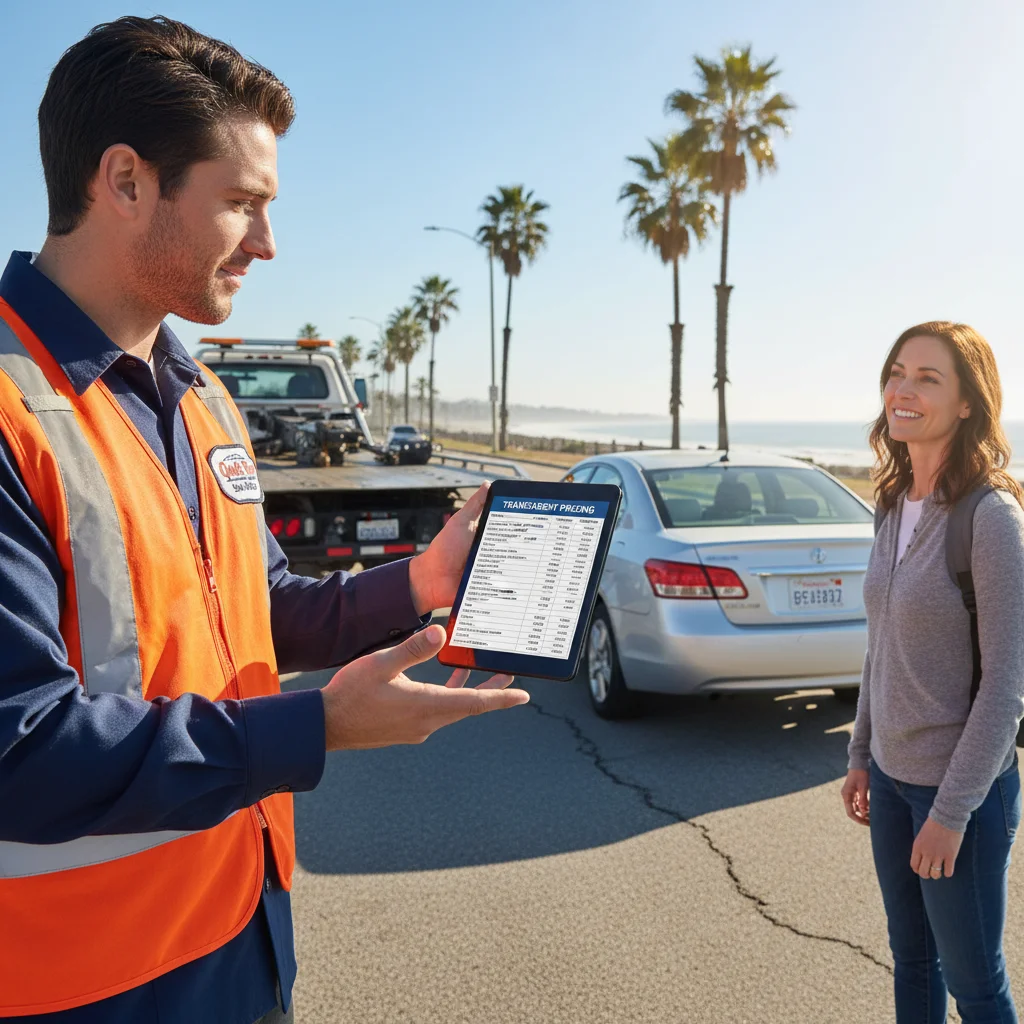
It’s a nice, round number that feels like a bargain. But is $50 a realistic price for a professional tow today? Let’s break down the real costs of towing in San Diego County so you know what to expect and how to avoid surprises.
Why everyone searches for ‘$50 towing’
The idea of a $50 tow is powerful. It feels like a simple, affordable solution to a complicated problem. For many, it’s a price point they remember from years ago, and it has stuck around as a search term for anyone looking for “cheap towing San Diego.” It’s the roadside assistance equivalent of a dollar menu, a quick, easy-to-understand price for a service you desperately need.
The reality, however, is that operating a professional towing service involves significant costs. Think about what goes into a single tow call: a commercially insured, properly maintained tow truck, a licensed and trained operator, fuel, dispatching software, and the business overhead to keep everything running 24/7. When you factor in the rising costs of fuel, insurance, and equipment in California, that $50 price point becomes very difficult to hit while running a safe and reliable operation.
Searching for a “$50 tow” is really a search for a fair deal from a trustworthy company. You want to know you’re not being taken advantage of in a vulnerable moment. The problem is, companies that advertise rock-bottom prices often have to make up the difference with hidden fees, slow response times, or subpar service. The goal shouldn’t be to find an impossibly cheap tow, but to find an honest company that provides clear, upfront pricing.
What a standard tow hook-up fee includes
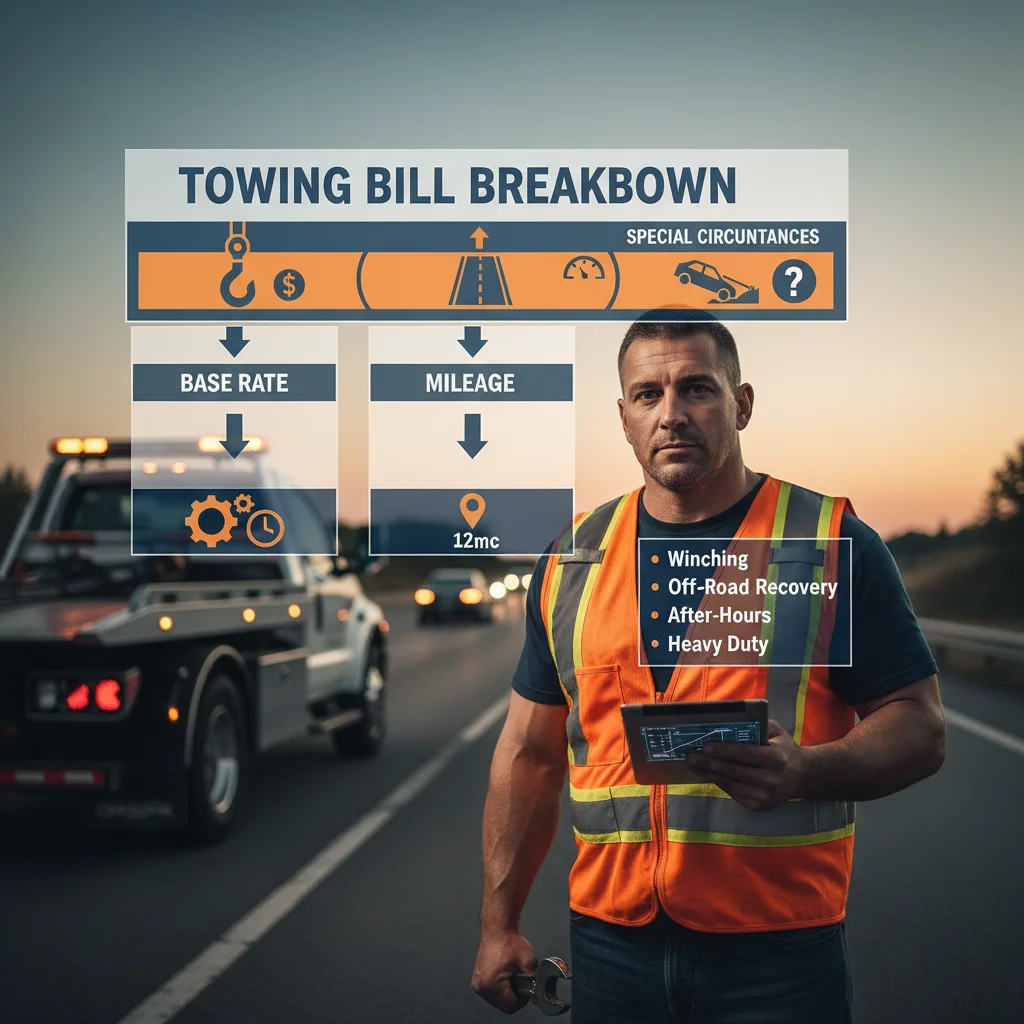
The foundation of any towing bill is the “hook-up fee,” also known as the base rate or minimum charge. This is the flat fee you pay just for the service to be dispatched and initiated. It’s important to understand this isn’t just the cost of latching your car to a truck; it covers several essential components of the service.
First, it covers the immediate dispatch. When you call, a dispatcher has to coordinate and send the nearest available driver to your location. Second, it includes the driver’s travel time and fuel to get from their location to you. Whether you’re in Oceanside or El Cajon, a truck has to burn fuel and a driver has to spend time getting there. Finally, the hook-up fee covers the professional labor involved in safely assessing your vehicle and situation, connecting it to the tow truck correctly (whether a flatbed or wheel-lift), and ensuring it’s secure for transport. This process requires skill and experience to prevent any damage to your vehicle.
In San Diego, a standard hook-up fee for a light-duty vehicle during normal business hours typically starts higher than $50. This initial charge covers the basic operational costs before the truck has even moved your car a single mile. It’s the price of getting a professional, properly equipped service to your side.
How per-mile charges add up quickly
After the initial hook-up fee, the next major component of your bill is the mileage charge. Nearly every towing company charges a set rate for each mile they transport your vehicle. This is where a seemingly low initial quote can quickly escalate. The per-mile rate covers the ongoing costs of the tow: fuel, wear and tear on the truck, and the driver’s time for the duration of the trip.
Let’s imagine a common scenario. Your car breaks down in Mission Valley, and your trusted mechanic is 12 miles away in Kearny Mesa. The total cost would be the hook-up fee PLUS the cost of those 12 miles. For example:
- Hook-Up Fee: $95
- Per-Mile Rate: $6.00
- Distance: 12 miles
- Mileage Cost: 12 miles x $6.00/mile = $72
- Total Estimated Cost: $95 + $72 = $167
As you can see, even a relatively short tow across town adds a significant amount to the initial base rate. This is the most common reason why a “$50 tow” is rarely possible for a standard vehicle tow. The only situation where a bill might be that low is for a service like a simple jump-start or a tow of less than a mile, but even that is becoming increasingly rare. Understanding the impact of mileage is critical to having a realistic expectation of the final cost.
What factors determine your final towing bill
The hook-up fee and mileage are just the beginning. Several other factors can influence your final bill, which is why it’s so important to provide detailed information when you call for a quote. A professional dispatcher will ask questions to understand these variables and give you an accurate estimate.
Time and day of service
Calling for a tow at 2 PM on a Tuesday is different from needing one at 3 AM on a Saturday or on a major holiday. After-hours, weekend, and holiday services almost always come with higher rates. This is because companies have to pay their drivers a premium to be on-call and available during these less desirable times.
Your vehicle’s size and type
Towing a compact sedan like a Toyota Corolla is much simpler than towing a Ford F-250 or a large SUV. Heavier vehicles require a more powerful tow truck, and sometimes specialized equipment, which costs more to operate. If you have a specialty vehicle, like a classic car or an all-wheel-drive SUV, you may need a flatbed towing service to avoid drivetrain damage, which can also affect the price.
The situation and location
Where your vehicle is located and what condition it’s in matters. A car with wheels that roll freely in an accessible parking lot is a straightforward job. However, if your vehicle is stuck in a ditch, mud, or sand, it will require a winch-out. If it’s in a parking garage with low clearance or was involved in an accident, the recovery process is more complex and time-consuming. These situations fall under emergency towing and accident recovery, which involves more labor and equipment, increasing the cost. Being on a busy freeway can also add complexity and potential surcharges due to the higher risk involved. The NHTSA offers guidelines for staying safe on the roadside, which is always the first priority.
How to get a clear, upfront towing quote
Now that you understand the components of a towing bill, you can be an empowered customer. The best way to avoid a nasty surprise is to ask the right questions and provide the right information from the very beginning. A reputable towing company will welcome your questions and provide a transparent quote.
When you call for a tow, be prepared to provide the following details:
- Your Precise Location: Give the exact address, cross-streets, or mile marker. “I’m on the I-15 North near the Miramar exit” is much better than “I’m on the freeway.”
- Vehicle Information: Tell them the make, model, and year of your car (e.g., “a 2021 Subaru Forester”). Mention if it’s all-wheel drive.
- The Problem: Describe the car’s condition. Is it simply not starting? Was it in an accident? Are the wheels turned or locked? Can it be put in neutral?
- Destination: Know the full address of where you want the car towed, whether it’s your home, a dealership, or a specific auto repair shop.
Once you’ve provided this information, ask the dispatcher directly: “Based on what I’ve told you, can you give me a total estimated cost for this tow?” An honest company will break down the expected hook-up fee, per-mile rate, and any anticipated special charges. You can learn more about what goes into these calculations by reading our guide on how much a tow truck costs in San Diego. If a company is evasive, only quotes a very low “hook-up” price, or won’t give you a total estimate, it’s a red flag.
So, does a $50 tow exist in 2026?
Let’s be direct: for a standard vehicle tow in San Diego County, a $50 total bill is not a realistic expectation in 2026. The basic operating costs for a licensed and insured towing company, from the truck and fuel to the skilled driver, make it economically impossible. A bill that low might only be possible for a very short, non-emergency tow of a moped during business hours.
While the “$50 tow” is more of a myth than a reality, the search for it speaks to a real need: drivers want affordable, honest service. The best way to find that isn’t by chasing an outdated price point, but by looking for a company committed to transparency.
At Quick Tow SD, we focus on providing fair, competitive pricing. When you call us, our goal is to give you a clear and accurate quote based on your specific situation. We believe that building trust through honesty is more valuable than luring customers with a price that isn’t real. You get a reliable, professional service at a price that is explained to you from the start.
When to call us
When your car won’t start and you need a reliable tow, we’re here to help. Our dispatchers provide clear, upfront quotes based on your specific situation. Call us at (858) 923-5787 for a same-day estimate.