There is no published county cash-pay card. A Class 8 semi tow in San Diego is heavy wrecker work, and recovery is a different job from a straight tow. Quick Tow SD is a referral line. The line takes calls 24/7 and matches you with an independent operator who quotes that total and an arrival estimate for your exact location. Call (858) 923-5787.
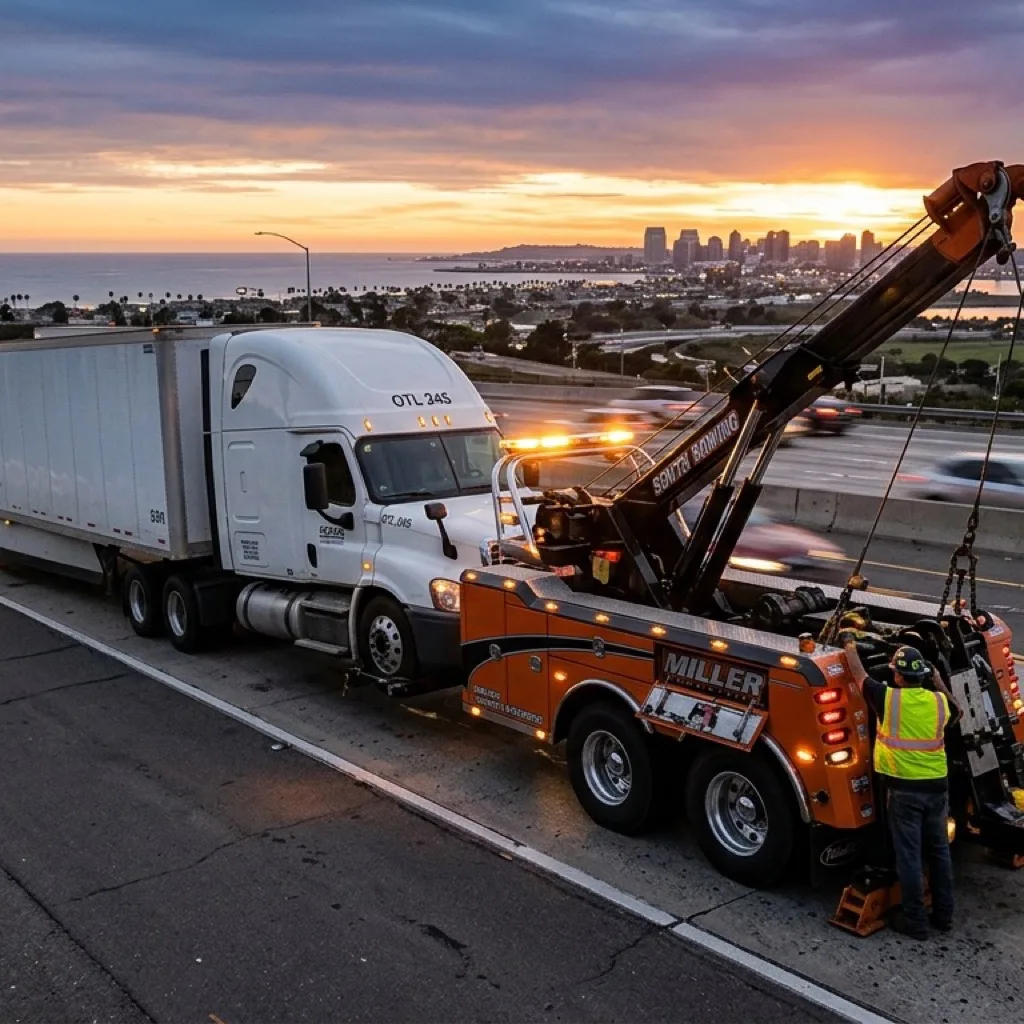
A light-duty flatbed is not the truck for a loaded tractor-trailer. The quote has to name the wrecker class, whether the rig is upright, and the drop. This page does not invent a cash-pay rate card. It tells you what to ask so the operator taking the job can put one written total on that pin.
How much does it cost to tow a semi truck in San Diego?
There is no published county cash-pay card for a consensual heavy-duty tow. Operators usually quote a hook-up plus miles for a straight tow, then extra time and extra trucks if the scene is a recovery. This page does not publish those numbers.
Ask the independent operator who takes the job:
- Hook-up. Dispatch, travel to the pin, and the work of getting a Class 8 wrecker under the rig.
- Included miles. How far is inside that hook-up before extra miles start.
- Per-mile start. When loaded miles begin, and that they are pickup to drop-off, not the wrecker’s empty run.
- Truck class. Confirm it is a heavy wrecker or rotator rated for the load, not a medium-duty truck quoted as if it were the same job.
- Recovery vs straight tow. Upright on pavement is one product. Jackknifed, rolled, or off the shoulder is another.
- One written total. Hook-up, miles, hour, and recovery in a single figure that still holds when the wrecker is loaded.
Name the pin. A tractor-trailer stalled on I-15 near Miramar headed to a shop in Kearny Mesa is a short loaded run. A rig down near Otay Mesa headed to a fleet shop in Oceanside is a longer one. A jackknife on I-5 that needs a rotator before it can even hook is recovery first, then the tow. Those are three different quotes. The operator quotes an arrival estimate for that exact location.
Why semi truck towing costs more than a car tow
A loaded Class 8 tractor-trailer can weigh up to 80,000 pounds GVWR. Moving it takes a heavy wrecker or rotator rated for that load, not the light-duty flatbed that handles cars. That equipment costs more to buy, insure, and run, and not every operator in the county has it. When you compare this to a standard tow truck cost in San Diego, the gap is the machinery on scene, not a markup on a car hook.
There’s also liability. A downed rig on a freeway shoulder is a live hazard, often carrying freight worth more than the truck. The operator has to secure the load, protect traffic, and move an oversized vehicle without damaging it. That skill and exposure sit inside the quote. Ask whether they are already in the written total.
What a heavy-duty quote should include
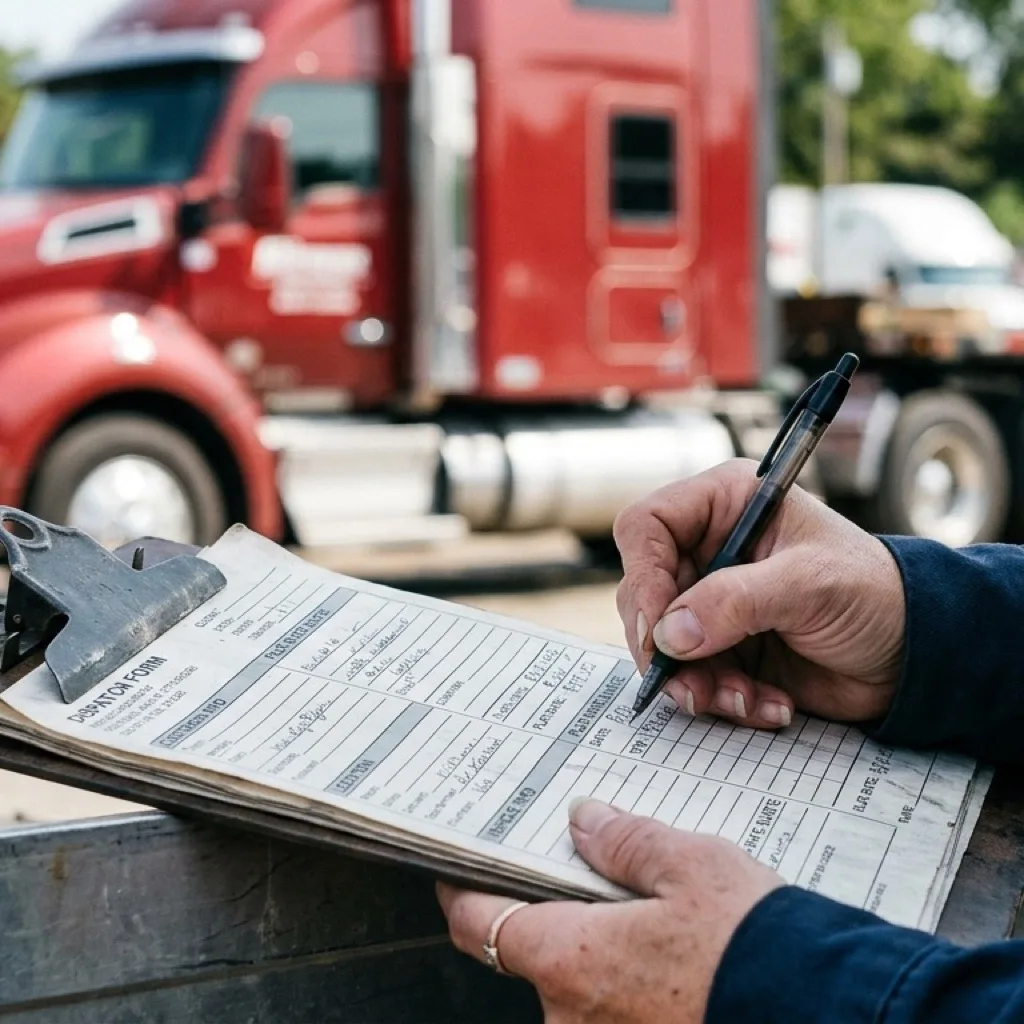
A trustworthy heavy-duty quote is itemized, then collapsed into one number. Before you agree to anything, have the operator confirm:
- The hook-up, and exactly what it covers.
- The per-mile start, and whether extra miles begin at pickup or after included miles.
- Recovery or winch work, quoted as time on scene with an honest estimate of hours, not hidden in a low hook-up.
- The all-in total for your specific pickup and drop-off.
Give the exact location, the truck’s weight class, axle count, and whether it’s upright or off the road. A real heavy-duty operator can turn that into one written total on the phone. If a company will not quote until the wrecker is already on scene, that is the quote: there isn’t one. A rate that sounds like a car tow is a warning, because a Class 8 wrecker is a different truck.
Recovery vs. a straight tow: the biggest cost swing
The single largest variable in a semi towing bill is whether the job is a tow or a recovery. A straight tow means the rig is upright, on a shoulder or in a lot, ready to hook. A recovery means it has to be righted, winched, or lifted before it can move.
Recovery is often billed as time on scene because no one can predict it from a phone photo. A rig that slid into a ditch off SR-78 might take one wrecker. A rollover on I-8 with spilled freight might take a rotator, extra trucks, and a cleanup crew. This is the same equipment covered in our guide to semi truck and big rig towing in San Diego, and it’s why a recovery quote is a range until the operator sees the pin. An honest operator says that up front instead of hiding it in a lowball hook-up.
Why San Diego freight traffic drives demand
San Diego runs heavy freight around the clock. I-5, I-15, I-8, and I-805 carry trucks between the border, the port, and the rest of Southern California, and the Otay Mesa port of entry pushes commercial rigs through the county at all hours. When one goes down, it blocks a lane and racks up freight delays fast, so the arrival estimate matters as much as the total.
That’s why a 24/7 referral line is part of the value, not an add-on. A rig stuck at 2 a.m. on I-15 cannot wait for business hours. Across the county, from heavy-duty towing in Kearny Mesa to the border crossings, the job is the same: match an independent operator with a wrecker rated for the load, and get the number in writing before it rolls.
What raises the final bill
Several factors can move a heavy-duty tow. Ask whether each one is already inside the written total:
- After-hours and weekends. Some operators charge more; some hold the same number 24/7. Ask.
- Weight and axle count. A fully loaded triple-axle rig is a different pull than an empty tractor.
- Access. A truck wedged under a low overpass or down an embankment needs specialized equipment and more time.
- Freight handling. If cargo has to be offloaded or secured before the tow, that is added labor.
- Distance and destination. A tow to a shop across the county costs more than one across town, because loaded miles on a heavy wrecker are part of the quote.
This page does not invent a county average or a year-over-year hike. The operator who takes the job sets the number for this pin, this hour, and this class of wrecker.
When to call
When a rig goes down in San Diego, you need two things: a heavy wrecker that can actually handle the load, and a clear number before it rolls. Quick Tow SD is a referral line. The line takes calls 24/7 and matches you with an independent operator who quotes one written total and an arrival estimate for your exact location.
Whether it’s a straight tow off the shoulder or a full recovery, you get that total from the operator taking the job. For a broader look at how quotes are built across every kind of tow, see our guide to tow cost in San Diego, and for coverage across the county, our towing service across San Diego County.
Call (858) 923-5787, or request a written quote for scheduled fleet work.
Frequently asked questions
How much does it cost to tow a semi truck in San Diego?
There is no published county cash-pay card. A standard heavy-duty tow is usually hook-up plus loaded miles for an upright Class 8 rig. A recovery, where the truck is jackknifed or off the road, is a different product and is often quoted as time on scene before the tow even starts. Ask for one written total for this pin.
Why is towing a semi truck so much more expensive than towing a car?
Equipment and risk. A loaded Class 8 rig weighs up to 80,000 pounds and needs a heavy wrecker or rotator, not the light-duty flatbed that tows cars. That machinery costs more to buy, insure, and run, and a downed rig on a freeway is a live hazard often carrying valuable freight. Those costs sit in the quote. This page does not publish a car-to-semi dollar comparison.
What’s the difference between a semi tow and a recovery?
A tow means the rig is upright and ready to hook. A recovery means it has to be winched, righted, or lifted before it can move, which is often billed as time on scene because the time isn’t predictable. Recovery is the biggest single swing in a heavy-duty bill, so a good operator quotes it as a range and explains it up front.
Can I get a heavy-duty towing quote over the phone?
Yes. Give the dispatcher the exact location, the truck’s weight class, and whether it’s upright or off the road, and a real heavy-duty operator can turn that into one written total. If a company refuses to quote until the wrecker is already on scene, treat it as a warning sign.
Do heavy-duty tows cost more at night or on weekends?
Not always. Some operators hold the same number 24/7. Others add for nights, weekends, or holidays. Since freight moves around the clock in San Diego, ask the dispatcher to confirm the hour is already inside the written total.
Need a heavy-duty tow right now? The line takes calls 24/7 and matches you with an independent operator running a heavy wrecker rated for Class 8 loads, across Escondido, Oceanside, Chula Vista, El Cajon, and every freight corridor in the county. Call (858) 923-5787 or request a written quote for scheduled fleet work.