A rusting sedan has been sitting in spot 14 for three weeks. The tags expired in January. A resident filed a complaint, and now you’re the one who has to do something about it. Knowing what you’re legally allowed to do, and what could expose you to liability, makes all the difference.
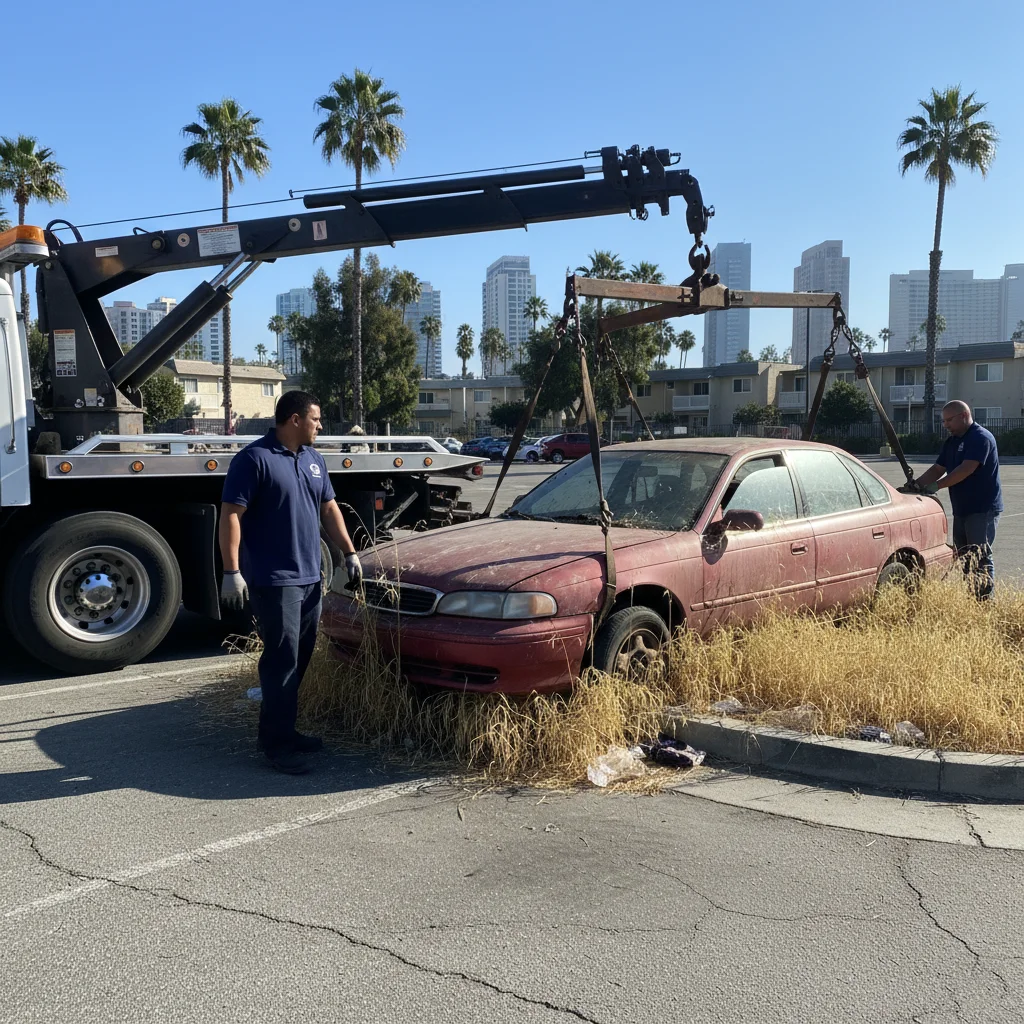
When a vehicle legally counts as abandoned in California
“Abandoned” is a looser word than most property managers expect. CVC 22658 doesn’t define a vehicle as abandoned after a set number of hours on private property. What it does is give you four alternative grounds to remove one, and two of them fit the classic abandoned-car scenario: a vehicle that was issued a notice of parking violation 96 or more hours ago, or a vehicle missing an engine, transmission, wheels, tires, doors, windshield, or another major part needed to drive safely, 24 or more hours after you notify local traffic law enforcement.
The visible signs people associate with abandonment, flat tires, missing plates, expired tags, accumulated debris, are useful evidence. They aren’t themselves a legal definition.
On public streets, the bar is 72 hours of continuous parking. But as an HOA board member or landlord, you’re dealing with private property, so the 24-hour rule is the one that matters most to you.
A few things that don’t automatically make a vehicle abandoned:
- An expired registration sticker alone (though it’s often a clue)
- A car parked slightly over the line
- A vehicle belonging to a unit in arrears, owing rent doesn’t strip someone of their property rights
The distinction matters because acting too soon can expose you to a civil claim. Acting too late, and a junk car becomes a liability: it leaks fluids, attracts break-ins, and takes up a space a paying resident needs.
The California DMV has detailed guidance on what qualifies a vehicle for removal and the state-level process for reporting. It’s worth bookmarking if you manage multiple properties.
What property managers can and can’t do under CVC 22658
California Vehicle Code 22658 is the statute that gives private property owners the authority to have vehicles towed without calling the police first. It also sets firm limits on how that authority is used. We wrote a full breakdown in our CVC 22658 guide, read that if you want the deep dive, but here’s the operational summary.
You can:
- Authorize a licensed tow operator to remove a vehicle that violates posted parking rules
- Have a vehicle towed immediately if it blocks a fire lane, driveway, or accessibility ramp
- Hire a private towing company for abandoned vehicle removal without a police report, as long as your property has the required signage
You can’t:
- Tow a vehicle yourself with personal equipment
- Remove a vehicle because you simply don’t recognize it
- Authorize a tow without proper signage in place, every entrance used by the public must have a compliant sign
- Accept payment or kickbacks from a tow company in exchange for referrals (that’s explicitly prohibited by CVC 22658)
Our private property towing service operates strictly within these rules. We document everything before we hook up, and we won’t touch a vehicle that doesn’t meet the threshold.
One more thing: if your property doesn’t have compliant signage, a towed vehicle owner can sue to recover their tow and storage fees. Get the signs right before you call anyone.
Required notices, photos, and waiting periods
This is where most property managers slip up. The paperwork isn’t complicated, but it has to be done in the right order.
Before the tow
Before you remove a long-sitting vehicle, establish which ground you’re towing on and build the record for it. In practice that means:
- Running the plate through DMV or asking local law enforcement to do so
- If you’re relying on the 96-hour ground, issuing and documenting the parking violation notice, then waiting out the clock. If you’re relying on the inoperable-vehicle ground, notifying local traffic law enforcement and waiting 24 hours. Some local ordinances add their own notice steps, so check your city’s.
- Photographing the vehicle, any notice affixed, the posted signage, and the location within the property
That photo set is your protection. If an owner disputes the tow, those images show which ground applied, that the clock ran, and that the signage was in place.
Emergency exceptions
If the vehicle is blocking a fire lane, a marked accessible space, or a driveway, you can authorize an immediate tow without the waiting period. Document it the same way, photos first, always.
After the tow
Within one hour of the tow being authorized, the local traffic law enforcement agency must be notified, by telephone or the fastest available means. That notification protects you as the property manager, too. It’s how the vehicle owner locates their car instead of reporting it stolen.
We handle the post-tow notification as part of every job. You don’t need to track that step separately when you work with us.

What we handle vs what the city handles
This is one of the most common questions we get from property managers. The short answer: private property is yours to manage, public streets belong to the city.
Quick Tow handles:
- Abandoned vehicle removal from HOA lots, apartment complexes, strip malls, and commercial parking structures
- Vehicles that are on your private property without authorization
- Junk cars left behind by former tenants, our junk car removal service includes coordinating title paperwork when the registered owner can’t be located
- Fleet-scale arrangements for properties that need regular enforcement
The city or county handles:
- Vehicles abandoned on public streets or in public parking lots
- Vehicles reported to 311 or San Diego’s online complaint portal
- Enforcement on city-owned property
If a car is straddling the line, partly on your lot, partly in a red zone on a public street, call us and we’ll figure out the right approach. San Diego County’s roads department handles some of the unincorporated areas, which adds a layer of complexity for rural or edge-of-city properties.
The overlap can be confusing, but the rule of thumb is: if wheels are on your property and you have authority over that property, you have options.
Costs and who pays for removal
The tow itself is typically charged to the vehicle owner, not to you as the property manager. Once a vehicle is towed, the owner pays the tow and daily storage fees to recover it. If no one claims the vehicle, it goes through a lien sale process.
Here’s where the numbers land in San Diego right now:
- Tow fee: typically $250–$400 for a standard passenger vehicle
- Storage: $50–$75 per day at a licensed facility
- Lien sale processing: varies; tow companies handle this if the vehicle is unclaimed
As the property manager or HOA, your direct cost is usually $0, unless you’ve agreed to absorb it as part of a bulk or standing arrangement. Some HOAs do pay a flat monthly fee for consistent enforcement; that’s a separate conversation.
What you should never do is negotiate an arrangement where the tow company pays you per vehicle towed. CVC 22658 explicitly prohibits those referral arrangements, and violations can expose your association or property management company to fines and civil liability.
For more detail on what towing actually costs in this county, our abandoned vehicle removal cost breakdown covers the fee schedule in plain language.
How to set up a standing removal arrangement
If you manage a large complex or multiple properties, a reactive approach, calling every time a complaint comes in, gets old fast. A standing arrangement with a licensed tow operator is cleaner.
Here’s what that looks like in practice:
Sign a property authorization agreement. This is a written contract that authorizes the tow operator to remove vehicles that meet defined criteria (blocking fire lanes, expired tags past a certain threshold, no permit displayed, etc.) without calling you for each individual job. You set the rules; they execute.
Audit your signage first. Before you sign anything, walk every entrance with the tow operator and confirm your signs meet CVC 22658 specifications, minimum size, required language, posted height. If signs are missing or wrong, fix them before enforcement starts.
Define the scope. Some property managers want tows on sight for fire lane violations but prefer a 72-hour notice window for general abandoned vehicles. Put that in writing.
Get reporting. A good tow operator gives you a log of every vehicle removed, date, time, license plate, photos, law enforcement notification number. That documentation protects you if an owner disputes the tow or threatens legal action.
We work with HOA boards and property management companies across San Diego County on exactly this model. If your current situation is a one-call-at-a-time headache, a standing arrangement is worth a conversation.
When to call us
If a vehicle on your property is blocking access, creating a safety hazard, or has clearly been abandoned, you need a professional towing operator, not a DIY solution and not a call to 311 (that’s for public streets). Our abandoned vehicle removal in San Diego is fully compliant with CVC 22658, and we handle the notification requirements so you don’t have to track them yourself. Call us at (858) 923-5787 for a same-day estimate.