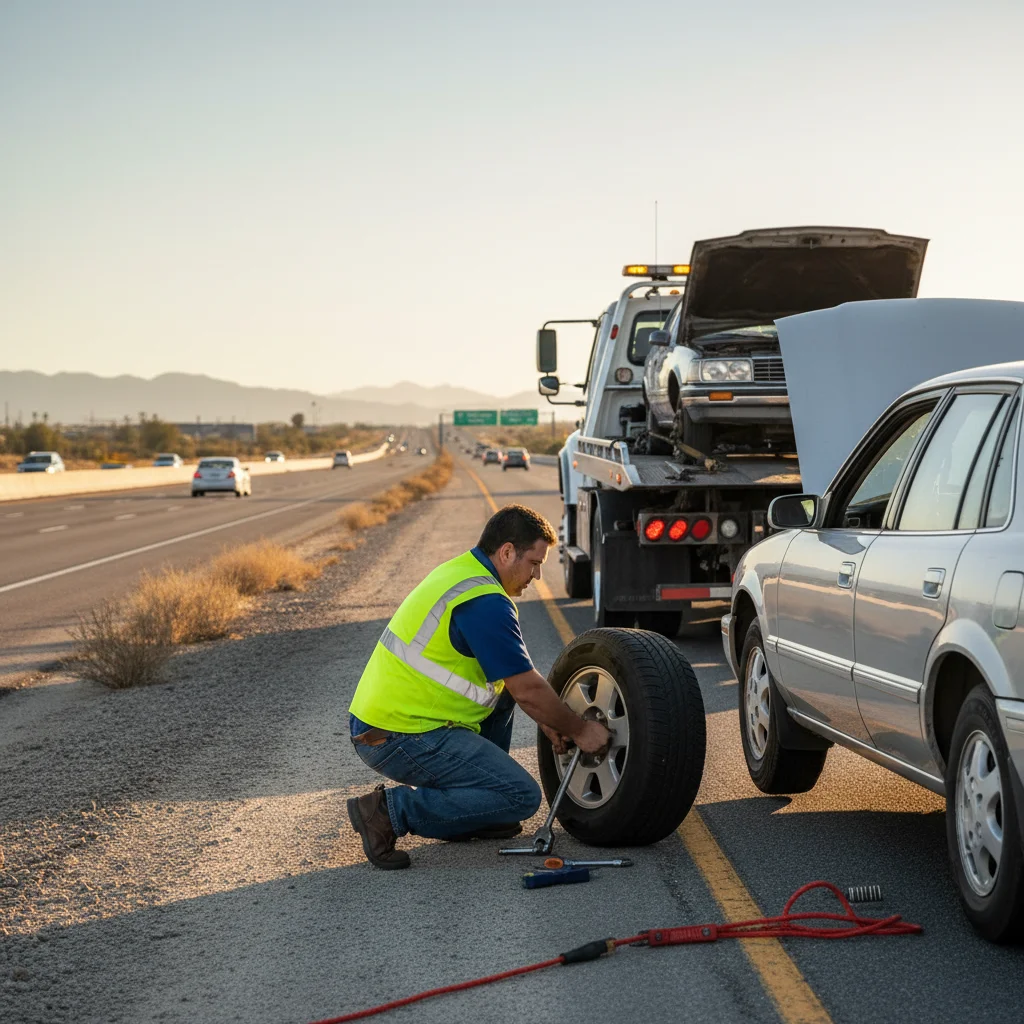
If your car is overheating, pull off the road as soon as it’s safe, turn the engine off, and let it cool before you touch anything under the hood. Driving on a hot engine is how a cheap fix turns into a cracked head and a four-figure repair bill. Here’s what to do, what to skip, and how to tell when it’s time to stop driving and call a tow.
Do this first, in order:
- Turn off the air conditioning and turn the heater on full blast. It pulls heat off the engine and buys you a minute to find a safe spot.
- Get to the shoulder or an exit and park out of traffic.
- Shut the engine off and pop the hood release, but leave the hood down until things cool.
- Wait at least 20 to 30 minutes before opening the hood or checking coolant.
What should you do the moment your car overheats?
The temperature gauge swinging toward red, or steam from under the hood, means the engine is running hotter than it can handle. The goal is to lower that heat and stop adding more.
Switch the AC off right away. The air conditioning puts a heavy load on the engine, and in San Diego summer traffic that load is often what tips a marginal cooling system over the edge. Then turn the cabin heater to full. It feels backwards on a hot day, but the heater core acts like a second radiator and dumps engine heat into the cabin instead of the engine.
Next, get off the road. A shoulder, an exit ramp, a parking lot, anywhere you’re clear of moving traffic. Once you’re stopped, shut the engine down. Every minute it idles hot is a minute it keeps cooking. Put your hazards on, and if you carry a reflective triangle, set it out behind you. The same shoulder safety rules apply here as in what to do if your car breaks down on the freeway.
What you should never do when your engine overheats
A few moves make an overheating engine worse, and one of them can hurt you.
- Don’t open the radiator cap while it’s hot. A hot cooling system is pressurized, and cracking the cap can blast scalding coolant and steam straight up. Wait until the engine is cool to the touch.
- Don’t keep driving to “make it home.” Heat warps metal. Pushing a hot engine another few miles is how a low-coolant problem becomes a blown head gasket. The tow is far cheaper than the rebuild.
- Don’t pour cold water on a hot engine. The fast temperature swing can crack the block or the cylinder head. If you have coolant or water, add it only after the engine has cooled down.
- Don’t ignore it because the gauge dropped. If the needle climbed once, it’ll climb again. A temporary dip doesn’t mean the underlying problem is fixed.
Why do cars overheat in San Diego?
San Diego puts a few specific stresses on a cooling system, and they cluster in summer.
Inland and desert heat is the big one. A car that runs fine along the coast can overheat climbing the I-8 grade toward Alpine and the East County foothills, or sitting in stop-and-go on the 5 and 15 during a heat wave. Out in Borrego Springs and the Anza-Borrego backcountry, summer afternoons run well over 100 degrees, and a cooling system with any weakness shows it there first.
Under the hood, the usual culprits are low coolant from a slow leak, a failing water pump, a stuck thermostat, or a radiator that’s clogged or losing fan function. Older cars and anything towing a trailer or loaded heavy run hotter to begin with. None of that is unique to here, but San Diego’s heat turns a small cooling weakness into a roadside stop a lot faster than a mild climate would.
When does an overheating car need a tow?
Sometimes a cool-down and a coolant top-off get you moving again. Other times, driving the car is the expensive mistake. Call for a tow if any of these are true:
- Steam or coolant is coming from under the hood.
- The gauge goes back into the red within a few minutes of restarting.
- You can see coolant pooled under the car or smell a sweet, hot smell.
- The engine won’t restart, or it runs rough and loses power after overheating.
Any one of those points to a real cooling failure, not a fluke. A dead or overheating engine almost always rides on a flatbed so the wheels and drivetrain aren’t dragged, and a local operator can route the right truck. This is the kind of call our emergency towing and roadside assistance services handle every summer across San Diego County.
How a tow works if you’re stranded in the heat
You don’t need a membership or a motor club to get a truck. A local provider works pay-per-use: you call, you get a flat quote, and a truck heads your way. Tell dispatch where you are, whether you have steam or a coolant leak, and where the car needs to go, a shop or your home.
To get help now, call (858) 923-5787. We’ll quote the job before anyone rolls, send a flatbed if the engine’s done for the day, and get you and the car off the hot shoulder. For a sense of what a tow runs locally, see how much a tow costs in San Diego.
FAQ
Can I keep driving if my car is overheating? No. Even a short drive on a hot engine risks warping metal and blowing the head gasket, which costs far more than a tow. Pull over, shut it off, and let it cool. If the gauge climbs again after a cool-down, call for a tow instead of driving.
How long should I wait before opening the hood? At least 20 to 30 minutes after the engine is off. The cooling system stays pressurized and dangerously hot well after you stop, so opening the radiator cap early can spray scalding coolant. Wait until the engine is cool to the touch.
Why does my car overheat in stop-and-go traffic but not on the highway? At highway speed, air flows through the radiator and cools the engine. In stop-and-go traffic that airflow drops, and the engine relies on the cooling fan. If the fan, water pump, or coolant level is marginal, slow San Diego traffic on a hot day is where it shows up.
Is it safe to add water instead of coolant? In a pinch, plain water can get you to a shop, but only add it once the engine has cooled. Never pour cold water into a hot engine, the temperature swing can crack the block. Get the proper coolant mix back in as soon as you can.
Should I call a tow or roadside assistance for an overheating car? If the car cooled down and runs normally, you may make it to a shop. If there’s steam, a coolant leak, or the gauge climbs right back into the red, it needs a tow on a flatbed. Call (858) 923-5787 and we’ll tell you which one your situation calls for.