It’s a moment every driver dreads. You’ve finished your shopping, you turn the key (or press the button), and… nothing. That silence, or a weak click, is one of the most frustrating sounds a car owner can hear. When your car won’t start in a parking lot, it’s easy to feel stranded and overwhelmed, but a few quick checks can often identify, and sometimes even fix, the problem right away.
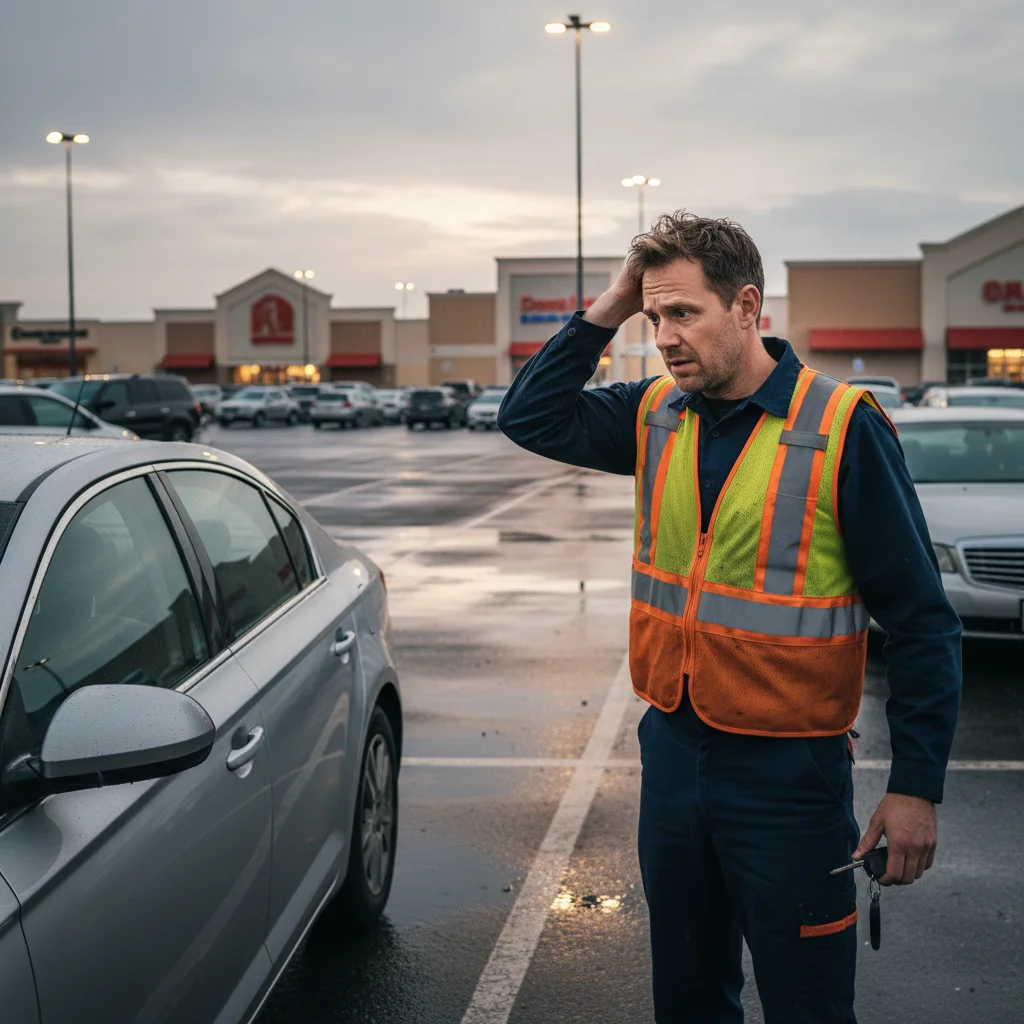
Don’t panic: you’re in a relatively safe place
First, take a deep breath. While it’s incredibly inconvenient, having your car die in a parking lot is much safer than breaking down on the shoulder of I-5 or the 805 freeway. You’re not in the path of fast-moving traffic, you have stable ground, and you can take a moment to think without the pressure of other cars speeding past.
This is a key advantage. You have time to safely assess the situation. According to the NHTSA’s guidelines on roadside safety, staying away from active traffic lanes is the most important step after a breakdown. You’ve already accomplished that. You can stand outside the vehicle, make a phone call, or look under the hood without immediate danger.
Instead of letting stress take over, view this as a troubleshooting opportunity. Most of the time, a car that won’t start in a parking lot is suffering from a very common and fixable issue. Running through a simple checklist can save you time, money, and the headache of calling for help prematurely.
The number one culprit: a dead battery
The most common reason your car is dead in a parking lot is a drained or failed battery. Your car’s battery powers the starter motor and all the electronics, and without enough juice, nothing can happen.
Here are the classic signs of a dead battery:
- No lights, no sounds: You turn the key and absolutely nothing happens. The dashboard doesn’t light up, the radio is silent, and there’s no cranking sound.
- Dim interior lights: The dome light or dashboard lights are very weak and might flicker when you try to start the car.
- A slow, groaning crank: The engine tries to turn over but sounds sluggish and weak, as if it’s struggling. This “rrr-rrr-rrr” sound is the starter not getting enough power.
- A rapid clicking noise: This is a very common sign. We’ll cover it more in the next section.
What causes a dead battery? It could be something simple, like leaving your headlights or an interior light on. It could also be that the battery is old. In San Diego’s mild but consistently warm climate, car batteries often have a lifespan of only 3-5 years. Extreme cold is tough on batteries, but so is sustained heat. A faulty alternator, which is supposed to recharge the battery while you drive, could also be the problem.
If you have jumper cables and another vehicle, a jump start might get you going. If you attempt this, it’s crucial you know how to jump start a car safely to avoid damaging your vehicle’s electronics. For most people, a professional jump start service is the quickest and safest bet.
Listen for clicks: what the sounds mean
Your car often gives you auditory clues about what’s wrong. Paying close attention to the sound it makes (or doesn’t make) when you try to start it can help you diagnose the issue.
- A single, solid click: If you hear one loud click when you turn the key and then silence, the problem is likely not the battery. This sound often indicates that electricity is reaching the starter solenoid, but the starter motor itself isn’t engaging to turn the engine over. This could be a failed starter or a bad connection. Trying to start it repeatedly won’t help and could damage the component further.
- Rapid, fast clicking: A series of quick clicks that sound like a machine gun is almost always a sign of a low or dead battery. The clicking is the sound of the starter solenoid engaging and disengaging rapidly. It has just enough power to try to start, but not enough to actually turn the engine. This is a very clear signal that you need a jump start.
- A grinding or whining noise: If you hear a high-pitched whine or a metallic grinding sound when you turn the key, stop immediately. This could mean the starter gear is not meshing correctly with the engine’s flywheel, or the starter motor has failed completely. Continuing to try could cause serious and expensive damage to the engine.
- No sound at all: Complete silence usually points back to the battery. It could mean the battery is completely dead, a terminal is loose or corroded, or there’s an issue with the ignition switch itself.

Check your gear shifter and steering wheel
Before you assume the worst, check two simple things that can prevent a car from starting. These are incredibly common oversights, especially when you’re in a hurry.
First, check your gear shifter. For safety, all automatic transmission cars are designed with a “neutral safety switch.” This switch prevents the engine from starting while the car is in gear, which would cause it to lurch forward or backward unexpectedly. Your car will only start when the gear shifter is in Park (P) or Neutral (N).
Sometimes, the shifter might look like it’s in Park but isn’t fully engaged.
- The fix: Firmly press the brake pedal and push the shifter all the way into the Park position. You might even try shifting it to Neutral and then back to Park to be sure. Then, try starting the car again. This simple jiggle fixes the problem more often than you’d think.
Second, check your steering wheel. Many vehicles have an anti-theft steering wheel lock. If you turned the wheel after shutting off the engine, the steering column can lock in place. When this happens, it also locks the ignition and won’t allow you to turn the key.
- The fix: This can feel like the key is stuck. To release the lock, you need to relieve the pressure on the steering column. Firmly jiggle the steering wheel back and forth with one hand while gently turning the key with the other. You’ll feel a click as the lock disengages, and the key should then turn freely.
Could it be the key fob?
For cars with push-button start systems, the problem might not be with the car at all, but with the key fob in your pocket. These fobs use a small battery to transmit a signal to your car, and when that battery dies, the car can’t detect the key and won’t start.
Here’s what to do if your car won’t start and you suspect a key fob issue:
- Look for a low battery warning: Many cars will display a message on the dashboard like “Key Fob Battery Low” or “Key Not Detected” for weeks before the battery dies completely.
- Use the manual override: Car manufacturers know these batteries fail, so there’s almost always a backup method. Check your owner’s manual for the specific procedure. Often, you need to either press the push-to-start button with the key fob itself or place the fob in a designated slot in the center console or steering column. This allows the car’s immobilizer system to read the fob’s internal chip directly, even with a dead battery.
- Check for interference: In rare cases, strong radio frequency interference in a crowded parking lot can disrupt the signal between your fob and your car. Try holding the fob in a different position or stepping out of the car and trying again.
If the manual override works, your car will start, but make sure to replace the fob’s battery (usually a CR2032 or similar coin battery) as soon as possible.
When to stop troubleshooting and call for a jump start or tow
If you’ve run through this checklist and your car still won’t turn over, it’s time to call for professional help. Continuing to crank the engine can drain any remaining battery power and potentially damage the starter motor.
It’s time to call when:
- A jump start doesn’t work. This suggests the problem is more than a simple dead battery, such as a bad alternator or a deeper electrical issue.
- You hear any grinding or whining noises.
- You smell fuel or see any smoke.
- Your lights and radio work perfectly, but the car won’t crank at all (often a starter or solenoid issue).
- You simply don’t feel comfortable diagnosing the problem yourself.
Quick Tow SD’s professional roadside assistance team is equipped to handle these exact situations. The technicians we send can quickly diagnose the problem, provide a professional jump start, or arrange for a safe tow to your trusted mechanic anywhere in San Diego County.
When to call us
If you’ve run through these checks and your car still won’t start, don’t waste any more time or risk further damage. Our experienced San Diego team is ready to provide a quick jump start or a safe tow to your mechanic. We’ll get you out of that parking lot and on your way.
Call us at (858) 923-5787 for a same-day estimate.