Car insurance only covers towing if you added roadside/towing coverage to your policy, or if the tow is tied to a covered claim. This post is about a regular breakdown, a dead battery, a flat tire, a car that just won’t start in a parking lot. If you’re asking about who pays for the tow after a crash, that’s a different question with a different answer, covered in who pays for a tow after an accident. Here, we’re talking about the optional add-on that pays for a tow when nobody hit you and nothing is technically “damaged,” your car just stopped working.
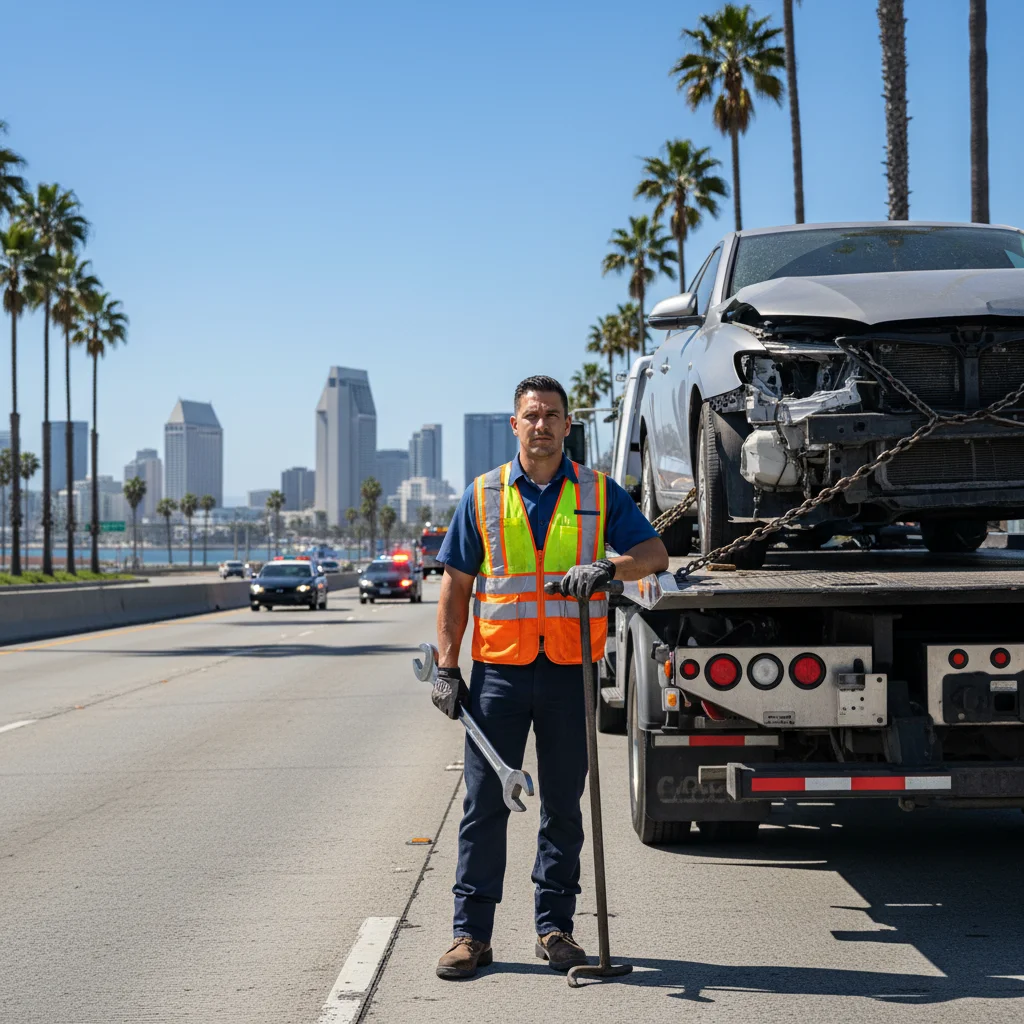
Most California drivers assume towing is baked into their policy somewhere. It’s usually not, unless they specifically added it. Here’s how it actually works.
Towing coverage is an add-on, not a default
Standard car insurance in California, liability, comprehensive, and collision, doesn’t automatically include a tow for a breakdown. What most insurers offer is a separate line item, often called “roadside assistance” or “towing and labor coverage,” that you add to your policy for an extra premium.
This add-on is cheap. It commonly runs somewhere in the range of $10 to $30 a year per vehicle, though the exact price depends on your insurer and your driving record. Check your own policy’s declarations page for the actual number. Insurers price this differently, and quoting one company’s rate as universal would be misleading.
What the roadside/towing add-on typically covers
When you have this coverage, a breakdown tow is usually reimbursed or dispatched through the insurer’s roadside network. Typical inclusions:
- A tow to the nearest qualified repair shop
- Jump starts for a dead battery
- Flat tire changes (if you have a usable spare)
- Lockout service if you’re locked out of your own car
- Limited fuel delivery if you run out of gas
The catch is almost always a cap. Insurers commonly limit either the tow distance (say, 15 to 25 miles) or the dollar amount reimbursed per incident (often somewhere in the $75 to $150 range), sometimes both. Go past the cap and you’re paying the difference out of pocket. Some policies also cap how many roadside events you can use per year.
What it doesn’t cover
This is where people get surprised. A few situations that roadside/towing add-on coverage typically does not reach:
- A tow that isn’t tied to your policy’s roadside coverage at all. If you didn’t add it, there’s nothing to claim.
- Comprehensive or collision paying for a routine breakdown tow. Those coverages kick in when there’s a covered claim, like your car was damaged in a collision, hit by another vehicle, or damaged by a covered event (theft, fire, vandalism). A dead battery or a car that won’t start isn’t a “loss” in the insurance sense, so comprehensive and collision generally don’t pay to tow it, even if you carry both.
- Towing after an at-fault or no-fault accident, which usually runs through the claims process differently and often gets folded into repair costs or the other driver’s liability, not the roadside add-on. Again, that’s who pays for a tow after an accident, not this post.
- Impound or police tows. If your car gets impounded, that’s a completely separate cost structure with tow fees, daily storage, and release fees, and insurance generally doesn’t touch it. See what it actually costs to get a car out of impound in San Diego if that’s your situation.
How to actually find out what your policy covers
Don’t guess. Pull up your policy’s declarations page, the summary page that lists your coverages and limits, and look for a line labeled “roadside assistance,” “towing and labor,” or similar. If it’s not listed, you don’t have it, no matter what you assumed when you signed up. If it is listed, note the per-incident dollar cap and any mileage limit before you need it, not while you’re standing next to a dead car.
Comparing the add-on to paying per tow
If you carry the roadside add-on, a breakdown tow inside your mileage and dollar cap is close to free beyond the small annual premium. If you don’t carry it, or you’re outside the cap, you’re paying full price for the tow.
For a straightforward local tow in San Diego, that’s a real number worth knowing ahead of time. Our guide on what a tow truck actually costs in San Diego breaks down typical per-mile and hookup pricing so you’re not caught off guard. It’s also worth comparing membership-style coverage against paying as you go. We laid that comparison out directly in AAA versus pay-per-use towing in San Diego.
The honest bottom line
Roadside/towing coverage is worth having if you drive an older car, commute long distances, or just want one less thing to think about when something goes wrong. It’s cheap, and for most drivers the annual cost is lower than a single uncovered tow. But it’s not automatic, it has caps, and it doesn’t stretch to cover accident tows or impound releases. Check your declarations page, know your cap, and keep a real tow company’s number in your phone for when you’re outside your coverage or don’t have it at all.
If you’re stuck on the side of the road right now and don’t want to sort out insurance paperwork first, give us a call at (858) 923-5787. We’ll get you towed home or to a shop, and you can sort out reimbursement with your insurer afterward. For non-emergency roadside help even without AAA, see our roadside assistance page.