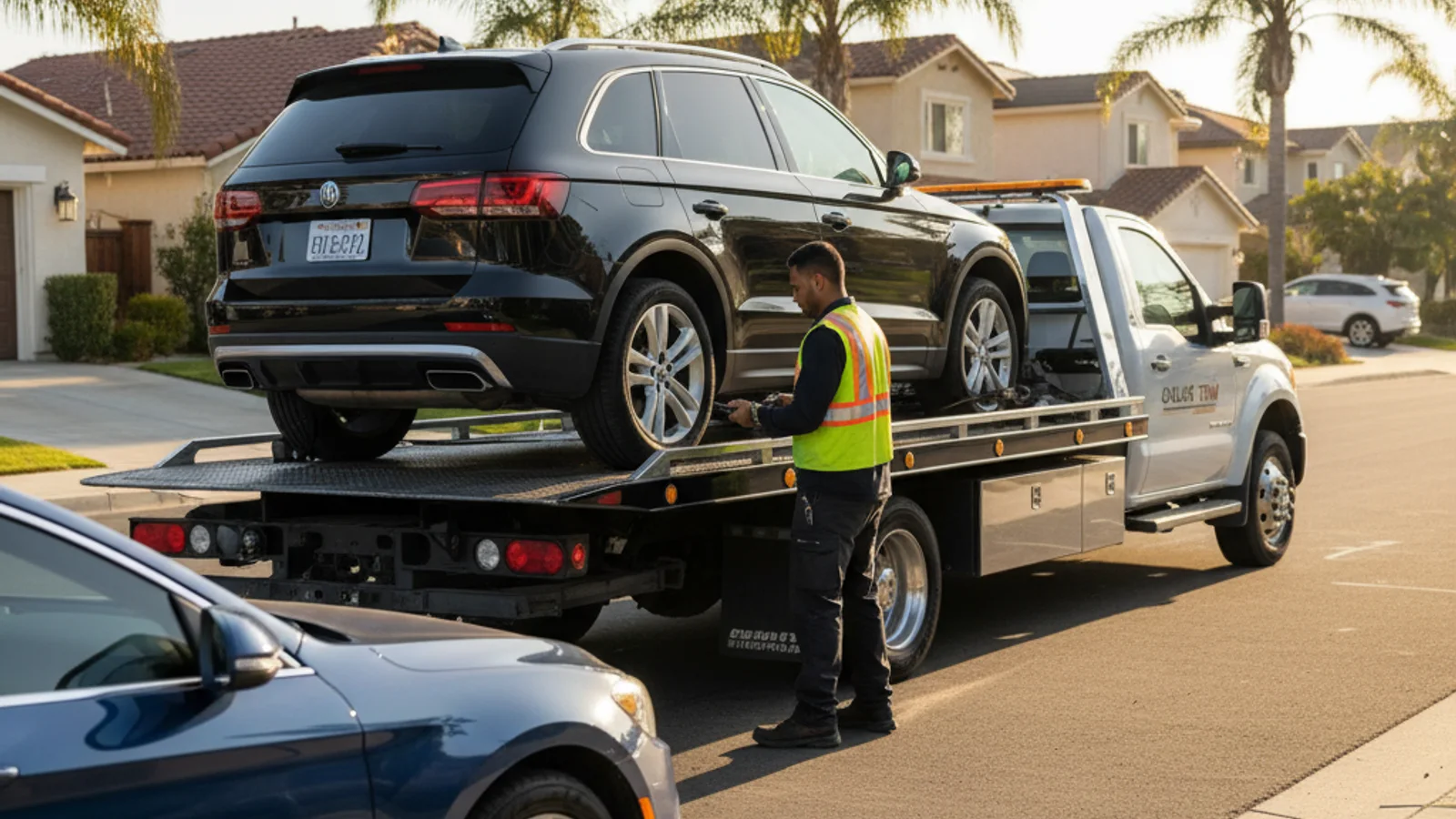
If your vehicle was towed in San Diego, you have specific rights under California law. The towing company cannot hold your vehicle hostage for unpaid storage if they violated process. They cannot refuse a release for an unrelated reason. They cannot charge whatever they want, there are caps. And you can dispute a tow you believe was illegal, sometimes within 24 hours, sometimes with the City directly.
Quick Tow SD has handled towing across all 47 cities in San Diego County since launch, with average arrival times of 30–45 minutes countywide. We’re writing this guide because the single most common call we get is from drivers who don’t know what they’re allowed to do after a tow. Most of them are paying fees they shouldn’t be paying. So here’s the plain-English version of California Vehicle Code 22658 (the private property tow law) plus the City of San Diego’s published guidance, with what to do at each step.
Quick action if your car was just towed: call (858) 923-5787. We don’t do impound retrievals, but our dispatch can usually tell you which yard a vehicle was taken to and what the legal cap on fees should be in your situation. Free over the phone.
TL;DR
- California caps private property towing fees. If you’re being charged more than the published cap, you can dispute it.
- The tow company must release your vehicle within 1 hour of you arriving with payment and ID, during business hours. They cannot make you wait days.
- Private property tows that lack proper signage, proper notice, or proper authorization are illegal under California Vehicle Code 22658. You may be entitled to up to 4x your actual damages.
- For police-initiated tows (DUI, expired registration, accidents), the rules are different, release usually requires a release form from SDPD plus proof of valid registration and insurance.
- You have 60 days to file a poststorage hearing request for any private property tow.
Why was my car towed?
Two main categories. The rules are different for each.
Police-initiated tow. SDPD or CHP ordered the tow. This usually happens after an accident, a DUI arrest, expired registration past 6 months, an unlicensed driver, or a vehicle abandoned in a public-safety hazard. To retrieve, you’ll typically need a release form from the agency that ordered the tow plus current registration and a valid driver’s license. Process is documented on the San Diego Police impound page.
Private property tow under CVC 22658. Apartment complex, HOA, retail parking lot, or shopping center had your vehicle towed. To be legal, the property must have had proper signage at all entrances, the towing must have been authorized by the property owner or manager (not just any tenant), and the tow operator must have notified the local law enforcement agency within 1 hour of the tow.
How do I find my towed car in San Diego?
Three ways:
- Call SDPD non-emergency at (619) 531-2000. Give them your license plate; they can tell you if a police-initiated tow was logged.
- Call the property where the tow happened (apartment, HOA, mall). They should have the tow company’s name on file.
- Call us at (858) 923-5787. We know most of the operating tow yards across SD County and can help you locate where your vehicle was likely taken, even if we didn’t tow it.
If none of those work, your vehicle may not have been towed, it may have been stolen. File a stolen vehicle report at SDPD immediately.
What can a tow company charge me in California?
California publishes maximum allowable fees for private property tows. As of 2026, the typical cap structure looks like:
- Tow charge: capped per the rate posted at the storage facility (which must be visible to the public)
- Daily storage: also capped per posted rate, and the first day must be free in many cases
- Gate fee (for after-hours retrieval): often capped at one half-day storage rate
- Lien sale fee: only applies after 30 days
If the storage facility is not visibly posting their rate schedule where the public can see it, that alone may make their entire fee structure unenforceable.
Note: Police-initiated tows follow a different fee structure set by the City and the contracted tow rotation operators. Those fees are published on the SDPD impound page.
When does the tow company have to release my car?
Under California law, once you’ve paid the legal fees and presented valid identification proving the vehicle is yours, the tow company must release the vehicle within 1 hour during their posted business hours. They cannot make you wait days. They cannot require you to come back tomorrow. They cannot demand “additional” fees not on the posted rate sheet.
If they refuse to release, file a complaint with both:
- The California Bureau of Automotive Repair (for licensing complaints)
- SDPD non-emergency at (619) 531-2000
A documented refusal to release a vehicle is grounds for civil action under CVC 22658(l).
What if my car was towed illegally from private property?
CVC 22658 lays out exactly when a private property tow is legal:
- Signs must be posted at each entrance to the lot, 36 square inches minimum, with the tow operator’s name and phone number
- The signs must have been visible to the public for at least 24 hours before the tow happened
- The property owner (or authorized agent, not any random tenant) must authorize each tow in writing or on-site
- The tow operator must notify local law enforcement within 1 hour of removing the vehicle
- Vehicles can only be towed after at least 1 hour of being parked, unless they’re blocking a fire lane, hydrant, or designated handicapped spot
If any of these were violated, the tow is illegal. Under CVC 22658(l), you may be entitled to recover up to 4x your actual damages from either the property owner OR the tow company.
How to dispute an illegal tow
- Take photos immediately when you arrive to recover the vehicle, signage (or lack of it), where the vehicle was parked, the location relative to the signage.
- Get a written tow receipt. The tow company must provide one showing the time of removal, location, authorizing party, fees, and storage facility.
- Request a poststorage hearing. Send a written request to the tow operator within 60 days of the tow. They must hold the hearing within 48 hours of receiving the request.
- File a complaint with the Bureau of Automotive Repair at https://www.bar.ca.gov.
- Consider small claims court for damages under $10,000, or consult an attorney for higher claims.
What about predatory tow companies?
San Diego has seen multiple investigations into predatory tow operators in the past five years. Common predatory patterns:
- Towing from lots without legal signage and hoping you don’t notice
- Charging fees not on the posted rate sheet
- Refusing release without “additional” cash payments
- Damaging vehicles during tow and refusing to acknowledge
If you suspect a tow operator is operating predatorily, document everything (photos, receipts, names, license plate of the tow truck), file complaints with the Bureau of Automotive Repair AND SDPD, and post your documented experience on review platforms. Predatory operators rely on driver confusion. Documented complaints shut them down.
Quick Tow SD’s pricing standard
We mention this because it’s a category-wide problem and we operate differently:
- Flat-rate quotes given up front, before any work begins
- No bait-and-switch on arrival
- Posted rate sheet for all standard tow types
- 24/7 live dispatch, a real person answers and tells you a real ETA
- Average 30–45 minute arrival countywide
- Bilingual English / Spanish
Call (858) 923-5787 anytime. We’ll quote honestly even if we can’t be the cheapest option.
Frequently asked questions
How long does a tow company have to hold my car before they can sell it?
Under California Civil Code section 3068.1, a tow operator can begin lien sale procedures after 30 days of storage if the registered owner hasn’t paid the fees and recovered the vehicle. Once the lien sale process begins, you have additional rights to redeem the vehicle by paying the full balance plus lien sale costs.
Can a tow company charge a “release fee” or “administrative fee”?
Only if the fee is on their posted rate schedule. If a fee isn’t visibly posted at the storage facility, they generally can’t charge it. Some operators add “release fee,” “gate fee,” or “admin fee” line items that exceed legal caps, dispute these specifically at the poststorage hearing.
What if the tow happened from a handicap-accessible parking spot I was legally using?
If you have a valid disabled placard properly displayed and you were parked in a designated accessible space, a tow under CVC 22658 is generally unlawful. Document the placard display in photos, request the poststorage hearing, and pursue damages.
Do I have to pay before they release the vehicle?
Yes, under most circumstances, the tow company can require payment of legal fees before releasing the vehicle. However, payment does NOT waive your right to dispute the fees at a poststorage hearing or in court. Pay under protest, get the vehicle back, then pursue the dispute.
Can I file an insurance claim for an illegal tow?
Most personal auto policies do not cover towing fees, but if your vehicle was damaged during an illegal tow, comprehensive coverage may apply. More importantly, under CVC 22658(l), the property owner or tow operator may be liable for up to 4x your actual damages including the towing fees themselves.
Last updated: May 13, 2026.
Need help right now? Call Quick Tow SD at (858) 923-5787, 24/7 live dispatch, average 30–45 minute arrival across all 47 SD County cities.
This article is general guidance, not legal advice. For specific legal questions about your tow, consult a California attorney or contact the California Bureau of Automotive Repair.
Related Quick Tow SD pages
- How to get my car back from impound
- Illegal private property tow in California
- How to legally tow a car from private property
- Roadside assistance services
- Private property towing services