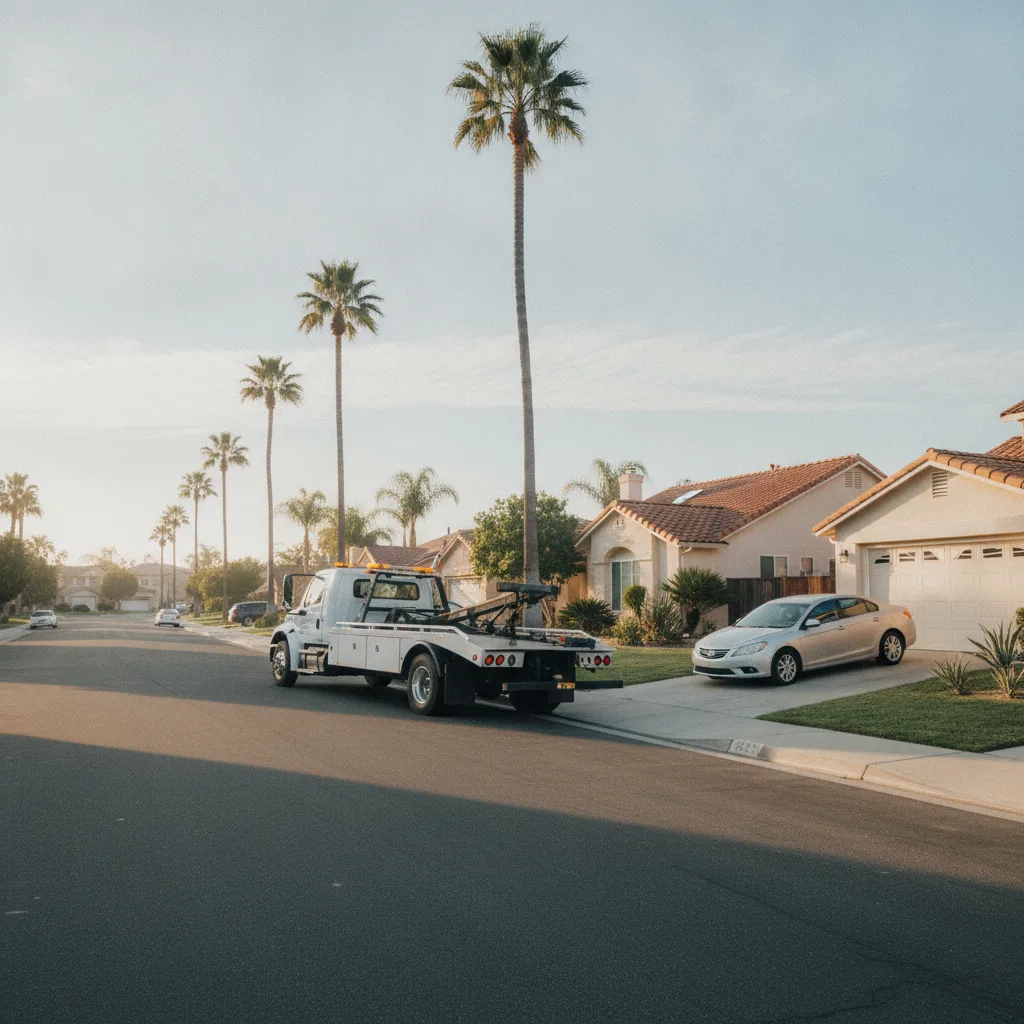
Yes, a repo agent may come onto some private property in California. That does not mean every driveway, garage, yard, or apartment lot is automatically open to repossession.
After default, California Commercial Code section 9609 allows a secured party to take collateral through court proceedings or without court proceedings only if it happens “without breach of the peace.”
The location matters, but so does what the agent does there. An open driveway may be treated differently from a private building or a fenced and locked area. Force, threats, property damage, and unlawful entry can change the analysis.
What California law says about private property
The Commercial Code does not list every location where a vehicle may be taken. It sets the broader rule that a repossession without judicial process must occur without a breach of peace.
The state’s repossession law adds more specific boundaries. Under Business and Professions Code section 7500.1:
- A private building includes a dwelling, outbuilding, or other enclosed structure.
- A secured area includes an area that is both fenced and locked.
Business and Professions Code section 7508.2 prohibits unlawful entry into a private building or secured area without consent from the owner or person in legal possession at the time of repossession. It also prohibits unlawful assault or battery.
The California Bureau of Security and Investigative Services repossession FAQ says agency employees may take vehicles at any time and location only while respecting other laws. They may not enter a private building or secured area unlawfully.
That means “it was on private property” does not settle the question. The type of property, how access was gained, and what occurred during the repossession all matter.
Can a car be repossessed from a driveway or street?
A vehicle parked on a public street is not protected simply because it is near the owner’s home. The repossession must still comply with the breach-of-peace rule and other applicable laws.
An open residential driveway is more complicated. It usually is not a private building. It also may not meet California’s definition of a secured area when it is not both fenced and locked. Still, that does not create unconditional permission for every repossession from every open driveway.
Facts such as barriers, consent, threats, force, damage, and access through another protected space may affect the result. A person reviewing a specific incident should consider the whole event, not just whether the vehicle was visible from the street.
Can a repo agent enter a garage?
A garage may qualify as a private building under California law. An open garage door alone does not establish permission for a repo agent to enter.
A closed garage raises an even clearer access concern. The federal Consumer Financial Protection Bureau’s repossession guidance identifies taking a vehicle from a closed garage without permission as a possible breach-of-peace issue.
Do not assume that an open door makes every entry lawful. Whether an agent entered the structure, remained outside it, had valid consent, or used force can matter. A lawyer or local legal-aid organization can assess those facts.
What about a backyard, fence, or locked gate?
California defines a secured area as one that is both fenced and locked. A fenced and locked backyard or driveway therefore presents a different issue from an unfenced driveway.
A fence by itself does not automatically establish that statutory definition. The gate, lock, property layout, and way the agent entered still matter.
BSIS says repossession agency employees may not break a gate, damage landscaping, or unlawfully enter a private building or secured area. Photograph any damage when it is safe to do so. Do not physically interfere with the repossession or confront the agent.
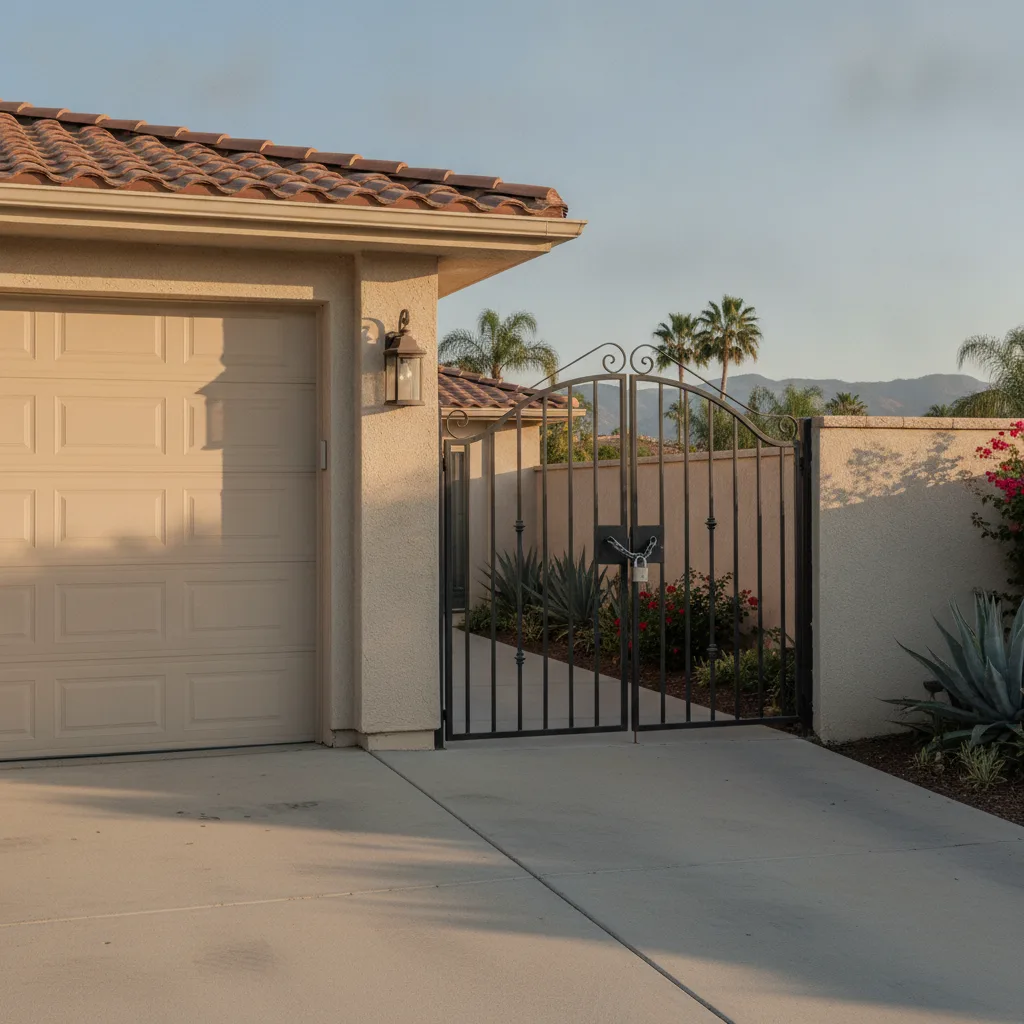
This closed garage and padlocked gate illustrate the access facts California law treats differently from an open driveway.
Can a repo agent move another car?
BSIS says a repossession agency employee may not move another vehicle to reach the vehicle being repossessed. The agency also may not break gates or damage landscaping.
If another vehicle was moved, record what you observed. Note where each vehicle was parked, whether it was locked, and whether it was damaged. Photos, video, witness names, and repair estimates may help establish the facts.
Do not park vehicles to obstruct an expected repossession. Do not try to hide the financed vehicle, drive away during an active repossession, or block the tow equipment. Those actions can create danger and additional legal problems.
Can a car be repossessed without its keys?
The absence of keys does not answer whether a repossession was lawful. The important questions are how the vehicle was removed and whether the agent used force, caused damage, entered a protected location, or otherwise breached the peace.
Do not try to retrieve keys from the vehicle or tow equipment during the repossession. Record the method used from a safe location. Raise damage or access concerns afterward through the lender, repossession agency, BSIS, police, or a legal professional as appropriate.
Can a vehicle be taken from a gated apartment complex?
A gated complex requires a fact-specific review. A fenced and locked area fits California’s statutory definition of a secured area, but the full access history still matters.
For example, the relevant facts may include whether the gate was locked, who allowed entry, and whether the person giving consent had legal possession of the property at that time. Do not assume that every fence bars entry or that any access through a gate makes the repossession lawful.
Record the gate’s condition and ask property management to preserve any available access records or video. Avoid asking them to share another resident’s private information.
Who may perform a repossession?
BSIS distinguishes licensed repossession agencies and their registered employees from legal owners. Do not assume every person involved in taking collateral must hold the same agency credential.
Ask for the repossession agency’s name and the identifying details shown by the employee. Confirm the person or company’s claimed role through official BSIS resources. If the information appears false or an agency may be operating without the required license, BSIS accepts unlicensed-activity reports.
Quick Tow SD is a towing referral service. It is not the lender, legal owner, repossession agency, or legal adviser involved in a vehicle repossession.
What to do if something appears wrong
Keep your distance and avoid an argument at the vehicle. Write down the facts as soon as you can:
- The date, time, and exact location
- Whether a garage, fence, gate, or lock was involved
- The agency name and identifying information provided
- What the agent and witnesses said
- Any force, threats, property movement, or visible damage
- Photos or video taken safely and lawfully
Contact the lender or loan servicer if you believe there was an account error, mistaken identity, or payment problem. Use the official contact information from your loan records. Do not post account numbers, vehicle identification numbers, or other sensitive information publicly.
Report forced entry, threats, or property damage to local police when appropriate. The BSIS complaint page provides online and printable complaint options. A complaint documents the issue, but it does not guarantee a particular refund, court ruling, or other remedy.
For advice about your specific rights, contact a California lawyer or local legal-aid organization. The CFPB also recommends contacting the lender or servicer about errors and seeking legal help when the repossession may have breached the peace.
How to recover belongings from the vehicle
Contact the repossession agency promptly about personal property left inside the vehicle. Ask for its current contact information, business hours, inventory, pickup procedure, and an itemized statement of any claimed removal or storage charges.
Business and Professions Code section 7507.9 governs personal-effects inventories and notices. It contains a general 48-hour framework, along with weekend, holiday, and other exceptions. Notice may be personally served or sent by regular mail.
A listed charge is not proof that every disputed fee is lawful. Ask the agency to explain charges in writing. Seek legal help if access to your belongings or the claimed fees remain disputed.
Repossession is not the same as a private-property tow
Repossession involves a creditor enforcing an interest in financed collateral after default. A private-property tow involves a property owner or manager arranging removal of a vehicle from a parking area.
Different laws govern those events. If there is no lender or repossession agency involved, see our explanation of California private-property towing rules instead.