Your bike is down, flat tire, dead battery, or worse, and you need to know what a tow is going to cost before you commit to anything. Prices vary more for motorcycles than for cars, and a few variables can push a $90 tow toward $200 fast. Here’s what you’ll actually pay in San Diego County, and why.
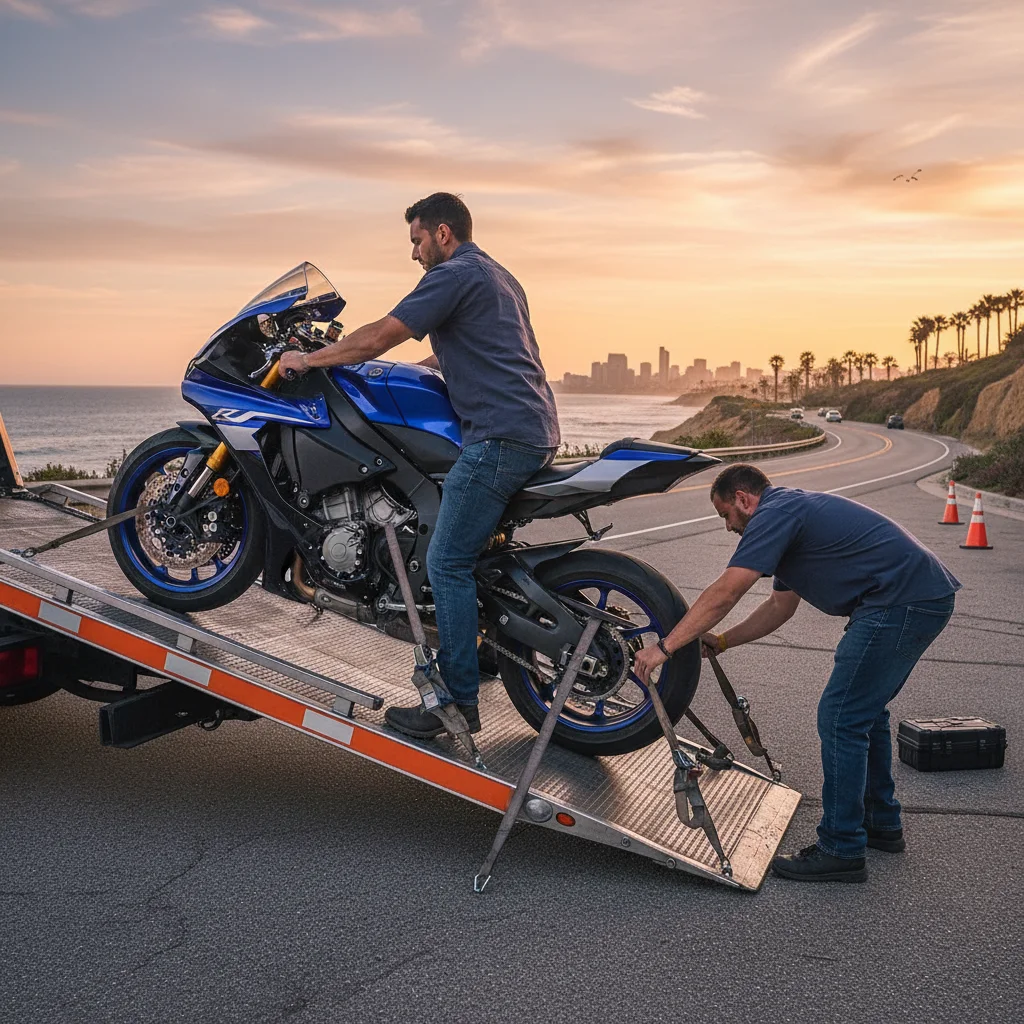
Average motorcycle tow cost in San Diego
Most motorcycle tows in San Diego run between $75 and $150 for a short haul, roughly under 10 miles. That range covers the hook-up fee and the first few miles of transport.
Here’s a rough breakdown of what to expect:
- Hook-up/base fee: $55–$85
- Per-mile rate: $3–$5 per mile after the first 5–10 miles
- Short local tow (under 10 miles): $75–$130
- Mid-range tow (10–25 miles): $120–$200
- Long-distance tow (25+ miles): $200–$400+
These figures are consistent with what San Diego tow operators charge as of 2026. For a broader look at how motorcycle costs compare to car towing in the county, our post on towing costs in San Diego breaks down the full range across vehicle types.
One thing worth knowing: motorcycle towing doesn’t have a state-mandated rate cap the way some CHP-dispatched tows do. That means you’ll see real variation between companies. Getting a quote upfront, before you agree to anything, is the single most important thing you can do.
What changes the price
Distance
Distance is the biggest lever. A 5-mile tow from Mission Valley to a shop in Kearny Mesa will cost far less than a tow from Oceanside to a dealer in El Cajon. Most companies charge a flat hook-up fee, then a per-mile rate after a set threshold. If your ride breaks down on the I-5 near Del Mar and you need it hauled to a Harley dealer in Escondido, expect to pay on the higher end.
Time of day
After-hours and overnight tows cost more, usually an extra $25–$60 on top of the base rate. If you’re on the shoulder at 2 a.m. near the 8 freeway, you’re paying a night rate. It’s not a penalty; it’s overtime for the driver and dispatching costs. Budget for it if you ride at night.
Bike size and type
A 400 lb. cruiser needs more tie-down time and different rigging than a 190 lb. dirt bike. Some operators charge a surcharge for heavyweight touring bikes or trikes, typically $20–$40 extra. Sidecars and three-wheelers may need a specialized truck and can push costs significantly higher.
Day of week and demand
Weekends and holidays mean more bikes on the road and more calls. If it’s a Sunday afternoon on the Pacific Coast Highway and you need a tow, you may wait longer and pay a slight premium, especially if the company is running at capacity.
Why motorcycle towing costs more than car towing
Cars can be hooked up quickly with a wheel-lift or dragged onto a flatbed in minutes. Motorcycles are different. They’re top-heavy, they tip, and the wrong strap in the wrong spot will gouge your tank or crack a fairing. That extra care takes time, and time costs money.
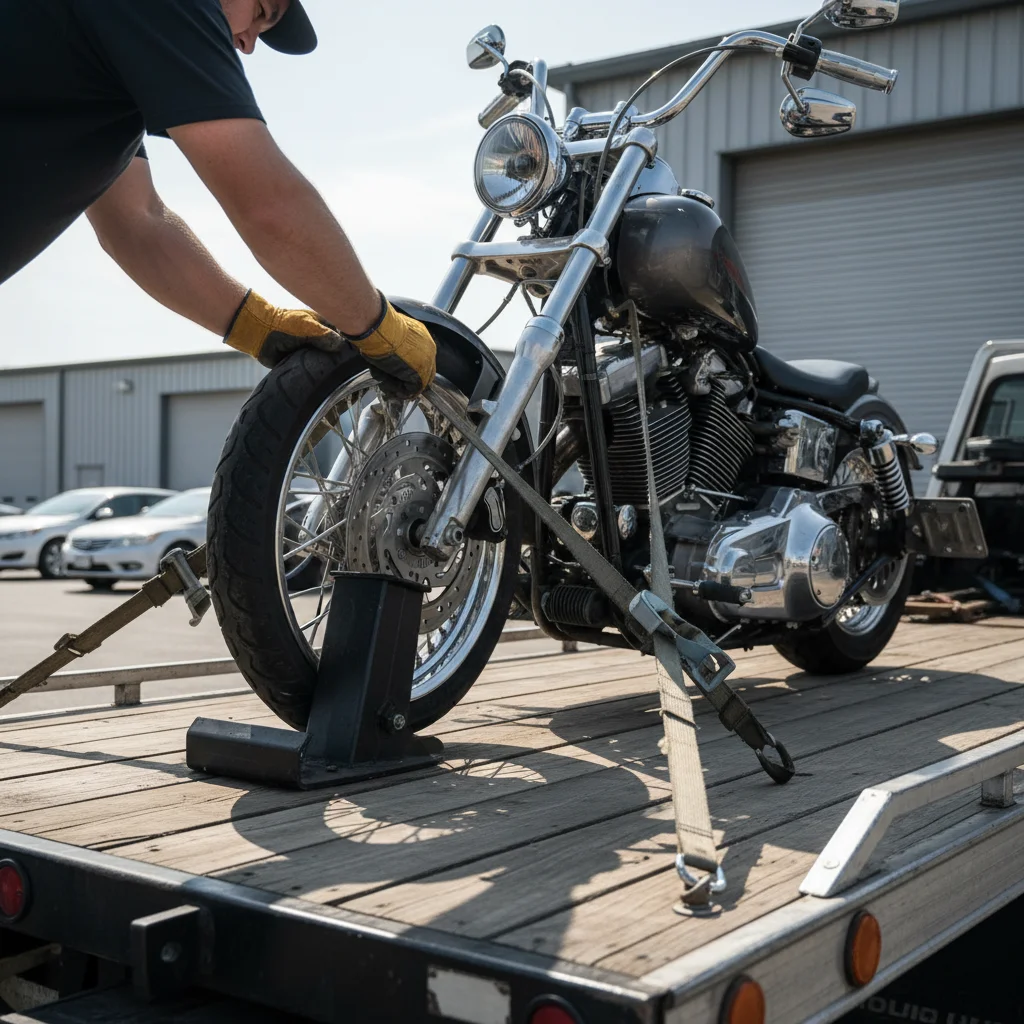
Most reputable motorcycle towing operators use a flatbed truck with a wheel chock, a cradle that locks the front wheel and keeps the bike upright during the whole tow. Soft loop tie-downs go over the handlebars or frame, not the suspension. Loading alone can take 10–15 minutes when it’s done right.
Compare that to a standard car tow, which a skilled driver can complete in 3–5 minutes with a wheel-lift setup. The extra labor and equipment on a motorcycle tow is real, and it’s why the base rate is often $20–$40 higher than what you’d pay for a sedan.
There’s also liability. A $15,000 Ducati or a custom Harley is expensive to damage. Operators who specialize in motorcycle towing carry insurance and training that general tow companies may not. That specialization is priced in.
Insurance and roadside coverage for bikes
Before you pay out of pocket, check what you already have.
Motorcycle insurance: Many full-coverage motorcycle policies include roadside assistance as an add-on or built-in feature. Check your policy documents or call your agent. Some riders don’t realize they’ve been paying for towing coverage for years.
AAA: Standard AAA membership covers motorcycle towing, though the AAA roadside assistance tow distance limit varies by membership tier, Classic members get 5 miles free, while Plus and Premier members get 100 miles and 200 miles respectively. If your bike breaks down 30 miles from home, your tier matters.
Credit cards: Some travel and rewards cards include roadside assistance that covers motorcycles. Read the fine print, some exclude two-wheeled vehicles.
Manufacturer programs: BMW Motorrad, Harley-Davidson, and a handful of other brands offer their own roadside programs. If you bought relatively recently, you may still be enrolled.
For a deeper look at what roadside programs make sense for San Diego riders, our post on motorcycle roadside assistance in San Diego covers the major options side by side.
If you’re paying cash, getting a firm quote before the truck rolls is standard practice. Any legitimate company will give you a price before dispatch.
How to avoid frame damage during pickup
This is where cheap towing can cost you more than the tow itself. A careless hook-up can scratch your tank, strip your frame threads, or bend your handlebars. Here’s what a proper motorcycle pickup looks like, and what to watch for.
Flatbed only. If a company shows up with a wheel-lift truck and wants to drag your motorcycle with a yoke under the tire, decline. Wheel-lift towing is for cars. Motorcycles need a flatbed with a built-in wheel chock.
Soft tie-downs, not chains. Chains and hooks can damage your frame and suspension mounting points. Proper motorcycle towing uses fabric soft loops that wrap around the handlebars or frame and attach to ratchet straps. No metal should contact your bike directly.
Check the chock. The front wheel should sit fully inside a wheel chock that’s bolted to the bed. The bike shouldn’t be able to tip side to side once strapped down. Ask the driver to show you the setup before they load.
Watch the loading angle. Most flatbeds extend a ramp. The operator should walk the bike up slowly or use a winch cable, not let it roll free. If the ramp angle is steep and the operator looks rushed, say something.
If you’re unsure about a company’s process, our post on choosing a tow company and red flags to avoid is worth a quick read before you book anyone.
What to ask before you book
A two-minute phone call can save you a surprise charge when the driver shows up. Here’s what to ask:
“What’s the total cost for my tow?” Give them your exact pickup location and drop-off address. Ask for a firm quote, not a range. Reputable companies will give you a number.
“Do you have a flatbed with a wheel chock?” If they hesitate or say they’ll “make it work” with a wheel-lift, call someone else.
“Is there an after-hours or weekend surcharge?” Ask this directly if you’re calling outside normal business hours. Better to know now.
“Are you licensed and insured in California?” CHP-approved tow operators are listed on the CHP tow service registry. A legitimate company won’t balk at this question.
“How long until you arrive?” Get an ETA. If you’re on a freeway shoulder, every minute matters. Being broken down on a San Diego freeway carries real safety risk, knowing your wait time helps you decide whether to stay with the bike or step back from traffic.
When to call us
Motorcycle towing requires the right equipment and someone who’s handled bikes before, a rushed or careless tow can do hundreds of dollars in cosmetic damage before you even reach the shop. If your bike is down anywhere in San Diego County and you want a flatbed operator who knows how to strap a motorcycle correctly, we’re available around the clock.
Call us at (858) 923-5787 for a same-day estimate.