Kearny Mesa towing starts with one distinction: freeway shoulder, parking structure, repair shop, or surface street. Each pickup changes the information dispatch needs and which operator can accept the job. Share the setting first, then explain what happened to the car.
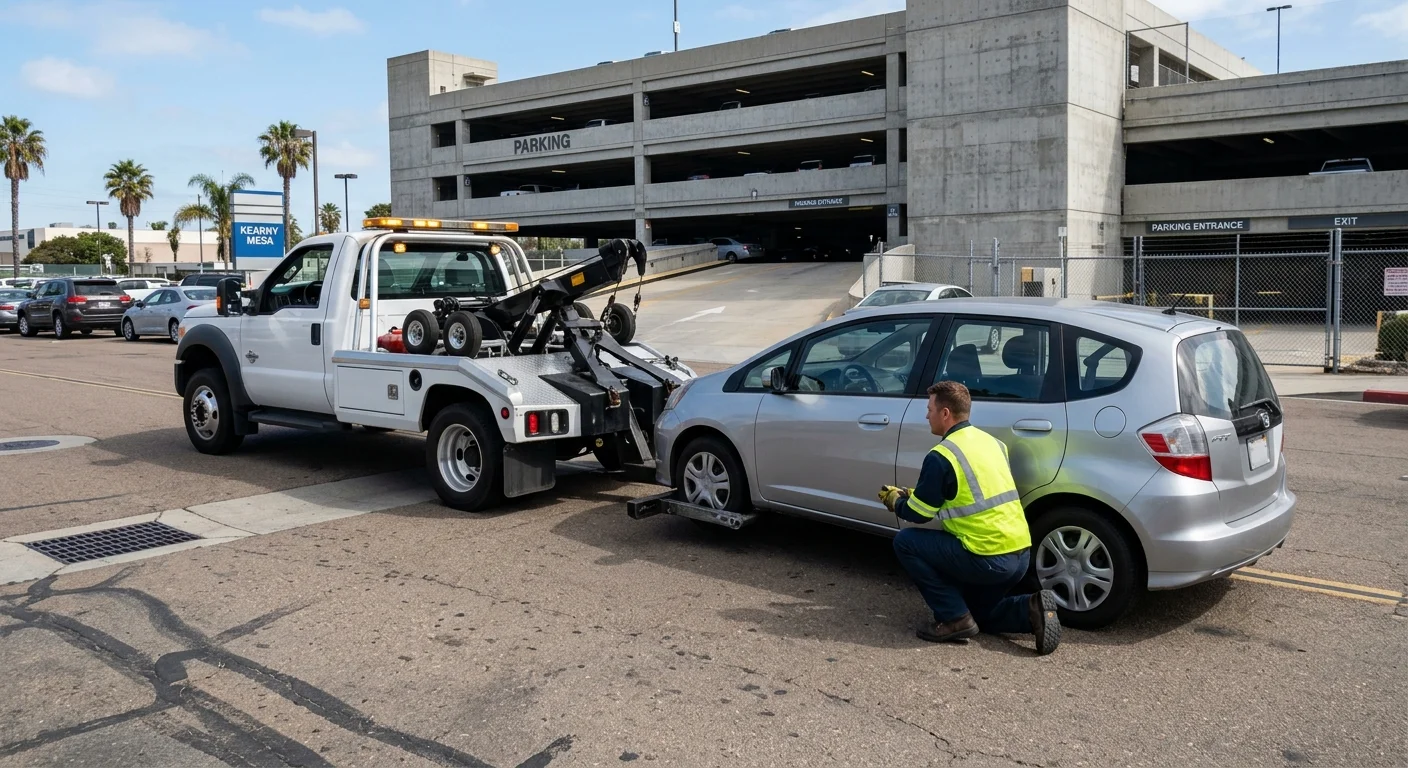
Start with the type of Kearny Mesa pickup
A disabled car near Clairemont Mesa Boulevard may be in several very different settings. It could be on a freeway shoulder, inside a garage, behind a repair shop, or parked along a surface street. Saying only “Kearny Mesa” leaves the most useful detail unanswered.
Start with the exact pickup type. For a street location, share the street name, nearest cross street, and side of the road. Mention whether the car is in a marked space, traffic lane, loading area, or private lot. A nearby business name can help, but it shouldn’t replace the street address.
Inside a commercial property, explain where the car sits. A front parking lot is different from a locked service yard. A garage entrance, loading dock, gate, or steep driveway may affect access. Don’t assume every tow truck Kearny Mesa operators use will fit every location.
The car’s condition matters too. Tell dispatch whether it rolls, steers, starts, or shifts into neutral. Mention damaged wheels, locked steering, missing keys, or accident damage. These facts help the operator assess the pickup before accepting it.
For a normal passenger vehicle, dispatch may consider wheel-lift towing. The final transport method depends on the vehicle, its condition, and the pickup area. The operator sent out makes that call after reviewing the details.
What changes near I-805 and SR 163
A freeway pickup needs more precise location information than a parking-lot tow. I-805 and SR 163 both pass through the Kearny Mesa area, while Clairemont Mesa Boulevard connects busy surface streets and freeway access points. Giving the road name without direction can send attention to the wrong side.
State whether you’re traveling north or south. Share the nearest exit, visible sign, or freeway connector. Say whether the car is on the right shoulder, left shoulder, gore area, or an off-ramp. If you’ve already left the freeway, give the first surface street and a nearby landmark.
Personal safety comes before inspecting the vehicle. Don’t stand beside moving traffic to check a tire or look under the hood. Stay aware of traffic and follow instructions from emergency personnel. NHTSA’s roadside safety resources offer general guidance for breakdown preparation and safer roadside decisions.
Freeway conditions also change the kind of request. A stalled car safely parked off the roadway is different from a collision scene or a vehicle blocking traffic. Tell dispatch about debris, fluid, damaged steering, or a wheel that won’t turn.
Our emergency towing referral service can connect you with an independent local operator. The operator taking the job provides an arrival estimate for that exact location. Quick Tow doesn’t publish a general freeway response window.
Why parking structure clearance matters
Parking garage towing in Kearny Mesa begins with the entrance, not the disabled car. A vehicle may be easy to see but difficult to reach through a low entry, tight turn, gate, or sloped ramp.
Look for the posted clearance at the entrance. Give dispatch the exact figure shown instead of describing the garage as “low.” Also share the floor, space number, and route from the entrance. Mention any overhead pipes, hanging signs, speed bumps, or narrow corners between the entrance and the car.
The vehicle’s position matters inside the space. Explain whether it’s parked nose-in or backed-in. Say how much room exists in front, behind, and beside it. A car against a wall or concrete stop presents a different pickup than one facing an open driving lane.
Don’t try to push a disabled car down a ramp. Steering, braking, and vehicle weight can make that dangerous. Leave movement decisions to the operator who inspects the location.
Building access can cause a separate delay. Confirm whether the gate opens, whether security must approve entry, and whether someone can meet the driver. If the garage closes overnight, check access before arranging dispatch.
Our guide to parking garage towing in San Diego explains these access details further. Sharing them early helps dispatch find an operator who can evaluate the structure and vehicle together.
When roadside help may avoid a tow
Not every Kearny Mesa breakdown requires vehicle transport. A dead battery, simple flat tire, lockout, or empty fuel tank may be handled where the car sits. The right choice depends on the vehicle’s condition and whether the location is safe for roadside work.
Start with what happened before the car stopped. Did the engine crank slowly, make no sound, overheat, or shut down while driving? Did a warning light appear? Is the tire merely low, or is it torn or separated from the wheel? Clear symptoms help dispatch distinguish roadside assistance from towing.
Location can override the mechanical problem. A battery jump in an open surface lot differs from work beside freeway traffic. A flat tire inside a cramped garage may also leave too little working room. Dispatch needs both the symptom and the setting.
Avoid repeated starting attempts if you smell fuel, see smoke, or notice leaking fluid. Don’t crawl beneath the vehicle or attempt a repair beside moving traffic. Describe what you can observe safely.
Roadside service may restore mobility, but it can’t solve every failure. Damaged steering, collision damage, a missing wheel, or a vehicle that still won’t run may require transport. When you’re unsure, explain the symptoms without diagnosing them. The operator can decide whether the request calls for roadside help or a tow.
What to confirm before dispatch
A useful dispatch request answers three questions: where is the car, what condition is it in, and where should it go? Gather those details before calling when it’s safe.
Give the full pickup address or freeway location. Include the nearest cross street, travel direction, business name, suite area, garage level, or shop service entrance. If map pins are unreliable inside the property, describe the correct driveway.
Next, identify the vehicle’s year, make, model, and body style. Tell dispatch if it’s electric, all-wheel drive, modified, unusually low, or carrying a trailer. Don’t guess about the needed towing method. Those facts allow the operator to review the manufacturer and access considerations.
Describe whether the keys are available. Confirm whether the car rolls, steers, brakes, and shifts into neutral. Report visible damage and blocked wheels. If the pickup is from a repair shop, ask whether the vehicle is outside, released for pickup, and accessible after the service desk closes.
Confirm the destination address and its access instructions. A dealership service lane, independent shop, home driveway, and storage facility each have different drop-off conditions. Make sure someone at the destination expects the vehicle.
Passenger-car requests also differ from commercial truck recovery. If the disabled vehicle is larger or heavily loaded, review our guide to heavy-duty towing in Kearny Mesa before calling.
The independent operator sets the price and is paid directly by the customer. Ask about pricing, accepted payment, and the arrival estimate for your exact request before approving dispatch.
When to call us
Call when the vehicle can’t be moved safely, roadside service won’t solve the problem, or the pickup needs professional access planning. Our line takes calls 24 hours a day, and we’ll match the request with an independent operator in our network. Call (858) 923-5787 to reach dispatch.