A car that won’t roll on flat ground is one job. A car that won’t roll on a Dictionary Hill grade is a different one entirely. Spring Valley’s terrain decides more about a tow here than almost anywhere else in the county.
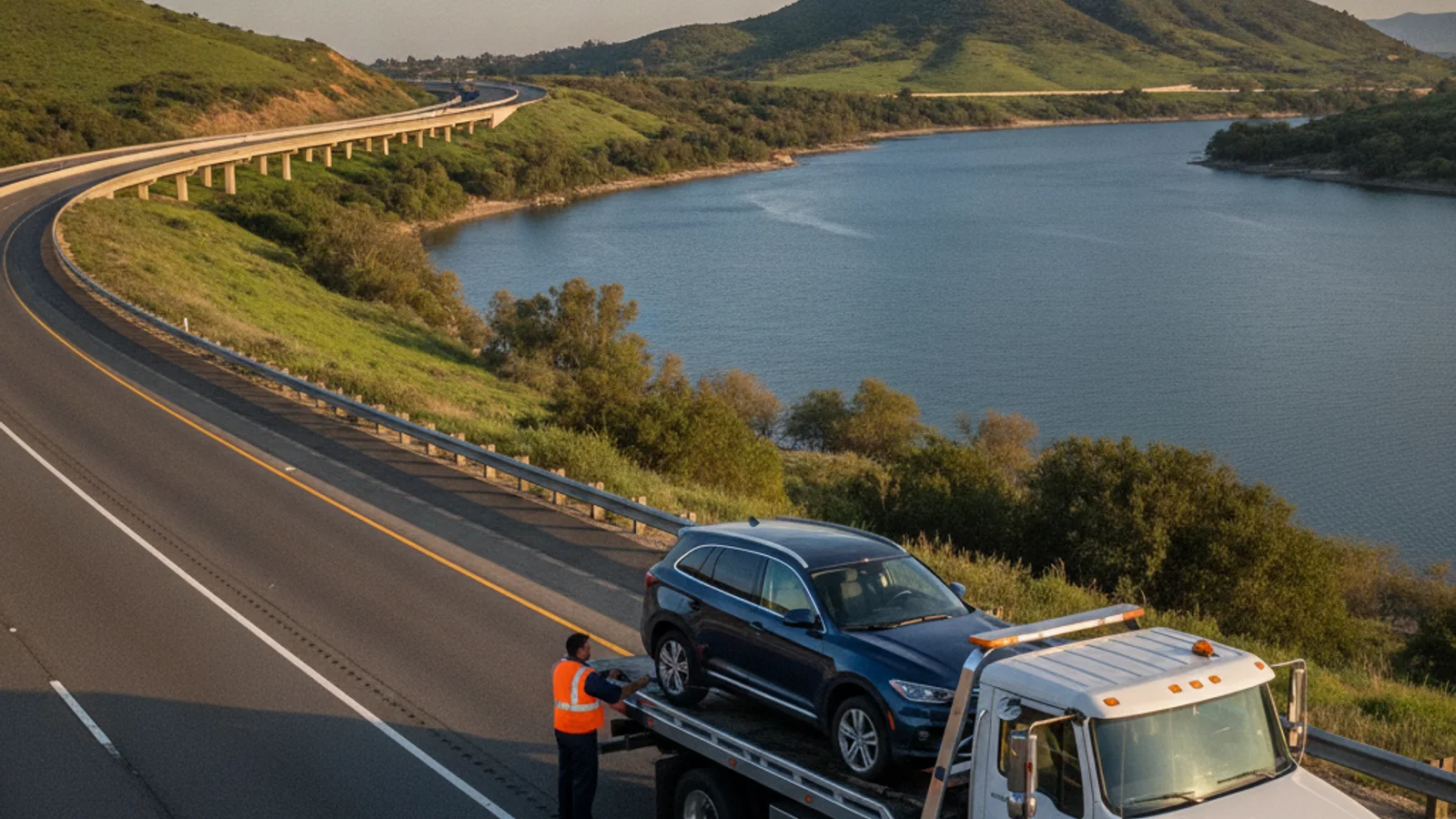
The freeways cut Spring Valley two ways
SR-125 and SR-94 both run through Spring Valley, and they carry different kinds of traffic. SR-125 through this stretch feeds a toll-road-adjacent corridor connecting south toward Chula Vista and the border area, and it moves fast with limited access points, so a breakdown here means fewer nearby off-ramps than a slower surface road would give you. SR-94 cuts more centrally through the community and connects west toward Lemon Grove, covered in our Lemon Grove towing guide if your call started closer to that side.
Sweetwater Road and Jamacha Boulevard are the two surface arteries most Spring Valley traffic actually uses day to day, and they’re where a lot of calls originate: an intersection backup, a shopping center lot, or a car that dies climbing one of the rolling grades between them. If your car stalls on either road, getting fully off the travel lane matters more here than the exact address, since both roads carry steady speed and limited stopping sight distance in a few stretches.
The reservoir and river valley shape the terrain
Spring Valley sits around the Sweetwater Reservoir and the Sweetwater River valley, and that geography means the community isn’t flat the way a grid-planned suburb is. Streets curve around canyon edges and drop into the river valley in places, which changes sightlines for both drivers and tow operators trying to locate a car by description alone. A cross street near the reservoir access roads is more useful to dispatch than “somewhere near the water.”
Dictionary Hill is a genuine grade problem
Dictionary Hill is the steep hillside neighborhood on Spring Valley’s western edge, and its streets climb hard enough that a non-running car sitting partway up isn’t a simple pickup. A vehicle with no engine power and no working brakes on a real grade needs an operator who can control the descent, not just hook up and pull. That’s usually a job for a flatbed rather than a wheel-lift, since a flatbed keeps all four wheels off the road entirely and removes the rolling risk on the way down. If the vehicle is heavier than a standard passenger car, or the grade is steep enough that standard equipment isn’t rated for it, that becomes a heavy-duty towing call instead.
Don’t try to hold a dead car in place on a hill with the parking brake alone while you wait. If it’s safe to do so, chock a wheel with whatever’s on hand and keep everyone clear of the downhill side until the operator arrives.
Unincorporated county land changes who responds
Spring Valley is unincorporated, meaning it isn’t its own city and isn’t policed by a city department the way San Diego, Chula Vista, or El Cajon are. The San Diego County Sheriff’s Department, not a city police department, is the agency that patrols unincorporated communities like Spring Valley. That matters if your car needs a police-ordered tow, since the agency directing that tow is the Sheriff rather than a city PD.
We don’t have a confirmed source for the Sheriff’s specific towing procedures or a direct non-emergency contact number to publish here, so don’t take a specific process as fact from this page. If you need to confirm who’s handling a particular tow order in Spring Valley, ask the responding deputy directly and confirm the correct number before you rely on it. For a private-property tow, the same statewide rules apply regardless of jurisdiction; our CVC 22658 breakdown covers the signage and notice requirements that govern that situation everywhere in California, unincorporated land included.
The rolling terrain hides cars from view
Because Spring Valley isn’t laid out on a flat grid, a car pulled onto what looks like a shoulder from one direction can be nearly invisible from the other, especially where the road curves around a canyon edge or drops toward the river valley. That’s a safety issue as much as a logistics one: a disabled vehicle sitting just past a blind curve needs hazards on immediately and, if it’s safe to do so, reflective triangles or flares placed well back from the car to give approaching drivers real warning time. Don’t assume a car pulled mostly off the road is visible to traffic coming around a bend.
This same terrain affects how confidently an operator can estimate a route before arriving. A pickup near the reservoir access roads or one of the canyon-adjacent streets may need a different approach path than a straight-line distance would suggest, since not every street connects directly to the one next to it. Giving dispatch a specific address or a dropped map pin, rather than a general area, matters more in Spring Valley than it would on a simple grid street elsewhere in the county.
What this means for calling a tow
Tell dispatch plainly if you’re on Dictionary Hill or another graded street, since that changes the truck sent. Mention if you’re near the reservoir or river valley roads, since street signage can be sparser out there than in the denser parts of the county. And if a law enforcement agency is already on scene, note whether it’s a Sheriff’s deputy, since that’s the agency with jurisdiction here, not a city department.
Vehicles that need more than a standard tow here
Spring Valley’s mix of steep residential streets and heavier vehicles, work trucks, trailers, and larger SUVs common in a community with more open lot sizes than the urban core, means a standard passenger-car setup doesn’t always fit the job. A loaded work truck stalled partway up a grade is a heavier lift than the same truck on flat ground, and it’s worth telling dispatch the vehicle’s approximate size and whether it’s carrying a load, a trailer, or equipment. That single detail can be the difference between sending a standard flatbed and sending a truck rated for the actual weight involved.
When to call us
A car stuck on a Dictionary Hill grade, stalled along SR-125, or sitting near the reservoir roads all need an operator who knows the terrain isn’t flat here. Don’t attempt to move a non-running vehicle down a hill yourself, and don’t rely on a parking brake alone to hold a heavier vehicle on a real grade while you wait.
If you’re not from the area and aren’t sure whether your street counts as Spring Valley, Lemon Grove, or unincorporated county land somewhere between the two, don’t spend time trying to work it out before you call. Give dispatch your cross street and let the operator sort out the jurisdiction while the truck is already on the way.
Call (858) 923-5787 to reach dispatch.