Someone asks a friend with a truck to tow their dead car home from a driveway in Alpine, and neither of them knows the real number for what that truck can safely pull. The brochure said a big figure when the truck was new. That number assumed no passengers, no cargo, and the lightest available trim.
Where the real number actually lives
Skip the marketing page. The figure that matters for your specific vehicle is printed on the certification label inside the driver’s door jamb, and it’s repeated with more detail in the towing section of your owner’s manual. That sticker lists your vehicle’s actual configuration, not the best-case trim used in an ad. A base model and a loaded version of the same truck can carry different ratings depending on engine, axle, and towing package.
If the sticker has worn off or you bought the vehicle used, the manufacturer can decode the VIN and tell you the exact factory specs, including the towing package that came on that specific vehicle. Some manufacturers offer this through a dealer service department; others have an online VIN lookup. Either way, the VIN is the only reliable path back to the original build sheet once the paper manual is gone.
Why a VIN decode beats a memory of what the salesperson said
A towing capacity by VIN lookup matters most for a used vehicle where you have no idea which factory options were checked off. The same model year of the same truck can ship with two or three different engine and axle combinations, and each one carries a different rating on that door jamb sticker. Whoever owned the vehicle before you may have mentioned a number from memory, and memory is not a source. Run the VIN through the manufacturer’s own lookup tool or ask a dealer’s service department to pull the original build sheet before you trust any number that isn’t printed on the vehicle itself or documented in writing.
This matters even more when a vehicle has changed hands more than once, because a trailer hitch installed by a previous owner is not proof the vehicle was ever rated to use it at that hitch’s full capacity. A bolted-on hitch tells you what the hitch can handle. It tells you nothing about what the vehicle behind it is rated for.
GVWR, GCWR, and payload aren’t the same thing
These three terms get confused constantly, and the mix-up is where people get into trouble.
- GVWR (gross vehicle weight rating) is the maximum your vehicle alone can weigh, fully loaded, with no trailer attached.
- GCWR (gross combined weight rating) is the maximum combined weight of your vehicle plus a loaded trailer, together.
- Payload is what your vehicle itself can carry inside and on it, meaning passengers, cargo, and tongue weight all count against this number before you’ve hooked up anything.
Towing capacity on its own is really just GCWR minus your vehicle’s actual current weight. Add a full cab of passengers, a bed full of gear, and a fuel tank topped off, and the trailer weight you can safely add goes down from the advertised maximum. Nobody advertises that part.
Tongue weight is the number almost nobody checks
Tongue weight is the downward force the trailer’s hitch puts on your vehicle’s own hitch ball, and it counts directly against your payload, not against your towing capacity. A trailer loaded so its weight sits too far back puts less pressure on the hitch and can make the whole combination sway at speed. One loaded too far forward can overload the tow vehicle’s rear axle even while staying under the total towing number. The only way to know your actual tongue weight is a scale, either a dedicated tongue weight scale or a bathroom scale and a length of pipe as a lever, not a guess based on how the trailer looks sitting there.
The mistake almost everyone makes
The most common error is matching a trailer, or a dead car sitting on a dolly or flatbed trailer, to its empty weight instead of its loaded weight. A trailer’s own weight when empty tells you almost nothing about what you’re actually pulling. What matters is the trailer’s weight plus whatever is strapped to it. No single weight figure applies across all vehicles and configurations. Check that vehicle’s door-jamb sticker and owner’s manual for its weight.
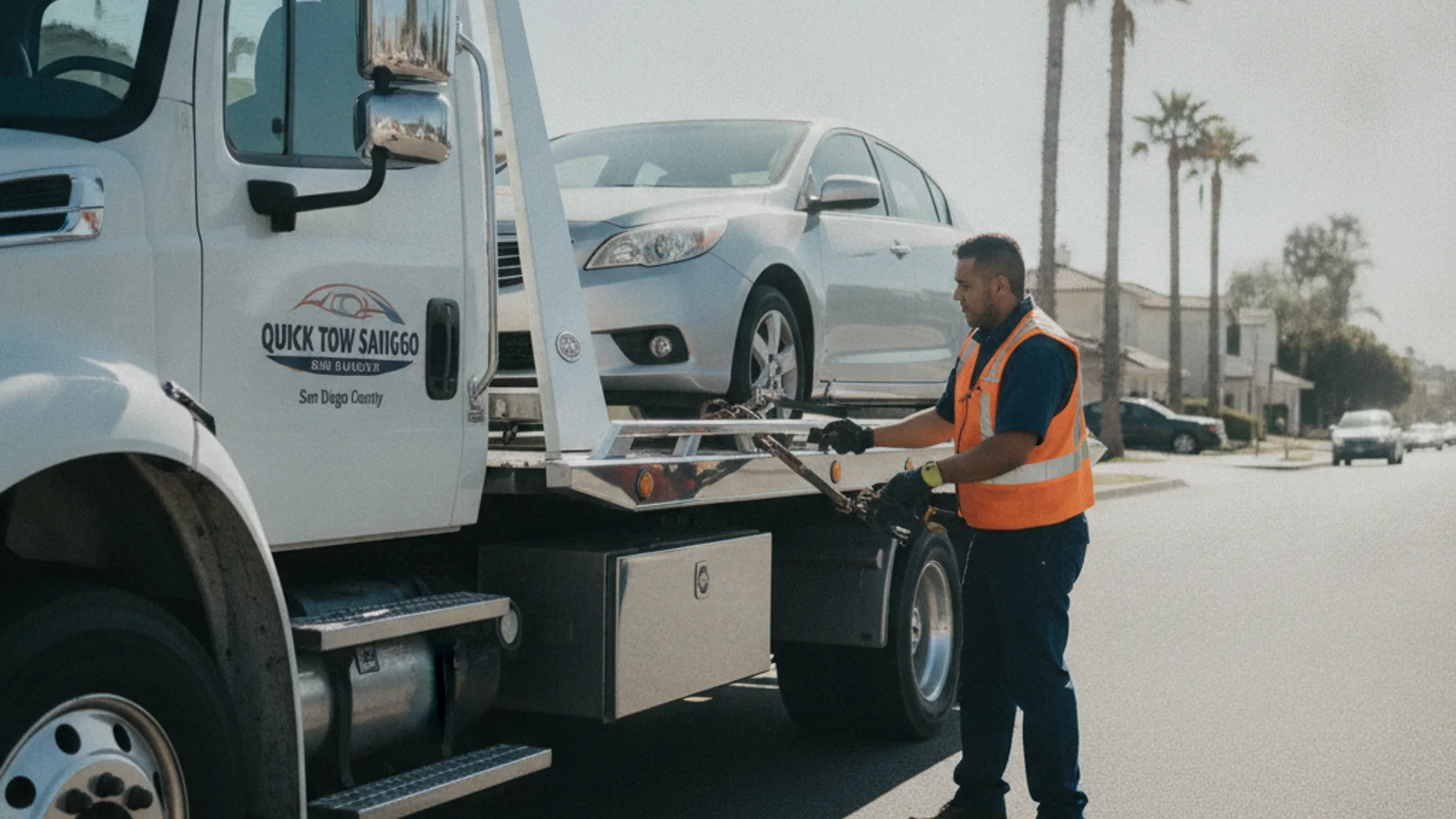
Guessing at a dead car’s weight is a real risk. If you don’t have a documented curb weight for that exact vehicle, don’t estimate it and don’t tow it behind a personal vehicle. That’s a case for a flatbed towing operator with the right equipment, not a guess based on how big the car looks. Our guide on flatbed versus wheel-lift towing explains why a flatbed removes the weight-transfer question completely.
Hitch class and brakes matter as much as the rating
A high GCWR on paper doesn’t help if the hitch bolted to your vehicle is rated for less. Hitches are rated in classes, and each class has its own maximum tongue weight and trailer weight, independent of what the vehicle itself could theoretically pull. Check the hitch’s own rating plate, not just the vehicle’s.
Trailer brakes are the other piece people skip. Brake rules vary by trailer and towing setup. Check the California DMV and your rental or trailer paperwork before leaving. Towing a heavy load without functioning trailer brakes puts the entire stopping job on your vehicle’s brakes alone, which they were never rated to handle for that combined weight. NHTSA’s road safety resources cover general towing and vehicle maintenance basics if you’re unfamiliar with any of this.
Paper capacity isn’t the same as a safe tow down a real grade
A number on a sticker assumes flat ground and ideal conditions. It says nothing about the eastbound grade on I-8 climbing out of Alpine toward the summit, or the long pull on I-15 through the Escondido grade. Towing near the top of a rated capacity on a steep, sustained grade puts far more heat into your brakes and transmission than the same weight on a flat surface, and that’s true even when you’re well under the sticker’s number on paper.
A dead car being towed is not a trailer, either. A trailer has its own brakes and predictable tracking. A car with no engine running has no power steering assist and no power brakes, and it doesn’t track behind a tow vehicle the way a purpose-built trailer does. See our guide on towing a car without wheels for how that changes the equipment an operator needs. That difference is exactly why a flatbed, where the disabled car’s wheels never touch the road, is the safer call for most non-running vehicles, rather than a hitch and a tow bar improvised in a driveway. Larger vehicles like work trucks or trailers over a personal vehicle’s rating need heavy-duty towing equipment instead.
When to call us
If you don’t have a documented weight for the disabled vehicle, aren’t sure your hitch class covers it, or the pickup involves a steep driveway, a locked-up wheel, or a grade like the one out of Alpine, this isn’t a DIY tow. A flatbed removes the guesswork about capacity entirely because the car’s weight never transfers to your vehicle’s drivetrain. Call (858) 923-5787 to reach dispatch, day or night, and describe the vehicle so the right equipment gets sent.