An empty space outside a San Diego store can mean a tow, theft, or parking mix-up. Confirm the removal before chasing a storage yard. Then document the lot, locate the car, and review the records before disputing anything.
Confirm that the car was actually towed
Start at the exact space where you parked. Confirm that a family member, passenger, or authorized driver didn’t move the car. Check nearby rows, levels, and adjoining sections before assuming it left the property.
Shopping centers can have several entrances and separate parking areas. Record the center’s street address, the nearest store, and the space location. A general description such as “Mission Valley” or “Chula Vista” isn’t precise enough for a vehicle search.
Next, ask the shopping center’s security office or property manager whether the car was removed. A store cashier may not know who controls the lot. Ask for the company that manages parking and the towing company named in its records.
Gather these details while you’re still there:
- Your license plate number and vehicle description
- The approximate time you parked and returned
- Receipts showing which business you visited
- Photos or app records that help establish the timeline
- The exact row, level, entrance, or storefront nearby
Keep the facts separate from assumptions. A purchase receipt can support your timeline, but it doesn’t settle whether the parking complied with posted terms.
If management can’t confirm a tow, contact the law enforcement agency responsible for that address. Ask whether a towing company reported the removal. If neither management nor the agency has a record, follow the agency’s instructions for reporting a missing vehicle.
Our guide to finding a towed car in San Diego covers the broader search process.
Check signs and contact the property manager
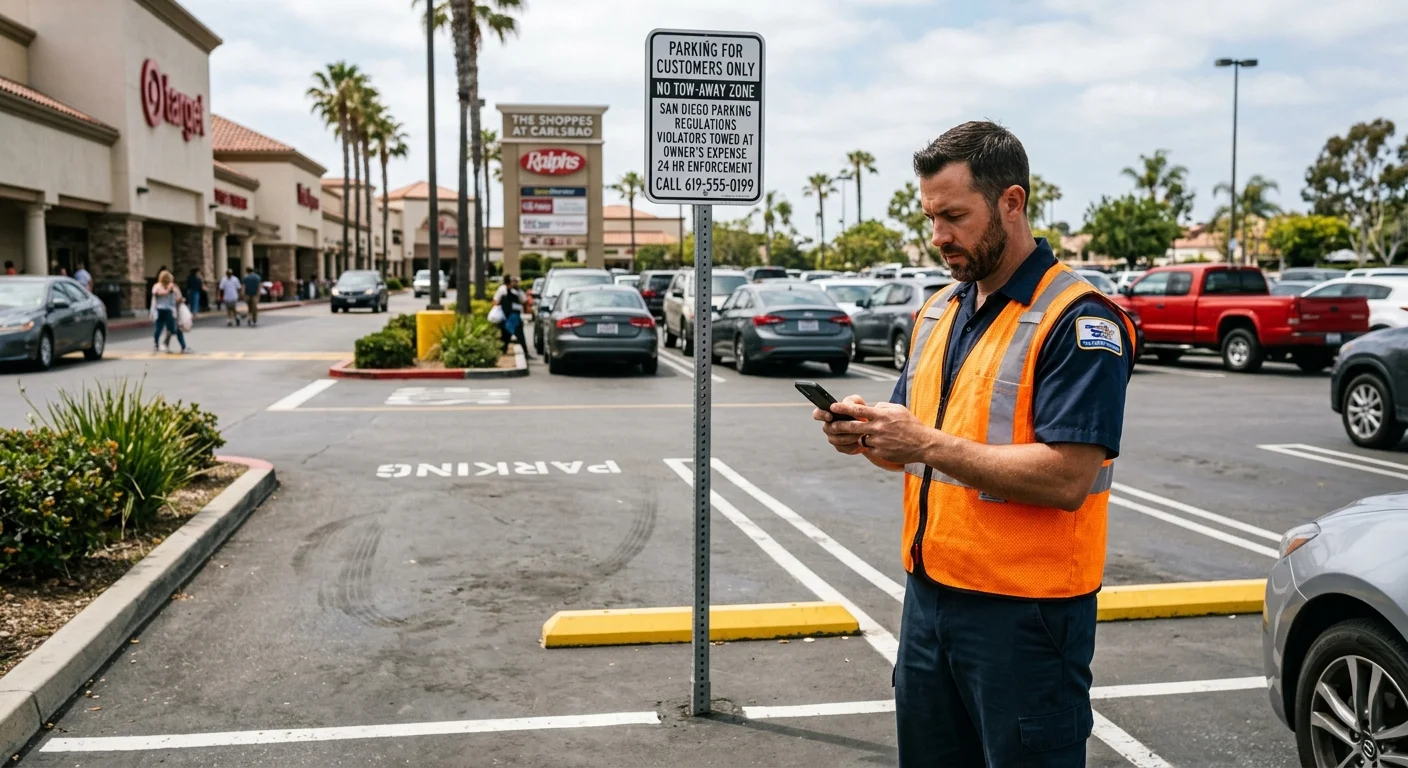
Photograph the lot before leaving. Take wide photos showing each entrance, then capture readable close-ups of every towing sign. Also photograph curb markings, space markings, temporary notices, and any posted parking limits.
California Vehicle Code 22658 sets specific rules for private-property towing signs. The signs must be posted in plain view at all entrances. They must measure at least 17 by 22 inches, with lettering at least one inch high. They must identify the parking restriction, state that unauthorized vehicles may be removed at the owner’s expense, and provide required towing and law enforcement contact information.
You can read the current statutory wording in California Vehicle Code 22658. Our separate guide explains California private-property towing sign requirements in plain language.
Don’t decide that a tow was invalid based on one missing sign. Section 22658 lists several alternative grounds for removal. The facts and authorization behind the specific tow still matter.
Ask the property manager these questions:
- Which parking rule did the vehicle allegedly violate?
- Who authorized the removal?
- When was the authorization given?
- Which towing company received the request?
- Does the center have photos or an incident record?
Write down the manager’s name and the time of the conversation. Keep emails, texts, receipts, parking validations, and screenshots together.
A retail lot isn’t the same as residential parking. If you’re comparing rules, see our article about a car towed from an apartment complex. Property managers seeking help with a separate removal can also review our private-property towing referral service.
Find the towing company and vehicle location
Begin with the towing sign. It should identify the authorized towing company and provide contact information. If the sign is missing, unreadable, or names several companies, ask property management which operator handled your car.
California Vehicle Code 22658 requires the towing company to notify law enforcement within 60 minutes after removal or within 15 minutes after reaching storage, whichever is less. That means the responsible agency may be able to confirm the towing company and storage location.
Provide clear identifying details:
- License plate number
- Vehicle identification number, if available
- Make, model, year, and color
- Exact shopping-center address
- Approximate parking and removal times
Private-property storage normally must be within a 10-mile radius of the removal location. The law includes an exception when law enforcement approves another location. Don’t treat distance alone as proof that a tow violated the law.
The correct contact path depends on who ordered the tow. A property-authorized removal isn’t necessarily processed like a police impound. For a City of San Diego police-directed tow, the City’s vehicle impound page directs drivers to its official AutoReturn system. A shopping-center tow may involve another operator.
San Diego County also contains several separate jurisdictions. A lot in National City, Chula Vista, or the City of San Diego may have a different responsible agency. Port District tidelands also fall under Harbor Police patrol. Start with the property’s exact address instead of choosing an agency by neighborhood name.
Before traveling, confirm the yard’s full address. Ask it to verify that your vehicle is physically there.
Ask what records and payment methods are accepted
Call the storage facility before leaving the shopping center. Ask what identification and ownership records it requires for release. A single statewide document list for this exact situation couldn’t be confirmed from the approved sources, so get the requirements directly from the yard.
Ask for the current amount due at your planned pickup time. No verified price applies to every San Diego shopping-center tow. Rates can depend on the jurisdiction and the circumstances. Request the figure from the storage facility instead of relying on an old online post.
California law does provide several payment and record protections. Storage facilities must accept cash, an insurer’s check, or a valid bank credit card. You’re also entitled to an itemized invoice showing the actual charges.
Ask the facility to provide or confirm:
- Written notice of the removal, grounds, and storage location
- An itemized invoice
- The accepted payment methods
- Its normal business hours
- The process for inspecting the vehicle
- The process for retrieving personal belongings
Under California Vehicle Code 22651.07, you may inspect the vehicle and retrieve personal property without charge during normal business hours. The first 72 hours of storage don’t permit a lien fee. For a private-property tow released within 24 hours, only one day of storage may be charged.
Ask the facility what it considers normal business hours before arriving. Specific hours for the yard can’t be confirmed without contacting that location.
Save every document. Photograph the car before driving away, including each side, the wheels, and visible damage. Keep the invoice and payment receipt with your parking records.
Where to verify your rights before disputing the tow
First identify whether the tow was authorized by the property or directed by police. That distinction affects which records, agency, and review process apply. Don’t begin a dispute using rules for the wrong type of tow.
For a private shopping-center removal, start with California Vehicle Code 22658. Compare the current law with the entrance signs, the stated removal ground, the authorization record, and the storage location. Ask the responsible law enforcement agency whether it received the required tow notification.
Then request records from the property manager and towing company. Build a simple timeline containing:
- When the vehicle entered the property
- Where it was parked
- Which posted terms were visible
- When the tow was authorized
- When the vehicle was removed
- When law enforcement received notice
- When the vehicle reached storage
- Which charges appeared on the invoice
Section 22658 provides civil liability tied to certain violations. Signage or notification failures can create liability for double the towing and storage charges. Removal without proper authorization can create liability for four times those charges. These aren’t automatic refunds. Whether a remedy applies depends on the evidence and the legal basis for the tow.
Ask the responsible agency how it accepts towing complaints. If the issue involves disputed authorization, significant damage, or unclear statutory grounds, consider speaking with qualified California counsel. Bring the photographs, receipts, written notices, invoice, and your timeline.
Don’t alter screenshots or discard original files. Clear records make it easier for the property manager, agency, towing company, or counsel to review what happened.
When to call us
If the recovered car is damaged, won’t start, or can’t be driven safely, a professional towing operator should move it. We can also connect property managers with an independent operator for a separate towing need. Call (858) 923-5787 to reach dispatch.