When a moving truck stops running, request moving truck towing and let dispatch determine the towing category. The correct match depends on the exact vehicle, its load, condition, access, and destination.
If it’s a rental, contact the rental company before authorizing outside service. Your agreement may explain how to request roadside help and where the truck should go.
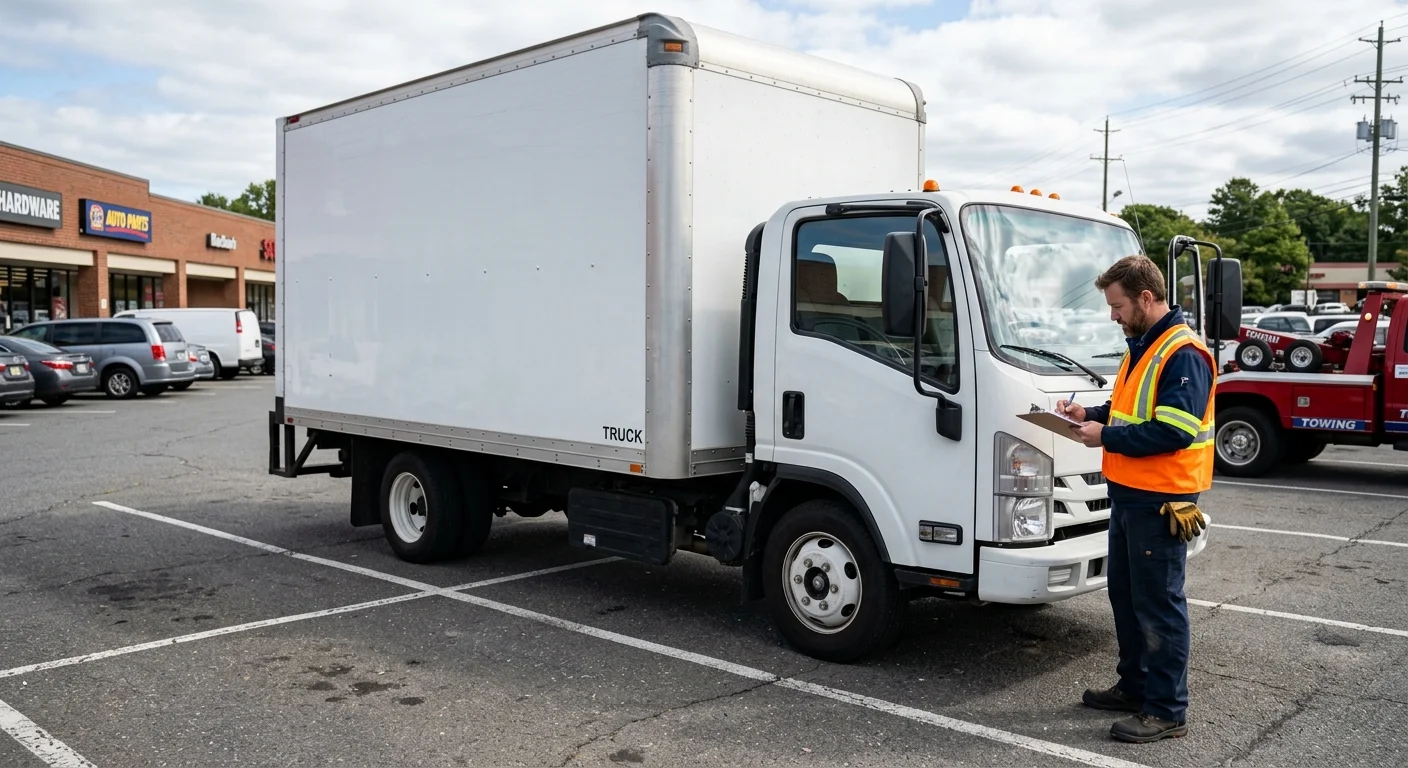
Identify the moving truck before calling
Start with the information printed on the truck and rental paperwork. Don’t classify it by appearance alone. Two box-shaped trucks can require different towing arrangements.
Give dispatch the make, model, model year, and unit number. If the paperwork lists vehicle weight information, read it exactly as shown. Don’t estimate the truck’s weight or cargo capacity from its box length.
Tell dispatch whether it’s a rental or privately owned. For a rental moving truck, keep the agreement nearby. It may contain a roadside assistance contact, vehicle identification details, or instructions for a breakdown.
Useful identification details include:
- The rental company or registered owner
- The truck’s unit or fleet number
- The license plate and issuing state
- The make, model, and model year
- Any weight information shown on the paperwork
- The location of the keys
Explain whether a trailer or vehicle is attached. Include that trailer’s identification and condition as well. Don’t disconnect anything beside traffic unless the rental company or responding operator directs you.
Your location matters too. Give a street address, freeway direction, nearby exit, or business name. “I-8 east near College Avenue” gives dispatch more context than “somewhere near San Diego.”
Have these details ready before requesting a tow truck for a moving truck. Clear information helps the network match your call with an independent operator prepared to assess that specific vehicle.
Describe its load and current condition
Tell dispatch what the truck is carrying. Household boxes create a different situation from appliances, shop equipment, construction materials, or an empty cargo area. You don’t need an exact cargo weight unless you have a verified figure.
Describe how the load is arranged. Mention anything that shifted, fell, leaked, or pressed against the rear door. Don’t open a loaded cargo door if items may fall outward. Tell the operator about the problem before anyone tries to access it.
Next, describe the breakdown. Say what happened just before the truck stopped. Useful details include warning lights, smoke, leaking fluid, unusual sounds, steering trouble, or a wheel that won’t turn. Report what you observed without diagnosing the cause.
Wheel condition deserves a separate description. Tell dispatch about flat tires, damaged wheels, missing wheels, locked wheels, or an axle that appears displaced. Mention whether the parking brake releases and whether the transmission can select neutral. If you don’t know, say so.
A collision, rollover, ditch, or unstable position isn’t a routine breakdown. Those details may point toward accident recovery instead of a standard roadside pickup. Photos can also help the operator understand the truck’s position before accepting the job.
For general breakdown preparation, review NHTSA’s roadside safety resources. Don’t attempt repairs, cargo adjustments, or recovery work that requires equipment or training.
Explain the road, lot, or garage access
A precise pickup location is only the beginning. Dispatch also needs to know how an operator can reach and position near the moving truck.
Describe whether the truck is on a freeway shoulder, surface street, loading area, driveway, parking lot, or inside a structure. Give the direction of travel on I-5, I-8, I-15, or SR-94. Include the nearest exit when you can confirm it.
San Diego locations create distinct access problems. A Mission Valley parking structure isn’t the same as an open Otay Mesa industrial lot. Loading areas in Kearny Mesa may have gates, parked vehicles, or narrow approaches. Downtown garages can have height restrictions and tight turns.
If the truck is inside a garage, read the posted clearance. Tell dispatch which level it’s on and whether ramps connect the levels. Mention gates, access codes, security desks, loading docks, low branches, or overhead pipes.
Explain the ground beneath the truck. Is it on pavement, gravel, dirt, sand, or a steep driveway? Say whether its front or rear faces the exit. Mention walls, curbs, parked cars, trailers, or landscaping close to the truck.
Don’t move the vehicle just to make the tow easier unless the rental company or operator says it’s appropriate. A truck with damaged steering, wheels, or leaking fluid may need a different plan.
Mountain and backcountry locations also take considerably longer to reach than San Diego’s urban core. Give dispatch a map pin when the address doesn’t identify the actual breakdown spot.
Ask what towing category fits the vehicle
Don’t order a towing category based only on the words “moving truck.” Ask dispatch to classify the vehicle using the information you provide.
A small rental truck shouldn’t automatically be treated like a passenger car. A large box truck shouldn’t automatically be called a semi. Vehicle specifications, cargo, damage, wheel condition, and access all affect the match.
Read any verified weight information from the rental agreement or vehicle label. Then ask whether the job fits the operator’s medium-duty or heavy-duty category. Our guide to medium-duty towing in San Diego explains the middle category without turning every box truck into a heavy truck.
For larger commercial vehicles, dispatch may consider an operator offering heavy-duty towing. That decision should come from the truck’s actual details. Don’t request heavy-duty service simply because the cargo box looks tall.
A moving truck also isn’t a tractor-trailer. If the disabled vehicle has a tractor, separate trailer, air systems, or other commercial details, say so directly. Our semi-truck towing guide covers that distinct situation.
Before accepting the match, repeat the essential details. Confirm that dispatch recorded the exact truck, attached trailer, load condition, wheel problems, pickup access, and destination. Ask whether the operator needs photos or information from the rental company.
This short review can expose a missing detail before the driver is sent out.
Confirm the repair destination and unloading plan
A moving truck breakdown creates two problems. The vehicle needs a destination, and the cargo still needs a plan.
Call the rental company first when the truck is rented. Ask whether roadside benefits apply, whether you must use its selected provider, and where it authorizes the truck to be taken. Confirm those instructions against your rental agreement.
Don’t choose a repair shop until the shop agrees to receive the vehicle. Give the shop the truck’s make, model, condition, and rental status. Ask where an arriving operator should place it and whether the property will be accessible.
The repair destination may not accept the cargo. A rental location may also have its own instructions for a loaded disabled truck. Ask who is responsible for unloading, transferring, or securing your belongings after delivery.
If another moving truck will receive the load, confirm where the transfer can happen. A roadside shoulder, narrow driveway, or crowded repair lot may not provide a workable transfer area. Never assume the towing operator will unload household goods.
Keep the truck keys, rental agreement, destination contact, and cargo notes together. If someone else will meet the operator, give dispatch that person’s name and phone number.
Before the tow moves forward, confirm the complete trip. That means the pickup point, authorized destination, receiving contact, access instructions, and plan for the cargo. Ask the operator directly about the price and payment terms for that specific job.
When to call us
A disabled moving truck needs a professional operator when it can’t be driven safely, has damaged wheels, carries a shifted load, or sits in difficult access. We’ll match your request with an independent licensed and insured tow operator serving San Diego County. Call (858) 923-5787 to reach dispatch.