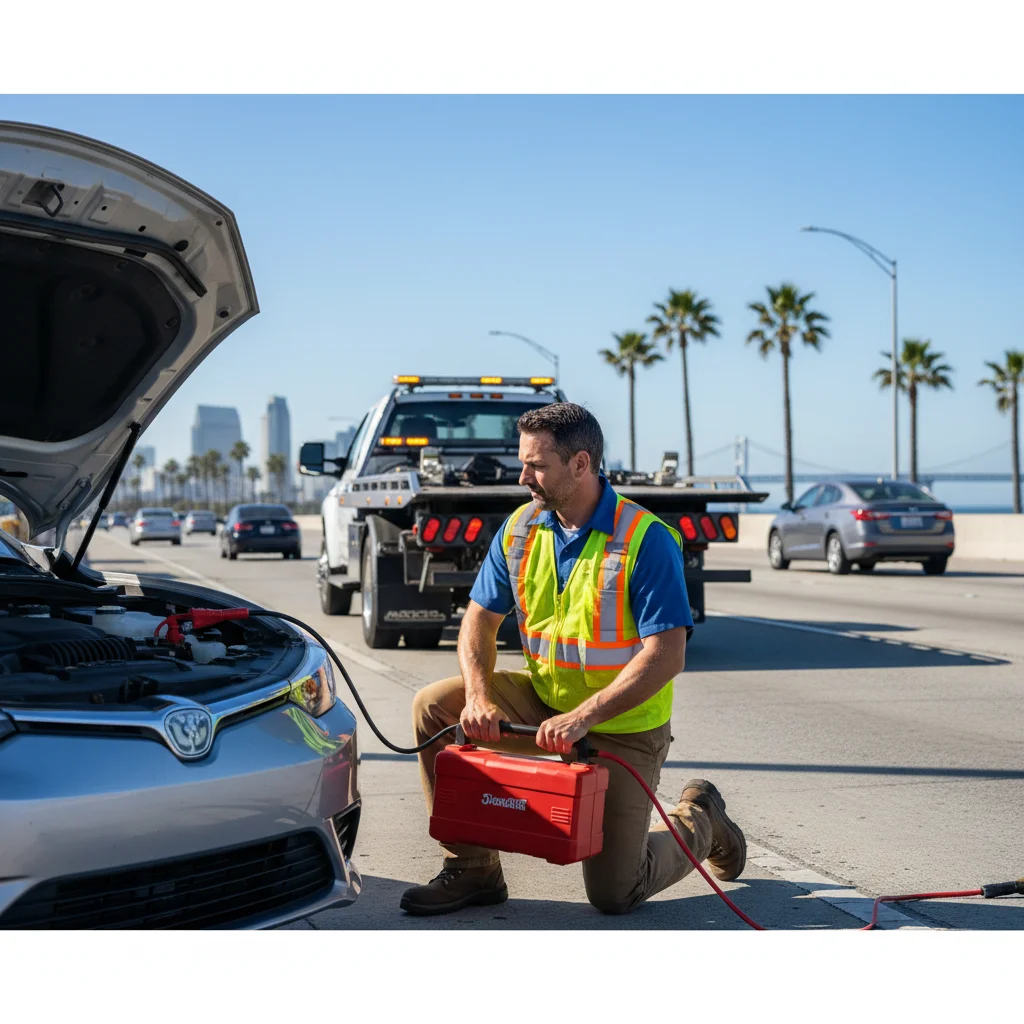
A quick trip to the grocery store turns into a frustrating delay when your car won’t start. The dashboard lights up, but the engine only clicks, or worse, stays silent. This common scenario plays out for thousands of San Diego drivers every year, often due to a dead car battery. While a dead battery might seem like a minor inconvenience, it’s a leading cause of roadside breakdowns, impacting daily commutes, weekend plans, and even safety on our busy freeways. Understanding how often these breakdowns occur, why they happen, and what they really cost can help you stay prepared.
The silent killer: dead batteries and their impact on San Diego drivers
Car batteries have a finite lifespan, and their performance degrades over time. They’re also sensitive to temperature extremes and inconsistent usage. For San Diego drivers, the mild climate might seem forgiving, but even here, battery issues are a constant problem. A battery that struggles to hold a charge can leave you stranded at the beach in La Jolla, stuck in commuter traffic on I-15, or facing a long wait in a remote East County canyon.
How often do dead batteries cause breakdowns? The national picture
Nationally, battery-related issues consistently rank as the number one reason for roadside assistance calls. Organizations like AAA report that battery failure accounts for about 25% of all breakdowns, making it the most frequent cause. This figure has remained largely consistent over the past decade.
Why do batteries fail so often?
- Age: Most car batteries last between three and five years. Beyond this, their ability to hold a charge significantly diminishes.
- Extreme temperatures: While less severe than in colder climates, San Diego’s summer heat, particularly in North County Inland cities like Escondido or Poway, can accelerate battery fluid evaporation and internal corrosion. Cold snaps, though rare, also reduce battery efficiency.
- Parasitic drain: Accessories left on (lights, phone chargers) or faulty electrical components can slowly drain a battery even when the car is off.
- Infrequent driving: Cars driven rarely, or only for short distances, don’t allow the alternator enough time to fully recharge the battery.
- Human error: Leaving headlights on overnight or doors ajar.
These factors combine to make battery failures a persistent issue, affecting millions of drivers annually.
San Diego’s climate and battery life: a unique challenge
While San Diego avoids the harsh winters that kill batteries in other parts of the country, our climate still presents challenges.
- Heat cycles: The warm days, especially inland, can stress batteries. A battery working harder in the heat will degrade faster.
- Coastal humidity: While less direct, humidity can contribute to corrosion on battery terminals if not properly maintained.
- Stop-and-go traffic: The constant start-stop nature of driving on I-5 through downtown, I-805 in the South Bay, or SR-163 during rush hour puts a strain on your battery. Each start draws a significant amount of power, which needs to be replenished. Short trips don’t allow for a full recharge.
For drivers in areas like Chula Vista, National City, or along the I-5/I-805 corridor, the daily commute can be a silent battery killer. Similarly, residents in El Cajon, La Mesa, or Santee, who frequently navigate warmer East County conditions, should be especially vigilant about battery health.
Beyond the battery: other common reasons cars break down in San Diego
While dead batteries top the list, they’re not the only reason Quick Tow SD receives calls. Many other issues can leave San Diego drivers stranded.
- Tire problems: Punctures, blowouts, and worn-out tires are a frequent cause of roadside distress. San Diego’s varied terrain, from urban streets to canyon roads in East County, means encountering road debris is common. Potholes, especially after rain, can also lead to tire and wheel damage.
- Engine overheating: This is particularly common during summer months or when driving up significant grades. The long, steep climb on I-8 heading east towards Alpine, Pine Valley, or Julian can put immense stress on an engine. Similarly, the I-15 corridor in North County Inland sees higher temperatures, contributing to overheating issues.
- Fuel issues: Running out of gas is more common than you might think, especially when navigating unfamiliar routes or misjudging distances in more remote areas like Borrego Springs or along Sunrise Highway. Misfueling (putting the wrong type of fuel in the tank) also happens.
- Electrical problems (non-battery): Issues with the alternator (which charges the battery while the engine runs), starter motor, or other complex wiring can mimic battery problems or lead to complete power loss.
- Accidents: Unfortunately, collisions are a reality on San Diego’s busy road network. Major freeways like I-5, I-15, I-8, I-805, SR-163, SR-52, and SR-56 are hotspots for accidents, often requiring immediate emergency towing and accident recovery services. The CHP often calls tow companies on rotation for these scenes.
Understanding these common breakdown scenarios helps San Diego drivers prepare for the unexpected.
The true cost of a breakdown: time, money, and stress for San Diego residents
A car breakdown is rarely just about the cost of a jump start or a tow. It comes with a cascade of other expenses and inconveniences.
- Financial costs:
- Jump start: While often inexpensive, if it doesn’t work, you’ll need a new battery.
- Battery replacement: Typically $150–$300, plus installation.
- Towing fees: These vary based on distance, vehicle type, and time of day. Ask dispatch for the exact flat rate before you agree to the job, and for a written quote on long-distance towing.
- Repair costs: Beyond battery or tire issues, engine or transmission problems can run into hundreds or thousands of dollars.
- Time costs:
- Lost work/appointments: Missing a crucial meeting or delaying personal errands.
- Waiting for assistance: However quickly an operator reaches you, and mountain or backcountry areas like Julian and Mt Laguna take considerably longer, waiting on the side of the road takes time.
- Arranging alternative transport: Rideshares, public transit, or asking for a lift.
- Stress and safety:
- Freeway breakdowns: Being stranded on the shoulder of I-5 near the Camp Pendleton corridor, I-8 heading up the grade, or I-15 during rush hour is inherently dangerous. The CHP advises drivers to stay in their vehicles if possible and call for help immediately. NHTSA provides roadside safety guidelines for staying safe during a breakdown.
- Remote locations: Breaking down on a canyon road in East County or a mountain pass can mean longer wait times and increased anxiety.
- Nighttime breakdowns: Reduced visibility and increased vulnerability.
For San Diego families, the inconvenience of a breakdown can disrupt school pickups, sports practices, or weekend trips to Balboa Park. For commuters, it can mean a missed day of work.
Average costs for roadside assistance and towing in San Diego
Quick Tow SD works with flat-rate pricing, 24/7. Ask dispatch for the exact rate before you agree to the job.
Here’s a general idea of what factors into the price for common services in San Diego County:
| Service Type | Price | Notes |
|---|---|---|
| Battery Jump Start | Ask dispatch | Varies by location and time. |
| Tire Change | Ask dispatch | Requires a spare tire to be present and accessible. |
| Fuel Delivery | Ask dispatch + fuel cost | Fuel cost is extra. |
| Lockout Service | Ask dispatch | Non-destructive entry. |
| Light-Duty Tow (Hook) | Ask dispatch | Initial hook-up fee, mileage extra. |
| Heavy-Duty Tow (Hook) | Ask dispatch | For large trucks, RVs, buses. Mileage extra. |
| Long-Distance Tow | Flat Quote | Provided in writing based on distance and vehicle. See our guide on long distance tow cost. |
Actual pricing depends on vehicle type (especially AWD or EV requiring flatbed), specific location within San Diego County, and time of day. Confirm the rate with dispatch before you agree to the job. For a full breakdown of cost drivers, check out our blog post on tow cost San Diego.
Preventing breakdowns: smart tips for San Diego drivers
Proactive maintenance is the best defense against unexpected breakdowns. A little effort can save you significant time, money, and stress.
- Regular vehicle maintenance:
- Battery checks: Have your battery tested annually, especially if it’s over three years old. Many auto parts stores offer this service for free. Clean any corrosion off the terminals.
- Tire pressure and tread: Check your tire pressure weekly. Proper inflation improves fuel economy and extends tire life. Inspect tread depth and look for uneven wear or damage.
- Fluid levels: Regularly check engine oil, coolant, brake fluid, and power steering fluid. Low levels can lead to overheating or mechanical failure.
- Belts and hoses: Inspect for cracks, fraying, or leaks. These components are critical for engine function.
- Battery care specifics:
- Turn off accessories: Always ensure headlights, interior lights, and other accessories are off before leaving your vehicle.
- Drive regularly: Short, infrequent trips don’t allow your alternator to fully recharge the battery. Aim for at least a 20-minute drive a few times a week.
- Consider a trickle charger: If you store your vehicle for extended periods, a trickle charger can maintain battery health.
- Emergency kit: Keep a well-stocked emergency kit in your vehicle. It should include:
- Jumper cables
- First-aid kit
- Flashlight with extra batteries
- Water and non-perishable snacks
- Phone charger/power bank
- Reflective triangles or flares
- Basic tools (screwdriver, pliers)
When to replace your car battery
Don’t wait until your battery completely dies. Look for these warning signs:
- Slow cranking: The engine turns over sluggishly when you try to start the car.
- Dim lights: Headlights and interior lights appear dimmer than usual.
- Check engine light: Sometimes a dying battery can trigger this warning.
- Corrosion: White, powdery substance on battery terminals.
- Battery age: If your battery is over 3-5 years old, it’s nearing the end of its life.
Replacing your battery proactively can prevent a roadside emergency.
Understanding towing options: flatbed vs. wheel-lift for San Diego roads
When a jump start isn’t enough, or your car has a more serious issue, towing becomes necessary. Knowing the right type of tow for your vehicle is important to prevent further damage.
- Wheel-lift towing: This method uses a yoke that cradles your vehicle’s front or rear wheels, lifting them off the ground while the other two wheels remain on the road. It’s efficient for many standard front-wheel-drive (FWD) or rear-wheel-drive (RWD) vehicles. Quick Tow SD uses modern wheel-lift trucks that are gentle on your vehicle’s frame.
- Flatbed towing (rollback): A flatbed tow truck has a hydraulic bed that tilts and slides down to ground level, allowing your vehicle to be driven or winched onto it. The vehicle is then securely strapped down for transport, with all four wheels off the ground.
- Mandatory for AWD, 4x4, and EVs: This is crucial for vehicles with all-wheel drive (AWD) or four-wheel drive (4x4) systems, such as Subarus, Audis, and many trucks. Towing these vehicles with a wheel-lift can cause severe damage to the drivetrain, leading to costly repairs ($2,500–$5,000).
- Essential for electric vehicles (EVs): EVs like Teslas, Rivians, and others must be transported on a flatbed. Their drive motors stay engaged even when powered off or “dead,” and dragging them with a wheel-lift can fry the motor and inverter, resulting in repair costs of $8,000–$18,000.
- Recommended for exotic, classic, or low-clearance vehicles: Flatbeds offer the safest transport for these vehicles, preventing potential scrapes or damage to bumpers and undercarriages. See our service for exotic and classic towing.
Quick Tow SD operates a fleet of both wheel-lift and flatbed towing trucks, ensuring we have the right equipment for your specific vehicle and situation. The drivers we send are trained to identify the correct towing method to protect your investment. Read more about flatbed vs. wheel-lift towing on our blog.
Quick Tow SD: your 24/7 partner on San Diego roads
When a dead battery or any other breakdown leaves you stranded, Quick Tow SD is ready to help. We provide reliable, professional 24/7 towing and roadside assistance across all of San Diego County, covering 67 cities and communities. From the coastal cities of La Jolla, Del Mar, Encinitas, and Carlsbad, to North County Inland areas like San Marcos, Escondido, and Poway, to East County (El Cajon, La Mesa, Santee, Lakeside, Alpine), the South Bay (Chula Vista, National City, Imperial Beach), and even the mountain communities of Julian and Pine Valley, we’ve got you covered. We also serve the critical Camp Pendleton corridor, where military families often need prompt POV breakdown response.
Arrival time depends on where you are and what is on the road. Mountain and backcountry areas take considerably longer because of the distance. We understand that time is valuable, and safety is paramount, especially when you’re on a busy freeway like I-5, I-15, or I-805.
Why Quick Tow SD is the right call
- A line that takes calls round the clock: the call routes to an operator covering your area at any hour.
- Experienced operators: The drivers we send are highly trained in all aspects of towing and roadside assistance, including proper battery jump starts and safe towing practices for all vehicle types.
- Proper equipment: the operators in the network run flatbed, wheel-lift, and heavy-duty wreckers, which covers everything from a compact car to an RV or commercial truck. We also specialize in motorcycle towing and RV towing.
- Transparent pricing: Ask for the flat rate on the call, at any hour, and there are no surprises at drop-off.
- Local expertise: We know San Diego County’s roads, traffic patterns (including SANDAG traffic data), and specific challenges, allowing for faster, more efficient service.
We handle everything from simple battery jump starts to complex accident recovery and long-distance towing. If you need a vehicle removed from private property, we understand California Vehicle Code 22658 regulations and private property tow requirements.
Frequently asked questions
How often should I check my car battery?
You should have your car battery tested annually, especially if it’s three years old or older. Visually inspect the terminals for corrosion every few months and clean them if necessary. Regular checks can help identify issues before they lead to a breakdown.
What are the signs of a dying battery?
Common signs include slow engine cranking, dim headlights or interior lights, the check engine light illuminating, and visible corrosion on the battery terminals. If your battery is more than three to five years old, it’s likely approaching the end of its useful life.
Can a dead battery damage my car’s electronics?
While a dead battery itself usually won’t damage electronics, repeated jump starts or improper jump-starting procedures can potentially cause spikes that harm sensitive electronic components. It’s always best to follow the correct procedure or call a professional.
Is it safe to jump-start a modern car?
Yes, it’s generally safe to jump-start a modern car if you follow the correct procedure. Always consult your vehicle’s owner’s manual for specific instructions. Modern cars have more complex electrical systems, so improper connections can be risky. If unsure, calling a professional for a battery jump start is the safest option.
How much does a jump start cost in San Diego?
A professional battery jump start from Quick Tow SD is priced flat-rate, 24/7. Ask dispatch for the exact rate before you agree, since it depends on your exact location and time of service.
Don’t let a dead battery or other breakdown disrupt your day. For fast, reliable, and professional roadside assistance anywhere in San Diego County, Quick Tow SD is here to help. Call us 24/7 at (858) 923-5787 or visit our battery jump start service page for more information.