California doesn’t offer one confirmed online form that gives every owner an immediate junk slip. You may start by checking DMV information online, but the final path depends on the ownership record and the receiving dismantler.
What a junk slip is for at pickup
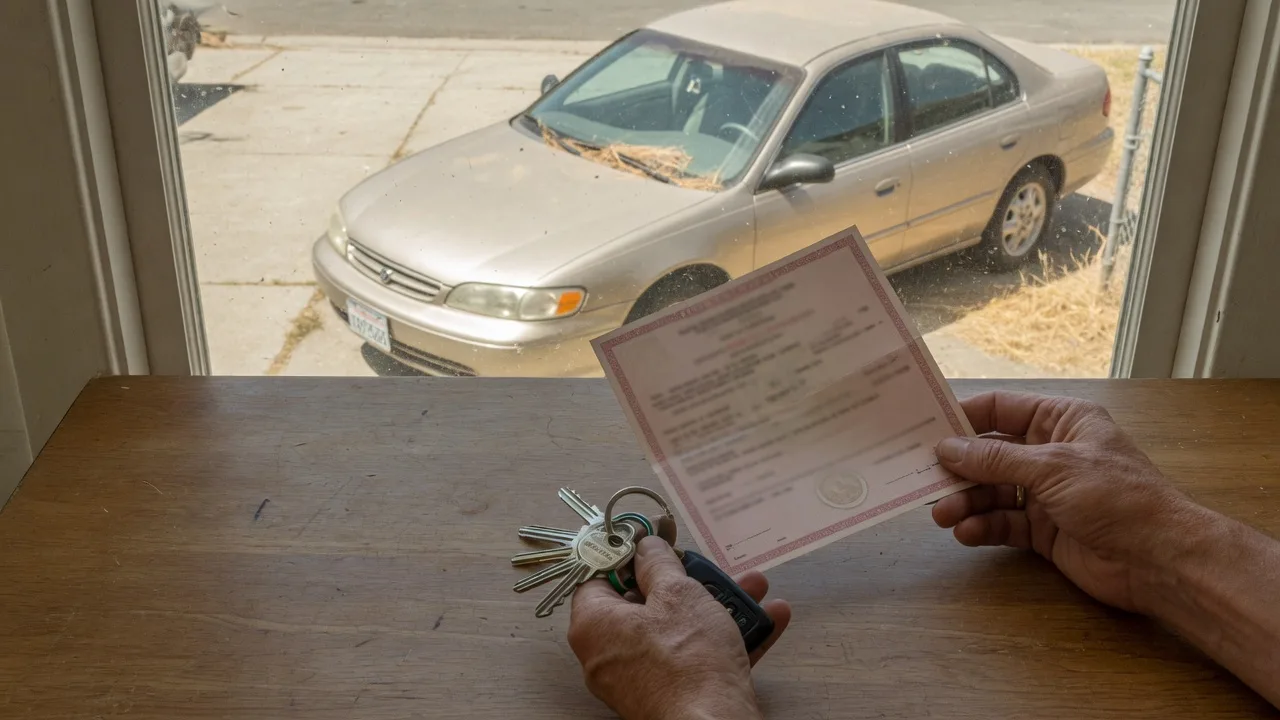
People often use “junk slip” as a casual name for a California DMV Junk Receipt. The DMV issues a Junk Receipt instead of an ownership certificate for a vehicle recorded as junk. Once issued, that receipt becomes the vehicle’s ownership document.
That doesn’t make it a universal pickup pass. A receiving yard may still need to match the receipt with the vehicle identification number. It may also check the person transferring the vehicle and the documents available. Ask what the yard needs before the towing operator arrives.
A junk receipt also isn’t the same as REG 42. REG 42 is the Notice of Acquisition and Report of Vehicle To Be Dismantled. According to the DMV’s dismantler handbook, a licensed dismantler files that form. It isn’t the registered owner’s general junk-car application.
The owner-side filing is REG 138, the Notice of Transfer and Release of Liability. REG 138 isn’t a junk certificate and doesn’t create junk status by itself. Don’t assume that submitting it replaces the receiving yard’s ownership review.
For a broader look at titles, releases, and vehicle records, read our California junk-car paperwork guide. That guide covers the wider transfer process. This page stays focused on the DMV junk slip online question.
Before pickup, ask the receiving yard which document will prove ownership after the transaction. Keep copies of anything signed or surrendered. A vehicle leaving a City Heights alley or an El Cajon driveway doesn’t alone confirm that the DMV record has changed.
What you can start online, and what still needs a yard or DMV check
The individual owner path to a California DMV junk receipt couldn’t be confirmed as fully online. The approved DMV material confirms only that REG 42 is filed by a licensed dismantler, not by the registered owner. It doesn’t confirm a general online junk-slip portal for owners.
This distinction matters. Search results for “DMV junk car application” often mix owner paperwork with dismantler paperwork. A downloadable form or document editor doesn’t prove that the DMV accepts that form online for your situation.
An owner can start online by reviewing the vehicle record and locating the relevant DMV guidance. You can also ask the receiving yard whether it files the dismantler paperwork after acquisition. Don’t upload ownership documents to an unrelated form service just because its page uses the words “junk slip.”
The current DMV material confirms these separate documents:
- A Junk Receipt replaces an ownership certificate for a junk vehicle.
- REG 42 is filed by the licensed dismantler.
- REG 138 is the owner-side transfer and liability notice.
- REG 227 is used when a title is lost.
That list doesn’t establish that one online submission completes every transaction. It also doesn’t show that every receiving yard follows an identical intake process.
Before arranging junk-car removal in San Diego County, tell the receiving yard what you actually have. State whether you hold the title, a junk receipt, or neither. Ask whether it needs original documents at pickup or another DMV step first.
The yard sets its document requirements for accepting the vehicle. The operator handling transport shouldn’t be expected to resolve an ownership problem at the curb.
How this differs from a missing title or expired tags
A junk receipt, a missing title, and expired registration describe different issues. Treating them as one problem can delay a pickup.
A junk receipt means the DMV issued an ownership document for a vehicle recorded as junk. A missing title means the expected ownership certificate isn’t available. REG 227 is the DMV Application for Duplicate or Paperless Title used when a title has been lost.
Having REG 227 doesn’t automatically mean a receiving yard will accept the vehicle. The yard may need a completed document, additional ownership evidence, or a DMV record check. Our guide to junking a car without a title in San Diego explains what to confirm before scheduling transport.
Expired tags are different again. Registration stickers show registration status, not whether the vehicle has been placed into junk status. The approved DMV material doesn’t confirm one universal rule for resolving expired-registration issues before every junk transaction.
That means you shouldn’t rely on a general answer about unpaid fees or penalties. Confirm the current requirement with the DMV and the specific receiving yard. Don’t pay a figure quoted by an unofficial page without checking who set it and what transaction it covers.
Our article about junk cars with expired California registration stays focused on that issue. It’s useful when the title is present but the tags aren’t current.
The cleanest call to a yard uses exact language: “I have the California title, but the registration is expired,” or “The title is missing, and I don’t have a junk receipt.” That gives the yard a clear starting point.
Questions the receiving yard may still ask
The receiving yard may need more than a screenshot from an online form. Its questions help establish the vehicle’s identity, ownership trail, condition, and pickup access.
Expect to discuss the vehicle identification number and the name shown on the available ownership document. If those details don’t match, ask what documentation can complete the ownership chain. Current DMV material says bills of sale may be needed in some ownership chains, but that doesn’t establish a universal bill-of-sale rule for every junk car.
Ask the yard these questions before pickup:
- Is my current ownership document acceptable?
- Do you need the original title or junk receipt?
- Who files REG 42 after the vehicle is acquired?
- Should I submit REG 138 for this transfer?
- What should I do if the title is missing?
- Does the vehicle record need a DMV review first?
- Which documents must be present when the vehicle arrives?
The yard may also ask about the car itself. Give the exact year, make, model, and location. Explain whether it rolls, steers, and has accessible wheels. Mention locked gates, parking structures, steep driveways, or tight alleys.
Those access details matter across San Diego County. A car behind a South Bay apartment building presents a different pickup than one beside a rural East County road. North County parking structures can also limit vehicle access. The operator needs accurate conditions before accepting the transport job.
Don’t sign blank documents or hand over ownership paperwork without knowing who receives it. Keep readable copies. If the yard can’t explain which DMV filing applies, pause the pickup and confirm the process directly with the DMV.
Where to confirm the current California DMV process
Start with the California DMV website, not a third-party PDF editor. Search the DMV site for “Junk Receipt,” “Junking a Vehicle Individual,” and the relevant form number.
Use the DMV’s Dismantlers Handbook to check how REG 42 and junk receipts work. Remember that dismantler instructions don’t automatically describe an owner’s filing path. The person submitting the paperwork matters.
For an online claim, look for three details on the DMV page:
- Who may use the application.
- Which documents must be uploaded or surrendered.
- Whether another DMV or yard step remains.
If the page asks for an Occupational License number, that signals a business-facing process. It shouldn’t be treated as an individual owner application without confirmation from the DMV.
A third-party page may offer to complete or edit a “junk slip” online. That service isn’t the same as the DMV issuing a Junk Receipt. Check the web address and the document name before sharing a title, registration record, or identification.
The live individual online path couldn’t be confirmed from the approved material for this article. Before pickup, ask the DMV whether your ownership situation can be handled online. Then confirm what the receiving yard will accept.
This two-step check is especially useful when the owner name has changed, the title is missing, or the vehicle already shows junk status. It prevents a towing operator from arriving for a vehicle the yard can’t yet receive.
When to call us
Call when the paperwork is confirmed and the non-running vehicle needs professional transport to the receiving yard. Quick Tow SD can match you with an independent operator, while the yard handles its own document review and sets its acceptance terms.
Call (858) 923-5787 to reach dispatch.