A Civic with 2023 tags can still leave a Chula Vista driveway as junk. Expired registration changes how the car can move and what a yard may ask to see. The California DMV still treats ownership paperwork as its own problem.
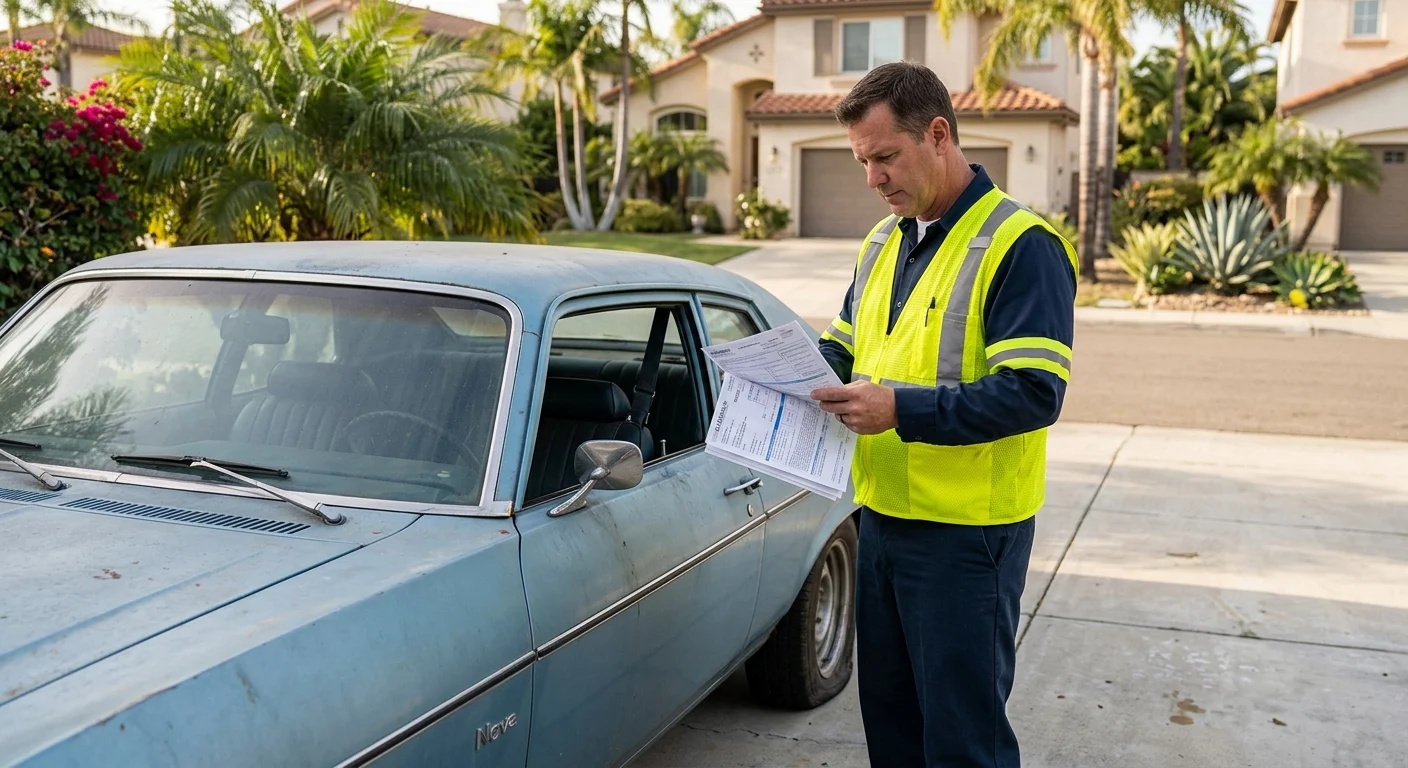
What expired registration changes at pickup
Expired tags are a road-use problem first. They also change the pickup, because the car is not going back into regular traffic. They don’t, by themselves, decide whether a licensed dismantler can take the vehicle.
If the car sits on a public street in North Park, City Heights, or downtown, stale tags create a police risk. California Vehicle Code 22651(o) lets police tow a vehicle when registration has been expired for more than six months. That is a public-road police ground. California Vehicle Code 22658 does not list expired registration as a private-property tow reason.
A car in your own driveway in El Cajon, Lakeside, or National City sits on different ground. HOA lots in Pacific Beach and Encinitas still follow private-property rules. Expired tags alone don’t authorize that kind of tow. Other posted or blocking problems still can, so a car that looks forgotten can still get pulled for a different listed reason.
The usual junk pickup in San Diego County is a tow. Driving the car yourself across I-8, I-15, or Broadway with dead tags can create a separate stop. Junk car removal keeps the car off the road: a licensed operator loads it and takes it to the destination you and the yard agree on.
Access matters more than the sticker on the plate. A tight alley in Barrio Logan, a gated South Bay complex, or a dirt pad in Jamul all change how the operator we dispatch can reach the bumper. Keys help. A clear path helps.
Tell dispatch the tags are expired before anyone rolls. Tell them whether the car is on a public street, a private driveway, or a lot with a gate. The operator taking the job sets the price and gives you an arrival estimate for that exact address.
Don’t assume the tow is free because the car is junk. Whether a pickup is billed, deducted, or included is a yard and operator question. Read whether a junk car can be towed for free before you treat a free hook as part of the deal.
What the receiving yard may still need to see
A licensed dismantler cares about the right to take the car into junk status. Current registration is a road document. Ownership lives on the title. Yards in San Diego County add their own intake lists on top of DMV rules. Ask the specific yard before the truck leaves.
Ask whether they want a photo ID at the bumper. Ask whether they want the title in your name. If a lender is printed on the title, ask how they handle the lien. A yard that cannot clear a lien will usually stop the job.
Bring the expired registration card if you still have it. It can help match the VIN, plate, and name. A California rule that an expired card stands in for a missing title could not be confirmed. Ask the yard, then check with the California DMV.
The forms people call a dmv junk slip are a small set of real DMV papers. REG 42 is the Notice of Acquisition / Report of Vehicle To Be Dismantled. The California DMV says the licensed dismantler files it. The registered owner doesn’t file REG 42.
REG 138 is the Notice of Transfer and Release of Liability. That is the owner-side filing. It is not a junk certificate. Filing it is how you document that you released the vehicle.
A Junk Receipt is issued by the California DMV instead of an ownership certificate for a junk vehicle. DMV issues it when an individual surrenders evidence of ownership and requests junk status. That receipt then becomes the ownership document. Confirm those steps with DMV and with the yard that will take the car.
Plate return and fee-clearance steps live in DMV handbooks that change. A specific plate-surrender rule for this pickup could not be confirmed. Ask DMV whether plates stay with you, go to the yard, or get surrendered. Pull personal items, the registration card, and any title in the car before the operator we dispatch loads it.
How this differs from a missing title
Expired registration and a missing title are different problems. They get mixed together because both show up on dead cars. They don’t get solved with the same form.
Registration records that the vehicle was allowed on the road for a period. Title records who owns it. A car in Santee can have a clean title in your name and tags that lapsed two years ago. A car in Oceanside can show plates and still have no title in the glove box. The first job is a tow and paperwork conversation. The second job may wait until ownership is documented.
If the title is lost, California DMV’s REG 227 is the Application for Duplicate or Paperless Title. That is the form named in DMV’s dismantler handbook for a lost title. Renewing registration doesn’t create a title. An expired card doesn’t replace REG 227, at least not as a rule we can confirm.
If the name on the title doesn’t match your ID, the yard may ask for transfer documents that complete the chain. A dollar threshold, bond amount, or registration-only shortcut could not be confirmed as a publishable California rule here. Confirm those with DMV.
For the no-title path in this county, use the guide on how to junk a car without a title in San Diego. Keep this page for the expired-tag question. Keep the broader form list on paperwork to junk a car in California.
Money is a separate conversation. Expired tags don’t create a published payout on this site. If you are comparing offers, read cash for junk cars in San Diego and treat every number as something the buyer has to quote. Quick Tow SD refers the tow. The operator and the yard set their own money terms.
Questions to ask before the car leaves
Ask these out loud before anyone hooks the car. Get the answers from the receiving yard and from the operator we dispatch. Treat DMV and the intake desk as the last word.
Who is taking the car, and where is the yard. A destination in Barrio Logan is a different trip from a yard in Escondido or Otay. The operator needs a real address.
What documents they will inspect at the bumper. Title, ID, REG 138, and any lien release should be named if they want them. If they want the expired registration card, bring it. If they want plates off the car, confirm that with DMV as well as the yard.
Who files REG 42. The DMV answer is the licensed dismantler. If a caller tells you that you must file REG 42 yourself, pause and check DMV.
Whether you still need to file REG 138 after pickup. That filing is how you document release of liability. Ask when they expect you to file it.
Whether a lender is still on the title. A junk pickup doesn’t erase a loan.
Whether the car is on a public street with tags expired more than six months. If it is, police already have a tow ground under Vehicle Code 22651(o). Moving it from your driveway is simpler than finding it later in a police impound.
How the truck will reach the car. Low cars in Mission Valley parking structures, blocked wheels in East County mud, and HOA gates in Carlsbad all change the job. The operator tells you what they can do from the description you give.
What you will pay for the tow, and what a buyer will pay you if anything. Ask the operator and the yard. Quick Tow SD doesn’t quote a network rate and doesn’t publish junk payouts. The line takes junk-removal calls from every city in San Diego County, any time, day or night. The operator who accepts the job still has to agree the paperwork and the access will work.
Where to confirm current DMV junk-slip rules
Searchers looking for a dmv junk slip are usually hunting one of three DMV documents. REG 42 is the dismantler’s acquisition and dismantle report. A Junk Receipt is what DMV issues when an individual surrenders ownership evidence and asks for junk status. REG 138 is the owner’s release of liability. Calling REG 138 a junk certificate is the wrong name.
Confirm the live instructions on the California DMV site. Handbook pages move. Filing windows for REG 42 were not confirmed in our last review, and the two halves of that form can carry different windows. Don’t take a deadline from memory. Use DMV’s current wording, or skip the deadline and ask the dismantler what they will file.
San Diego County is not one counter and not one driveway. Coastal north county, the central city, East County, and the South Bay all use the same California DMV forms. Then they add local pickup facts. A car that sat through a Ramona summer on a dirt lot has different truck access than a car that sat in a Logan Heights driveway. The form names don’t change by ZIP. The path to the bumper does.
If the car already looks abandoned to a neighbor or an HOA, you may be on two tracks. Junking is an owner-directed transfer to a dismantler. An abandoned or lien-sale path is a different DMV process. Start at DMV’s lien sales and abandoned vehicle handbook if you are no longer sure which track you are on.
Quick Tow SD is a referral line. We connect you with independent licensed operators. We don’t hold a dismantler license. We don’t run a yard. We don’t file REG 42. The operator performs the tow. The dismantler and DMV handle junk status. You handle the owner-side release. If a yard in Chula Vista tells you one document list and a yard in San Marcos tells you another, believe the intake desk that will actually receive the car, then verify anything that sounds like a DMV rule on dmv.ca.gov.
When to call us
When the car can’t legally roll out of a San Diego driveway, you need a licensed operator to move it to the dismantler. Quick Tow SD takes the call and matches you with an independent licensed operator in the county. Call (858) 923-5787 to reach dispatch.