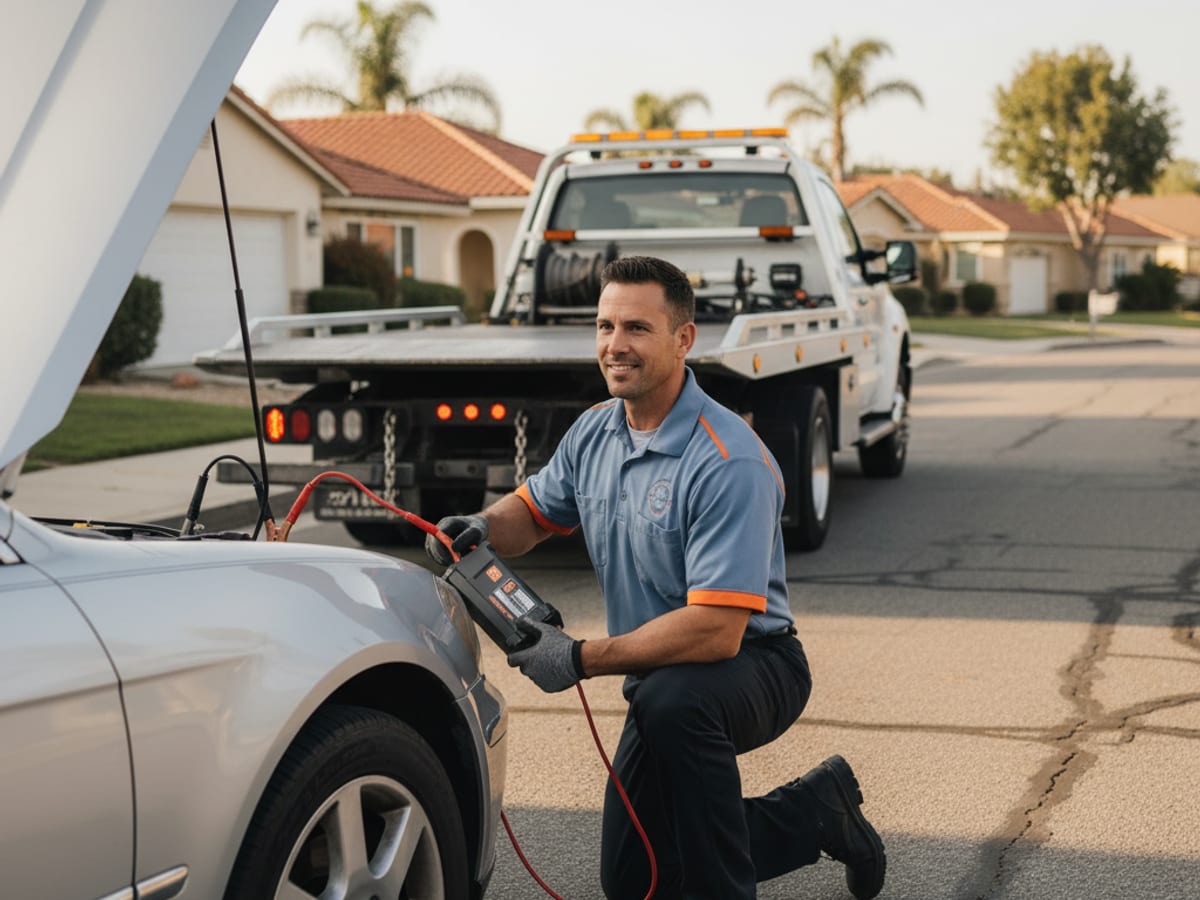
Yes, partly. California’s Freeway Service Patrol can help on covered San Diego freeways during posted hours, at no charge. Call 511 and say “Roadside Assistance.” Quick Tow SD is a referral line for a paid operator after that free patrol does not apply. This page does not publish a nine-minute arrival time.
If you want every free-tow path, not just FSP, see free towing in San Diego.
What the Freeway Service Patrol actually is
SANDAG publishes the San Diego Freeway Service Patrol on 511. The captured page lists help a patrol can give: a gallon of gas, a flat-tire change, a jump start, and water for the radiator. If they cannot get the vehicle running, they tow it at no charge to a safe location the CHP designates. They cannot tow to a private shop or home, and they are not allowed to recommend a shop.
Drivers complete a CHP training program. Trucks carry the statewide Freeway Service Patrol markings. That page does not publish a countywide response clock, and this article will not invent one.
Posted hours and where it does not run
Per that 511 page, service hours (effective July 1, 2021) are:
- Monday through Friday, 5:30 a.m. to 6:30 p.m., with peak windows 5:30 to 9:30 a.m. and 2:30 to 6:30 p.m., and midday 9:30 a.m. to 2:30 p.m.
- Saturday and Sunday, 10 a.m. to 6 p.m.
- No patrol on federal holidays
Service is available in most of the metropolitan region, with the exception of the Santee portion of SR 52, SR 56, SR 67, SR 125, and SR 905. If you stall on one of those routes, FSP is not the program for that pin.
If you stall on I-15 at 11 p.m. on a Tuesday, that same page says the patrol is not running. That is a paid-referral call, not a free patrol.
How to reach it
Call 511 and say “Roadside Assistance.” You can also flag a marked FSP truck if one is already there. This article does not publish a call-box count.
For what to do on the shoulder, read what to do if your car breaks down on the freeway.
Free FSP vs AAA vs a paid local quote
| Option | What it covers | Cost | Hours | Where it works |
|---|---|---|---|---|
| Freeway Service Patrol | Gas, jump, tire change, radiator water, free tow to a CHP-designated spot | Free, no membership | Posted 511 hours; closed federal holidays | Covered metro freeways only |
| AAA membership | Tow and roadside per your plan | Annual fee, plus extra miles | 24/7 membership line | Wherever that plan actually covers |
| Paid local operator | Quote for this pin and this destination | That operator’s number | Line takes calls 24/7 | Freeway, street, driveway, if that operator can take it |
FSP is the right first call on a covered freeway during posted hours. A membership is a contract you already paid for. A pay-per-use quote is what this line matches when FSP does not apply. Compare plans in AAA roadside assistance number and local San Diego alternative.
Where the free help ends
You need a paid quote if you are on a surface street, after posted hours, on an excluded route, or you need the car taken to a shop or home instead of a CHP drop. Timing color is in how long roadside assistance takes in San Diego. Budget color is in roadside assistance cost in San Diego.
If you are on a freeway right now, freeway breakdown in San Diego covers the safety steps first. When FSP cannot take the job, call (858) 923-5787. The line takes calls 24/7 and matches you with an independent operator who quotes that pin. This brand does not promise to come to you. The operator who accepts sets the arrival estimate.
Frequently asked questions
Is roadside assistance free in California?
Some of it is. On covered San Diego freeways during posted FSP hours, 511 can send a patrol at no charge. Off the freeway, after hours, and destination tows are not that program.
What does the Freeway Service Patrol cover?
Per the captured 511 page: a gallon of gas, a flat if they can change it, a jump, radiator water, and a free tow to a CHP-designated safe spot if they cannot get you running.
Does the Freeway Service Patrol tow you home?
No. That page says they cannot tow to a private facility or home.
What if I break down off the freeway?
FSP does not cover surface streets, lots, or driveways. Call (858) 923-5787 for a quoted independent operator, or use whatever motor club you already have.
When does FSP not run?
Federal holidays, outside the posted weekday and weekend windows, and on the excluded routes named above. This page does not invent a nine-minute county average.