A car that needs to leave California isn’t automatically a job for a tow truck. Past a certain distance, an auto transport carrier usually does the job better, and knowing which one you actually need before you call saves a wrong booking.
Why crossing a state line changes the service
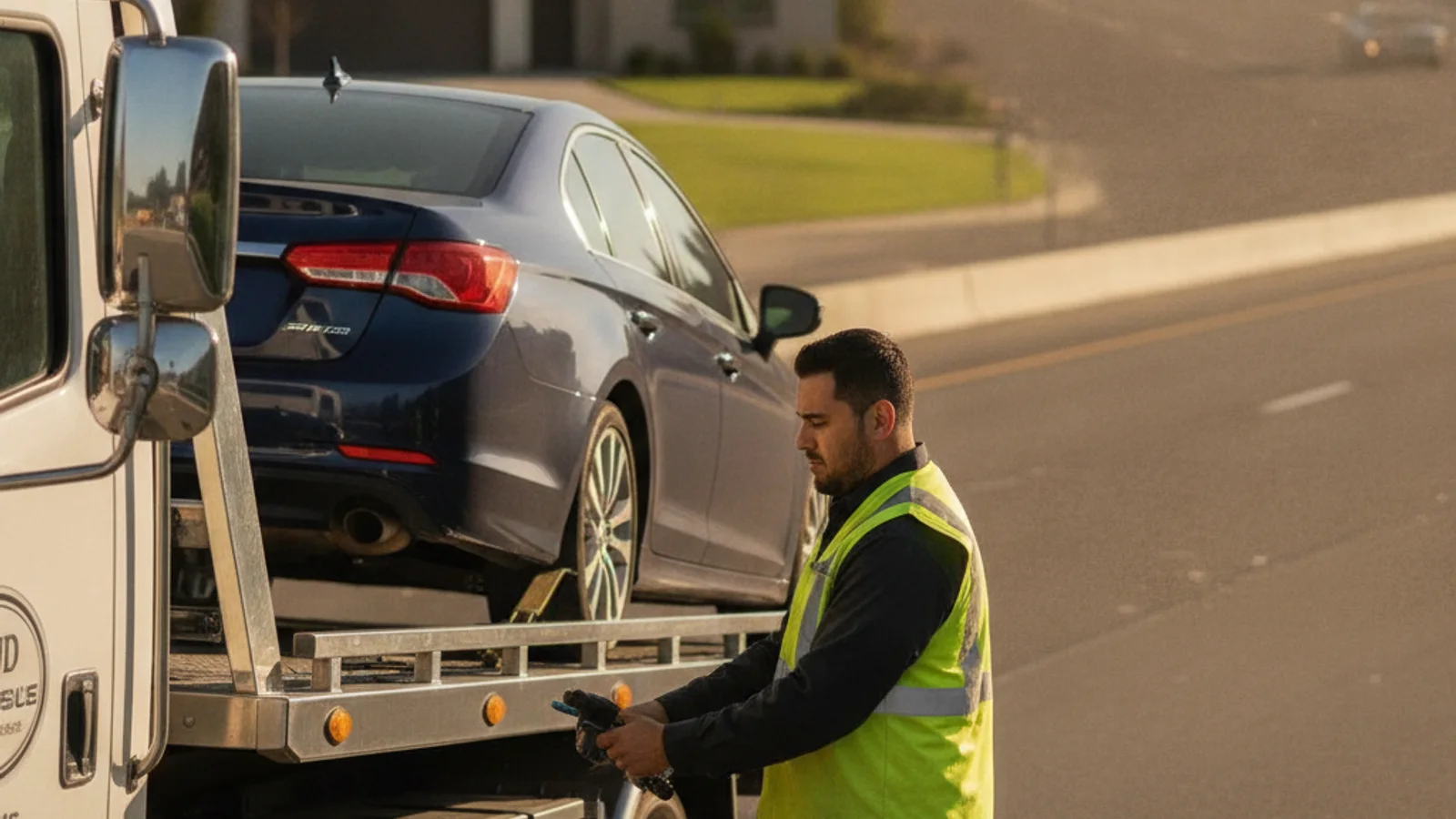
A tow truck moving a car across a state line is billed by the mile, and it ties up one truck and one driver for the entire trip, there and often back empty. That’s a reasonable setup for a short hop, a non-running car going from San Diego to Yuma, for instance, but it gets expensive fast once the distance stretches into hundreds or thousands of miles. An auto transport carrier works differently. It’s a truck built to carry several vehicles on one open or enclosed deck, running a route that serves multiple customers along the way. That shared capacity is why transport pricing works out better than a dedicated tow once a move goes any real distance out of state.
When an out-of-state tow is still the right call
A dedicated tow still makes sense in a narrower set of cases. A non-running car going a short distance, say across the Arizona line to Yuma or into southern Nevada, doesn’t need to wait for a transport carrier’s route and schedule. A vehicle that genuinely cannot be driven onto a carrier’s ramps, because the wheels don’t turn, the frame is damaged, or the vehicle needs to stay perfectly level, may also need a flatbed tow rather than a standard car-hauler loading process. If the trip is truly one state line and a couple hundred miles, long-distance towing can be the more direct option than arranging transport.
The routes out of San Diego
Three corridors carry most of San Diego’s out-of-state vehicle moves. I-8 runs east toward Yuma and on into Arizona, the most direct route for anything headed toward Phoenix or beyond. I-15 runs north through Temecula and into the Inland Empire before continuing toward Las Vegas and the rest of Nevada. I-5 runs north along the coast toward Los Angeles and up into Oregon and Washington for longer West Coast moves. Which route applies changes the estimate for either a tow or a transport booking, since it’s the actual mileage and road conditions on that corridor that set the job, not a flat statewide rate.
What a transport carrier needs from you at pickup
A transport company will generally want the vehicle to start, or at least roll, steer, and brake, so it can be winched or driven up the carrier’s ramps safely. Have the keys, the title or registration, and a valid ID ready, since carriers typically verify ownership before loading a vehicle they don’t control for the length of the trip. Walk the vehicle with the driver before it’s loaded and note any existing damage on the paperwork both of you sign, the same way you would with a moving company. Ask directly whether the carrier is open or enclosed, since that affects both the price and how exposed the vehicle is to weather and road debris for the length of the trip. None of these details are things Quick Tow SD sets or verifies, since a transport company is a separate service from a tow dispatch; confirm them directly with whichever carrier you book.
Our existing intra-state guides, and where this is different
Our other long-distance posts, like long-distance towing from San Diego and towing a car from San Diego to Los Angeles, cover moves that stay inside California. Those trips are almost always a straightforward tow question: distance, vehicle size, and route. An out-of-state move adds the transport-versus-tow decision on top, plus the practical reality that a tow driver working an interstate job is out of service for California calls for the length of that round trip, which is part of why the economics shift once you’re leaving the state entirely.
What actually drives the cost difference
The reason a tow costs more per mile than transport isn’t a markup, it’s what each service is actually paying for. A tow truck driver and truck are dedicated to one vehicle for the whole trip: driving out, delivering, and either returning empty or picking up a different job on the way back if one happens to line up. A transport carrier spreads its driver, fuel, and truck cost across several vehicles riding the same deck on the same route, so your car’s share of that trip’s cost is smaller. That’s also why a transport carrier’s schedule works around a multi-stop route rather than driving straight to your address the way a dedicated tow does. If timing matters more to you than the per-mile cost, raise that directly with whichever transport company you’re comparing, since scheduling is set by that company’s own route, not something either service can promise upfront.
Questions worth asking before you book either one
Before committing to a tow or a transport carrier, ask for the total cost in writing, not just a verbal estimate, and ask whether that figure is guaranteed or subject to change once the driver sees the vehicle. Ask what happens if the vehicle can’t be loaded as described, whether that’s a canceled booking, a rescheduled pickup, or an added fee. For transport, ask about the insurance coverage on the vehicle while it’s on the carrier’s truck and what the claims process looks like if something goes wrong in transit. For a direct tow, ask whether the price already accounts for the full mileage of the route you researched, including the corridor out of San Diego, or whether tolls and fuel surcharges get added afterward. None of these are numbers we can quote here, since actual pricing and terms belong to whichever company or operator handles your specific move, not to a referral line.
A simple way to decide
If the car runs, rolls, and can be driven onto a ramp, and the distance is more than a few hundred miles, get a transport quote first. If the car is genuinely non-running or damaged in a way that rules out loading on a standard carrier ramp, or the distance is short enough that waiting on a transport route doesn’t make sense, ask about a direct tow instead. When you’re not sure which category your situation falls into, describing the vehicle’s actual condition, not just “it doesn’t start,” to whoever you call first is the fastest way to get routed to the right service instead of booking the wrong one and having to redo it.
When to call us
If your car needs to leave California and it’s genuinely not drivable onto a transport carrier’s ramps, or the trip is a short hop across the Arizona or Nevada line, that’s a direct tow question worth a call. Call (858) 923-5787 to reach dispatch.