A junk car can sometimes be towed at no separate charge. That only applies when the receiving yard or buyer agrees to it. The vehicle, pickup location, ownership records, and written terms determine who pays.
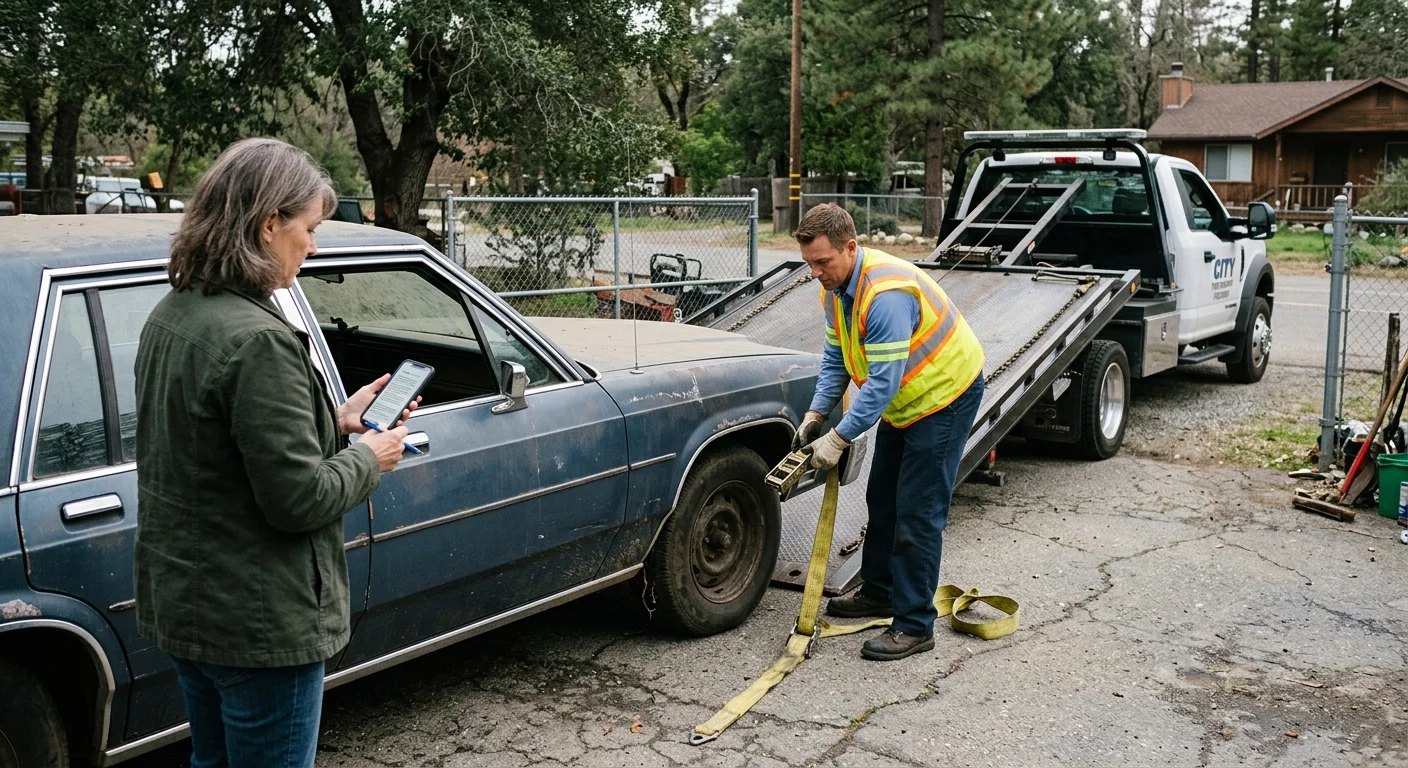
Why free junk-car towing isn’t universal
“Free towing” doesn’t describe one standard arrangement. A receiving yard might include pickup in its offer. Another yard might accept the car but leave transportation to you. A third might decline the vehicle after learning about its condition or location.
That’s why you shouldn’t rely on a headline or phone promise. Ask whether pickup is included for your exact car and address. Get the answer in writing before scheduling anything.
Pickup conditions matter. A car parked along a wide City Heights street presents a different job from one inside a Mission Valley garage. A rear alley in Barrio Logan can limit truck access. A steep driveway near El Cajon or a dirt parcel outside Ramona can change the equipment needed.
Tell the yard whether the car rolls, steers, and has wheels. Mention missing keys, locked steering, collision damage, or blocked access. Share the garage clearance if the vehicle is below ground. Photos can help the yard and towing operator understand the situation.
Don’t treat “free” as meaning every part of the transaction costs nothing. Ask whether there’s a separate pickup charge, cancellation charge, or condition that changes the offer. If the answer isn’t clear, the towing cost hasn’t been settled.
Our junk-car removal service connects San Diego County callers with independent operators. The operator taking the job sets the price. Confirm that price separately unless a receiving yard has clearly agreed to pay it.
Who may arrange and pay for the pickup
The receiving yard may arrange the tow. In that setup, ask whether the yard pays the operator directly. Also confirm that no pickup charge will be deducted or billed later. Don’t assume an arranged tow is automatically free.
The vehicle owner may need to arrange transportation instead. Quick Tow SD can match the caller with an independent operator. The operator performs the work, sets the price, and receives payment from the customer.
A buyer may also coordinate the pickup through another towing provider. Ask for the provider’s name and the destination before releasing the vehicle. Confirm who authorized the job and who owes the towing charge.
Keep these parts separate during the call:
- What the receiving party offers for the vehicle
- Whether towing is included in that offer
- Who selects and contacts the towing operator
- Who pays the operator
- What happens if the vehicle is rejected at pickup
A cash offer doesn’t prove that transportation is included. Our guide to cash offers for junk cars in San Diego explains why the vehicle offer and pickup terms should be reviewed separately.
Be especially careful when several parties are involved. The buyer, yard, dispatcher, and operator may not share the same paperwork. Ask one party to confirm the final arrangement in writing. The message should identify the car, pickup address, destination, and person responsible for towing costs.
What changes when the car has no title
A missing title makes the receiving yard’s acceptance rules more important. There isn’t one title-free promise that applies to every yard or vehicle. Don’t schedule pickup until the recipient confirms what it will accept.
Tell the yard exactly what’s missing. Don’t describe a lost title as available paperwork. Explain whether you’re the titled owner and whether another party may have an interest in the vehicle. Provide the vehicle identification number only through a channel you trust.
Ask the recipient to name the exact ownership record or DMV document it needs. Then verify that answer with the California DMV. Our California junk-car paperwork guide provides a focused starting point.
The DMV remains the authority for California vehicle records and its official processes. Its abandoned and abated vehicle guidance is also useful when the car isn’t a normal owner-authorized disposal.
Don’t assume a tow operator can solve an ownership problem at pickup. The operator transports the vehicle. The receiving party decides whether it will accept the car under its stated terms.
If the car isn’t yours, don’t offer it for sale or disposal as your property. A vehicle abandoned on a street, parking area, or someone else’s parcel requires a different path. Start with the property owner, the correct local authority, or DMV guidance. San Diego County contains several cities and unincorporated areas, so the right contact depends on the vehicle’s location.
Questions to ask the receiving yard
Call the actual destination before booking the tow. A clear conversation can prevent a rejected delivery, a second tow, or a dispute over payment.
Start with the vehicle itself. Give the year, make, model, and current condition. Explain whether it starts, rolls, steers, and brakes. Mention missing wheels, collision damage, fire damage, or stripped parts. Ask the yard to confirm that it accepts the car as described.
Next, settle the pickup terms:
- Is towing included for this vehicle and address?
- Who books the towing operator?
- Who pays the towing operator?
- Could any condition change the vehicle offer?
- Are there charges if the yard rejects the car?
- What ownership records must be ready before pickup?
- Where will the vehicle be delivered?
- What written receipt will show that the yard accepted it?
Ask for the yard’s name and physical destination. Don’t rely only on a text from an unknown buyer. If you’re arranging transportation, review what happens when you tow a car to a scrap yard before confirming the job.
Describe San Diego access details carefully. Mention gated communities, parking structures, narrow alleys, slopes, soft ground, and blocked driveways. A pickup near coastal North County may have different access from an inland property near Alpine. Those details help the operator determine the suitable truck and approach.
Save written offers, pickup messages, and destination details together. If a term changes, ask for a revised confirmation. Don’t let the car leave based on two parties giving different answers about payment.
What to confirm before the car leaves
Review the final terms while the vehicle is still present. The written description should match the actual car, pickup address, receiving party, and destination. It should also state whether pickup is included and identify who pays for towing.
Check that the receiving yard still accepts the vehicle’s condition. A missing catalytic converter, damaged wheel, locked steering column, or absent key may matter to the recipient. Report changes before the operator arrives.
Remove personal belongings from the cabin, trunk, and storage areas. Check under seats and inside the glove compartment. Don’t leave documents containing account numbers or private information. Ask the DMV what to do with registration records and plates for your situation. Don’t assume the driver handles those decisions.
Take clear photos of the car before pickup. Include each side, the interior, visible damage, and the vehicle identification number. Keep copies of messages showing the agreed destination and payment arrangement.
The person releasing the vehicle should know who’s collecting it. Confirm the operator’s destination before handing over the keys. If the destination or payment terms don’t match the written agreement, pause the pickup and contact the receiving party.
Access should also match what was reported. Open required gates and move unrelated vehicles when you can do so safely. Tell the operator about low garage clearance, loose ground, steep grades, or missing wheels. Don’t attempt to push, steer, or recover a disabled car without suitable training and equipment.
Finally, request a receipt or written acknowledgment from the receiving party. Keep it with your DMV records and towing paperwork.
When to call us
Call when the car can’t roll safely, has missing wheels, lacks keys, or sits in a difficult San Diego pickup location. We’ll connect you with an independent towing operator and you can confirm the job terms directly.
Call (858) 923-5787 to reach dispatch.