If you need to tow a car with a locked steering wheel, begin with clear dispatch details. Explain whether the car rolls, where its wheels point, and how much working space surrounds it. The operator can then choose a towing setup for the actual pickup.
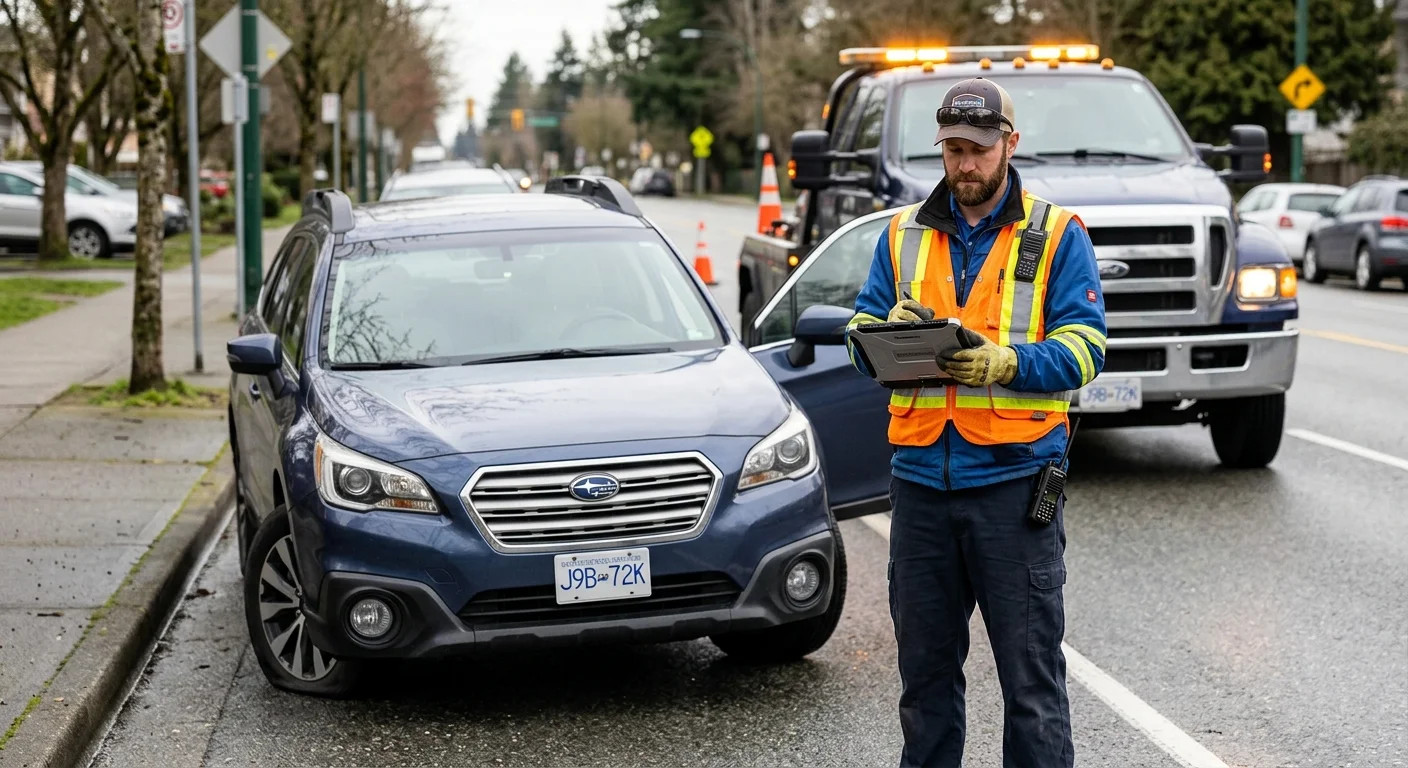
Explain whether the car can roll or steer
Start with what the car does now, not what caused the problem. Tell dispatch whether the steering wheel moves at all. Mention whether the front wheels point straight, left, or right. If they’re pressed against a curb, include that detail.
Next, describe the rolling condition. Say whether the car has already rolled freely, appears held in place, or hasn’t been tested. Don’t push the vehicle into traffic or down a slope to find out. An observation from the driver’s seat is enough.
Tell dispatch what the dashboard and controls show. The operator should know whether the transmission indicates park, neutral, or another position. Mention the parking brake’s current position without forcing any control. If the battery is dead, the keys are missing, or the selector won’t move, say so.
A locked wheel and a vehicle without keys can create overlapping dispatch problems. Our guide to towing a car without keys explains the extra information that situation requires.
Avoid diagnosing the steering over the phone. Instead, describe the last normal action and what changed. A warning message, impact, missing key, dead battery, or sudden resistance gives the operator useful context. Photos of the wheel position and surrounding space may also help when dispatch requests them.
These details let the independent operator prepare for the condition reported. They don’t require you to unlock, bypass, or dismantle anything yourself.
Share the vehicle and drivetrain details
Give dispatch the vehicle’s year, make, model, and body style. A sedan, pickup, van, and low-clearance sports car present different pickup conditions. Include any modifications that visibly change the vehicle’s height, wheels, or ground clearance.
State the drivetrain if you know it. Common descriptions include front-wheel drive, rear-wheel drive, all-wheel drive, and four-wheel drive. Don’t guess from the vehicle’s appearance. Check the owner’s manual, manufacturer information, or the vehicle specifications tied to its exact model.
The operator also needs to know whether the vehicle is electric, hybrid, or gasoline-powered. If it’s an electric vehicle, share the exact model and any dashboard message. Manufacturer towing guidance varies by vehicle, so the operator may need model-specific instructions before moving it.
Mention visible damage around the steering, suspension, wheels, or underside. A wheel that looks tilted, a tire touching the body, or loose material under the car should be reported. Don’t crawl beneath the vehicle to inspect it.
Keys still matter even when the steering won’t move. Tell dispatch whether you have every available key or key fob. Say whether the doors, trunk, and charging port are accessible. If the car recognizes the key but won’t release the steering, describe that result without repeatedly forcing the wheel.
A photo of the VIN plate or registration can reduce model confusion. Cover personal information that dispatch doesn’t need. The goal is accurate vehicle identification, not a roadside mechanical diagnosis.
Describe the parking position and available clearance
The pickup location may shape the operator’s plan as much as the steering condition. Give the exact address, parking level, stall number, and nearest entrance. In a large Mission Valley garage, the entrance used by passenger cars may not provide useful access for towing equipment.
Report overhead clearance from posted signs. Don’t estimate it. Include low pipes, hanging signs, tight ramps, gated entrances, and sharp corners. Tell dispatch whether the car faces into a wall, sits between two vehicles, or has open space ahead and behind.
Outside, describe the surface and slope. Asphalt, concrete, gravel, dirt, and soft shoulders present different working conditions. Mention curbs, wheel stops, medians, landscaping, and narrow alleys. A tight City Heights driveway differs from an open commercial lot in Otay Mesa.
San Diego pickups can also involve underground garages, coastal parking structures, and steep neighborhood streets. Give cross streets or a recognizable entrance when the property has several access points. If a gate requires a code, resident fob, attendant, or property approval, arrange access before dispatch when possible.
For roadside locations, share the road name, direction of travel, nearest exit, and whether the car is fully outside a traffic lane. Don’t stand beside moving traffic to inspect the wheels. Report only what you can observe safely.
Photos work best when they show the whole vehicle and surrounding clearance. Close-ups of a turned wheel help, but dispatch also needs the larger pickup area. Send both views if requested.
Ask which towing method fits the pickup
A locked steering wheel doesn’t support a one-method answer by itself. The operator needs the vehicle details, wheel position, drivetrain, damage, surface, and available clearance before selecting equipment.
Ask what method the operator plans to use for the reported condition. Possible discussions may include a wheel-lift, flatbed, dollies, or other recovery equipment. The right answer depends on the vehicle and pickup site, not a universal rule.
Our wheel-lift towing service page explains how to request that type of operator. Our flatbed towing service page covers flatbed dispatch. For a broader comparison, read flatbed versus wheel-lift towing.
Those pages can help you ask better questions. They shouldn’t replace the vehicle manufacturer’s guidance or the operator’s on-site assessment. Share the exact model, then ask whether the planned method matches its published towing instructions.
Also ask how the turned wheels and limited steering affect access. Dispatch may need more photos or a clearer description before matching the job. Tell them if another vehicle blocks the approach or if access could change before pickup.
Don’t try to straighten the wheels with force. Don’t defeat a steering lock, drag the car with another vehicle, or attach straps yourself. This article is a dispatch guide, not a loading procedure. The operator sent out should control the vehicle movement and equipment setup.
Confirm the destination before dispatch
Choose the destination before the operator starts toward the pickup. Give its full address and the name of the repair shop, dealership, residence, or storage location. A business name alone can be unclear when it has several San Diego County locations.
Confirm that the destination expects the vehicle. Ask the recipient where a disabled car should be left and how after-hours access works. If you can’t verify those details, tell dispatch they remain unconfirmed. Don’t assume an open parking lot means the vehicle may be left there.
Share any destination access limits you’ve confirmed. These might include a gate, parking level, narrow driveway, or assigned drop area. Report posted clearance rather than estimating it. Tell dispatch whether someone will meet the operator and who will have the keys.
If the first destination changes, notify dispatch before transport begins. A repair shop in Kearny Mesa and a home in Chula Vista create different route and drop-off instructions. The independent operator sets the price and receives payment directly, so confirm the destination with that operator before accepting the job.
Quick Tow SD matches callers with vetted licensed towing operators serving every city in San Diego County. The line takes calls around the clock, but the operator accepting the job provides the arrival estimate for your exact location.
Keep your phone nearby after requesting service. Dispatch may need a gate code, updated parking position, or another photo. Clear pickup and destination details reduce avoidable confusion.
When to call us
A locked steering wheel needs a professional towing operator when the car won’t steer normally, sits near traffic, or must leave a confined or sloped space. We’ll match your reported vehicle and pickup conditions with an independent operator.
Call (858) 923-5787 to reach dispatch.