A dead battery or flat tire doesn’t always justify another annual plan. One time roadside assistance lets you request help for the problem in front of you, then pay for that specific call. The key is confirming exactly what the dispatch includes before an operator starts toward you.
What a one-time call usually means
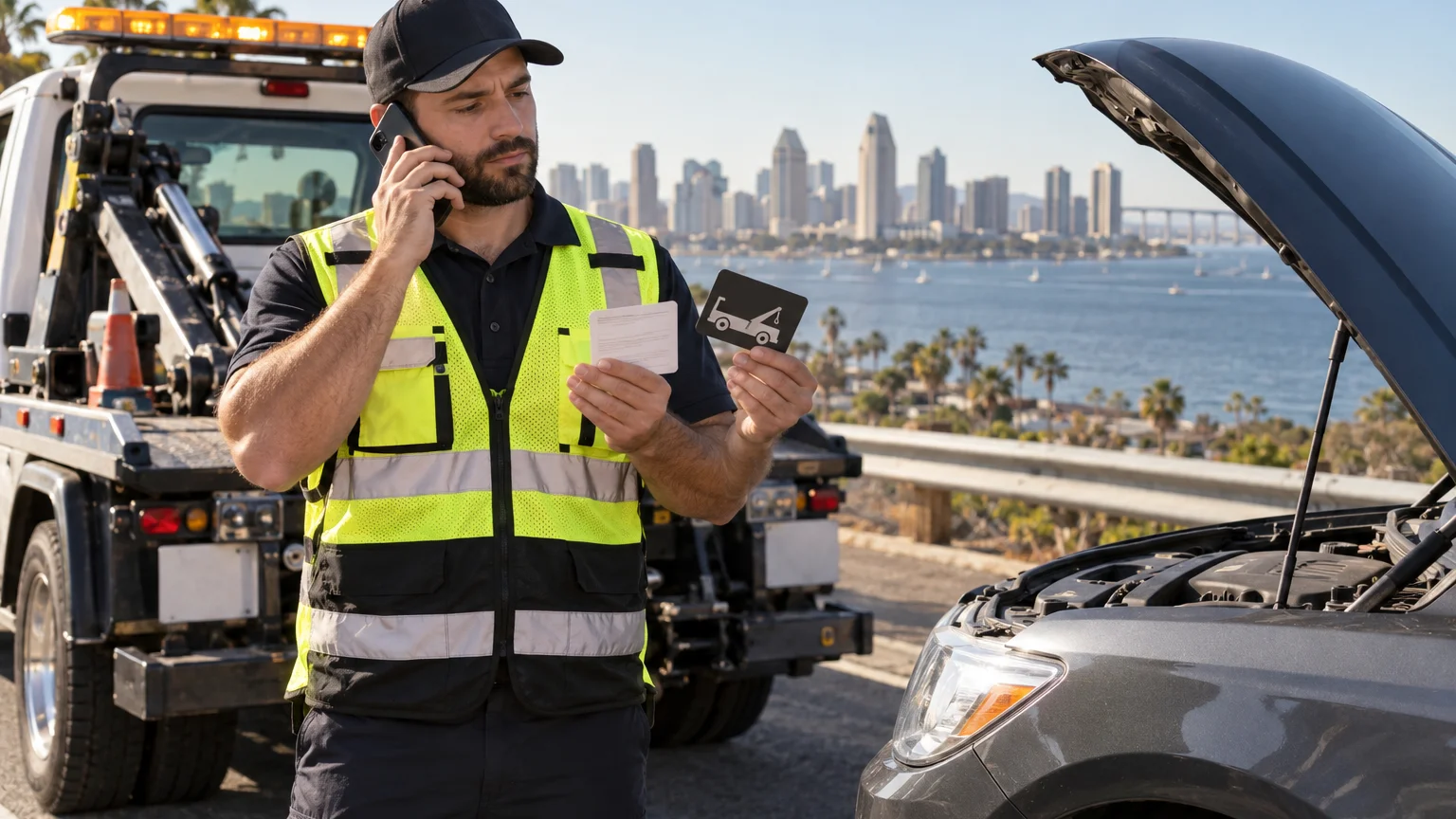
A one-time call is commonly called pay per use roadside assistance. You request a jump, tire change, fuel delivery, lockout service, or tow without enrolling in an ongoing membership.
That description doesn’t create standard coverage. Each provider sets its own services, prices, restrictions, and payment terms. Ask what the operator will do and what you’ll pay before approving dispatch. Quick Tow SD refers callers to independent licensed operators. The operator accepts the job, sets the price, performs the work, and receives payment directly.
One call should match one clearly described problem. A dead battery may need a jump start. A damaged tire may need a spare installed. A vehicle that still won’t move may need towing instead. If the first requested service can’t solve the problem, ask whether switching to a tow changes the charge.
Location matters across San Diego County. A car inside a Mission Valley parking structure presents different access issues than one beside SR 94. A narrow Ocean Beach street differs from an East County dirt shoulder. Give the exact location, vehicle position, and nearby hazards.
Our roadside assistance service can connect you with an operator for the current problem. If you’re still deciding whether this model fits, the guide to roadside help without a membership explains the broader choice.
A one-time call buys a specific dispatch. It doesn’t automatically create future benefits, reimbursement rights, or continuing coverage.
How it differs from a membership or unlimited plan
A membership normally exchanges a recurring fee for benefits governed by written terms. A one-time call has no continuing benefit unless the provider expressly offers one. You pay for the event rather than buying access for a longer period.
That difference can make pay per use roadside assistance practical for someone who rarely needs help. A frequent driver may care more about annual call allowances, towing distance, covered vehicles, or household access. Neither structure is automatically better.
Memberships can also cover a person or a particular vehicle. One-time service is arranged for the vehicle and incident reported during that call. Confirm whether the provider will help a rental, motorcycle, RV, trailer, commercial vehicle, or someone else’s car.
Don’t treat “unlimited” as a complete coverage description. A plan may still define eligible events, towing destinations, covered vehicles, service areas, or extra charges. Read our guide to what unlimited roadside assistance covers, then check the provider’s current written terms.
AAA’s Auto Club of Southern California terms are another specific model. Our approved claims record says its tiers allow up to four roadside calls per membership year, with towing distance varying by tier. Terms can change, so verify current benefits before relying on them. Our AAA versus pay-per-use comparison explores that decision.
The best roadside assistance program is the one matching your actual driving. Compare the covered person, vehicle, incident, destination, and payment method. A familiar brand name doesn’t replace those details.
What to confirm before a jump, tire, fuel, or tow dispatch
Start by naming the symptom, not your diagnosis. “The lights turn on, but the engine only clicks” is more useful than “I need a battery.” Tell dispatch if the vehicle overheated, lost steering, struck something, or displays a warning about its electrical system.
For a jump start, provide the vehicle year, make, model, and fuel type. Mention whether it’s electric, hybrid, diesel, or modified. Don’t assume every no-start condition is a dead battery.
For a tire call, confirm whether the vehicle has an inflated spare, wheel-lock key, and accessible jack points. Share visible wheel, suspension, or body damage. A missing or unusable spare may turn the call into a tow.
For fuel delivery, identify the correct fuel type. Ask whether the quoted amount covers delivery only or also includes the fuel. No standard amount or price could be confirmed from the approved claims ledger, so get the current terms directly from the provider.
For towing, state the pickup and destination addresses. Describe the drivetrain if known, along with wheel damage, locked steering, missing keys, low clearance, or parking-garage restrictions. Manufacturer transport procedures vary by model. An accurate vehicle description helps dispatch select appropriate equipment.
Ask these questions before approving the call:
- What exact service is being dispatched?
- What is the total quoted price for the details provided?
- What could change that price?
- Is payment made directly to the operator?
- What happens if roadside service becomes a tow?
- Will you receive a receipt?
If you expect reimbursement, contact the insurer, card issuer, automaker, or membership provider first. Quick Tow SD can’t confirm another company’s benefit or promise reimbursement.
Limits that still show up on a pay-per-use call
Pay per use removes the membership requirement. It doesn’t remove practical limits.
A tire change still depends on having a usable spare and safe access. Fuel delivery won’t repair a fuel-system problem. A jump won’t solve every no-start condition. A lockout request may change if the key is lost, broken, or secured inside a trunk with separate access controls.
Tow requests need a clear destination and accurate vehicle details. Tell dispatch if any wheel won’t roll, the transmission won’t shift, or the car sits below street level. Parking structures in Downtown San Diego and Mission Valley can have height or turning constraints. Alleys in North Park and beach communities may restrict truck positioning. Backcountry and mountain locations take considerably longer to reach than the urban core, but the operator accepting the job provides the arrival estimate for your exact location.
Service areas can also differ. Confirm that both the disabled vehicle and intended destination fall within the provider’s current range. Ask whether mileage, special equipment, extra labor, or a destination change affects the quote. No universal one-time towing limit or local pay-per-use price appears in the approved claims ledger.
Free public help may apply in a narrow situation. SANDAG runs Freeway Service Patrol with Caltrans and the California Highway Patrol on patrolled San Diego freeway segments during published service periods. It can provide limited roadside help, but it isn’t available everywhere or at all times. Check SANDAG’s current route and schedule information before depending on it.
If you’re stopped near moving traffic, focus on personal safety. Follow current NHTSA roadside safety guidance, and don’t attempt repairs in an exposed lane.
Questions to ask so you are not sent the wrong help
Dispatch works from the information you provide. A few precise answers can prevent a roadside vehicle from arriving when the job needs towing equipment.
Give your exact location first. A freeway name alone isn’t enough. Share the direction of travel, nearest exit, cross street, business name, parking level, or gate instructions. Describe whether the vehicle is fully outside traffic.
Then identify the vehicle:
- Year, make, and model
- Car, motorcycle, RV, trailer, or commercial vehicle
- Gas, diesel, hybrid, or electric
- Two-wheel, four-wheel, or all-wheel drive, if known
- Current gear and whether steering is locked
- Visible collision, tire, wheel, or suspension damage
- Whether the keys are present
- Garage clearance or difficult access
Explain what happened immediately before the vehicle stopped. A warning light, impact, overheating event, smoke, unusual noise, or fluid leak can change the proper response. Don’t restart or move a vehicle when doing so appears unsafe.
Ask dispatch to repeat the requested service and destination. Confirm the operator-set price and accepted payment method. If the problem changes, contact dispatch before authorizing different work.
A one-time roadside call is also different from an accident tow. Tell dispatch about any collision, police involvement, blocked traffic, or insurance instructions. Don’t describe accident damage as a routine breakdown to obtain a different service.
Finally, ask who will provide the work. Quick Tow SD matches callers with independent licensed operators. It doesn’t own trucks, employ the sent driver, operate an impound lot, or control another provider’s membership terms. That distinction keeps responsibility clear before the job begins.
When to call us
Call when a jump, tire change, fuel delivery, lockout, or tow requires a professional operator. Quick Tow SD can match you with an independent licensed operator serving San Diego County.
Call (858) 923-5787 to reach dispatch.