Ocean Beach towing starts with one useful detail: your exact position. A disabled car on Newport Avenue presents a different pickup than one in an alley, beach lot, or along Sunset Cliffs Boulevard. Share the location and access conditions before an operator heads your way.
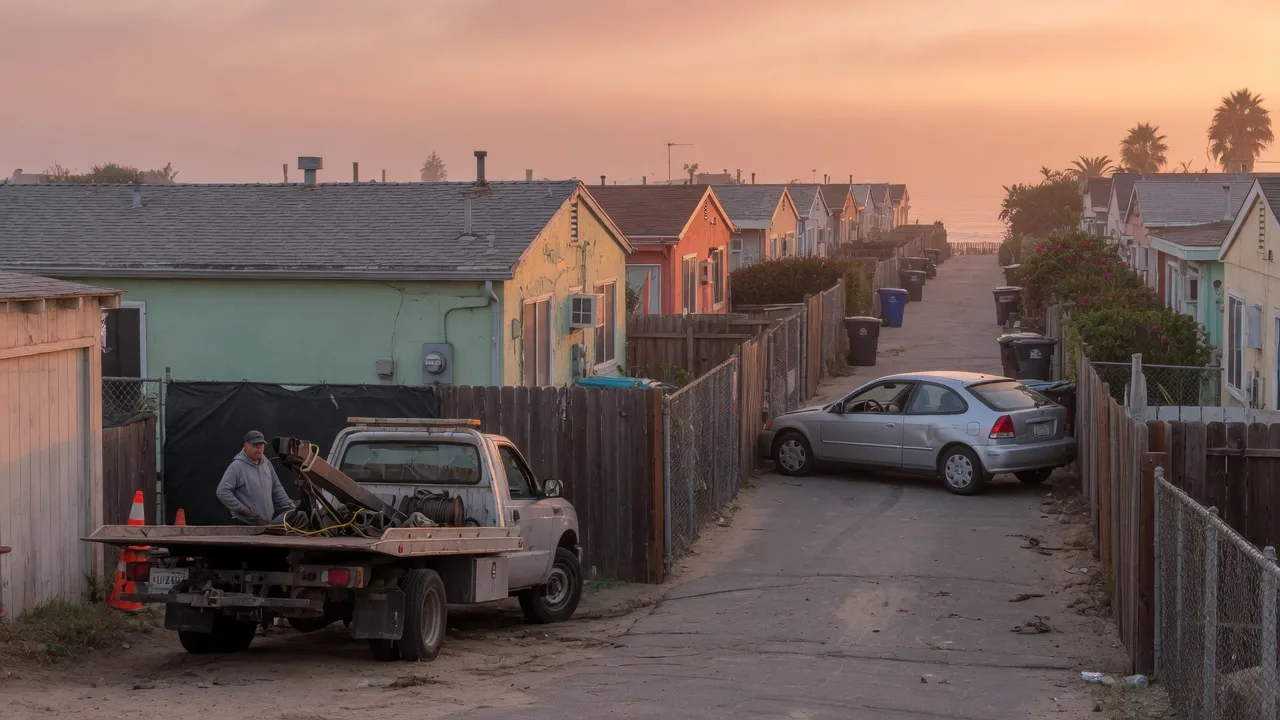
Share whether you are on Newport, Voltaire, or Sunset Cliffs
Give dispatch a street name before describing the vehicle problem. Say whether you’re on Newport Avenue, Voltaire Street, Sunset Cliffs Boulevard, or inside the surrounding alley grid. If you’re in a lot, share its entrance rather than only naming a nearby business.
A map pin helps, but it may not show the actual pickup point. Your pin could land on the front of a property while the vehicle sits behind it. Tell dispatch if the car is in an alley, driveway, side lot, or marked parking area.
Useful details include:
- The street or alley used to reach the vehicle
- The direction the vehicle faces
- Whether other cars restrict the approach
- Whether the car can roll, steer, or shift
- The vehicle’s year, make, model, and drivetrain
- Any visible collision damage or damaged wheels
- Your intended delivery address
Don’t guess about a mechanical failure. Describe what happened instead. “The engine stopped and won’t restart” is more useful than naming a failed part. Warning lights, unusual sounds, leaking fluid, or smoke should also be reported without attempting a diagnosis.
Quick Tow SD connects callers with independent local towing operators. The line takes calls around the clock, and the operator accepting the job provides an arrival estimate for that exact location.
Why alley, hill, and beach-lot access change the pickup
Ocean Beach has several pickup settings within a compact area. Newport Avenue, Voltaire Street, the alley grid, Sunset Cliffs grades, and beach lots don’t offer the same working space. The operator needs to understand the setting before choosing an approach.
An alley pickup may involve limited turning room. Trash containers, parked vehicles, gates, walls, or overhead obstacles can narrow the usable path. Tell dispatch what blocks the approach and which entrance reaches the car. Don’t move another person’s property or attempt to pull the vehicle into the street.
A Sunset Cliffs towing request needs clear information about slope and vehicle position. Say whether the car is level, facing uphill, facing downhill, or close to an edge.
Beach-lot pickups bring different access questions. Identify the lot entrance and the surface beneath the tires. Report whether the vehicle remains on pavement or has entered loose sand. A car in sand may call for a recovery assessment rather than a basic hookup.
Low clearance also matters. Tell dispatch about lowered bodywork, a damaged bumper, locked steering, or wheels that won’t turn. The accepting operator decides what towing method fits the vehicle and access. Our wheel-lift towing guide explains one transport category, but it isn’t a promise that method suits every car.
Ocean Beach isn’t Pacific Beach with a different name. The Pacific Beach towing guide focuses on PB access patterns. Here, Newport, Voltaire, Sunset Cliffs, and Ocean Beach alleys should lead the location conversation.
When roadside help may fit
Roadside help may fit when the car remains safely positioned and the problem appears limited. Examples can include a discharged battery, an empty fuel tank, a lockout, or a flat tire with a usable spare. The provider still needs the vehicle details and a safe place to work.
Describe the symptoms without deciding the repair yourself. Tell dispatch what the car did, what you can see, and whether it starts. If you already tried a jump start, say so. Report any smoke, heat, leaking fluid, or damaged wiring.
A tire problem also needs context. Share which tire is affected and whether the wheel appears damaged. Mention whether the car sits on level pavement.
Roadside assistance isn’t always the right next step. A jump start won’t resolve every no-start condition. A spare tire won’t help every damaged wheel. The provider may decide that transport is safer after reviewing the facts or inspecting the vehicle.
Your insurance policy or membership may include roadside benefits, but coverage varies. Check the current policy, service agreement, or app before relying on it. Quick Tow SD can’t confirm what another company will approve or reimburse.
When arranging a tow makes more sense
Arrange a tow when the vehicle can’t be returned to safe operation at the pickup point. That can include collision damage, steering trouble, a wheel that won’t rotate, repeated stalling, or a roadside attempt that didn’t solve the problem. These are conditions to report, not diagnoses.
A tow may also make more sense when there’s no safe room for roadside work. An Ocean Beach alley can be too constrained for extended service. A grade near Sunset Cliffs may make pushing or experimenting unsafe. A busy street position may require professional handling rather than another roadside attempt.
Tell the operator where the vehicle needs to go. That might be a repair shop, tire shop, dealership, residence, or another authorized destination. Confirm that the destination can receive the vehicle. After-hours access, locked gates, and unclear drop locations can complicate delivery.
For an urgent disabled-vehicle request, see our emergency towing service. Quick Tow takes the call and matches the customer with an independent licensed operator. The operator performs the work, sets the price, and receives payment directly.
Don’t choose a towing method based only on appearance. Vehicle design, drivetrain, damage, clearance, and manufacturer instructions can affect transport. Give the exact year and model, then let the operator assess the job. If the car is electric, modified, unusually low, or missing a wheel, say that during the first call.
A parking structure creates another category of access issue. Height restrictions and tight turns should be discussed before dispatch. Our San Diego parking garage towing guide covers those details separately.
Confirm clearance, access, and the destination
A good dispatch description follows the path from street to vehicle. Start at the usable entrance. Then describe turns, gates, slopes, parked cars, and overhead clearance. Finish with the vehicle’s position and condition.
For an alley pickup, check the street signs or map before calling. Give the alley’s nearest cross street if you can confirm it. Explain whether the operator can enter from either end. If one side is blocked, say which side remains open.
For a lot, identify the correct driveway. A business name alone may point to the wrong entrance. Mention gates, ticket arms, curbs, wheel stops, or tight corners that affect access. If permission is needed to enter private property, arrange it with the property controller.
Clearance details should be factual. Don’t estimate a height if no sign or measurement is available. Say that the clearance is unknown and tell dispatch what you can see. The same applies to vehicle weight, modifications, and mechanical condition.
Before work begins, confirm these points with the operator:
- The pickup position and safest available entrance
- The vehicle’s year, make, model, and drivetrain
- Whether the vehicle rolls, steers, and shifts
- Any damaged tires, wheels, suspension, or bodywork
- The delivery address and approved drop location
- The operator’s price and accepted payment method
The operator determines the equipment and handling plan. Don’t promise a specific truck or request an improvised method. Accurate details let the operator assess the Ocean Beach pickup before committing to an approach.
Keep your phone available after placing the request. If you move to a safer waiting spot, tell dispatch where you’ll be. Don’t leave the keys in an unattended car unless the accepting operator gives you instructions and you agree to them.
When to call us
Call when your vehicle can’t move safely, roadside help isn’t suitable, or Ocean Beach access needs a professional assessment. Quick Tow SD will connect you with a local towing operator who can review the vehicle, alley, grade, lot, and destination details.
Call (858) 923-5787 to reach dispatch.