A car won’t start in a grocery store lot, and the driver doesn’t have AAA, doesn’t remember if the insurance policy covers a tow, and assumes that means no help is coming without paying for a membership first. That assumption is wrong. Roadside help with no membership and no insurance policy is a real, normal way this works, not a workaround.
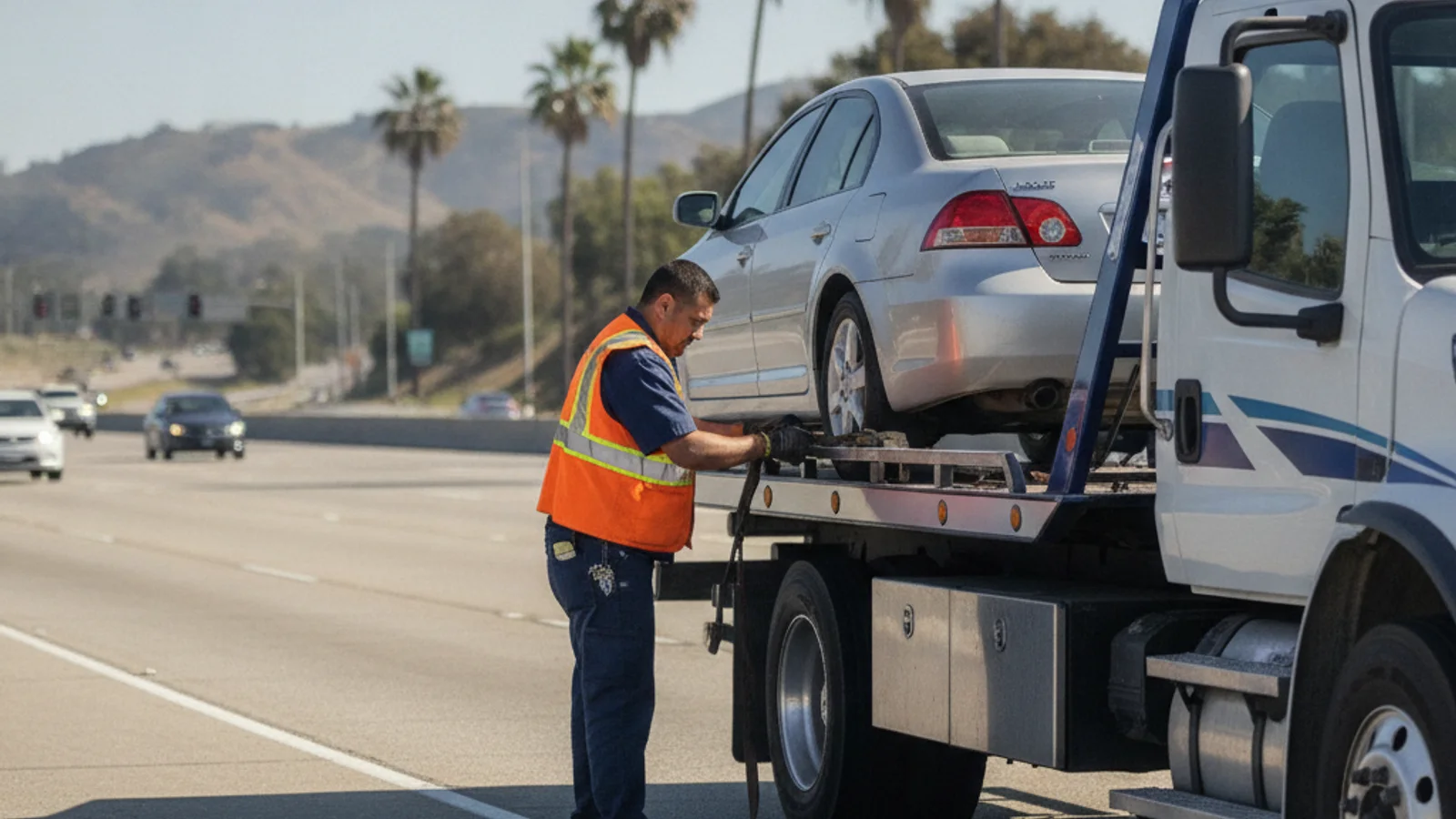
Pay-per-use is a real category, not a loophole
Plenty of people assume roadside help only comes bundled with an insurance policy or a paid annual membership. It doesn’t. Independent tow and roadside operators take calls from anyone, member or not, and get paid directly for the specific job done that day. That’s this site’s own model: no membership fee, no annual plan, just a call when something goes wrong and a direct payment to the operator who shows up. Our cost guide for roadside assistance in San Diego covers how that payment side generally works.
Coverage you might already have and forgot about
Before assuming you have zero coverage, it’s worth checking a few places people routinely forget:
- A credit card benefit. Some credit cards include roadside assistance as a cardholder perk, often with a per-incident cap and specific covered services. Check your card’s benefits guide or call the number on the back to ask.
- A new-car warranty program. Many manufacturers bundle a roadside program into the original warranty period, sometimes for years after purchase, sometimes only for the first year or two. Check your original sale paperwork or the manufacturer’s owner portal.
- A phone carrier perk. Some carrier plans, particularly higher tiers, throw in a roadside assistance benefit as an add-on. It’s easy to have it and never notice, since it’s rarely advertised after signup.
- An employer or union benefit. Some employer benefits packages and union memberships include an auto club or roadside line as a perk. HR or your benefits portal is the place to check, not a guess based on what you remember from onboarding.
None of these are guaranteed, and the terms vary by issuer, manufacturer, and employer. The point isn’t to assume you have one of these. It’s to actually check before assuming you have none.
If you carry a service contract or extended warranty on a used vehicle, check whether that specific contract includes roadside coverage, since terms differ by provider and by the plan tier purchased at the time of sale. The paperwork from whoever sold you the contract, not a general assumption about what extended warranties usually include, is the only reliable source for that answer.
Check the actual terms, not what you assume they say
Every one of the sources above has its own terms: what’s covered, how many uses per year, whether there’s a mileage cap on a tow, and what counts as an eligible incident. We don’t have verified terms for any specific card, warranty program, or carrier plan, so don’t take a guess as fact. Call the number on the benefits page or the back of the card and ask directly what’s covered before you assume either way.
Having insurance doesn’t automatically mean you have roadside coverage
This is where a lot of confusion starts. Carrying auto insurance and having roadside coverage through that insurance are two separate things. A standard liability or collision policy doesn’t include a tow benefit by default in most cases; roadside coverage is typically a separate rider or add-on that has to be selected and priced into the policy. So “I have insurance” and “I have roadside assistance” aren’t the same statement, and confirming which one applies to you means calling your agent or reading the declarations page rather than assuming coverage exists because a policy does.
It matters more in parts of the county with fewer nearby options
Whether you have a membership or not, where the breakdown happens in San Diego County changes what your options look like. A stall on a surface street in North Park or Hillcrest sits close to plenty of independent operators regardless of what plan you’re on. A breakdown out toward Julian, Pine Valley, or the backcountry stretches of state route 79 is a longer wait no matter who you call, membership or pay-per-use, simply because fewer operators cover that ground. Knowing you can call with no membership matters just as much in those areas, since there’s no guarantee a membership plan’s own network reaches that far either.
What to expect calling as a non-member
Calling a pay-per-use line works differently from calling a membership hotline, but not in a complicated way. You describe the problem: dead battery, flat tire, locked out, or a car that needs to be towed somewhere. Dispatch matches that description with an operator who can handle it. Before the operator starts, you agree to the job, and once the work is done, you pay the operator directly. There’s no account number to look up first and no membership status to verify, which is generally faster for a one-time call than explaining you don’t have a plan.
The Freeway Service Patrol is a separate, free option
If your car is broken down on a San Diego freeway during the day, there’s a genuinely free option worth knowing about before you call anyone else. The Freeway Service Patrol, run by SANDAG with Caltrans and the CHP, patrols county freeways and provides free help including a gallon of gas, a jump start, radiator water, or a flat tire change. SANDAG’s own published figure puts average dispatch around nine minutes on patrolled segments.
It has real limits. The patrol runs weekdays in three windows between 5:30 a.m. and 6:30 p.m., and weekends 10 a.m. to 6 p.m., and it doesn’t operate on federal holidays. Midday and weekend service doesn’t cover SR-905 or SR-11. It’s freeway-only, so it won’t help in a parking lot or on a surface street. Request it by calling 511 and saying “Roadside Assistance.” Our full breakdown of free roadside assistance in California and San Diego covers this program and other no-cost options in more detail.
When to call us
If the Freeway Service Patrol isn’t running, isn’t available on your road, or the problem is bigger than a jump start or a gallon of gas, calling with no membership still works. Describe the vehicle and the problem, and dispatch will connect you with an operator who can handle it and be paid directly. The line takes calls 24/7. Call (858) 923-5787 to reach dispatch.