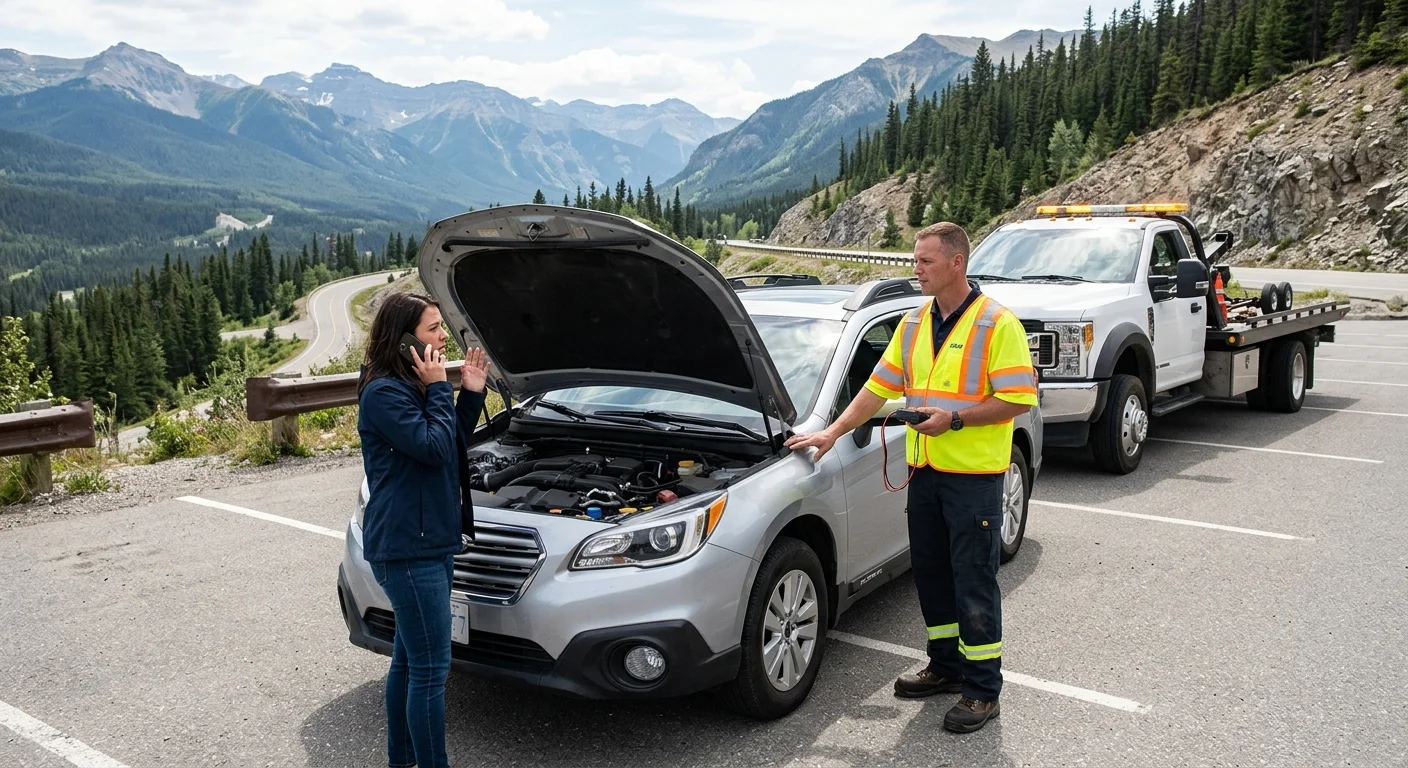
A no-start in Vista creates one immediate choice: request roadside help or arrange a tow. Roadside help may fit when the car is safely parked and the visible signs suggest a simple battery issue. A tow makes more sense after damage, unusual warning signs, or a roadside attempt that doesn’t restore normal operation.
Start with what happens when you turn the key
The first useful clue is what the car does during one normal start attempt. Tell dispatch whether the engine turns over, clicks once, clicks repeatedly, or stays silent. Also note whether the dashboard, headlights, radio, and interior lights have power. These details don’t prove what’s wrong. They help separate a possible roadside call from a vehicle that may need transport.
With a push-button start, describe exactly what appears on the display. Mention messages about the key, battery, brake pedal, transmission, or charging system. Don’t translate the message into your own diagnosis. Read it as shown, or take a clear photo. If the car uses a key, say whether it turns normally and whether the steering wheel feels locked.
Think back to the moment before the no-start. Report a recent impact, overheating, a strong odor, smoke, leaking fluid, or a wheel sitting at an odd angle. Those signs change the request. A jump-start request alone may send the wrong kind of help.
Avoid repeating the start attempt while you wait. Keep the keys with you and note whether the car is in a traffic lane, parking stall, driveway, or garage. If you’re near moving traffic, follow NHTSA’s roadside safety guidance while help is arranged.
When roadside assistance may fit
Roadside assistance may fit when the vehicle is clear of traffic. There should also be no impact, smoke, leak, or wheel damage. A single click, dim cabin lights, or fading power can support a jump-start request. They aren’t a diagnosis. The operator sent to you must still assess the vehicle in person.
This choice is most practical when a short roadside service could leave the car ready to drive. Give dispatch the fuel type and whether the vehicle is gas, diesel, hybrid, or electric. Share the year, make, and model if you have them. Battery access and manufacturer instructions can differ, so those details matter before equipment is sent.
Vista location matters too. A car in a lot off Vista Village Drive presents a different pickup than one stopped near State Route 78. In an apartment garage, overhead clearance and gate access also affect the service setup. Our roadside assistance service page explains the request types we coordinate. The parking-lot no-start guide covers details worth gathering before you call.
If a roadside attempt doesn’t restore normal operation, stop treating the call as a simple jump. Tell dispatch what changed, including any warning message. The next step may be a tow to a repair destination.
When arranging a tow makes more sense
A tow makes more sense when the no-start is only one part of the problem. Report collision damage, smoke, a strong burning odor, visible fluid, a damaged wheel, or a vehicle resting outside its normal position. The same applies if the car lost steering or braking response before it stopped. These details point beyond a basic jump-start request.
Choose towing after a roadside attempt fails, or when the engine starts but won’t keep running normally. Persistent warning messages also belong in the dispatch notes. You don’t need to name the failed part. Guessing can hide the symptom the operator needs to hear.
Access can settle the decision. A vehicle deep inside a low garage, blocked within a tight stall, or parked behind a gate may require planning before it can be moved. Tell dispatch about low clearance, locked wheels, missing keys, aftermarket body parts, or a lowered suspension. For an electric, hybrid, all-wheel-drive, or four-wheel-drive vehicle, give the exact model and current condition. The dispatched operator can select transport equipment from those facts and the manufacturer’s instructions.
We coordinate emergency towing when the vehicle needs professional transport instead of another start attempt. Our Vista tow-truck guide gives broader local pickup context. The operator performs the tow, sets the price, and receives payment directly.
Describe your Vista pickup location
An address is a useful start, but it may not identify the correct entrance. For roadside assistance in Vista, describe where the car sits and how an operator can reach it. Give the business, apartment complex, or parking structure name when one is visible.
On surface streets, include the nearest cross street or recognizable entrance. Vista Village Drive, Civic Center Drive, South Santa Fe Avenue, Sycamore Avenue, and Melrose Drive can each cover more ground than a map pin suggests. State which side of the street you’re on. Mention whether the car is curbside, in a driveway, or inside a private lot.
Near State Route 78, give your direction of travel and the nearest signed exit. Say whether you’re before or after a ramp. Also describe whether the vehicle is on the right shoulder, left side, or another protected area. Don’t describe the location only as “near Vista.” That leaves too much room for error.
Inside a garage, share the level, stall number, entrance, and posted clearance. For a gated property, explain how the operator should enter and who can provide access. A photo of the entrance can also help.
Send a map pin along with the written details. If the car gets moved before help arrives, contact dispatch with the new location.
Confirm the destination before help is sent
A successful roadside service may mean the car doesn’t need transport. Still, choose a backup destination before help is sent. That prevents a rushed decision if the roadside attempt doesn’t work.
Name the repair shop, dealership, home address, or other requested drop-off point. Confirm the exact address yourself. Businesses with similar names may have several locations across North County. A Vista address can also sit close to neighboring San Marcos or Oceanside, so the city name alone isn’t enough.
Call the destination and confirm it can receive the vehicle. Ask where a disabled car should be left and whether someone must meet the operator. If the property has a gate, garage, loading area, or designated vehicle entrance, pass those instructions to dispatch.
Explain where the keys will be and who will meet the driver. If you won’t travel with the vehicle, ask the operator what information is needed before pickup. Don’t assume keys can be left inside the car or at an unattended counter.
The operator sets the price and receives payment directly. Confirm the requested service and destination with that operator before work begins. If the plan changes from roadside help to towing, ask the operator to restate the service and drop-off address. Membership or insurance benefits can have their own authorization process, so check directly with that provider before relying on coverage.
When to call us
Call when damage, warning signs, or a failed roadside attempt means the vehicle needs a professional towing operator instead of another DIY attempt. We match Vista callers with an independent operator for roadside help or transport. Call (858) 923-5787 to reach dispatch.