The paperwork side of junking a car is one problem. Getting the actual vehicle from where it sits to a yard that will take it is a different one, and it’s the part that stalls people out when the car won’t roll, has no keys, or is parked somewhere a truck can’t easily reach.
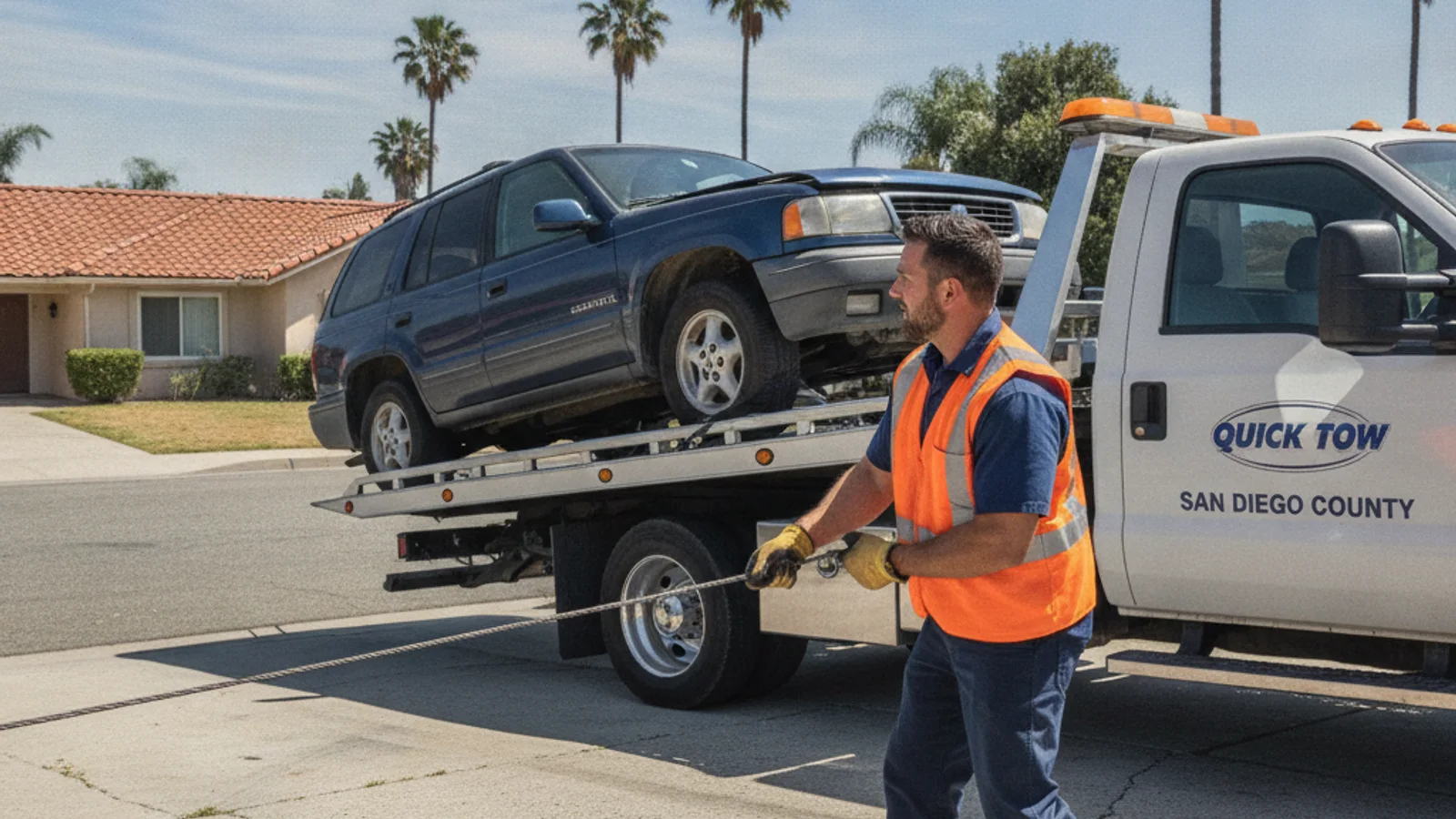
This is a logistics question, not a document question
If you’re looking for the title, the release of liability, or what DMV form covers a lost pink slip, that’s a separate topic, covered in our guide on the paperwork you need to junk a car in California. This post assumes the paperwork side is handled or in progress. What’s left is getting a vehicle that often can’t move under its own power from its current spot to a yard’s gate.
That distinction matters because a lot of the frustration people run into isn’t about ownership documents at all. It’s a car with a seized engine sitting behind a locked gate, or a vehicle with a missing wheel resting on a jack stand in a side yard, and no straightforward way to load it.
What a yard needs before it will accept a delivery
Every scrap or dismantling yard has intake requirements beyond the title paperwork, and they vary by yard, so calling ahead before a truck shows up saves a wasted trip. Common requirements include a scheduled drop-off window rather than a walk-in delivery, a driver present who can sign the release paperwork on site, and confirmation of the vehicle’s condition so the yard’s equipment can handle it once it arrives.
Some yards also want to know in advance if a vehicle is missing parts, has fluids leaking, or isn’t a complete unit, since that affects where on the lot they can put it and how they process it. Not confirmed here: any specific yard’s exact intake checklist or hours. Call the yard directly and ask what they need before the truck arrives. If a shop or tow company already holds the vehicle over unpaid repair or storage charges, that’s a separate lien process governed by the DMV’s lien sale procedure, not a simple drop-off, and it’s worth knowing which situation applies before assuming the car is free to move.
Why a yard’s free-tow offer sometimes gets refused on arrival
Some yards advertise free towing for a junk vehicle, and that offer is often real, but it usually comes with conditions that aren’t obvious until a truck is standing in the driveway. A car that doesn’t roll, steer, or brake changes the job from a routine hookup to a winch pull or a specialized load, and a yard’s free-tow arrangement is frequently built around vehicles that move normally onto a standard wheel-lift or flatbed.
If a vehicle has flat, locked, or missing wheels, sits on a slope, or is behind a gate too narrow for the yard’s contracted truck, the driver may decline the pickup on the spot or ask for a different arrangement. This isn’t a bait-and-switch so much as a mismatch between what was described over the phone and what’s actually in the driveway. Being specific about the vehicle’s condition when you first call, not just “it doesn’t run,” heads off a wasted trip for everyone.
Wheel-lift, flatbed, or a winch pull: what the condition decides
A car that rolls freely, even without a working engine, is usually the simplest case. Wheel-lift towing lifts the drive axle and rolls the car on its remaining wheels, and it works fine for most non-running vehicles that still have intact, inflated tires that turn.
A flatbed becomes the better option when a car has a wheel that’s locked, flat, or damaged badly enough that rolling it risks more damage to the rim, axle, or brake components. Loading the whole vehicle off the ground avoids dragging a bad wheel across pavement.
A seized car, meaning the engine or drivetrain is locked up entirely, or a vehicle missing a wheel altogether, needs a winch pull to get it moving at all before it can be loaded. This is also true for a car resting on blocks or a jack stand instead of its wheels. Accident recovery and winch-outs covers this kind of situation when a vehicle can’t be moved by conventional hookup alone.
Clearing the space before the truck arrives
A driveway, side yard, or gated area needs enough clear path for a truck and, in a winch situation, enough room for the truck to position itself and pull in a straight line. Trim overgrown branches, move stored items, boxes, or a second vehicle out of the way, and unlock or open any gate ahead of the scheduled arrival rather than leaving that for the driver to sort out.
If the vehicle is on a slope, note that clearly when you call. A car in neutral on any grade can roll once it’s unblocked from whatever was holding it in place, and an operator needs to know that before starting the job, not after the wheels are already loose. A car missing a wheel entirely also needs to be checked for how it’s currently supported. If it’s resting on a cinder block or a makeshift stand instead of a proper jack, tell the operator exactly what’s underneath it before anyone starts moving the vehicle.
Gated communities and shared driveways add another layer. If the vehicle sits inside a gate with a code or a shared access point with a neighbor, arrange for that access ahead of the scheduled time rather than leaving it for the day of pickup. A truck that can’t get through a gate on arrival either waits on the property owner to show up or has to reschedule, and either outcome adds a delay nobody planned for.
No keys doesn’t automatically mean no move
A car with no keys can still often be moved by an operator, since a professional hookup for wheel-lift or flatbed transport doesn’t require the vehicle to start or be steered under its own power in most cases. What matters more is whether the steering wheel is locked in place, which happens on many vehicles when the ignition is off and the key isn’t present. A locked steering column changes how a car tracks behind a dolly or wheel-lift rig, since it can’t be guided through turns the way a car with free-turning wheels can.
Tell the operator up front if there are no keys available, rather than waiting until the truck arrives. That single detail changes which equipment gets sent and how the job is staged, and it’s a common gap between what a caller mentions on the phone and what actually matters for the vehicle’s condition.
When to call us
A car that won’t roll, has no keys, sits behind a gate, or is missing a wheel is a job for an operator with the right equipment, not a flatbed truck rental or a friend with a chain. Getting the setup wrong on a seized or partially supported vehicle risks more damage and more cost than the scrap value covers.
Call (858) 923-5787 to reach dispatch.