Someone searches “tow truck rental” expecting a truck with a hook shows up at a counter. It doesn’t work that way. What’s actually for rent is a dolly or a trailer, and you supply the truck, the hitch, and the judgment call about whether your setup can handle the vehicle behind it.
What you’re actually renting
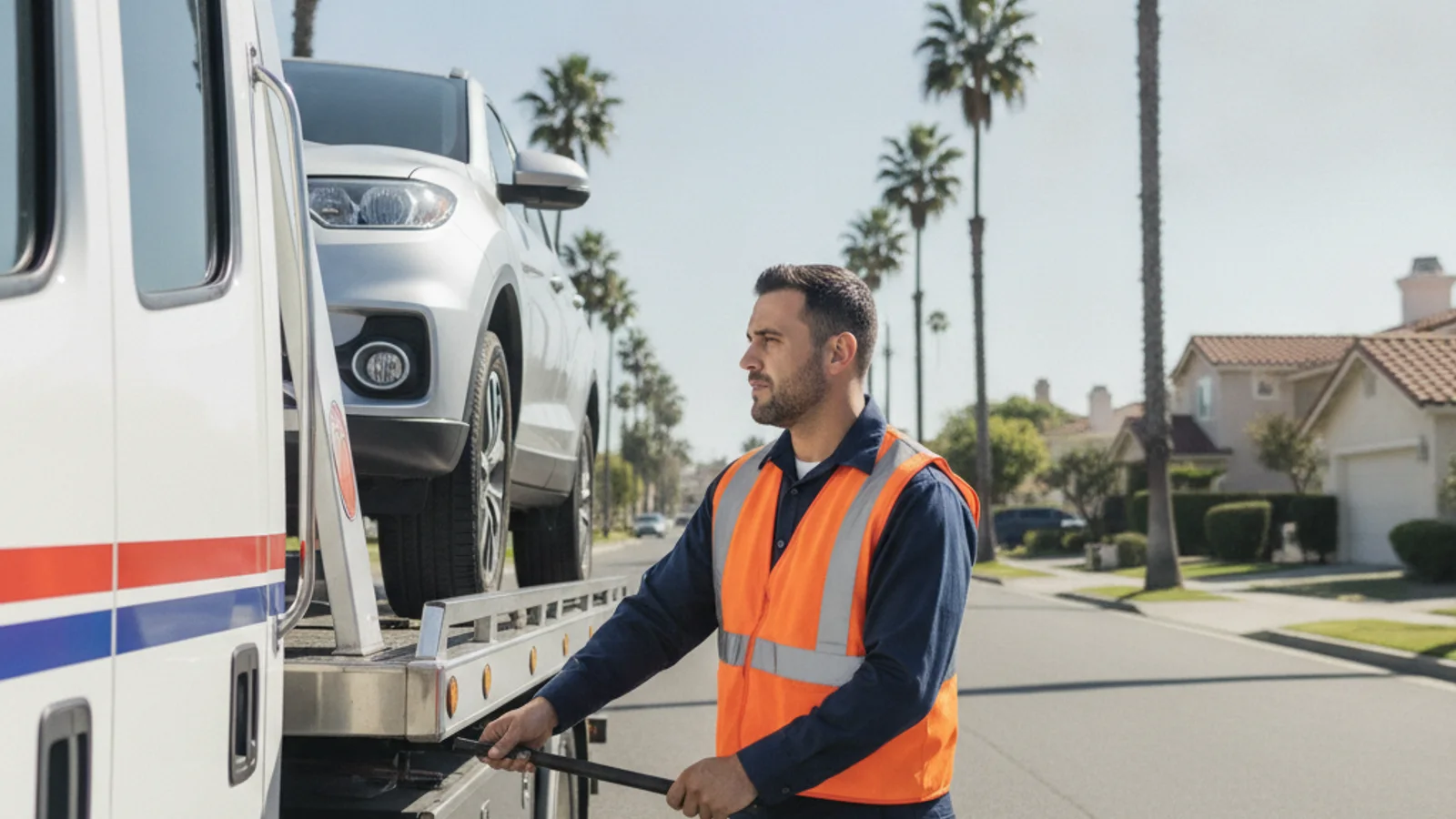
No national rental counter puts a licensed tow operator and a hook truck on a reservation. What U-Haul, Penske, and similar counters rent is equipment: a two-wheel tow dolly, or a full car-carrier trailer with all four wheels off the ground. Either one needs a separate tow vehicle, usually a pickup or an SUV rated for the combined weight, that you either already own or also rent.
That distinction matters before you book anything. A dolly lifts the front two wheels and rolls the back two on the road. A trailer lifts the whole car. They solve different drive-train problems, and picking the wrong one is where most rental-counter tow jobs go sideways. If the car you’re moving doesn’t run or steer at all, neither option is safe without a winch, and that’s a job for long-distance towing with an operator, not a rental.
The hitch and licence reality nobody mentions at the counter
Renting the equipment is the easy part. The tow vehicle needs a hitch rated for the combined weight of the dolly or trailer plus the car on it, which most sedans and crossovers are not built to carry. Tongue weight, the downward force the hitch takes at the coupler, has to stay within the tow vehicle’s rated limit or the rear end squats, steering gets light, and the trailer starts to sway at speed.
Don’t take licensing or endorsement rules from a blog post. The California DMV sets those rules for drivers and vehicles. Your rental company confirms which rules apply before you reserve equipment. A rental counter checks that your card clears. It does not check whether your SUV’s hitch was designed for this load, and neither does anyone else once you’re on the freeway.
Hitches are rated, and the rating stamped on the receiver, not the size of the ball, is what actually matters. Read the number on your own hitch and compare it against the loaded weight the rental counter gives you, because a receiver sized for a bike rack and one sized for a loaded car dolly are not interchangeable. Neither figure is something to estimate: the hitch label and the equipment’s own paperwork are the authority. Trailer brakes are the same story. Check what the rental equipment requires and whether your vehicle can run it, because braking down a long grade is where that answer shows up.
The drive-train problem that ruins transmissions
This is the detail that gets skipped. A front-wheel-drive car goes on a dolly with its front wheels lifted, because the front wheels are what the transmission drives. Put a rear-wheel-drive car on the same dolly backward, or tow it with its drive wheels on the ground, and the transmission spins with the engine off, which can burn it out inside a few miles.
An all-wheel-drive vehicle changes the math again. Most AWD systems need all four wheels off the ground, which rules out a dolly entirely and points straight to a trailer or a flatbed. Our EV towing guide covers a related version of this problem: electric and hybrid drivetrains have their own transport rules that a rental-counter clerk isn’t trained to check, and getting it wrong risks the drive unit, not just the transmission.
What breaks when someone gets it wrong
The damage from a mismatched dolly or trailer setup rarely shows up on the spot. A driveshaft-connected transmission spinning without lubrication pressure can overheat and seize gradually, so the car that rode fine for the first ten miles arrives with a transmission that won’t shift. Tow dollies loaded past their rated capacity also change how the whole rig handles: longer stopping distances, sway on a lane change, and a rear tow vehicle that fishtails on a downhill grade.
There’s also the load-securing side. A car that isn’t strapped down correctly on a dolly or trailer can shift under braking, and a rental counter’s quick demo isn’t the same as someone who straps vehicles for a living. The rental company’s own securing instructions are the standard to follow here, and worth reading before you leave the lot rather than on the shoulder. NHTSA is the place to start on general roadside and highway safety.
None of this shows up as a dramatic failure most of the time. It shows up as a wheel bearing running hot after an hour on the freeway, a strap that loosened on the second big bump, or a transmission shop quoting a repair that costs more than the car was worth. The rental receipt doesn’t cover any of that, because the equipment did exactly what it was built to do. The mismatch was in how it got used.
A short checklist before you sign for the equipment
A few questions decide whether a rental dolly or trailer is even the right tool, before the drive-train question comes into play at all:
- Does the car start, roll, and steer normally, with no locked wheels or dragging brakes?
- Do you know the drive-train type, front-wheel, rear-wheel, or all-wheel, and which wheels the equipment needs to lift?
- Is the tow vehicle’s owner’s manual clear on its towing capacity and hitch rating for this combined weight?
- Is the route mostly flat, or does it include a sustained freeway grade?
- Can you park the loaded rig and get it back to the rental yard without a tight turn or a steep driveway?
A “no” on more than one of those points is the signal to stop pricing equipment and call a professional instead.
When handing it off is the cheaper mistake
None of this means a rental dolly is always the wrong call. Moving a car you already know rolls freely, has the right drive-train configuration, and is going a short, flat distance is a reasonable DIY job for someone comfortable with a hitch. Where it stops making sense is a non-running vehicle, a car with a drive-train you’re not sure about, a long freeway haul, or a route with real grade, all of which describe a lot of San Diego moves.
At that point, an operator with a proper flatbed does the same job without the guesswork: no drive-train math, no tongue-weight calculation, no strap job to get right on the first try. Getting it wrong on a rental rig can cost a transmission or a totaled hitch setup, and that’s the more expensive mistake by a wide margin.
When to call us
If the car doesn’t roll, doesn’t steer, or you’re not certain which wheels need to come off the ground, that’s not a rental-counter job anymore. It needs an operator with the right equipment and the judgment to match it to the vehicle.
Call (858) 923-5787 to reach dispatch.