A hard curb strike, collision, or sudden wheel problem can leave a car unable to roll. When broken axle towing looks necessary, accurate dispatch details help the operator prepare. Don’t try to diagnose hidden damage beside traffic.
Signs that the car shouldn’t be driven
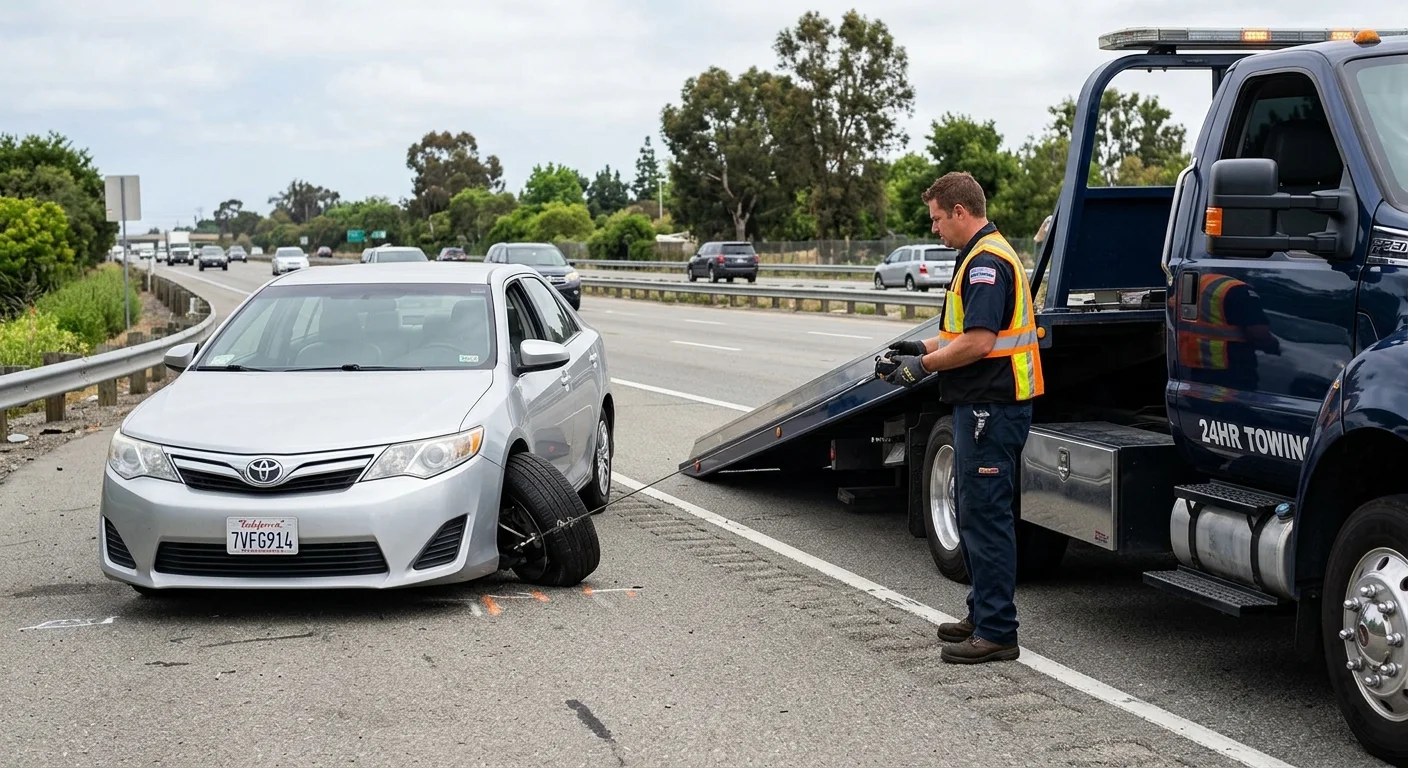
A wheel sitting at an unusual angle is a clear warning. It may lean inward, point away from the other wheel, or sit farther back in the wheel opening. The tire might also press against the fender or another vehicle part.
Other warning signs include a wheel that won’t turn or roll. You may hear scraping when the car moves slightly. One corner may sit lower than the others. Parts may also be hanging beneath the vehicle.
These signs don’t confirm a broken axle by themselves. A collision can damage several connected parts. Dispatch doesn’t need you to name the failed component. Describe what you can see and what happened before the car stopped.
Don’t test-drive a vehicle with a displaced or jammed wheel. Moving it can make pickup harder and may cause more damage. If the car stopped after the steering changed suddenly, review our guide to towing after steering failure.
Your location changes the immediate priority. A disabled car inside a parking lot presents a different problem than one blocking an I-805 lane. If the vehicle creates an immediate roadway hazard, contact emergency authorities and follow their directions. Don’t stand beside moving traffic to inspect the wheel.
NHTSA also publishes general roadside safety guidance. Use a safe viewing position, and don’t crawl beneath the vehicle.
Details dispatch needs about the damaged wheel
Start by identifying the damaged corner. Say front driver side, front passenger side, rear driver side, or rear passenger side. “The left wheel” can become confusing when people face different directions.
Next, describe the wheel’s position. Tell dispatch whether it’s turned sideways, folded inward, pushed backward, or trapped against the body. Mention whether the tire remains on the wheel. Also report any loose pieces you can see from a safe location.
Dispatch will need to know whether the car can roll. Don’t force it forward or backward to find out. Share what happened during the last movement instead. For example, say the rear passenger wheel dragged when the car moved several feet.
A useful damaged wheel towing description may sound like this:
The front passenger wheel points outward and touches the fender. The tire is still attached, but that corner won’t roll. The car is facing into a parking space.
Share the vehicle’s year, make, model, and approximate size. Say whether it’s an electric vehicle or hybrid. Mention a recent collision, curb strike, pothole impact, or lost wheel if applicable.
Tell dispatch whether you have the keys. Note whether the steering responds and whether the parking brake releases. Don’t attempt unfamiliar controls solely for the tow request.
Photos can clarify the position when they’re taken safely. Capture the damaged corner, the whole vehicle, and the surrounding access. Never step into traffic for a better angle.
Why vehicle position and access matter
A car that cannot roll may need more preparation than a routine roadside pickup. The operator must understand both the damaged wheel and the space around it. That information helps the operator choose a suitable recovery approach.
Give the exact location first. A street address alone may not identify a freeway shoulder, garage level, or shopping-center entrance. Share the nearest cross street, direction of travel, parking level, or visible business name.
San Diego locations can create very different access problems. A wide lot in Kearny Mesa differs from a tight underground garage in Mission Valley. A narrow alley in Barrio Logan differs from an East County roadside slope. On I-5, I-805, or SR-94, direction and the nearest exit matter.
Describe how the car sits. Is it parallel to the curb or facing into a space? Is the damaged wheel against a curb? Is the car on pavement, gravel, dirt, or a slope? Note any wall, post, parked car, median, or low tree blocking access.
For garages, report the posted height clearance and current level. Mention sharp ramps, locked gates, access codes, and narrow turns. Don’t guess at clearance. Read the posted number if you can do so safely.
Collision scenes may include debris, bent body panels, or a vehicle resting away from the roadway. Those details help dispatch determine whether the request belongs with an accident recovery operator. Tell dispatch if police, property management, or another authority controls access to the scene.
Questions about flatbed and recovery equipment
A broken axle doesn’t automatically identify one required truck or loading method. Vehicle design, wheel position, access, and manufacturer instructions all matter. The operator taking the job should make that decision from accurate details.
Ask dispatch how the damaged wheel will be kept from rolling during pickup. Explain whether it’s locked, detached, folded under the car, or pressed against the body. Don’t reposition the wheel or place anything beneath the vehicle yourself.
You can ask whether flatbed towing fits the situation. A flatbed may be one option, but access can affect that choice. A low garage, tight corner, steep driveway, or blocked approach may change the recovery plan.
Wheel-lift equipment and dollies are other terms you may hear. Don’t select equipment based only on an online photo. Our flatbed and wheel-lift comparison explains the basic differences, but the visible damage still controls the decision.
Give dispatch the exact model and drivetrain information when known. If you have the owner’s manual, keep it available. Manufacturers may provide model-specific transport instructions, especially for electric and hybrid vehicles.
Tell dispatch about any collision damage near the battery area. Don’t touch exposed cables or damaged electrical parts. The operator may need more information before accepting the recovery.
Before ending the call, repeat the damaged corner and access limits. Confirm that dispatch understands the car cannot roll normally. That short review can catch a mistaken vehicle description or garage location.
Where to send the vehicle after pickup
Choose the destination before the operator arrives when possible. Broken axle towing usually ends at a repair facility, collision center, dealership, or another location that has agreed to receive the car. The right destination depends on what happened and who can inspect it.
Call the intended facility first. Explain that the vehicle has a damaged wheel and may not roll. Ask whether the facility can accept it in that condition. Also ask where a tow operator should enter and where the vehicle should be left.
Confirm the facility’s current receiving hours directly. Don’t assume its service desk and vehicle drop area follow the same schedule. If the business will be closed, ask whether it allows after-hours delivery and how access works.
Share the complete destination with dispatch. Include the business name, street address, entrance, and contact instructions. A large dealership or repair complex may have several gates. The public entrance may not lead to the vehicle receiving area.
Think about unloading access too. A destination with a steep driveway, locked garage, or crowded curb may create another problem. Tell dispatch about any known height limit or narrow approach.
If the destination hasn’t confirmed acceptance, say so. Don’t send a non-rolling car to a closed lot and hope it can stay there. Storage policies, repair authorization, and after-hours access come from the receiving facility. Check those details with that facility before pickup.
Keep your keys and contact information available. Remove essential personal items only when it’s safe. The tow operator can explain what must remain with the vehicle for delivery.
When to call us
A displaced wheel, dragging corner, or car that cannot roll needs a professional towing operator, not a DIY pull. We can match your broken axle towing request with an operator serving San Diego County. Call (858) 923-5787 to reach dispatch.