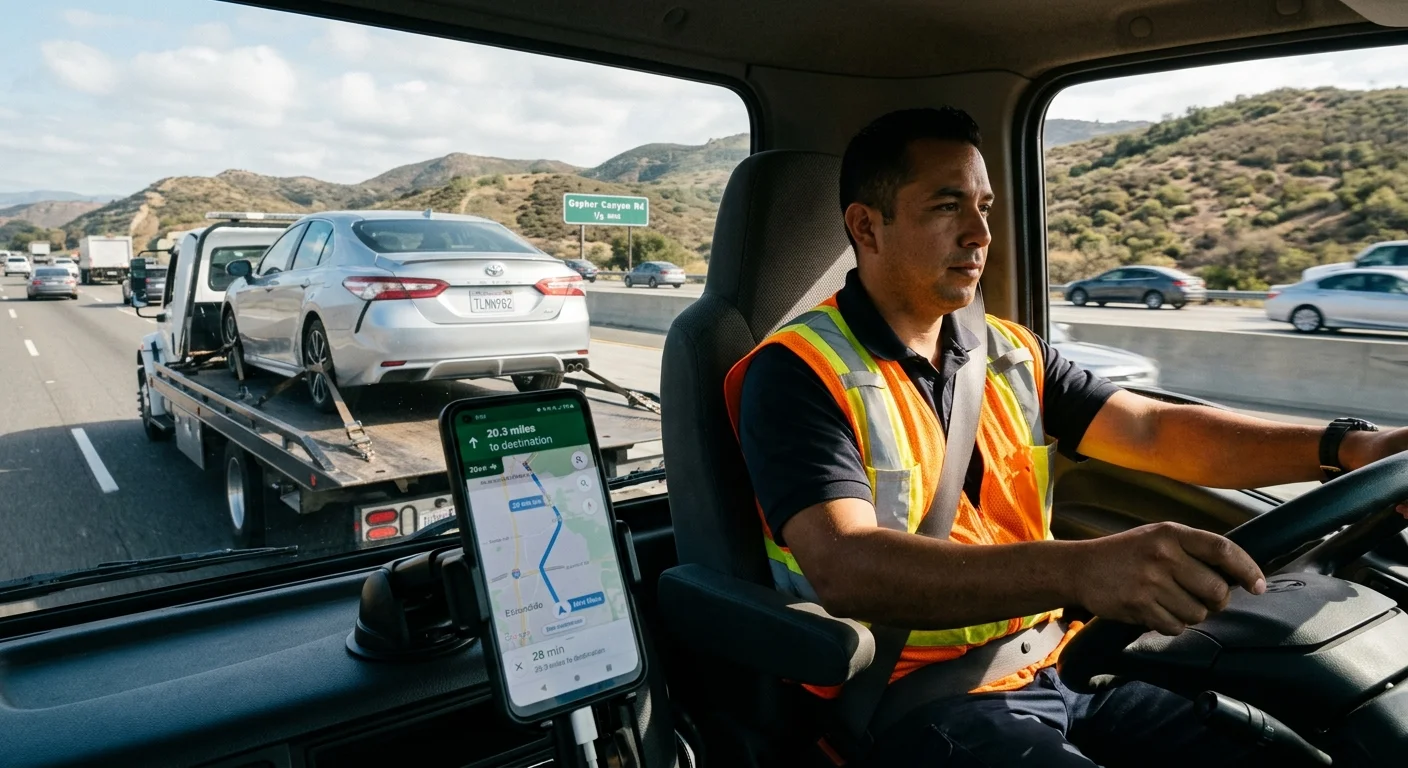
A 20-mile car tow in San Diego doesn’t have one confirmed universal price. The cost must come from the operator’s written quote for your specific vehicle and route. Get every expected charge in writing before approving dispatch.
Why a 20-mile tow doesn’t have one fixed price
Distance is only one part of the requested job. The operator also needs the exact pickup, destination, vehicle condition, access, and towing method. Without those details, a supposed 20-mile tow price isn’t tied to a complete job.
No verified universal consumer rate for a 20-mile San Diego tow appears in the approved sources. The City of San Diego publishes a fee schedule for vehicles handled through its impound system. That schedule isn’t a general rate card for a voluntary tow to your mechanic.
Customer-requested towing prices are generally set through agreement with the operator. That makes a written quote more useful than an online average. Our broader guide to San Diego towing costs explains the same distinction across shorter and longer trips.
Make sure both sides also mean the same thing by “20 miles.” Ask whether the quoted mileage covers only the loaded trip from pickup to destination. Also ask whether approach mileage or another mileage calculation appears in the quote.
San Diego geography makes that clarity useful. A route may follow I-5, I-805, I-8, SR 94, or several local streets. Two destinations can look close on a map while producing different actual routes. Give full addresses and ask which route the written mileage reflects.
Don’t calculate a 20-mile price by doubling an advertised shorter trip. The 10-mile towing cost guide can help you gather details, but it isn’t a substitute for a fresh quote.
Details that can change the written quote
Start with the complete pickup and delivery addresses. Include the parking level, gate instructions, loading zone, and destination entrance. Tell dispatch if the car sits in a garage, alley, underground structure, steep driveway, or traffic lane.
Describe the vehicle before anyone accepts the job. Give its year, make, model, and general size. State whether it starts, rolls, steers, and brakes. Mention missing keys, locked steering, collision damage, damaged wheels, lowered clearance, or a blocked position.
Those facts help the operator choose the towing method. Don’t rely on a broad online rule about flatbeds or wheel lifts. Manufacturer towing instructions can differ by model and condition. Ask the operator to review the vehicle information and identify the planned method in writing.
Photos may help explain tight access or visible damage. Send wide images showing the vehicle and surrounding space. Add close views of damaged wheels or body panels when relevant. A photo shouldn’t replace a complete verbal description.
The destination matters too. Confirm that the repair shop, residence, dealership, or storage location can receive the car. Ask what happens if the destination is closed or refuses delivery. If storage might become necessary, request the yard location, release process, hours, and charges in writing before dispatch.
A quote based on a running car in an open lot may need revision when the car can’t roll inside a low garage. Accurate details reduce that risk. If something changes, request an updated written quote before approving additional work.
How to compare the route and towing method
Compare quotes using the same trip details. One quote shouldn’t assume a curbside pickup while another covers an underground garage. Give each operator the same addresses, vehicle condition, access notes, destination requirements, and requested towing date.
Look at the route behind the mileage. In San Diego County, a 20-mile trip might stay near the I-5 corridor or cross between inland and central communities. It may use freeways, surface streets, or both. Ask the operator which mileage is included instead of relying on a straight-line map measurement.
Next, compare the planned towing method. A flatbed carries the vehicle on its deck. A wheel-lift setup raises part of the vehicle, with dollies used when the operator determines they’re needed. The right choice depends on the specific vehicle, its condition, and its manufacturer guidance.
Our long-distance towing service page explains what information dispatch needs for planned transport. Although 20 miles isn’t a county-to-county haul, the same preparation helps. Exact endpoints and vehicle details produce a clearer request.
A roadside breakdown also needs location details that a scheduled transport doesn’t. Share your travel direction, nearest exit, visible landmark, and whether the car is outside a traffic lane. For an active roadside problem, see the emergency towing service page before calling.
The lowest-looking quote isn’t comparable if important terms are missing. Compare the complete written scope, not one headline figure.
Questions to ask before approving dispatch
A useful quote should describe the trip clearly enough to review. Ask these questions before the operator is sent:
- What operator will perform the tow?
- Does the quote use both complete addresses?
- How is the 20-mile distance being measured?
- Does the quote include every anticipated charge?
- What towing method is planned for this vehicle?
- Which vehicle and access details does the quote assume?
- Will the vehicle go directly to the named destination?
- Could storage become necessary if delivery isn’t accepted?
- What payment methods will the operator accept?
- Will you receive an itemized receipt?
- How long does the written quote remain valid?
- Who must approve a change to the job?
Pay attention to assumptions. If the quote says the vehicle must roll and steer, confirm that it does. If you don’t know, say so. A driver may discover damage or access limits that weren’t visible during the call.
Quick Tow SD is a referral service. We take the call and connect customers with independent operators. The operator performs the work, sets the price, and receives payment directly from the customer. Make sure the operator’s business name appears on the quote or dispatch confirmation.
Keep the quote accessible on your phone. Review any revision before extra work begins. If the pickup, destination, towing method, or storage plan changes, ask for the new terms in writing.
What to confirm when no current rate is published
No approved source confirms one current consumer price for towing a car 20 miles in San Diego County. The City of San Diego publishes an impound fee schedule, but it doesn’t establish a universal customer-requested rate. For a voluntary tow, the operator sets the price through agreement with the customer.
That means the honest answer is “not confirmed” until an operator quotes the actual trip. Request a written quote containing the pickup, destination, mileage basis, vehicle condition, access, towing method, and any possible storage. Don’t accept a bare number that leaves those items undefined.
You can also check the operator before approving dispatch. California DMV provides a Motor Carrier Permit lookup for permit records. The California Highway Patrol also maintains information through its Commercial Vehicle Section. Use the operator’s legal business name when checking available records.
Confirm the receiving location yourself. Make sure someone can accept the car and identify where it should be left. If the destination can’t receive it, ask the operator to explain the alternative before the vehicle moves.
Save the written quote, dispatch confirmation, and final receipt. Compare the receipt with the approved terms. If the circumstances changed during pickup, keep the written revision with the original documents.
A clear quote won’t create one countywide price. It will tell you what your specific 20-mile trip covers and who is responsible for each part.
When to call us
A disabled car that must travel 20 miles needs a professional towing operator, especially when it has damaged wheels, missing keys, or tight access. We connect callers with independent operators serving every city in San Diego County. Call (858) 923-5787 to reach dispatch.