Buying a non-running car remotely creates one immediate decision. If you need to tow from state to state, compare direct towing and scheduled transport using the car’s condition, access, and handoff needs.
Direct towing can fit a controlled pickup and delivery. Scheduled transport may fit a flexible purchase with confirmed loading support. The right answer depends on details the listing probably doesn’t show.
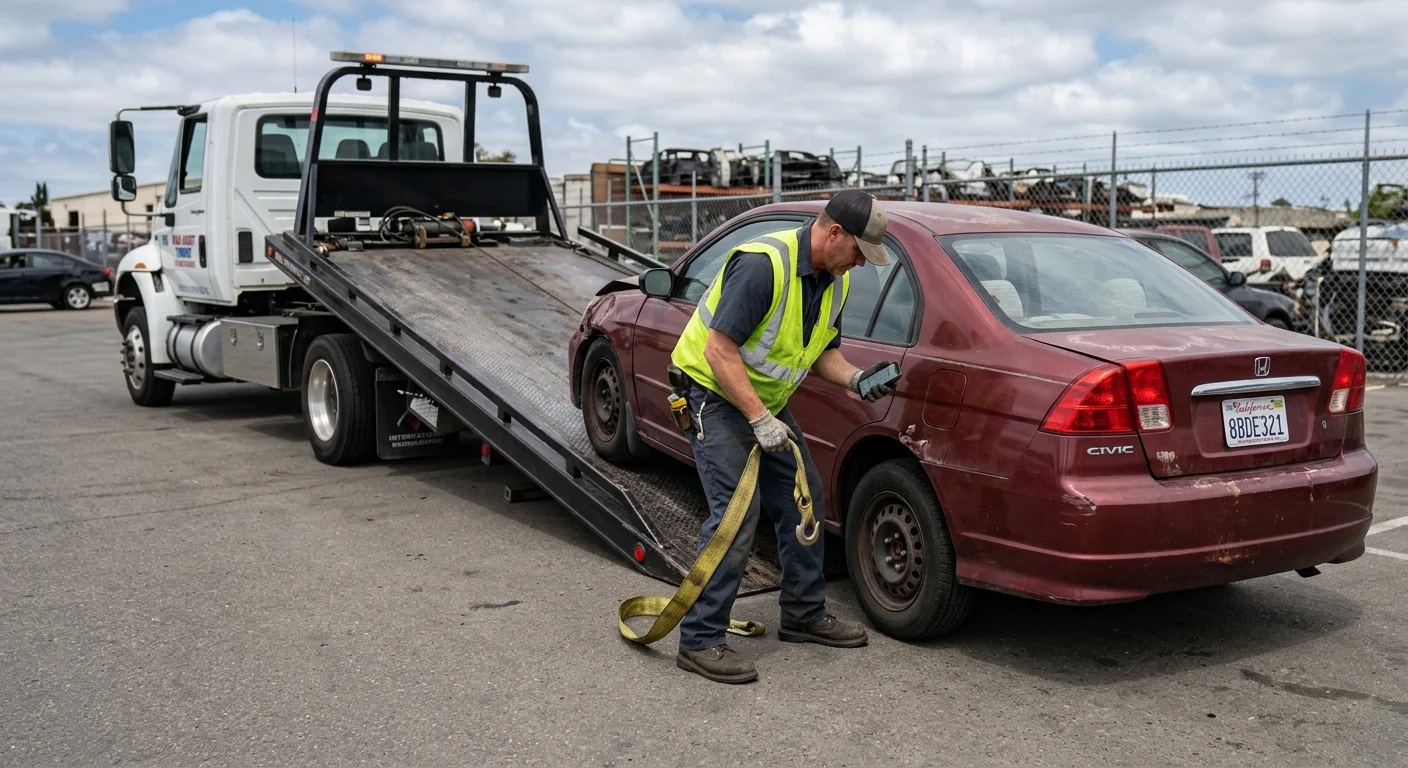
Confirm the vehicle’s condition before pickup
“Non-running” doesn’t explain enough for a carrier to plan the move. A car with a dead battery presents a different loading problem from one with missing wheels. Get a current condition report before booking anything.
Ask the seller to confirm these points:
- Whether the car rolls freely
- Whether each tire is mounted and holds air
- Whether the steering turns and the brakes release
- Whether the transmission can enter neutral
- Whether keys are available
- Whether the parking brake releases
- Whether loose body panels or parts remain attached
- Whether fluids are visibly leaking
- Whether crash damage affects the wheels or suspension
- Whether the vehicle sits unusually low
Request recent photos from every corner. Get close views of each wheel and visible damage. A short video can show whether the car rolls, steers, and stops. Ask for a fresh recording instead of relying on old listing media.
Share every known problem with the carrier before pickup. Hidden damage can prevent the planned equipment from working safely. It can also create a failed handoff when the driver reaches the seller.
Some non-running vehicles may be candidates for flatbed towing. That decision still belongs to the operator handling the vehicle. Give dispatch the make, model, condition, location, and access details. The operator can then decide whether the job matches its equipment.
Don’t ask the seller to pull, push, or steer a damaged car without proper help. A lower purchase price isn’t worth an improvised loading attempt.
Compare direct towing with scheduled transport
Direct towing and scheduled auto transport aren’t interchangeable services. Compare the actual pickup plan, not just the final destination.
A direct towing arrangement may provide one planned movement from the seller to San Diego. Ask whether the same operator controls both handoffs. Also confirm whether the vehicle stays on the same carrier during the trip.
Scheduled transport can involve different loading procedures. Some carriers may accept non-running vehicles, while others may require working steering, brakes, or loading support. Don’t assume a transport listing includes those services. State the vehicle’s condition and get acceptance in writing.
When comparing ways to tow a car across states, ask each provider the same questions:
- Who collects the vehicle from the seller?
- Can the carrier load its present condition?
- Will another carrier or terminal become involved?
- Where will the vehicle be delivered?
- Who contacts the seller before collection?
- Who documents the vehicle at each handoff?
- What happens if the condition differs from the description?
Our guide to interstate towing versus auto transport explains the broader service differences. For a remote purchase, concentrate on control, loading needs, and written responsibility.
You can also review our long-distance towing options before calling. Quick Tow SD matches customers with independent operators. The operator accepting the job sets the price and provides scheduling details for that specific move.
Plan access at both ends of the trip
A carrier can accept the vehicle but still face an impossible pickup. Confirm the exact loading space before anyone travels to the seller.
Ask where the car sits now. It might be inside a garage, behind a gate, on soft ground, or against other vehicles. Get the driveway width, overhead clearance, surface condition, and slope. Tell the carrier about locked wheels, missing tires, low clearance, or a blocked approach.
The seller should identify any property rules affecting access. If the car sits at an auction, repair shop, storage site, or gated lot, ask when carriers may enter. Confirm who can open the gate and release the car. Don’t rely on a general business listing or an old message thread.
Plan the San Diego delivery with the same care. A curb in North Park offers different access from an inland driveway near El Cajon. A gated complex in Chula Vista may require advance entry instructions. Downtown parking structures can add clearance and turning limits.
Choose a delivery point where the operator can unload without improvising. Mention narrow streets, steep driveways, low branches, gates, and parked vehicles. If home access won’t work, discuss another authorized location before pickup.
Also decide who’ll receive the vehicle. That person should have the carrier’s contact details and the written delivery instructions. Don’t send a non-running car to an unattended curb or an address where it can’t remain.
For the reverse situation, our guide to long-distance towing out of San Diego covers the same access planning from the local end.
Verify records and release details with the seller
The carrier needs a clean handoff, even when the sale happened entirely online. Confirm the seller’s release process before choosing a pickup date.
Ask the seller which records will accompany the vehicle. Confirm the name used on the transaction, the vehicle identification number, and the exact pickup address. Check that those details match your purchase paperwork and the carrier’s order.
This article can’t confirm which title, registration, insurance, or release rules apply to your transaction. Those requirements can depend on the vehicle and the states involved. Check the current requirements with the relevant motor vehicle agencies, seller, and carrier.
The seller should explain who may release the car. Get that person’s name and direct contact method. If a dealer, auction, shop, or storage site holds the vehicle, ask what authorization it requires from you. Send accepted documents through the method that location specifies.
Ask the carrier what it needs before dispatching an operator. Don’t assume a purchase receipt alone will satisfy every facility. For California-side carrier questions, the California Highway Patrol is an official starting point. Ask the carrier which other authorities govern the full route.
Create a shared record of the handoff. Save the seller’s condition photos, authorization messages, carrier order, and pickup confirmation. Ask for photos when the vehicle is collected. Compare them with the original listing and your delivery inspection.
Remove uncertainty before the pickup. A driver shouldn’t arrive to discover that the named seller isn’t present, the keys are elsewhere, or the holding site has no release authorization.
Get written pickup and delivery terms
A phone conversation helps explain the job. Written terms show what each party actually accepted.
The order should identify the vehicle, pickup location, and San Diego destination. It should state that the car doesn’t run. Add every known loading issue, including locked steering, damaged suspension, missing keys, low clearance, or tires that won’t hold air.
Ask the operator or carrier to write down:
- The planned pickup and delivery locations
- The accepted vehicle condition
- The loading method and required equipment
- The seller and receiver contact details
- Any transfer or terminal arrangement
- The scheduling terms provided for the job
- The operator’s price and listed additional charges
- The payment method and payment recipient
- The process for reporting condition changes
- The process if pickup access isn’t available
Read the terms before approving the move. If a promise matters, don’t leave it in a text fragment or verbal conversation. Ask for it in the order or carrier agreement.
Pay close attention to condition exceptions. The seller may describe the car as rolling when one wheel is locked. A listing may omit a missing key or detached suspension part. Your written terms should explain how the carrier handles a material difference at pickup.
Confirm the final San Diego address again before collection. Spell out gate instructions, unloading space, and the receiver’s name. If the destination changes, get the revised location accepted in writing.
Keep the pickup record until you inspect the delivered vehicle. Compare its condition with the seller’s photos and the carrier’s collection record. Note concerns through the process stated in your agreement.
When to call us
Call when a non-running purchase needs professional loading and out-of-state vehicle towing to San Diego. We can match you with an independent operator based on the vehicle, route, and access details. Call (858) 923-5787 to reach dispatch.