An unfamiliar car is blocking your driveway or occupying your assigned space. You want it removed, but you don’t want an unexpected bill. There isn’t one universal payer rule for every San Diego tow, so confirm the authorization and payment terms before dispatch.
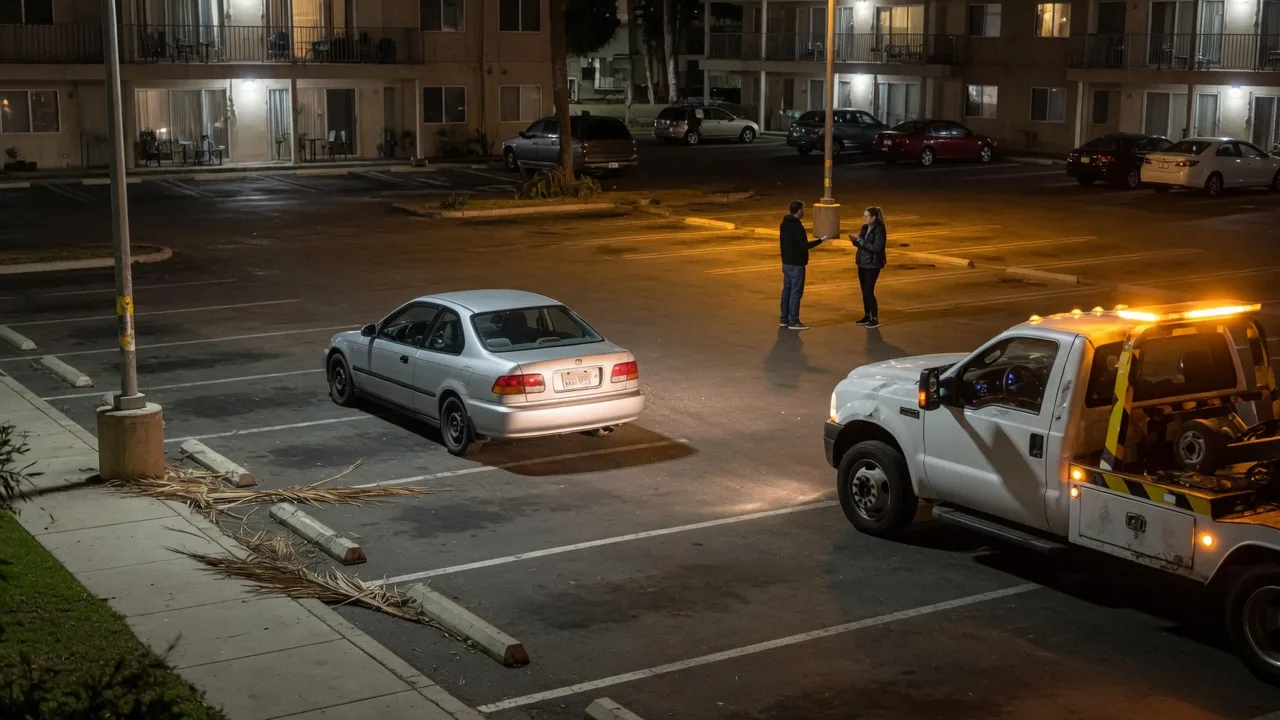
Who is asking for the tow, and who owns the car
Start by identifying your role. The answer changes depending on who controls the property, who owns the vehicle, and why it needs moving.
A driver requesting help for their own disabled car is arranging an owner-requested tow. The operator sets the price, and the customer pays that operator directly. That’s different from requesting removal of a stranger’s car without the vehicle owner’s consent.
A property owner or authorized property representative may be dealing with an unauthorized vehicle. An apartment resident might instead be reporting a car in an assigned space. A tenant’s lease, parking agreement, or community rules may affect who can authorize action. Those documents aren’t interchangeable, so check them before calling.
California’s private-property towing rules don’t create a simple answer stating that every caller pays or never pays. We couldn’t confirm a universal rule covering every property, contract, and authorization arrangement. Ask the property manager and referred operator who will be treated as the customer.
Don’t request a tow merely because you know the vehicle owner. Ownership permission still matters for a voluntary move. For an unwanted vehicle, control of the property and lawful authorization matter instead.
If the car was involved in a crash, see the separate guide to who pays for a tow after an accident. Insurance, police involvement, and vehicle custody make that a different question.
Private property, assigned spots, and public-street limits
A car on private property isn’t automatically available for removal. California Vehicle Code 22658 provides several alternative grounds for private-property towing. These include compliant entrance signage, an earlier parking-violation notice, certain inoperable-vehicle conditions, and property improved with a single-family dwelling.
The statute also limits when general authorization can replace approval for a specific tow. Its list covers a vehicle within 15 feet of a fire hydrant, in a fire lane, or blocking an entrance or exit. Don’t assume the same treatment applies merely because a registration sticker appears expired or a car occupies a marked space.
Read the current California Vehicle Code 22658 and review our guide to legally towing a car from private property before authorizing removal.
Assigned parking creates another layer. A resident in a Chula Vista apartment lot or Mission Valley complex may control a space under written parking terms. That doesn’t establish every resident’s authority to order a tow. Report the vehicle to the manager or other party named in your agreement. Our guide about a car parked in your assigned spot covers that process.
A public curb is different. A private caller shouldn’t treat a street like a private lot. California law prohibits parking in front of a public or private driveway, and police may tow a vehicle blocking a private driveway from the street. Contact the agency responsible for that roadway rather than arranging a private-property removal.
What the referred pro will need before dispatch
The operator needs enough information to decide whether the request can proceed. Be ready to explain who you are, where the vehicle sits, and what gives you authority over that location.
Provide the complete address and a precise description. “Behind the eastern gate near Building C” is more useful than an apartment complex name alone. Say whether the car is in a driveway, assigned space, fire lane, entrance, private lot, or public curb.
Share the vehicle’s color, make, model, and license plate when visible. Don’t enter the vehicle or move anything attached to it. Photos can document its position, nearby signs, space numbers, curb lines, and blocked access. Capture the wider area as well as close details.
The operator may also need the property owner’s or manager’s contact information. Have your lease, parking agreement, management instructions, or ownership records available when relevant. If another person must authorize the removal, contact that person before requesting dispatch.
Tell the operator whether the vehicle is occupied. Don’t confront the driver or stand where the car might move. If the situation involves immediate danger, threats, or a traffic hazard, use the appropriate emergency or law-enforcement channel.
Quick Tow SD connects callers with independent operators for private property towing. The referred operator evaluates the job, confirms what authorization is needed, and provides terms for that request. A referral doesn’t replace permission from the property or authority controlling the location.
Who may be asked to pay, and when that is not settled yet
The person who calls isn’t automatically the final payer in every situation. However, callers also shouldn’t assume that someone else will receive the bill.
For an owner-requested tow, the customer and operator agree on the service. The operator sets the price and is paid directly by the customer. When someone requests a nonconsensual private-property tow, the payment arrangement may depend on the property contract, authorization, and operator’s written terms.
California-required private-property towing signs state that unauthorized vehicles are removed at the vehicle owner’s expense. That required wording doesn’t answer every dispute between a caller, manager, property owner, vehicle owner, and towing business. It also doesn’t confirm that a caller can authorize removal without meeting the statutory conditions.
We couldn’t confirm a statewide rule saying a property owner always pays, never pays, or receives free removal. No verified San Diego-wide figure establishes how much it costs to remove a car from private property. The operator or property’s contracted towing provider sets or communicates the applicable terms within governing rules.
Online phrases such as the “80% towing rule” or “$3,000 car rule” don’t appear in the approved California sources for this payer question. Don’t rely on those phrases when authorizing a San Diego tow.
If a manager says the vehicle owner will be charged, ask the manager and operator to put that arrangement in writing. If responsibility remains disputed, pause the request until the party with authority clarifies it.
What to confirm in writing before the truck rolls
Written terms protect everyone from avoidable confusion. Ask the referred operator to identify the authorizing party, customer, requested service, vehicle, pickup location, and destination or storage location.
The document should also state who is expected to pay the operator. If payment depends on a property agreement, ask the manager for the relevant language. Don’t accept “the other person pays” as a complete answer when no document identifies that person’s responsibility.
Confirm these points before authorizing dispatch:
- Who has authority over the vehicle’s current location
- Which facts support removal from that location
- Whether the vehicle is on private property or a public street
- Who signs the authorization
- Who the operator identifies as the customer
- Who will be asked for payment
- What happens if the vehicle moves before pickup
- Where the vehicle will be taken
Ask for the quoted terms directly from the operator. Quick Tow SD doesn’t publish a rate card because each independent operator sets the price for the job. Don’t sign a blank authorization or rely on a verbal promise that conflicts with written terms.
If the request comes from an HOA, apartment complex, retail lot, or commercial property, check whether that property already has a towing provider. The manager may need to handle the request under an existing agreement.
Keep copies of the authorization, photographs, messages, and documents supplied by the property. If the current payer rule still isn’t clear, don’t guess. Ask the operator and authorizing property representative to resolve it in writing first.
When to call us
Call when an unwanted vehicle is on private property and the authorized party needs a professional operator to assess the request. We connect callers throughout San Diego County with independent towing operators, while the referred operator confirms authorization and payment terms.
Call (858) 923-5787 to reach dispatch.