A hard curb strike can leave an Oceanside driver with a difficult choice. The tire may still hold air, yet the wheel may no longer sit correctly. Before requesting flatbed towing in Oceanside, focus on what moved, what’s touching, and whether the car can roll.
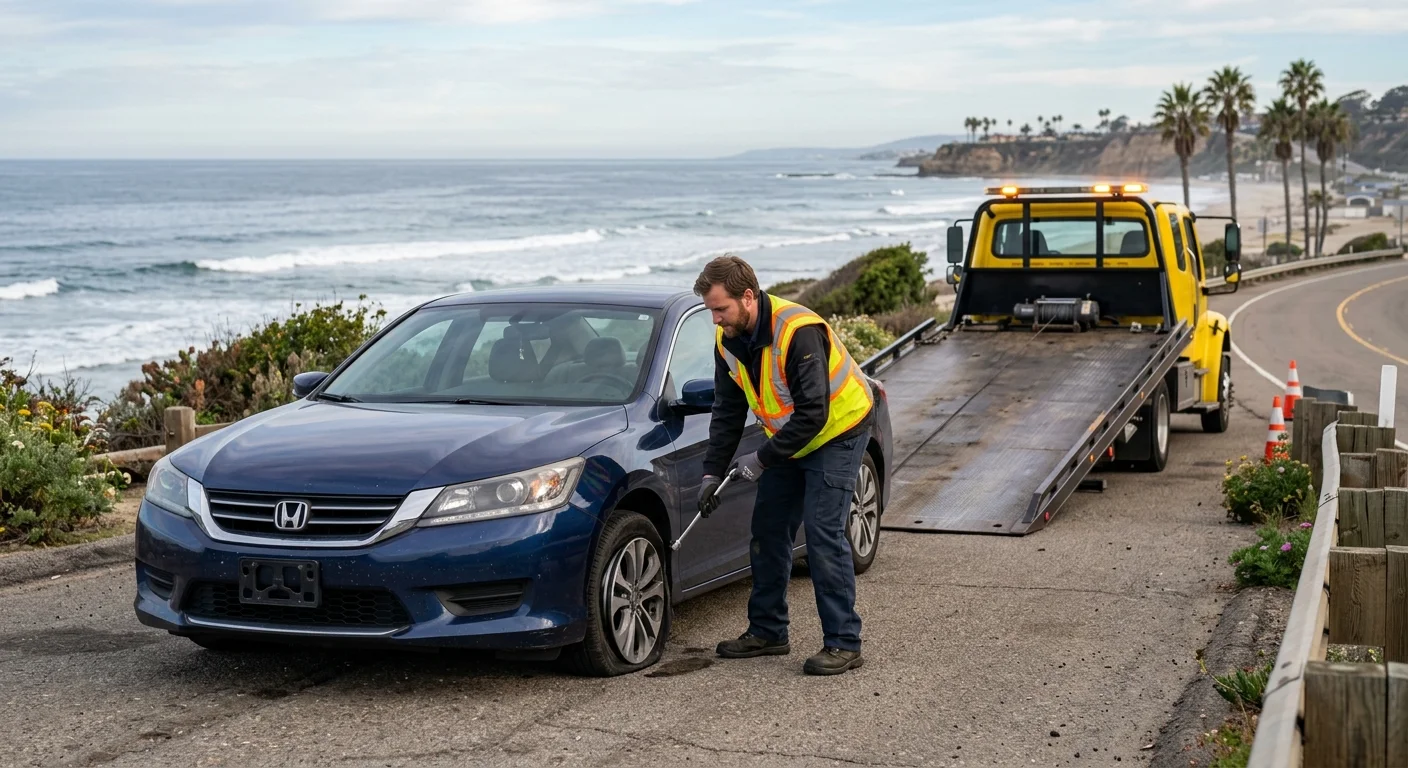
Start with the wheel and suspension condition
Begin with the damaged corner of the car. Look from a safe position without crawling underneath it. Note whether the wheel points straight or leans inward or outward. Tell dispatch if it sits farther back in the wheel opening than the opposite wheel.
Check for visible contact between the tire, wheel, fender, or suspension. A bent rim, torn tire, loose body panel, or wheel pressed against the fender can affect loading. Fluid beneath the damaged corner also matters. Don’t drive the car merely to test whether the problem feels serious.
Describe what happened before the damage appeared. A curb strike, pothole impact, collision, or failed suspension part creates a different pickup problem. Mention any scraping, grinding, steering change, or sudden drop at one corner. These details help the operator choose loading equipment before reaching you.
A damaged wheel doesn’t make a flatbed the automatic answer in every case. The vehicle’s condition, manufacturer guidance, and pickup space still matter. However, a flatbed may keep the damaged end from rolling during transport. Our flatbed towing service connects Oceanside callers with operators who can evaluate that setup.
Don’t remove broken parts or force the steering straight. Don’t try pushing a car whose wheel appears folded, locked, or displaced. Tell dispatch that the car cannot roll, then let the operator plan the loading method.
How I-5 and Coast Highway pickups differ
An I-5 shoulder creates a different problem from a Coast Highway curb. On I-5, traffic exposure comes first. Give dispatch your direction of travel, the nearest visible exit, and your position relative to the roadway. State whether the vehicle is fully on the shoulder or blocking any part of a travel lane.
Don’t spend extra time inspecting the traffic-facing side. If the location is exposed, follow directions from law enforcement or emergency personnel. The NHTSA road safety resources provide additional guidance for roadside emergencies. A damaged car in an active lane needs an emergency response, not a prolonged mechanical inspection.
Along Coast Highway, access may depend more on curb position and nearby obstacles. Tell dispatch whether you’re beside a curb, inside a business lot, or blocking a driveway. Mention parked cars, posts, landscaping, or a narrow entrance. These details can affect how a flatbed tow truck approaches the vehicle.
Location descriptions should remain specific. “I-5 in Oceanside” leaves too much uncertainty. A direction, nearby exit, and dropped map pin are more useful. On Coast Highway, provide the nearest cross street or recognizable property. Specify whether you’re near Downtown Oceanside, Oceanside Harbor, or another clearly identified area.
For broader location guidance, see our Oceanside tow truck guide. The operator taking the job will provide an arrival estimate for your exact pickup location.
Why clearance and drivetrain details matter
A flatbed must load the car without creating new contact points. Tell dispatch about low bumpers, splitters, side skirts, exhaust parts, or aftermarket suspension. If one corner has collapsed, explain which body panel now sits closest to the pavement.
The pickup surface matters too. A level parking lot differs from a sloped driveway or tight garage. Share any posted garage clearance before the operator is sent. Mention gates, sharp turns, speed bumps, and limited space around the car. Photos may help dispatch understand the approach.
Give the vehicle’s year, make, model, and drivetrain when known. State whether it’s front-wheel drive, rear-wheel drive, all-wheel drive, or four-wheel drive. Don’t guess if you aren’t sure. The vehicle identification details or owner’s manual may provide the answer.
Also report whether the transmission shifts into neutral. Tell dispatch if the parking brake won’t release, the steering is locked, or the keys are missing. Each condition can change the loading plan. The operator may need equipment that keeps a damaged or locked wheel from dragging.
Electric vehicles require their own manufacturer instructions. Guidance varies by brand and model, so don’t assume one procedure covers every EV. Give dispatch the exact model and describe any collision or battery-area damage. The operator can then review the correct transport guidance.
Our guide to vehicles that may need flatbed towing explains other conditions worth reporting. It doesn’t replace the vehicle manual or the operator’s inspection.
When roadside help isn’t enough
Roadside help fits problems that can be corrected safely where the car stopped. A simple tire change may be possible when the wheel, suspension, spare, and mounting area remain usable. Wheel damage changes that decision.
Request a towing evaluation when the wheel leans, binds, or presses against the body. Do the same when the steering no longer responds normally. Visible suspension separation, leaking fluid, or a vehicle resting unusually low also deserves professional attention.
A tire inflator can’t straighten a bent wheel. A jump start can’t address a displaced suspension part. Installing a spare won’t solve damage behind the wheel. If the car can’t roll without scraping or resistance, tell dispatch before anyone attempts to move it.
Avoid turning a roadside problem into a DIY recovery. Household jacks, tow straps, and another passenger car aren’t substitutes for a planned loading setup. Moving a damaged vehicle without understanding the wheel position may create more contact or leave it stuck in a worse location.
Our emergency towing service is the better starting point when the vehicle is exposed, obstructing traffic, or unable to roll. Quick Tow SD takes the call and matches the customer with an independent operator. The operator evaluates the vehicle, selects the equipment, performs the work, and collects payment directly.
What to confirm before dispatch
Start with an exact location. For I-5, provide your travel direction, nearest exit, shoulder position, and map pin. For Coast Highway, give the nearest cross street and describe whether the car is curbside or on private property.
Next, provide the vehicle details. Dispatch needs the year, make, model, drivetrain, and damaged corner. Explain whether the car starts, shifts into neutral, steers, brakes, and rolls. Mention missing keys or a parking brake that won’t release.
Describe the damage without diagnosing it. “The left front wheel leans inward and touches the fender” is more useful than “the axle is broken.” Report warning lights, fluid, loose panels, and unusual sounds. Send clear photos if dispatch requests them.
Confirm the pickup conditions. Include slopes, garage clearance, gates, narrow driveways, soft ground, and nearby obstacles. Tell dispatch which side faces traffic. Also provide the destination address and note any access restrictions there.
Ask whether the assigned operator plans to use a flatbed, dollies, or another loading method. The operator should base that choice on the actual vehicle and scene. If the method conflicts with your owner’s manual, raise that concern before loading begins.
A single citywide flatbed rate for Oceanside couldn’t be confirmed. The operator taking the job sets the price and is paid directly by the customer. Confirm the current charge and any equipment-related costs before accepting the dispatch.
When to call us
A displaced wheel, suspected suspension damage, or a car that can’t roll needs a professional towing operator instead of a DIY fix. We’ll connect you with a local operator and pass along the vehicle, damage, and pickup details. Call (858) 923-5787 to reach dispatch.