Your car needs to move 300 miles, or 500, and you’re figuring out whether a flatbed or a transport carrier makes more sense. That decision depends on distance, timeline, and what the vehicle actually is. Here’s how to think through it without wasting a day on hold with a broker.
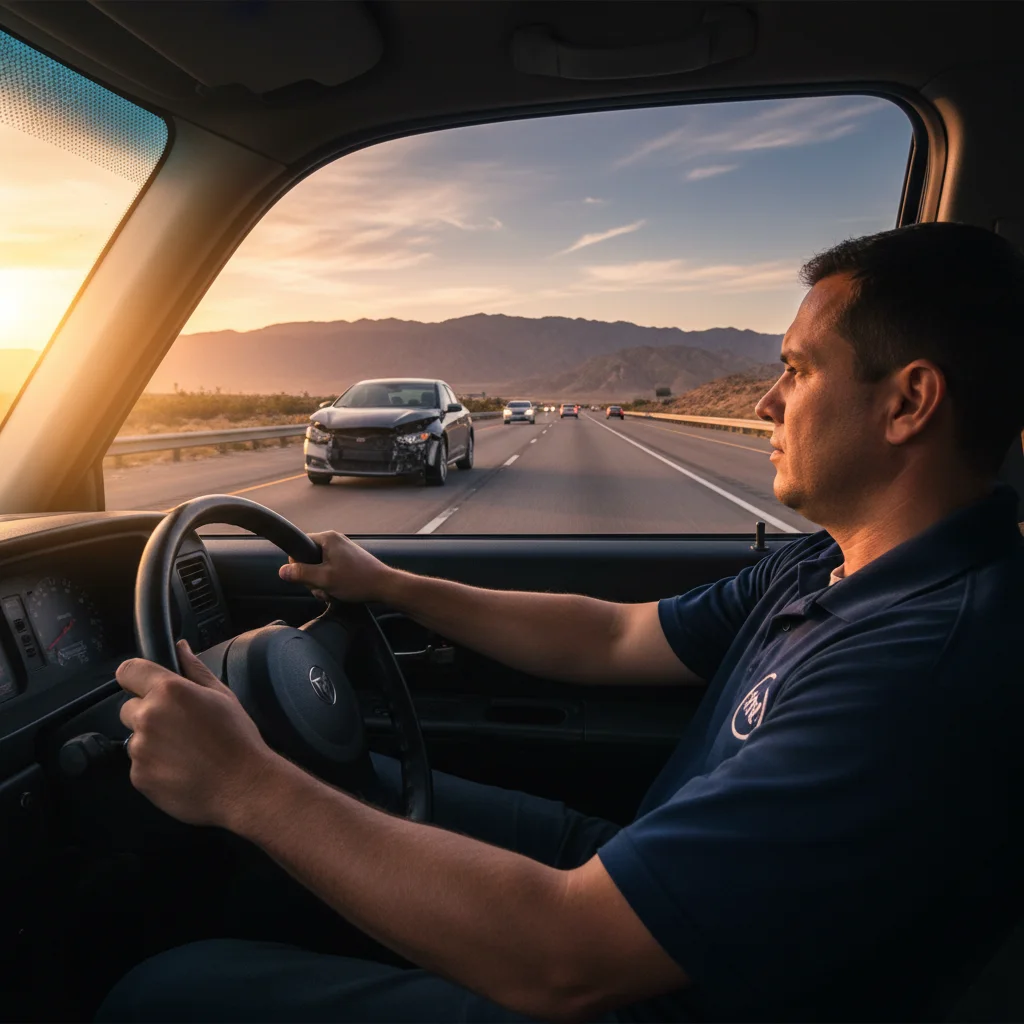
When long-distance towing makes sense vs shipping
Auto transport brokers can move your car for less per mile on a multi-vehicle carrier, if you’re flexible. If you’re not, towing wins almost every time.
Choose long-distance towing when:
- You need the car moved within 24-72 hours
- The vehicle can’t be driven onto a carrier ramp (non-running, wrecked, lowered, or modified)
- You bought a car out of state and need it delivered directly
- You’re a breakdown victim and need to get home, not wait 10 days for an open slot on a multi-car hauler
Auto transport brokers typically quote 5-10 business days for pickup, then another week in transit. That’s fine if you’re planning a cross-country relocation. It’s useless if your car threw a rod in Yuma and you need it back in San Diego by Thursday.
The other factor is accountability. A dedicated tow truck driver handles your car and only your car the entire trip. You’re not sharing deck space with seven strangers’ vehicles. For anything expensive, modified, or non-running, that matters.
Our long-distance tow cost breakdown goes deeper on where the money goes, worth a read before you compare quotes.
Common San Diego routes
San Diego sits at the convergence of I-8, I-15, and I-5, three interstates that fan out toward every major Western city. These are the routes we run most often.
San Diego to Los Angeles (I-5 N, ~120 miles)
The shortest long-haul. LA tows come up constantly, someone bought a car in Carlsbad and needs it in Silver Lake, or a breakdown on the 5 in San Clemente needs a truck from SD. Expect 2-2.5 hours in normal traffic. Factor in a 30-60 minute buffer if you’re crossing between 4 and 7 p.m.
San Diego to Phoenix (I-8 E, ~355 miles)
This is our most common true long-distance run. I-8 through El Centro and Yuma is straightforward but remote, if a truck has mechanical trouble in the desert, options are limited. We run this route regularly. Total drive time is roughly 5-6 hours.
San Diego to Las Vegas (I-15 N, ~270 miles)
I-15 through Temecula and Barstow. The Cajon Pass stretch through San Bernardino County climbs to 4,200 feet, that’s relevant for large flatbeds in summer heat. Las Vegas tows are common after car trouble during weekend trips.
San Diego to the Bay Area (I-5 N or I-15/I-40 combo, ~500+ miles)
The longest standard run on the board. Bay Area tows are less frequent but come up with relocations and auction purchases. A 500-mile tow is a full-day job, driver out and back is two days minimum, which factors into cost.
How per-mile pricing actually works
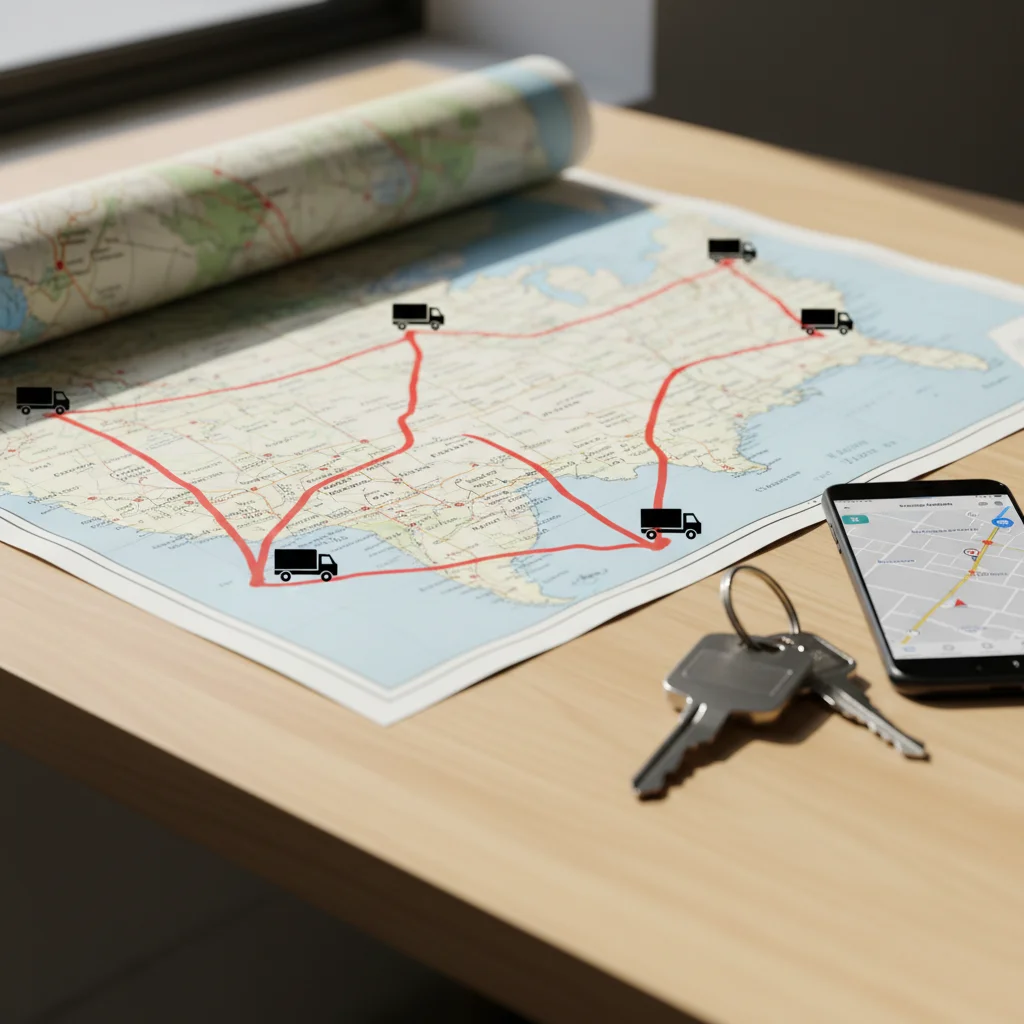
Long-distance towing is priced per mile, but it’s not a flat rate multiplied by distance. A few things move the number.
Base rate vs per-mile rate. Most companies charge a hook-up fee (covering the first several miles) plus a per-mile rate after that. In the San Diego market, per-mile rates for standard flatbed towing typically run $3-$6 per mile depending on distance, vehicle type, and fuel costs at the time of booking. Longer hauls often get a slightly lower per-mile rate because the fixed costs get spread out.
Return trip is priced in. The driver has to come back. That’s baked into the quote, you’re not paying for it separately, but it’s why a 350-mile tow doesn’t cost 350 times your local tow rate.
Vehicle condition and load factors. A running sedan on a standard flatbed is simpler than a non-running lifted truck that needs winching. If the car needs extra rigging or specialized equipment, that adds cost.
Fuel surcharges. On runs to Phoenix or Vegas, fuel is a real variable. Some companies add a fuel surcharge explicitly; others fold it into the per-mile rate. Ask upfront which method your quote uses.
For local San Diego tow pricing context, our San Diego tow cost guide has current rate ranges.
Flatbed vs enclosed for long hauls
For most long-distance tows, an open flatbed is the right tool. It’s what the flatbed we send towing service uses for the majority of runs, the car rides secured on a flat deck, fully off the ground, with zero drivetrain wear.
Open flatbed works well for: standard sedans, SUVs, trucks, non-running vehicles, vehicles with salvage titles, and anything that needs to be winched on.
Enclosed transport is worth considering for: exotics, classics, vehicles with paint work or body kits that can’t handle road debris, or anything where the owner has strong feelings about exposure to dust and weather. Enclosed trailers are less common in the towing-on-demand space and typically need more lead time to book. If you’re moving a Porsche or a restored muscle car, ask specifically about enclosed options, we can discuss what makes sense for the vehicle.
The flatbed vs wheel-lift comparison is a good primer if you’re not sure what equipment your vehicle needs.
What to do with the car keys, plates, and personal items
This is the part people forget until the truck is already loaded.
Keys. You’ll hand a key to the driver. Make sure it’s a key that works, not a valet key, not a dead fob. For keyless-entry vehicles, confirm the driver has a working fob or that the car can be moved manually into neutral. On non-running vehicles, discuss this before pickup.
License plates. California plates stay with the vehicle if it’s being towed within the state. If the car is being registered out of state at the destination, you may want to remove the plates before it leaves, check with the California DMV and the receiving state’s DMV on registration transfer requirements. Don’t leave this to chance on a 400-mile tow.
Personal items. Clear the car before it’s loaded. Anything left in the cabin during a long haul is your responsibility, most towing companies don’t cover lost or damaged personal items in transit. This includes phone chargers, sunglasses, documents, anything in the trunk. If there’s a GPS or dash cam mounted to the windshield, remove it.
Fuel level. Keep the tank at a quarter or less. A full tank adds weight unnecessarily. Some enclosed transport carriers have restrictions on fuel levels for safety reasons, ask when you book.
Booking timeline: how far ahead to call
This is where people get caught off guard.
For a planned move or auction pickup with flexibility, call 48-72 hours out. That gives us time to confirm truck availability, route timing, and coordinate pickup windows.
For a breakdown or urgent situation, car stranded in Yuma, broke down outside of Barstow and needs to come home, call now. We can often dispatch same-day for emergency long-distance runs. The sooner you call, the more options you have on timing and routing.
Avoid booking through a broker if speed matters. Brokers aggregate carriers and can take 24-48 hours just to confirm a driver. For dedicated, direct long-distance towing out of San Diego, going directly to a local company with trucks on the road is faster.
If you’re coming back from Las Vegas after a vehicle breakdown, the CHP tow service information can tell you which tow companies are authorized to respond in a given stretch of highway, useful context if a CHP rotation tow drops you somewhere mid-route and you need to arrange onward transport.
One more thing: have your destination address confirmed before you book. On long runs, knowing exactly where the car is going, residential driveway, storage facility, dealership lot, affects scheduling and sometimes the route.
When to call us
Long-distance towing isn’t a job for an uninsured driver with a borrowed trailer or a company that’s never run I-8 in August. It needs an experienced operator, a properly equipped flatbed, and a driver who knows the route. If your vehicle is non-running, damaged, or expensive, the stakes are higher.
Call us at (858) 923-5787 for a same-day estimate.