A lowered car can turn a routine tow into a clearance problem. Dispatch needs specific details before matching you with an independent towing operator.
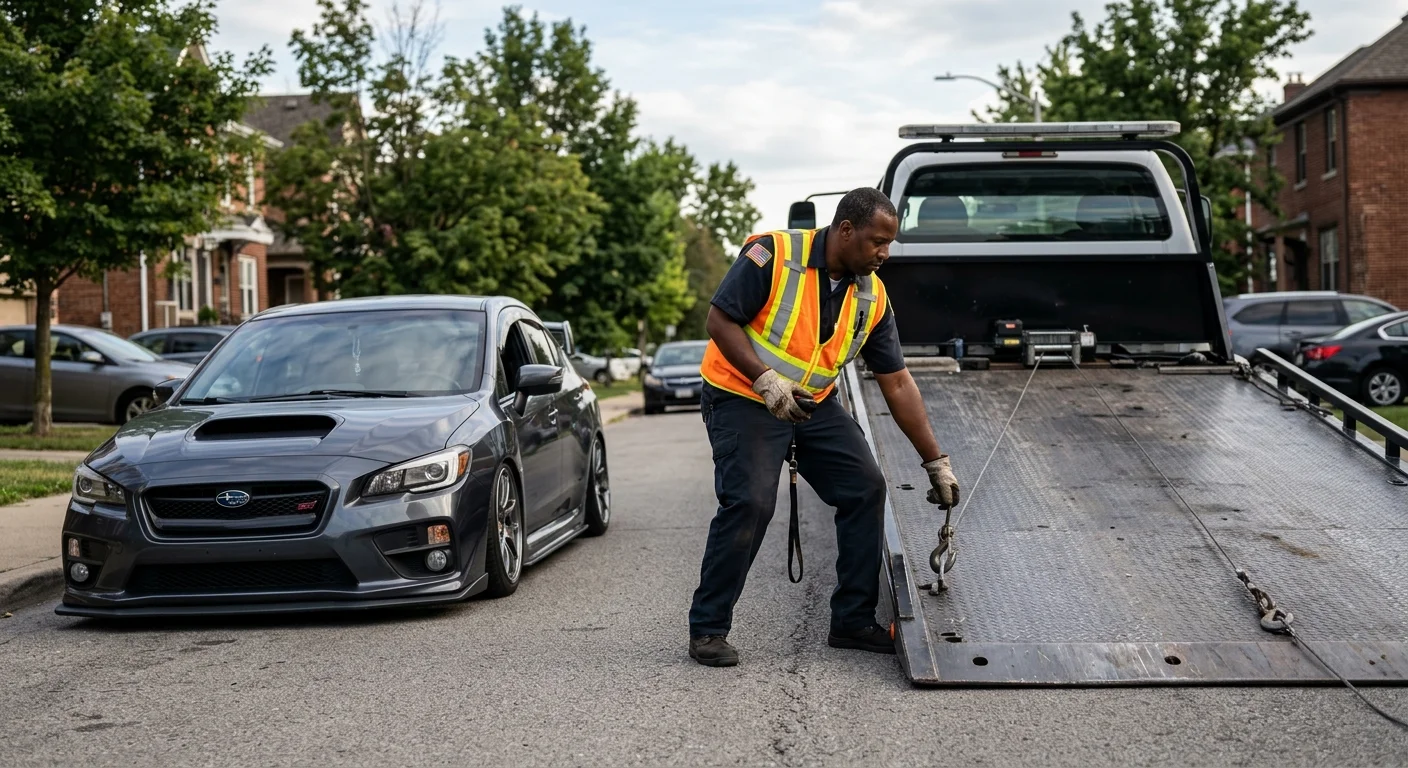
Describe the car’s actual ground clearance
Start with what you can see, not the suspension brand. Dispatch needs to know how close the lowest part sits to the ground.
Check the front bumper, splitter, side skirts, exhaust, and rear bumper. One area may hang much lower than the rest. If it’s safe, use a tape measure beside the car. Don’t crawl underneath a disabled vehicle or enter moving traffic.
Tell dispatch where you measured and whether the number is exact. For example, say, “The front splitter sits this far above level pavement.” If you can’t measure safely, call it an estimate. A clear photo from ground level can help the referred operator understand the angle.
Also share the car’s year, make, model, and body style. “Lowered Honda” leaves too much unanswered. A sedan, coupe, wagon, and modified pickup can present different access concerns.
Mention whether the vehicle can shift into neutral. Say whether it rolls, steers, and brakes normally. Report any wheel that’s locked, turned sharply, or pressed against the bodywork. Don’t try to force a wheel or suspension component into place.
Lowered car towing doesn’t always call for one specific truck. The operator needs the complete picture before choosing an approach. Our flatbed towing service page explains one available service type, but dispatch should still evaluate the actual car and site.
Share modifications and damaged body parts
List every modification that changes the car’s height, width, or rolling condition. Include coilovers, air suspension, splitters, side skirts, diffusers, wide wheels, and body kits. Don’t assume a modification is obvious from the model name.
Tell dispatch whether the suspension can be raised. If it uses air suspension, explain whether the system currently works. A dead battery or damaged control system may leave the car at its lowest setting. Don’t promise that it can rise until you’ve confirmed it.
Wheel and tire details matter too. Report stretched tires, unusually wide wheels, deep-dish rims, or tires rubbing the fenders. Share whether any tire is flat or separated from the rim. If a wheel broke during an impact, describe its position and send photos.
Damage can create a lower point than the original modification. A hanging bumper, loose undertray, bent exhaust section, or displaced fender may interfere with movement. Don’t remove damaged panels beside traffic. Leave that decision to the professional at the scene.
Tell dispatch about tow hooks or removable covers only if you know where they are. The owner’s manual may identify the manufacturer-approved connection points. Don’t guess based on another model or a social media video.
Modified and collectible vehicles often need more planning than ordinary roadside pickups. Our exotic and classic vehicle towing service covers that referral process. You can also read our guide to towing luxury and classic cars in San Diego.
Explain the pickup surface and approach
The car’s location matters as much as its clearance. Tell dispatch whether it’s on level pavement, a sloped driveway, gravel, dirt, grass, or a parking structure floor.
Describe every route leading to the vehicle. Include gates, tight corners, low ceilings, speed bumps, curbs, drainage dips, and parked cars. Photos looking toward the car and away from it help show the available approach.
San Diego County creates very different pickup settings. A North Park parking structure may have a low entrance and tight turns. A La Mesa driveway may meet the street at a sharp angle. East County properties can have dirt or gravel access. Coastal apartment buildings may place vehicles below street level.
Give dispatch the garage level and entrance location when applicable. State whether the vehicle faces inward or outward. Mention columns, overhead pipes, or turns that limit access. Don’t move the car closer to a ramp if driving could scrape loose bodywork.
On a public road, provide the street name, nearest cross street, and travel direction. Say whether the car occupies a traffic lane, shoulder, curb space, or center divider. Follow NHTSA roadside safety guidance while waiting, and don’t stand where approaching traffic can reach you.
A wide photo can prevent confusion that close-up damage photos miss. Dispatch should see both the vehicle and the space around it. That context helps the operator decide whether the planned setup fits the pickup location.
Ask how the referred pro plans the pickup
Before accepting the dispatch, ask how the operator plans to move the vehicle without guessing about its clearance. Repeat the lowest measured point, current wheel condition, and site limitations.
Ask whether the operator has reviewed your photos. Confirm that they know about loose body parts, disabled suspension, or a wheel that won’t roll. If the car sits inside a garage, repeat the posted height and any tight turns between the vehicle and exit.
Avoid insisting on a towing method because it worked for another lowered car. Two vehicles with similar ride heights may have different bodywork, damage, and access. The operator sent out should make the vehicle-specific decision after reviewing the details.
You can ask practical questions without directing the technical work:
- What information is still missing?
- Did dispatch share every modification and damaged area?
- Does the pickup location change the proposed approach?
- What should remain untouched until the operator arrives?
- Will the destination provide enough unloading space?
If an answer conflicts with the vehicle manufacturer’s instructions, pause and check the owner’s manual. Manufacturer guidance varies by model. Don’t apply Tesla, Ford, or another brand’s instructions to a different vehicle.
Our guide to vehicles that may need flatbed towing provides useful background. It isn’t a substitute for the manual or an on-site assessment.
Quick Tow SD refers customers to vetted, licensed operators. The operator performs the work, sets the price, and receives payment directly. Ask that operator to confirm the final pickup plan before the car moves.
Confirm the destination and unloading access
A careful pickup can still fail if the destination can’t receive the car. Give dispatch the complete destination before the operator heads out.
Name the repair shop, residence, storage location, or dealership. Confirm that someone there expects the vehicle. Ask the destination where a disabled lowered car should be placed. A service entrance may work better than the public driveway, but the destination must make that call.
Describe the unloading surface with the same detail used for pickup. Mention steep aprons, narrow gates, speed bumps, gravel, underground access, and crowded parking. If you’re sending the car to a home, identify a legal and accessible placement area.
Don’t assume a closed business has an approved after-hours drop location. Confirm access directly with the destination. Find out whether a gate, locked lot, or building entrance could prevent delivery. Dispatch also needs to know if the car’s keys will travel with it.
Share any change before the vehicle leaves. Switching destinations can affect routing and whether the unloading site fits the plan. The operator sets the price, so ask the operator directly about any cost change before approving a different destination.
Keep photos of the car’s condition and loose parts. Remove personal valuables when it’s safe and permitted. Don’t reach into an unstable vehicle or work beside moving traffic.
The best dispatch description covers the entire move. It includes the lowest clearance, modifications, damage, pickup access, and unloading access. That information gives the referred professional a better basis for planning the tow.
When to call us
Call when a lowered or modified car can’t move safely, has damaged bodywork, or sits in a difficult pickup location. A professional towing operator should handle the vehicle when clearance, wheel damage, traffic, or access makes a DIY move unsafe. Call (858) 923-5787 to reach dispatch.