A flat motorcycle tire leaves one immediate decision: request tire help or arrange transport. Motorcycle flat tire towing often makes more sense when damage is unclear, the wheel took an impact, or nobody confirms an on-site option. Roadside help may still fit a motorcycle parked securely away from traffic.
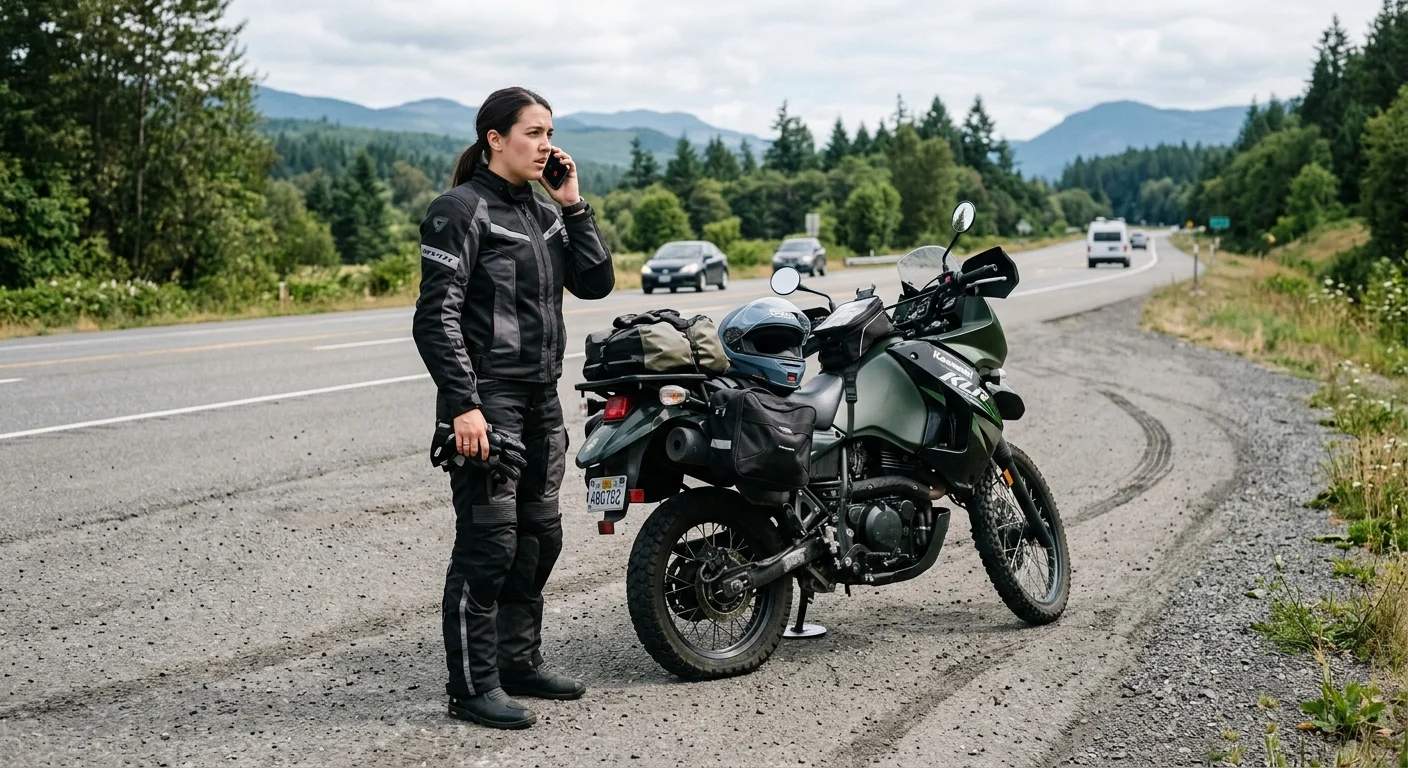
Start with the tire and wheel condition
Begin with what you can see without taking anything apart. Tell the provider whether the front or rear tire is flat. Mention any visible nail, screw, cut, or torn area. Also report whether the tire still sits evenly around the wheel.
Look closely for obvious wheel damage from a pothole or curb strike. A bent edge, cracked area, or fresh impact mark changes the conversation. If you can’t see the wheel clearly, say that instead of guessing.
Explain how the pressure loss happened. A tire that softened while parked presents differently from one that lost pressure after a hard impact. Describe any wobble, vibration, noise, or warning you noticed before stopping. Those details help the provider understand why you’re calling.
Don’t ride the motorcycle simply to test the tire. You also don’t need to diagnose the puncture beside traffic. The goal is to give an accurate visual report, then let a qualified provider assess the next step.
Send clear photos when the dispatcher or operator requests them. Photograph the whole motorcycle, the affected wheel, and the visible damage. Include enough background to show the pickup setting. A motorcycle in a North Park garage creates different access questions than one beside SR 94.
Our broader flat-tire towing guide explains how location and wheel condition shape the service decision.
When roadside help may fit the situation
Roadside help may fit when the motorcycle is securely parked and easily accessible. The provider must also confirm that it handles motorcycle tire calls. Don’t assume a service intended for cars includes the same motorcycle options.
Ask what the provider can evaluate at your location. Describe the tire, wheel, motorcycle, and available working space. Then ask whether the proposed service matches guidance for your motorcycle and tire. The answer should come from the provider or manufacturer, not a generic online rule.
Membership and insurance benefits vary by plan. This page can’t confirm whether your coverage includes motorcycle roadside tire help. Check your current policy, mobile app, or member agreement before relying on it.
Location matters as much as the puncture. A level parking area in Chula Vista may allow an assessment that isn’t practical along I-805. Underground garages also require an accurate clearance and entrance description. A provider needs those details before deciding what service fits.
Our roadside assistance service can help you discuss the available options. Be clear that the vehicle is a motorcycle when you call.
Keep basic roadside supplies with your riding gear. NHTSA’s driving guidance includes a phone and charger, flashlight, water, and first aid kit. Those items help while you arrange assistance, but they don’t replace professional tire evaluation.
When arranging a tow may make more sense
Arrange a tow when nobody confirms that roadside tire help fits the situation. Towing may also be practical after an impact, with visible wheel damage, or when the tire’s condition remains unclear. The same applies when the motorcycle can’t roll or steer normally.
The pickup setting can settle the decision quickly. Freeway shoulders leave little room for uncertainty. I-5 through central San Diego, I-8 through Mission Valley, and SR 78 in North County all demand precise location details. Tell dispatch if the motorcycle is near moving traffic or behind a barrier.
Don’t choose a towing method from a blanket internet claim. Manufacturer guidance can differ by motorcycle. The operator needs the make, model, year, wheel condition, and steering condition before selecting equipment. Ask how the proposed transport plan follows the manufacturer’s instructions.
A motorcycle that fell after the tire failed also needs a fuller description. Report visible fluid, broken controls, loose bodywork, or parts touching the ground. Don’t attempt to straighten or remove damaged components beside the road.
Use a provider familiar with motorcycle towing when transport is the better option. The operator can discuss access, equipment, and the destination for that specific bike.
If the breakdown happened after dark or in an exposed location, share that immediately. Our emergency motorcycle towing guide covers the details dispatch needs during a stressful roadside call.
What to tell the motorcycle towing dispatcher
Start with your exact location. On a freeway, provide the route, travel direction, and nearest exit. On a surface street, share the nearest cross street and a recognizable landmark. A dropped map pin can help, but add written details too.
State where the motorcycle is sitting. It might be on a shoulder, inside a garage, behind a gate, or in a narrow alley. Report garage clearance, gate access, ramps, tight turns, and any parking restrictions you can see. Don’t describe the bike as “near downtown” when a precise location is available.
Next, identify the motorcycle’s make, model, and year. Say which tire is flat and what damage you can see. Tell dispatch whether the motorcycle remains upright, rolls, steers, and has its keys available. Mention an impact or fall, even when the damage looks minor.
Give the operator these details:
- Your name and callback number
- The motorcycle’s exact pickup position
- Front or rear tire condition
- Visible tire, wheel, or body damage
- Whether the bike rolls and steers
- Garage, gate, or roadside access
- The confirmed destination
- Any manufacturer transport instructions you have
The independent operator sets the price and is paid directly by the customer. Ask that operator to explain the quoted work before you accept the job. The operator taking the call can also provide an arrival estimate for your exact location.
Confirm the destination before pickup
Choose and confirm the destination before the motorcycle is collected. Call the repair shop or dealership first. Verify that it accepts your motorcycle and can address the tire or wheel concern you described.
Ask whether the shop can receive the bike when it arrives. Online hours may not answer questions about service intake, locked gates, or after-hours drop-offs. Get approval directly from the destination instead of assuming access will be available.
Confirm whether the shop wants the motorcycle delivered to a service entrance, main lot, or another location. Large dealership properties may have separate entrances for sales and repairs. Small shops may have limited unloading space. Pass the shop’s instructions to dispatch.
San Diego County trips can cross several distinct areas. A breakdown near Coronado, Otay Mesa, Oceanside, or inland East County may place several shops within a map search. The nearest listing isn’t automatically the right destination. Motorcycle brand, tire availability, wheel services, and receiving access can affect your choice.
If no shop can accept the motorcycle, discuss another approved destination with the operator. That might be your home or another secure location you control. Don’t send the bike onto private property without permission.
Keep the destination’s name and full address ready. If roadside help changes the plan, update dispatch before transport begins. Clear pickup and delivery details prevent confusion during a motorcycle flat tire towing request.
When to call us
When you can’t confirm that roadside help fits the tire, wheel, and location, skip the DIY attempt and arrange a professional tow. We can match you with an operator serving every city in San Diego County. Call (858) 923-5787 to reach dispatch.