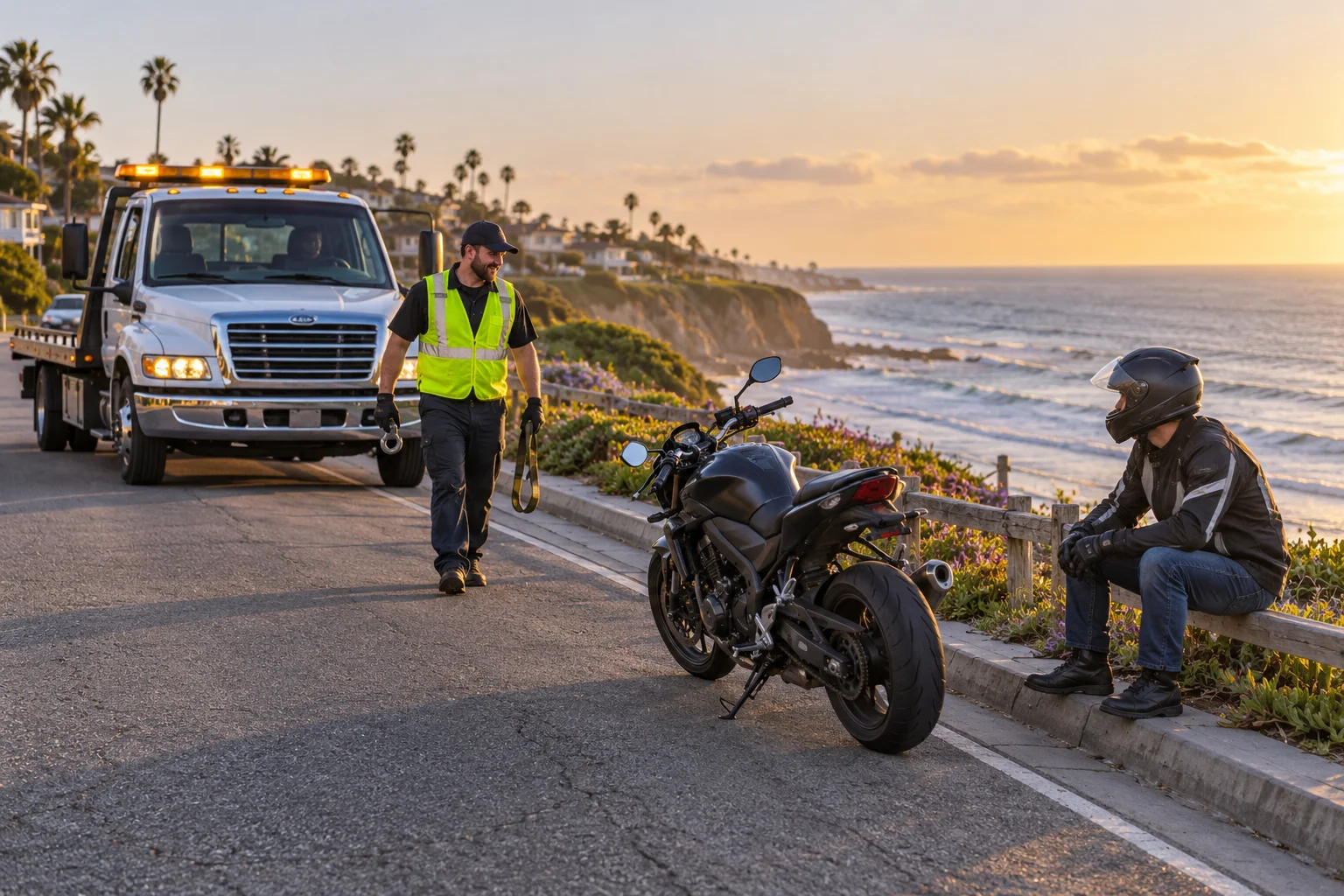
A motorcycle breakdown in Leucadia calls for clear, practical details. Share the bike, location, wheel condition, access, pickup plan, and destination before dispatch. That information helps Quick Tow connect you with a suitable local towing operator.
Describe the motorcycle without guessing at the failure
Start with details you can confirm by looking at the motorcycle. Give the year, make, model, and general style if you know them. Tell dispatch whether it’s a scooter, cruiser, touring bike, sport bike, or another type. Mention attached saddlebags, a top case, a sidecar, or other parts that change its size.
You don’t need to diagnose the motorcycle. Describe what happened and what you can observe. For example, say that the engine stopped while riding, the bike won’t start, or the controls aren’t responding normally. If a warning appeared, repeat its wording without interpreting it.
Tell dispatch about visible damage after a fall or collision. Mention loose bodywork, bent parts, or anything touching the pavement. Report smoke, a fuel smell, leaking fluid, or unusual heat immediately.
Share whether the motorcycle is in the roadway or away from traffic. Move yourself away from traffic when that can be done safely.
Our motorcycle towing service connects riders with independent local operators. The operator can evaluate transport needs using the details you provide. A truthful description is more useful than a confident guess about the failure.
Share whether you’re near I-5 or Highway 101
“Leucadia” alone doesn’t identify a pickup point. Tell dispatch whether you’re near I-5, Highway 101, Leucadia Boulevard, or a coastal access point. Give the street name, travel direction, nearest cross street, and a visible landmark.
Location details matter most when the motorcycle is beside a fast road. If you’re near I-5, share your direction of travel and the nearest exit information you can see. Use signs visible from your waiting position.
For a pickup near Highway 101, distinguish the roadway from a nearby parking area. Say whether the motorcycle is at the curb, inside a lot, behind a building, or near a coastal access entrance. A dropped map pin can help, but include written directions too. Pins sometimes land on the wrong side of a road.
Leucadia Boulevard can also be a useful reference. Give the operator the exact business, driveway, or side street when possible. If your location has two entrances, explain which one offers access to the motorcycle.
Stay where you’re protected from moving vehicles. Use your hazard lights if the motorcycle’s electrical system works and doing so is safe. For broader guidance, review NHTSA roadside safety information.
Some problems may be handled through motorcycle roadside assistance in San Diego. Others require transport. Describe the symptoms and location, then let the operator assess the appropriate response.
Explain the wheel condition and available access
The motorcycle’s wheel condition affects the pickup assessment. Tell dispatch whether both wheels are attached, straight, and able to turn. Report a flat tire, damaged rim, locked wheel, broken chain, or anything visibly caught near a wheel.
Also explain whether the handlebars turn and whether the steering appears locked. Say if you have the key. If the key is missing or broken, mention that before the operator is sent. Don’t force the ignition or steering lock.
A motorcycle that stands upright presents a different situation from one resting on its side. Tell dispatch which condition applies. If it fell, describe the surface beneath it and whether another vehicle or fixed object blocks access. Don’t lift it if you’re injured, traffic is close, or the bike is unstable.
Access details are just as important as the motorcycle’s condition. Note stairs, gates, steep driveways, low garage clearance, loose sand, tight turns, or narrow parking spaces. If the bike is inside a locked area, identify who can open it.
For a motorcycle flat tire, this guide explains how to compare roadside help with a motorcycle tow. Describe its visible condition and wait for a professional assessment.
What to confirm about the pickup plan
Before dispatch, confirm who will meet the operator. Give the rider’s name and a working callback number. If another person will handle the pickup, share that person’s name and confirm they can access the motorcycle.
Tell dispatch whether you’ll remain with the bike. If you must leave for medical care or another urgent reason, explain where the key will be and who can authorize access. Don’t hide a key at the scene without an agreed plan.
Ask what information the operator needs before accepting the job. That may include the motorcycle’s exact location, condition, access limits, and destination. The operator sets the price and provides an arrival estimate for that specific pickup. Quick Tow doesn’t publish a rate card or a standard arrival window.
Confirm the pickup point rather than assuming the operator can stop beside you. A curb may be blocked, a parking area may have a gate, or the motorcycle may be separated from vehicle access. Describe the situation and let the operator decide how to approach it.
If you aren’t sure whether the bike needs transport, explain what happened without attempting a repair. Our roadside assistance service can connect you with a local pro for an assessment. Avoid taking apart controls, wheels, or bodywork while waiting. Loose pieces can complicate the pickup and may be lost.
Confirm the repair destination before dispatch
Choose the destination before the operator is sent whenever possible. It could be a motorcycle repair shop, dealership, secure storage location, or your home. Provide the full street address, business name, and any entrance instructions.
Call the destination first when you can. Confirm that it accepts your motorcycle and can receive it when the operator arrives. Ask where a disabled bike should be left. A storefront address may not identify the correct service entrance.
If the shop is closed, don’t assume it allows unattended drop-offs. Ask the shop about its procedure. Share any confirmed instructions with dispatch, including a gate location or named contact. Don’t leave the decision until the motorcycle reaches the property.
Consider access at both ends of the trip. Tell dispatch if the destination involves a parking garage, steep driveway, locked gate, narrow alley, or assigned parking space. Mention whether someone will meet the operator there.
You don’t need to select a repair shop based on a roadside diagnosis. Describe the motorcycle’s behavior and let the shop inspect it. If you’re still deciding between roadside help and transport, the San Diego motorcycle roadside assistance guide explains the information that helps with that choice.
Before confirming dispatch, repeat the pickup address and destination. Then verify the motorcycle description, wheel condition, key status, and access notes. That final check can prevent a simple location or destination mistake.
When to call us
Call when the motorcycle can’t be moved safely, has visible damage, or needs professional transport from Leucadia. Quick Tow connects riders with local towing operators rather than asking them to attempt a risky roadside fix. Call (858) 923-5787 to reach dispatch.