A disabled motorhome on I-8 near Alpine creates two immediate problems. First, protect everyone at the scene. Then give dispatch enough detail to match the RV with a suitable operator.
If the RV blocks a live lane or creates an immediate hazard, contact emergency authorities first.
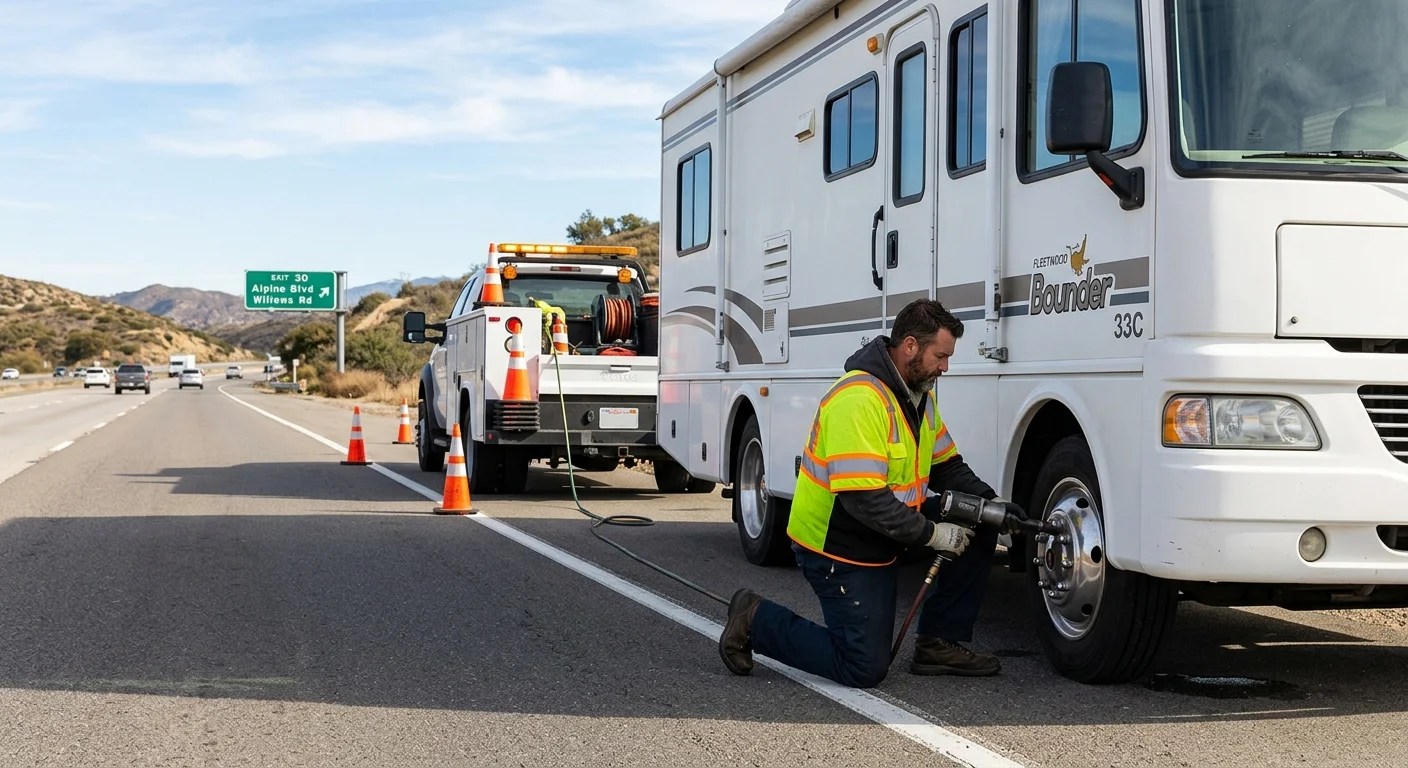
Share your direction and nearest safe reference point
Start with your direction of travel. “I-8 near Alpine” covers two directions and several possible access points. Say whether you’re eastbound toward Descanso or westbound toward El Cajon.
Next, share the nearest exit, sign, or visible landmark. Tavern Road and Willows Road are useful Alpine references. Farther east, a caller might mention the Viejas area. Read the exact name from the nearest freeway sign when possible.
A dropped location pin helps, but don’t rely on it alone. The pin could land across the median or on a nearby frontage road. Pair it with details such as:
- Eastbound or westbound
- Before or after the nearest exit
- Freeway shoulder, ramp, turnout, or parking area
- Right or left side of the roadway
- Nearby sign, business, or cross street
- Whether the RV can roll to a safer location
Don’t cross traffic lanes to find a better sign. Don’t walk along the shoulder unless emergency authorities direct you. Describe what you can see from your current position.
Tell dispatch if the RV is completely outside the traffic lane. Mention any trailer, car, or loose material extending toward traffic. If traffic is passing close to the vehicle, say that clearly.
For an active roadway hazard, follow instructions from emergency authorities. The California Highway Patrol is the relevant statewide highway agency. Towing arrangements should come after the immediate danger has been reported.
Describe the RV and anything it’s towing
“RV” can mean a motorhome, camper van, travel trailer, or fifth-wheel trailer. Those vehicles don’t create the same towing job. Begin with the exact type, make, model, and model year when known.
For a motorhome, explain whether it’s a smaller van-based unit or a larger coach. Share the approximate length and height from the vehicle information you have. Tell dispatch whether it uses gasoline or diesel. Mention any unusual body additions, low-mounted equipment, or rear cargo carriers.
A trailer breakdown near Alpine needs details about both vehicles. Identify the tow vehicle and the trailer separately. Say which one failed and whether they remain connected. Describe the hitch type without disconnecting anything beside moving traffic.
Also report every vehicle attached behind a motorhome. That may include a car, small trailer, or other equipment. Dispatch needs to understand the complete combination before looking for a suitable operator.
Wheel and axle condition matters too. Say if a tire is flat, a wheel is missing, or an axle appears displaced. Mention locked brakes, steering damage, suspension problems, or a vehicle that won’t shift into neutral. Report visible fluid, smoke, fire damage, or collision damage immediately.
Slides, awnings, steps, and leveling jacks should be fully retracted when possible. If one is stuck, don’t force it. Just explain its position and which side it extends from.
Our RV and trailer towing service connects callers with local licensed operators. The broader San Diego RV towing guide explains how motorhomes, trailers, and vehicles carried behind them create different transport needs.
Decide whether roadside help may fit
Not every RV breakdown requires transportation. A simple chassis battery problem, accessible flat tire, or empty fuel tank may be suitable for roadside help. The deciding factor is whether the issue can be addressed safely at that location.
An RV that still has interior lights may still have a chassis problem. Tell dispatch what happens when you try to start it. Describe warning lights, clicking sounds, loss of engine power, or a complete electrical shutdown. Don’t keep restarting an engine that’s smoking, leaking, or overheating.
A tire problem also needs careful description. Say which tire is affected and whether the RV has paired rear wheels. Note visible wheel, hub, or suspension damage. Don’t attempt a tire change beside fast traffic or on unstable ground.
If the tow vehicle works but the trailer doesn’t, roadside help may still be limited. A damaged axle, failed bearing, separated suspension part, or locked wheel can prevent safe movement. Leave the diagnosis to a qualified professional.
Location changes the decision. A repair that might be manageable at a campground could be unsafe on an I-8 shoulder. Your own safety comes before preserving a trip schedule.
Our freeway breakdown guide covers the first decisions after a vehicle stops on a San Diego freeway. For preparation before another trip, review NHTSA’s roadside safety information.
When you call, describe the symptoms without naming a repair unless it has been confirmed. “The engine stopped after the warning light appeared” is more useful than guessing that a specific part failed.
Explain access, traffic, and vehicle condition
An I-8 pickup near Alpine isn’t the same as a level parking-lot tow. Direction, grade, shoulder space, traffic exposure, and surrounding terrain can change how an operator approaches the vehicle.
Describe the ground beneath every wheel. Say whether the RV is on pavement, gravel, soft dirt, or an uneven shoulder. Mention if one side sits lower than the other. Tell dispatch if the vehicle is close to a guardrail, embankment, wall, sign, or drainage area.
Access details are just as important. Report whether the vehicle is on the freeway, an exit ramp, a frontage road, or private property. If you reached a gas station, campground, or parking area, mention gate width, overhead clearance, tight turns, and parked vehicles.
Don’t assume the RV’s size is obvious from its model name. Share the length and height shown in your records when available. Also mention roof-mounted air conditioners, antennas, cargo, bicycles, or other additions that affect clearance.
Vehicle condition may point toward heavy-duty towing, but dispatch needs the details before matching the job. A large motorhome, severe wheel damage, or a difficult roadside position can require a different operator than a small camper van.
Tell dispatch how many people and pets are present. Mention anyone who needs mobility help or another safe transportation plan. A tow operator may not be able to carry every passenger, so that question should be settled before dispatch.
Keep everyone away from traffic and from the space around the RV. Don’t crawl underneath it, release brakes, remove driveshaft parts, or attempt recovery work on the shoulder.
Confirm the destination before help is dispatched
Choose the destination before an operator starts toward Alpine. The right destination could be a repair facility, campground, storage location, dealership, or private property. It depends on the RV’s condition and what the receiving location accepts.
Call the destination directly. Confirm that it accepts your type and size of RV. Ask whether it can receive the vehicle in its current condition. A shop that services small campers may not handle a large motorhome or damaged trailer.
Also confirm access. Ask about gates, turning space, overhead clearance, surface conditions, and after-hours procedures. If the destination will be closed, determine whether it permits an unattended drop. Don’t assume a locked lot has space outside its gate.
The motorhome, trailer, and towed car may need different destinations. Explain that before dispatch. Moving one part of the combination doesn’t automatically solve the rest of the breakdown.
Have the destination name and full address ready. Share a contact name when the facility provides one. If you’re deciding between Alpine and a location farther west, make that choice before the operator accepts the job.
Quick Tow SD doesn’t set the operator’s price or take payment for the tow. The independent operator performs the work, sets the price, and is paid directly by the customer. Confirm the destination and job details with that operator before approving service.
If plans change, tell dispatch promptly. A different destination can change the required transport plan. Clear information prevents an operator from arriving with an incomplete picture of the RV, its attachments, or the receiving location.
When to call us
A disabled motorhome, damaged wheel, leaking vehicle, or stranded trailer isn’t a roadside DIY project. Quick Tow SD can connect you with a vetted licensed operator after you share the location, RV details, access conditions, and destination. Call (858) 923-5787 to reach dispatch.