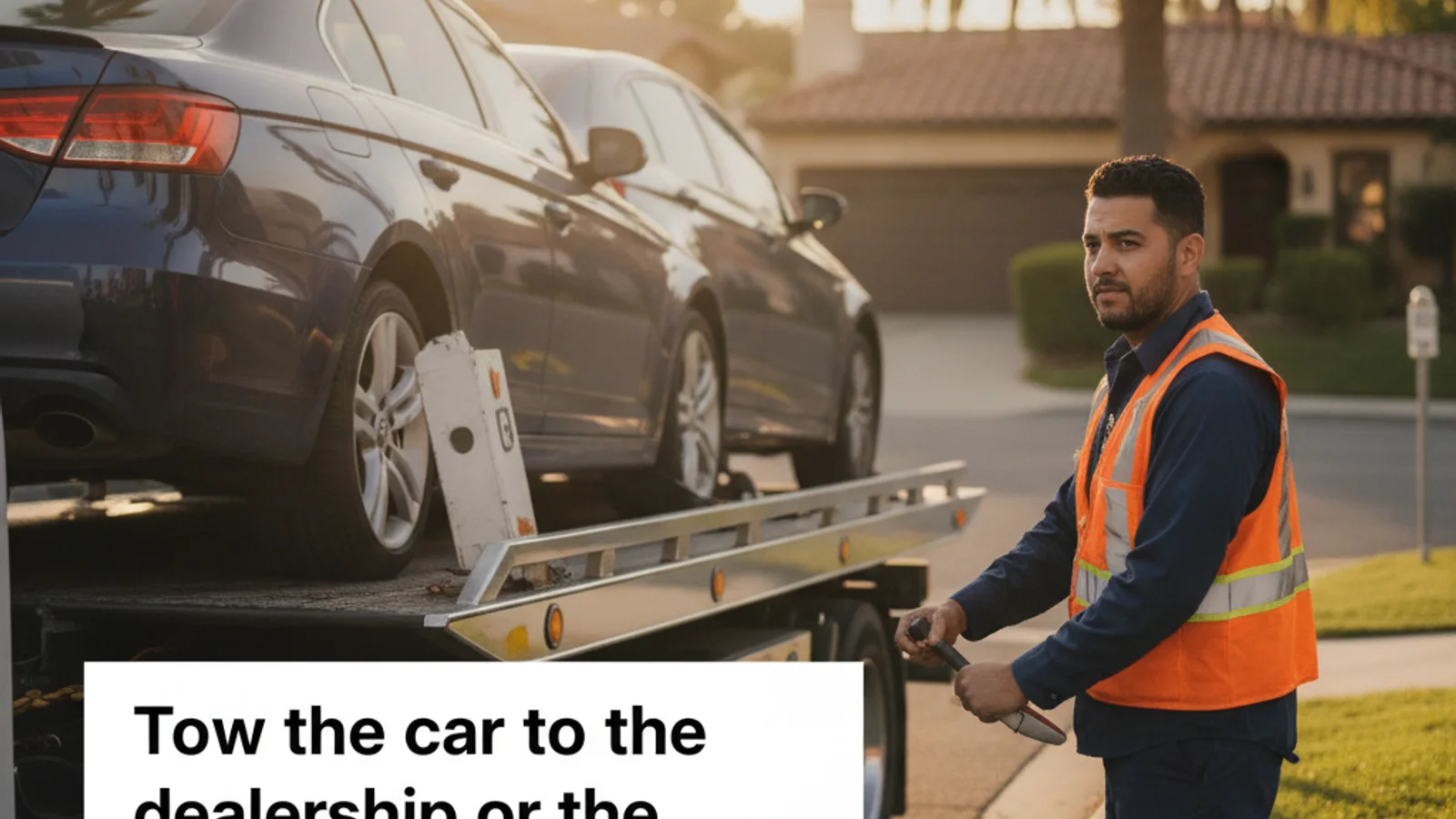
The car won’t start, you’ve got a tow lined up, and the driver on the phone needs an address. Dealer or independent shop isn’t a coin flip. It usually turns on one question: does this repair have to happen at the dealer, or is that just the safer-sounding default?
When the dealer isn’t optional
If the car is under a manufacturer’s factory warranty and the problem might be a warranty claim, or if there’s an open safety recall involved, the dealer is generally the shop equipped to file that paperwork and get manufacturer-covered parts. An independent shop can often do the same mechanical work, but it typically can’t process a warranty claim or a recall repair the way a franchised dealer can. If you’re not sure whether your issue qualifies, your NHTSA recall lookup by VIN is a fast way to check for an open recall before you decide where the car goes.
Don’t take our word, or anyone’s word, for what your specific warranty covers or requires. Warranty booklets vary by manufacturer and by the extended coverage you may have purchased separately. Pull your own paperwork or the digital copy in the manufacturer’s app before you commit to a tow destination, and call the dealer’s service line to confirm the repair is actually a covered claim before you pay to get there.
When an independent shop makes more sense
Once a car is out of factory warranty, or the issue is routine wear and tear rather than a warranty-qualifying failure, an independent shop is often closer, sometimes cheaper, and just as capable for common repairs: brakes, batteries, suspension work, and general diagnostics. Distance matters here in a very literal way. A long-distance tow costs more the farther it goes, and a shop four miles away versus a dealer twenty-five miles across the county can be the difference that decides the call.
There’s no fixed rule that says independent always wins on price. Ask both shops directly what the diagnostic fee and estimated labor look like before towing to either one. We don’t publish rate figures for repair shops because we don’t perform that work and can’t speak for a shop’s pricing.
Confirm the shop will actually take the car
Before you send a tow to any shop, dealer or independent, confirm two things by phone: that they’re open to receive a tow at the time it will arrive, and that they’ll accept an after-hours drop if the tow lands outside business hours. Many shops use a key drop box for exactly this situation, but not all of them do, and the ones that do usually want the keys in a labeled envelope with your name, phone number, and a short description of the problem.
Ask specifically who is authorized to sign for the vehicle when it arrives unattended. Some shops require the account to be pre-authorized before a drop-box vehicle gets touched the next morning; others will call you first. Getting that answer before the truck leaves saves a wasted trip if the shop turns the driver away.
What actually happens with the key drop
Most shops that accept after-hours vehicles use a straightforward system: a locked drop box near the service entrance, an envelope for your key with your name and phone number written on it, and a short form describing the problem in your own words. Some shops want that form filled out online in advance through their service portal; others just want a note in the envelope. Ask which one your shop uses before the tow arrives, not after, since a driver standing at a locked gate with no instructions wastes time that costs you nothing to avoid.
Also ask what happens if the drop box is full or the gate is locked with no box at all. Some shops, especially smaller independent ones, don’t offer a true after-hours option and expect the vehicle dropped only during business hours. Finding that out before the tow is dispatched, not after the truck arrives at a dark, locked lot, saves a second trip and a second charge.
The math changes with distance
A car with a genuine warranty issue sitting four miles from an independent shop but twenty-five miles from the nearest dealer is a real tradeoff, not an easy answer. Towing twenty-five miles costs more and takes longer than towing four. Distance is the lever that moves the bill, so it’s worth knowing what dispatch needs from you before you commit. Our rundown of the details that make a tow quote accurate covers what to have ready, and nobody can price the job honestly without it.
Sometimes it still is. A car under warranty repaired at an independent shop can void that specific coverage for that repair, depending on your manufacturer’s terms, so read your own booklet rather than assuming either way. If the closer shop can’t touch the warranty work, the tow distance to the dealer may be unavoidable.
Who signs for the car matters more than people expect
Once the vehicle arrives, someone has to take responsibility for it on the shop’s side, even if that’s just a technician logging it in the next morning. If the tow lands after hours and nobody’s there, the car effectively sits unsigned-for until the shop opens and staff process the drop box. That’s a normal part of an after-hours system, not a problem, but it means your car isn’t “checked in” the moment it’s parked. If you need proof the vehicle was dropped, take a photo of it at the shop with a timestamp, and note the exact time the operator left it there.
If the shop requires a signature from someone in person rather than accepting a drop-box vehicle unattended, that changes the plan entirely. Confirm this specifically if you can’t be there yourself, since some dealer service departments in particular want a live handoff rather than an overnight drop, especially for warranty diagnostic work.
What to have ready before you call
- Your warranty booklet or the manufacturer’s app, so you can answer basic coverage questions if the shop asks
- The exact shop or dealer address, confirmed as currently accepting after-hours drops
- Your policy on insurance towing coverage, if you’re checking whether insurance covers the tow itself
- A way to reach the shop again once the car arrives, in case they need authorization to start diagnosis
When to call us
If the car doesn’t start, doesn’t roll, or you’re not confident it’s safe to drive even a short distance, that’s a job for a professional operator rather than trying to limp it somewhere yourself. Confirm the destination shop is ready to receive the car first, then get it moved.
Call (858) 923-5787 to reach dispatch.