A breakdown in San Ysidro starts with one decision: identify the pickup zone. Freeway shoulders, border-area lots, and neighborhood streets need different details before dispatch can match you with a local operator.
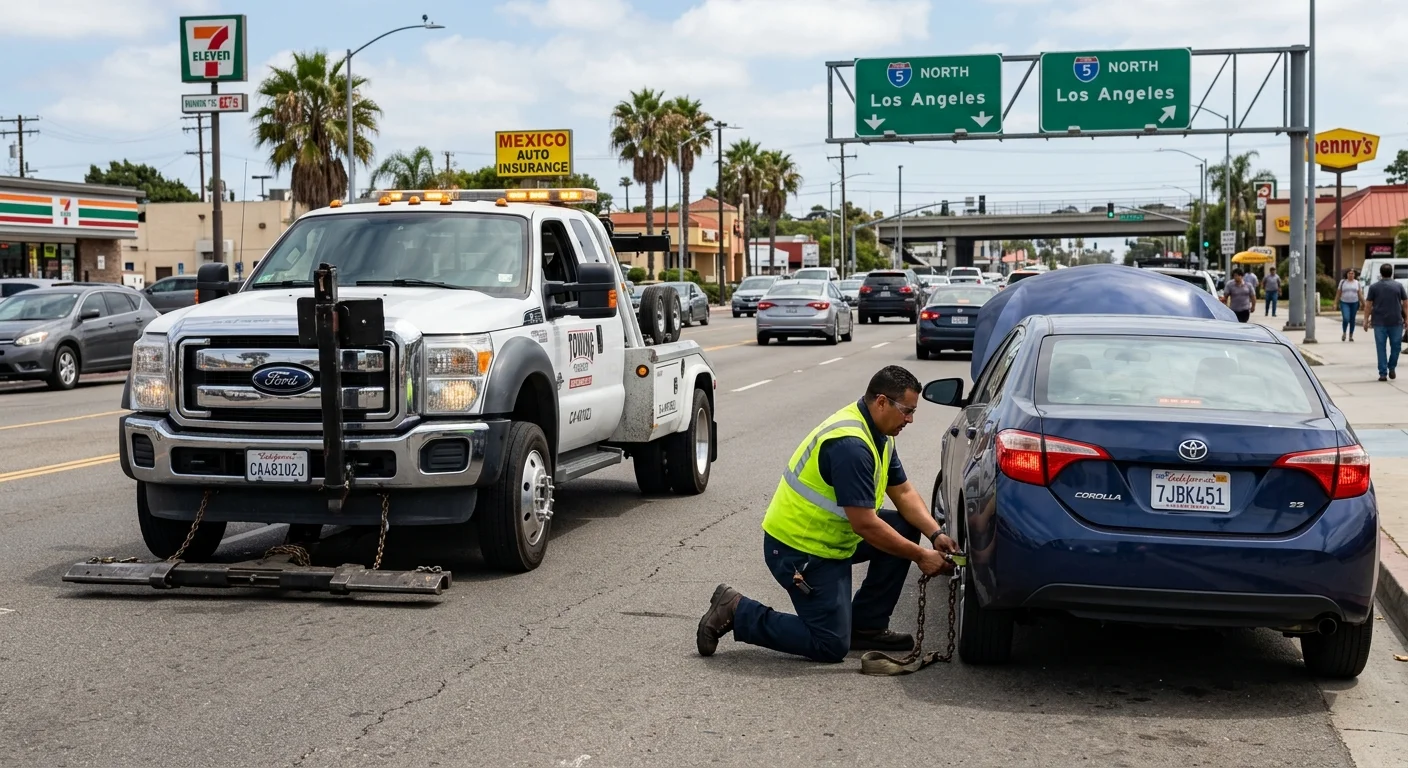
Describe where the vehicle stopped
When you request towing in San Ysidro, start with the car’s current location. Don’t rely on a broad landmark such as “near the border.” The operator needs a point that leads to the vehicle, not the general neighborhood.
For an I-5 or I-805 call, share the freeway name and travel direction. Add the nearest signed exit and the side where you stopped. Mention whether the vehicle is on a shoulder, beside an exit, or already off the freeway. These details help prevent the driver from approaching on the wrong side.
Surface-street calls need different information. Give the street address, closest cross street, and side of the road. San Ysidro Boulevard, Beyer Boulevard, Dairy Mart Road, and Camino de la Plaza cover different pickup settings. One address may lead to a curb, while another leads into a commercial lot.
If the car is inside a parking structure or gated property, say so immediately. Share the level, entrance name, posted clearance, and any gate instructions. Tell dispatch if the vehicle rolls, steers, and has accessible keys. A missing wheel or damaged steering changes what the operator must prepare for.
Small location details matter more than a long explanation. A dropped map pin can help, but pair it with visible signs. Phone location data can place you on the wrong frontage road or across a divided route.
What changes near I-5 and I-805
I-5 and I-805 calls must be described by direction and position. A freeway name alone leaves too much uncertainty. Northbound and southbound lanes require different approaches, even when the vehicle appears close on a map.
Before calling, read the nearest exit or overhead sign from a safe position. Tell dispatch whether you passed that sign or haven’t reached it. Describe the shoulder side and whether the vehicle blocks a travel lane. If public safety personnel are present, follow their directions and relay any pickup point they provide.
If you’ve moved onto a ramp or surface street, give the final stopping place. Don’t keep using the earlier freeway landmark. The operator needs the vehicle’s current location. A car near Via de San Ysidro isn’t the same pickup as one still beside I-5.
A freeway shoulder isn’t the place for extended troubleshooting. Keep yourself away from moving traffic when possible. Don’t cross lanes or walk along a ramp to make the pickup easier. The National Highway Traffic Safety Administration publishes roadside safety guidance for stranded drivers and other road users.
Our San Diego freeway breakdown guide explains the first safety decisions in more detail. When the vehicle can’t continue safely, emergency towing can connect you with an independent operator equipped for the reported condition.
How border-area pickup differs from neighborhood towing
A tow truck near the San Ysidro border may encounter access questions that don’t arise on a residential street. Don’t assume an operator can enter every inspection area, loading zone, or controlled lane. Dispatch must confirm access for the exact place where the vehicle stopped.
Describe whether you’re near the San Ysidro Port of Entry, the transit center, or a commercial lot off Camino de la Plaza. Use the name shown on the nearest entrance or sign. If an official has directed you to a specific area, repeat those directions exactly. Don’t move the car into another controlled area unless authorized.
Commercial properties can create another challenge. The storefront address may not identify the vehicle’s row or entrance. Give the business name, parking section, and closest driveway. If a gate, ticket, or property attendant controls entry, mention that before the operator starts toward you.
Neighborhood pickups are usually described by an address and cross street. Still, dispatch needs to know whether the car sits at a curb, in a driveway, or inside an apartment lot. Tell them if another vehicle blocks access. An owner-requested tow for your disabled car is also different from asking to remove someone else’s vehicle.
If the problem began during a border crossing trip, see our San Ysidro border breakdown guide. It covers that specific situation. This page applies more broadly to freeway, commercial, and neighborhood pickups throughout San Ysidro.
When roadside assistance may be enough
Not every disabled car needs a tow. A dead battery, simple flat tire, empty fuel tank, or locked door may be handled through roadside assistance. Describe the symptoms first, then let dispatch match the call to the appropriate service.
For a battery problem, say whether the lights work and whether the engine clicks. Don’t guess that the battery is dead if the car shows other warnings. If a jump start doesn’t restore normal operation, moving the vehicle may require a tow.
For a flat tire, confirm whether the car has a usable spare. Mention wheel damage, missing lug hardware, or an unsafe stopping position. A tire change may solve a routine flat, but it won’t address damage that prevents the wheel from turning safely.
Fuel delivery may help when the gauge reached empty and no other problem appeared. A lockout call may also be resolved without moving the vehicle. Tell dispatch if a child, pet, or medical concern is involved so the situation can be treated appropriately.
Don’t attempt roadside work when traffic exposure makes it unsafe. You also shouldn’t force a car to move when it won’t steer, roll, or run normally. Describe what happened, including any warning lights, leaks, collision damage, or unusual sounds. The operator can decide whether roadside service or towing fits the reported condition.
What to confirm before dispatch
For a tow truck in San Ysidro, prepare the location before you call. Share the address or freeway, travel direction, nearest exit, cross street, and visible landmark. If you send a map pin, confirm that it matches the vehicle’s actual side of the road.
Next, describe the vehicle. Dispatch needs its year, make, model, and general size. Mention whether it’s an electric vehicle, motorcycle, pickup, or vehicle carrying a trailer. Report collision damage, locked steering, missing wheels, low clearance, or anything preventing normal movement.
Confirm access as well. Say whether the vehicle is in a gated lot, garage, loading area, driveway, or controlled border-area lane. Provide the posted garage clearance when applicable. Tell dispatch whether you have the keys and can meet the driver at the vehicle.
Choose a destination before the operator arrives when possible. It may be a repair shop, dealership, home, or another permitted location. Confirm that the destination can receive the vehicle. Don’t assume a closed business has an approved after-hours drop area.
Quick Tow SD is a referral service. We match callers with independent licensed and insured towing operators. The operator performs the work, sets the price, and receives payment directly. Before accepting the job, ask what the quoted amount covers and which payment methods are accepted. The operator taking the job can also provide an arrival estimate based on your exact location.
Keep your phone available after dispatch. If officials direct you elsewhere or the vehicle moves, report the new location immediately. That update can prevent the operator from searching the wrong entrance, freeway side, or parking area.
When to call us
Call when the vehicle can’t move safely, won’t steer or roll, or has damage that roadside service can’t resolve. We’ll match your San Ysidro call with an independent professional towing operator based on the location and vehicle condition. Call (858) 923-5787 to reach dispatch.