The moments right after a crash are disorienting. Adrenaline is running, your car might not be driveable, and a tow truck could be pulling up before you’ve even called your insurance company. What happens next depends a lot on decisions made in that first hour.
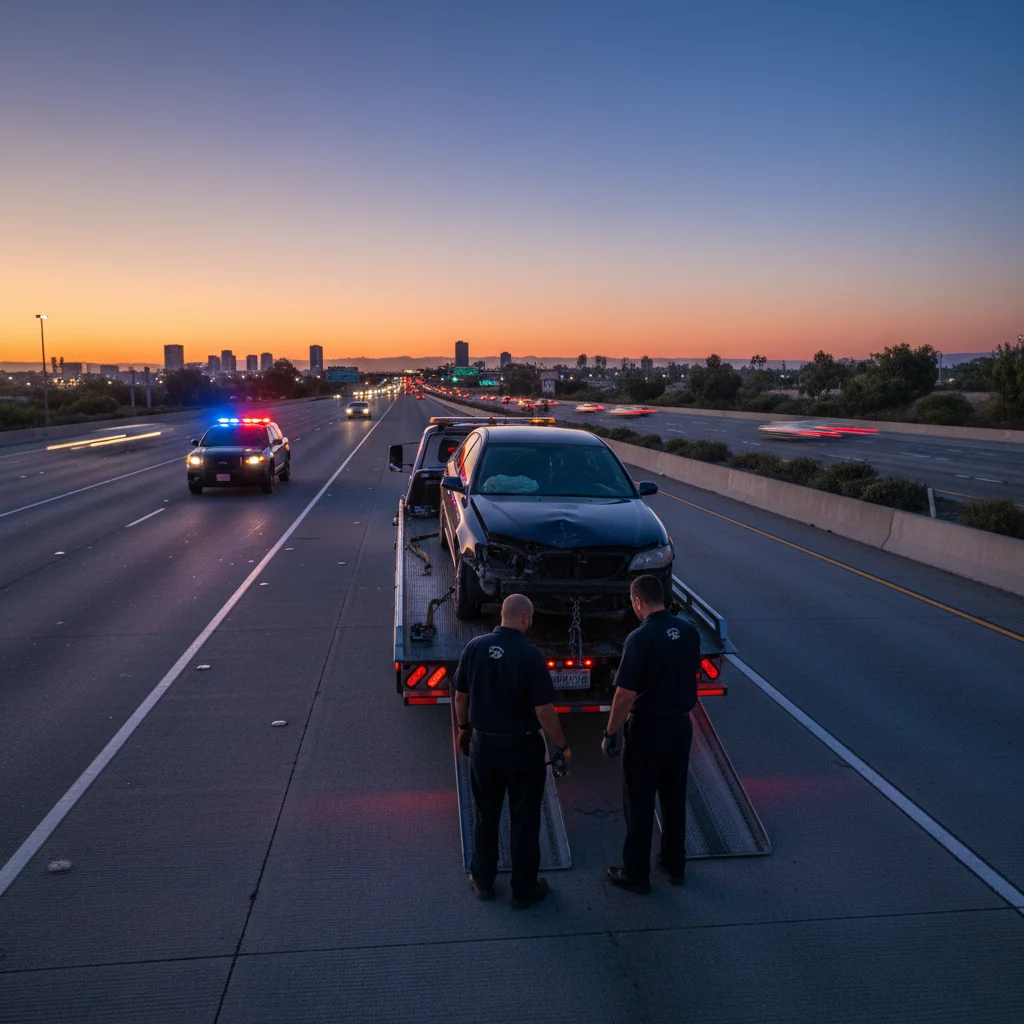
The first hour after a crash: who calls the tow
If the collision is on a San Diego freeway or state highway, CHP officers will typically be on scene within minutes. They control traffic, document the crash, and, critically, they’re the ones who initiate the tow call if your vehicle is blocking travel lanes or can’t be driven away safely.
On surface streets in the city, SDPD or a county deputy handles the same role depending on jurisdiction. Either way, if law enforcement is on scene, they’re making the first call about whether a tow is needed and how fast.
If the crash is minor and your car is out of the travel lane, you may have time to call your own tow company before the officer orders one. That distinction matters more than most drivers realize, we’ll get to why in the next section.
What you should do in that first hour: check everyone for injuries, move to safety if you can, call 911, then document the scene with your phone. Don’t move the vehicles until you’re instructed to unless there’s a safety hazard. And if you haven’t already, read our full after-accident playbook for San Diego drivers, it walks through every step in detail.
One more thing: don’t try to drive a car that’s taken significant front-end or underbody damage, even if it starts. What feels like a driveable car can have a cracked radiator, brake line damage, or a bent subframe that makes it genuinely dangerous on the road.
Police-ordered tow vs choosing your own company
This is where a lot of drivers get surprised by the bill.
In California, CHP operates a rotating tow list, a program that assigns freeway tow calls to pre-approved companies on a rotation. If CHP orders the tow, you don’t get to choose the company. The truck that shows up is whoever’s next on the rotation for that stretch of highway.
Rotation tows aren’t predatory by default, but the rates can be higher than market average, and you have very little say once your car is already on the hook. Storage fees start accumulating quickly, sometimes the same day.
On surface streets, the rules are slightly different. If the scene isn’t a safety emergency and your car isn’t blocking traffic, you often have a window to call a company of your choosing. Use it. A company you’ve vetted, one with clear pricing and a local reputation, is almost always a better outcome than whoever happens to be on rotation that day.
If you’re not sure what to look for when picking a tow company under pressure, our post on red flags to watch for covers the most common traps.
One thing to know: even on a CHP-ordered tow, you can usually request your vehicle be taken to a specific shop rather than the tow company’s yard. Ask the officer directly. Getting your car somewhere you trust saves you from an additional tow bill later.
What accident recovery actually involves (winch-outs, fluid cleanup, debris)
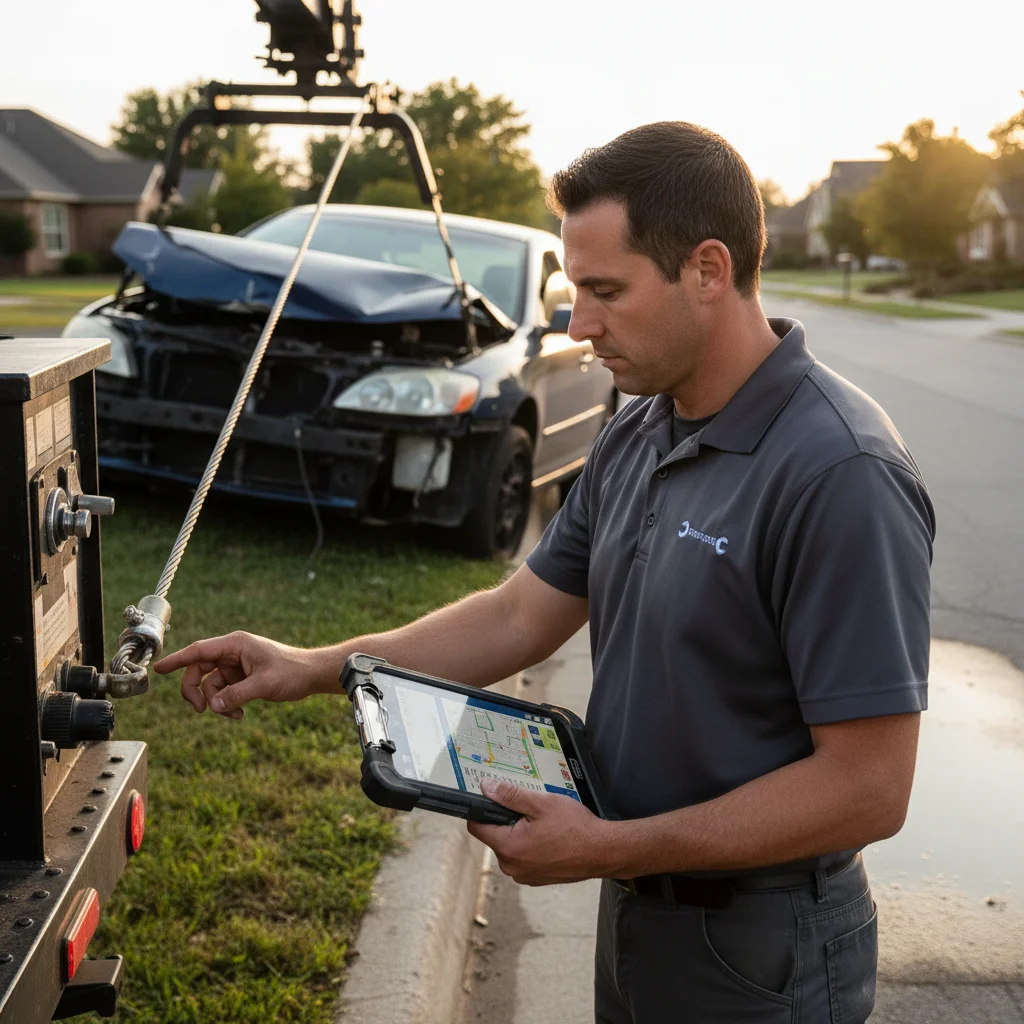
“Accident recovery” isn’t just hooking up a car and driving away. Depending on the crash, it can involve several distinct tasks, and understanding them helps you know what you’re being charged for.
Winch-outs
If the vehicle has left the roadway, ended up in a ditch, against a barrier, or embedded in landscaping, it needs to be winched back to a surface where it can be loaded. This is more complex than a standard tow. The operator has to assess the anchor point, cable angle, and vehicle position to avoid making structural damage worse. A rushed winch-out can collapse a rocker panel or tear out suspension components. Our accident recovery and winch-out service is built around doing this carefully.
Fluid cleanup
Crashed vehicles often leak, coolant, oil, transmission fluid, sometimes fuel. On a San Diego freeway, CalTrans or CHP will require the scene to be cleaned before lanes reopen. The tow operator may handle initial absorbent material, but a full hazmat cleanup can involve a separate crew. You don’t typically pay for this directly, but it does affect how quickly the scene clears.
Debris removal
Side mirrors, bumper fragments, glass, and cargo from the vehicle all have to come off the road. The tow operator usually handles this as part of the scene clearance. If there’s significant debris, expect some delay before the truck is ready to load your car.
The combination of these tasks is why accident recovery services are billed differently than a simple breakdown tow, and why the quote should be specific, not a flat “tow fee.”
How insurance handles the bill
Most full-coverage auto policies include towing and roadside assistance, but the specifics vary a lot. Some policies reimburse you after the fact. Others have a direct-pay arrangement with specific tow providers. A few cap reimbursement at a dollar amount that doesn’t cover a full accident recovery, especially if a winch-out is involved.
Call your insurer from the scene if you can, or at minimum before you authorize any tow. Ask two things: does my policy cover accident recovery towing, and is there a preferred provider or a reimbursement cap? If there’s a cap, get the tow company’s estimate upfront so you’re not surprised.
The at-fault driver’s liability insurance covers damage to your car but typically doesn’t cover towing directly, that comes out of their property damage liability, which you may have to claim after the fact. It’s worth understanding who’s actually paying before the truck pulls away.
Our post on who pays for the tow after an accident breaks down the insurance mechanics in plain language, scenarios for at-fault, not-at-fault, and uninsured situations.
If you don’t have towing coverage and you’re paying out of pocket, ask for an itemized invoice. That document is what you’ll need if you later pursue reimbursement from the other driver’s insurer.
Why flatbed matters for damaged vehicles
Not every tow truck is appropriate for a crash-damaged vehicle. A wheel-lift truck picks up one axle and rolls the other two wheels on the road. That’s fine for a car that broke down mechanically, it’s not ideal for a car with bent suspension, a damaged drivetrain, or airbags that have deployed.
A flatbed carries the entire vehicle with all four wheels off the ground. For a crash-damaged car, that’s almost always the right call. Here’s why it matters:
- Bent suspension or tie rods can cause uneven tire wear or wheel lockup when rolling even a short distance
- Drivetrain damage in an all-wheel-drive vehicle can be made significantly worse by towing on two wheels
- Leaking fluids are better contained when the car is level on a flatbed
- Insurance adjusters want to see the vehicle arrive at the shop in the same condition it left the scene, flatbed makes that easier to document
If you want to understand the full difference between tow types, our flatbed vs wheel-lift breakdown covers it in depth. And if the vehicle is an EV, especially a Tesla, a flatbed isn’t optional, it’s mandatory. Rolling an EV on its tires during a tow can damage the motor.
Request a flatbed specifically. If the company says they don’t have one available or tries to talk you out of it, that’s a red flag.
Where your car goes next
Once the vehicle is loaded, it needs a destination. You have three main options: your chosen repair shop, a dealership, or the tow company’s storage yard.
The yard should be a last resort. Storage fees in San Diego typically run $50–$75 per day, and they start accumulating fast. If your car sits for five days while you sort out insurance, that’s $250–$375 added to an already expensive situation.
If you have a shop you trust, give the driver the address before you sign anything. If you don’t have a preferred shop, ask your insurer, most major insurers have a network of approved shops where they can guarantee the repair timeline. The shop you choose can also do a teardown estimate, which is often required before insurance approves repairs on a significantly damaged vehicle.
If the car is totaled, which your insurer determines, not the shop, it’ll likely be moved to a salvage facility. At that point, the title transfers and your payout is based on the vehicle’s pre-crash market value.
One practical note: retrieve your personal belongings from the car as soon as you’re allowed to. If it goes to a yard, access can be restricted, and not everything survives the transition to a salvage auction.
When to call us
Accident recovery in San Diego is not a job for an uninsured driver with a pickup and a tow strap. Winch-outs, fluid scenes, and damaged-vehicle transport all require proper equipment and training, and mistakes made at the scene can complicate your insurance claim or cause additional vehicle damage.
If you’ve been in a crash anywhere in San Diego County and need a flatbed-equipped recovery crew, we’re available around the clock through our 24/7 emergency towing service. Call us at (858) 923-5787 for a same-day estimate.