A car that won’t shift or move normally needs a tow decision, not roadside testing. Stop driving, describe exactly what happened, and let dispatch determine what equipment the operator may need.
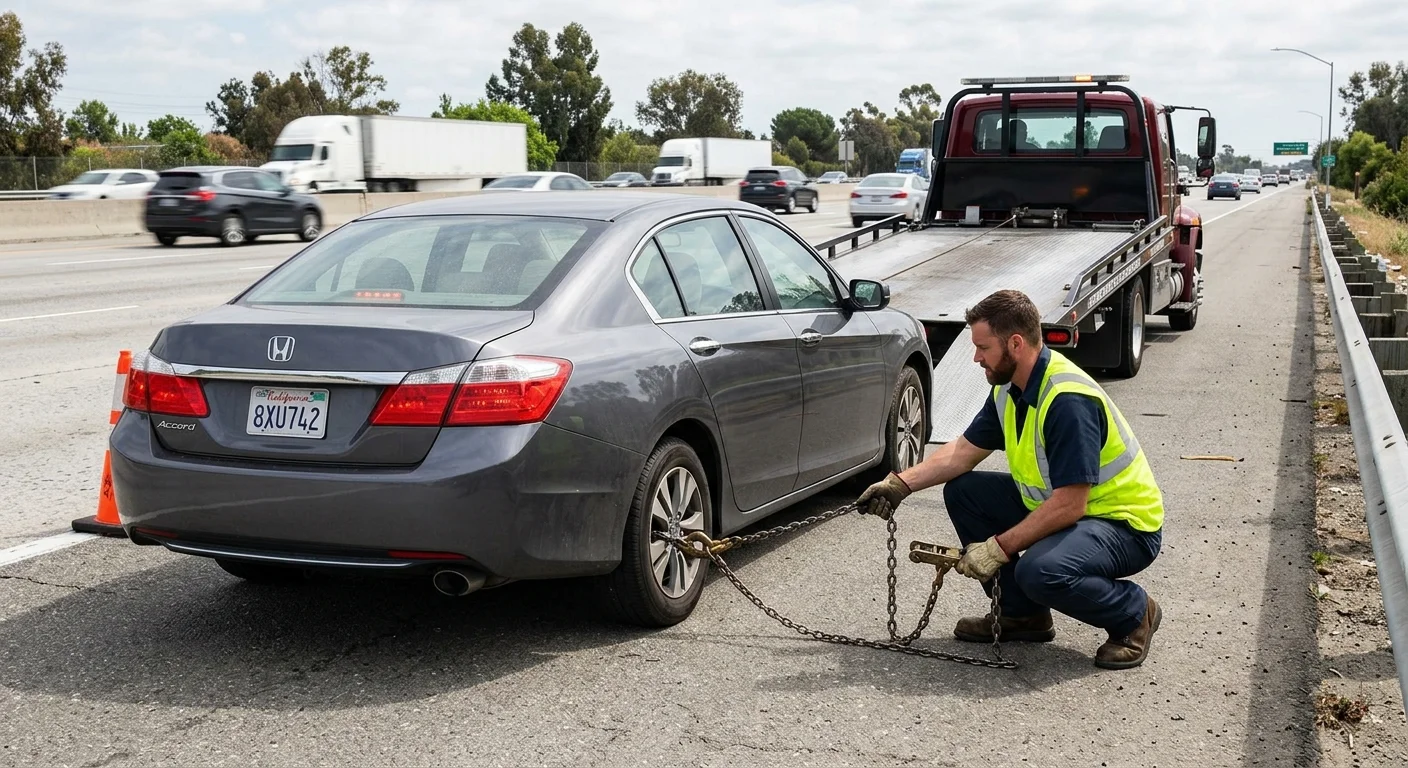
Stop driving when the car won’t move normally
Transmission trouble doesn’t always look the same from the driver’s seat. The engine may run while the car stays still. The vehicle may move briefly, slip out of gear, or respond differently when you select drive or reverse.
You don’t need to diagnose the cause beside the road. If the car won’t move normally, don’t keep shifting between gears to test it. Don’t attempt another drive through traffic to see whether the problem clears.
Get fully out of the travel lane if you’ve already reached a safe parking area. Once stopped, leave the vehicle where it is until you can explain the situation to dispatch. A car in a Mission Valley garage presents a different pickup than one beside I-8 east of El Cajon. The same breakdown also changes when the vehicle blocks traffic or rests on a narrow shoulder.
For general preparation, NHTSA roadside safety guidance recommends keeping a phone and charger, flashlight, first-aid kit, water, food, and jumper cables in the vehicle. That preparation helps you communicate and wait without turning the breakdown into a repair attempt.
If the car can’t be driven normally, request emergency towing. Tell dispatch whether you’re parked, partly in a lane, inside a garage, or on a freeway shoulder. That location detail helps the operator prepare for the pickup conditions.
Describe what the vehicle is doing
Dispatch needs observations, not a transmission diagnosis. Start with what happened immediately before the car stopped moving normally. Then describe what the vehicle does now without running another test.
Useful details include:
- Whether the engine starts and continues running
- What happens after selecting park, reverse, neutral, or drive
- Any exact warning message shown on the dashboard
- Whether you heard a bang, grinding sound, or repeated clicking
- Whether the car rolls when it shouldn’t
- Whether steering or braking feels different
- Whether you can see a puddle beneath the vehicle
- Whether the keys are present and accessible
Repeat the dashboard wording exactly. A photo can help you avoid paraphrasing an unfamiliar message. If you noticed a puddle, describe its location under the vehicle and its color. Don’t guess what the fluid is.
Also report the year, make, model, and body style. Tell dispatch if it’s electric, hybrid, all-wheel drive, modified, lowered, or carrying unusual weight. Manufacturer transport instructions can differ by model, especially for electric vehicles.
San Diego locations need similar precision. “Near I-805” leaves too much uncertainty. Give the direction of travel, nearby exit, shoulder side, parking level, gate instructions, or a visible business name. In East County or the backcountry, provide a map pin when street descriptions are limited. Clear details help dispatch match the job with an independent operator prepared for that vehicle and setting.
When roadside assistance may not solve it
Roadside help works when the requested task can be completed where the vehicle sits. A jump start, fuel delivery, or tire change addresses a specific roadside problem. Those services don’t replace transport when a running car still won’t move normally.
Avoid booking a jump start only because the car won’t move. First tell dispatch whether the engine starts, whether electrical accessories work, and what happens when you select a gear. That lets dispatch separate an observed battery problem from a car that needs transportation.
The key question isn’t whether the transmission has failed. Without an inspection, that may not be confirmed. The practical question is whether the vehicle can be driven normally and safely from its present location. If the answer is no, arrange transportation to a repair destination.
A roadside visit may still make sense when the problem is clearly limited to a flat tire, empty fuel tank, or discharged battery. If that service restores normal operation, towing may not be needed. If the car starts but remains unable to move normally, stop there and update dispatch.
Don’t ask a friend to pull the car with a rope or chain. Vehicle condition, traffic, steering, braking, and attachment points all affect transport. A professional operator can assess the pickup after receiving the vehicle details. When towing is the right next step, explain the symptoms once and avoid further trial-and-error in traffic.
What towing details dispatch needs
A useful transmission failure towing request covers the vehicle, pickup, access, and destination. Give dispatch the full picture during the first call.
Start with the exact location. For I-5, I-8, I-805, or SR-94, include direction and the nearest exit. In downtown San Diego, mention one-way access, loading zones, or garage restrictions. In Chula Vista or National City, identify the street or lot entrance rather than naming only the shopping center.
Next, explain the vehicle’s rolling condition. Tell dispatch whether the selector will enter neutral, whether the wheels appear locked, and whether the steering wheel turns. Don’t force any control to answer these questions. Report only what you already observed.
Access can determine which setup fits the pickup. Mention low garage ceilings, steep driveways, tight corners, locked gates, underground parking, missing keys, or a vehicle parked nose-first against a wall. Include visible body damage or a lowered suspension.
Dispatch also needs the year, make, model, drivetrain information you know, and destination. The operator makes the transport decision from those details and the conditions found on scene. Flatbed towing may be discussed when the vehicle can’t roll normally or has model-specific transport instructions. Our guide to flatbed versus wheel-lift towing explains the basic equipment differences without asking you to choose blindly.
Choose and confirm the destination
Pick the destination before the operator loads the vehicle. That prevents an avoidable pause after pickup and gives dispatch the full trip information.
Call the repair facility first. Confirm its current address, receiving hours, and whether it accepts unattended vehicle drop-offs. Ask whether it works on your vehicle’s make, drivetrain, and reported symptoms. If transmission work may be involved, ask whether the shop handles that work or refers it elsewhere.
A dealership may make sense when you want manufacturer-specific service. An independent repair shop may be more convenient for another situation. Neither choice is automatic. Our guide on whether to tow your car to a dealership or repair shop covers the questions to ask before deciding.
Distance matters to dispatch even when you haven’t received a price. Give the complete destination address and confirm it with the facility. The operator sets the price and is paid directly by you, so confirm the charge before authorizing transport. Quick Tow SD doesn’t publish an operator’s rate for an individual job.
If the preferred shop is closed, ask how it handles keys and after-hours arrivals. Don’t assume a parking lot is an approved drop point. If no facility has agreed to receive the car, tell dispatch that the destination is still being confirmed. A clear plan is especially helpful for breakdowns far from the urban core, including Alpine, Ramona, Pine Valley, and other inland communities.
When to call us
Call when your car won’t shift, roll, or move normally and roadside work won’t resolve the immediate problem. We can match you with an independent licensed and insured towing operator serving San Diego County. Call (858) 923-5787 to reach dispatch.