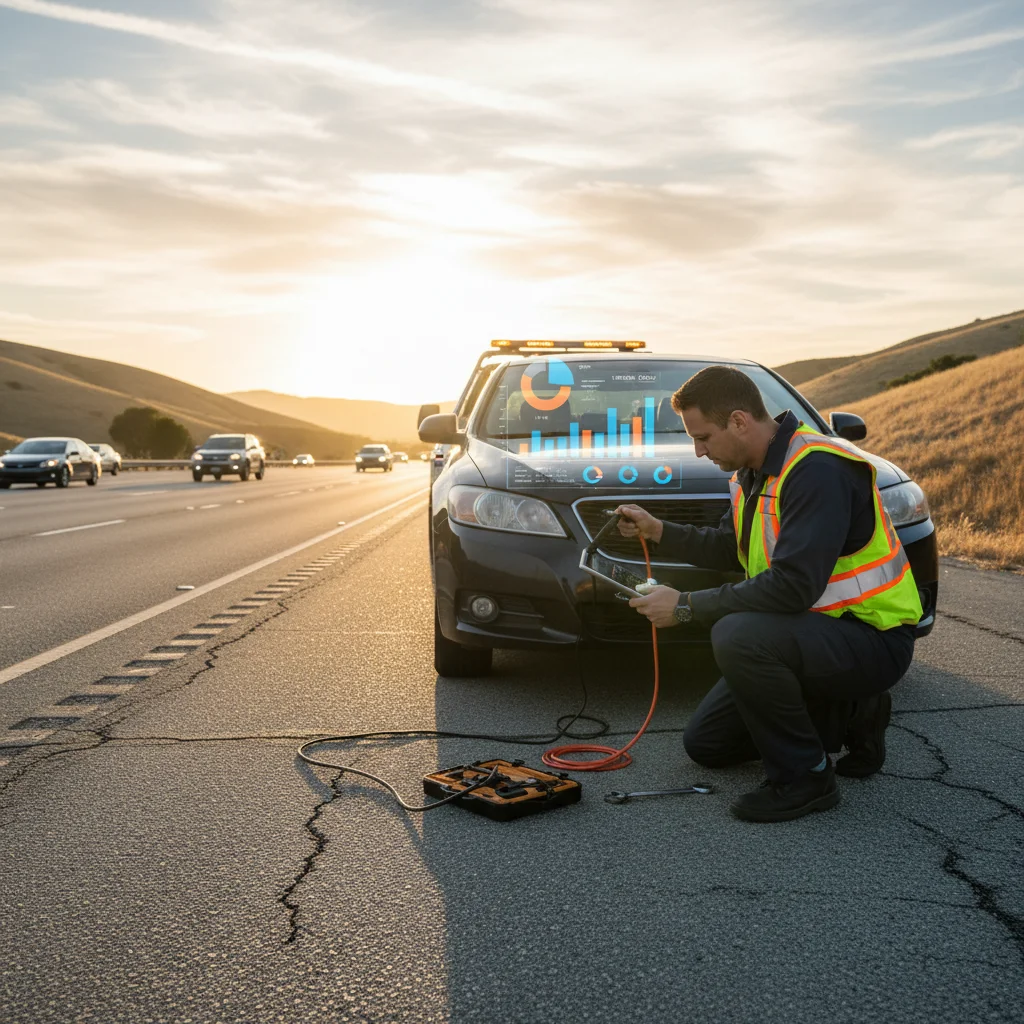
A vehicle breakdown on a California highway is more than an inconvenience. It’s a common event for millions of drivers each year. Understanding the underlying statistics from major insurance providers and roadside assistance giants like AAA helps us prepare. This data tells a story about vehicle reliability, common failures, and the environmental factors that contribute to roadside emergencies across the Golden State. For San Diego drivers, knowing these trends means being better equipped for what the road might throw their way.
The big picture: California’s breakdown landscape (2026)
California has the most registered vehicles of any state, with over 30 million cars, trucks, and motorcycles sharing its extensive highway network. That’s a lot of moving parts, and inevitably, some of them stop moving. Organizations like AAA respond to millions of roadside assistance calls annually across the U.S., and a significant portion of those happen right here in California.
AAA’s latest reports consistently show a few culprits dominating breakdown calls:
- Battery-related issues: This is almost always the number one reason vehicles need roadside assistance. Old batteries, parasitic drains, or cold weather (even in San Diego) can leave you stranded.
- Flat tires or blowouts: Road debris, potholes, or simply worn-out tires are a constant threat. Many newer vehicles also lack a spare, complicating matters.
- Lockouts: Keys locked inside the car, or increasingly, dead key fob batteries, are a frequent call.
- Fuel delivery: Running out of gas is more common than you might think, especially when traffic unexpectedly slows or detours occur.
- Engine-related failures: Overheating, check engine lights, and other mechanical problems often require a tow to a repair shop.
These aren’t just minor inconveniences. They can be safety hazards, especially on California’s busy freeways. The California Highway Patrol (CHP) deals with countless disabled vehicles daily, responding to everything from minor stalls to major accidents. Their data often highlights specific stretches of highway prone to incidents, which we’ll look at for San Diego.
Insurance data insights: what claims reveal
Insurance companies track roadside assistance and towing claims closely. This data directly influences policy pricing and reveals patterns in vehicle reliability and accident frequency. When your policy includes roadside assistance, your insurer typically covers the cost of a tow up to a certain distance, or other services like a jump start or tire change.
What do these claims tell us?
- Accident recovery: A significant portion of towing claims are for vehicles involved in collisions. California’s dense traffic and high mileage mean accidents are a daily occurrence. When a vehicle is undrivable after a crash, an accident recovery tow is necessary. The CHP often coordinates these services on freeways, assigning them to tow companies on a rotation.
- Mechanical breakdowns: Beyond basic battery or tire issues, more serious mechanical failures like transmission problems, engine failure, or brake issues frequently lead to a tow. These are often costly repairs, and the tow itself is just the first step.
- Theft recovery: While less frequent, stolen vehicles that are recovered often require towing, especially if they’re damaged or abandoned.
- Vehicle type trends: Insurance data can also show which types of vehicles are more prone to certain issues. For instance, older vehicles naturally have more mechanical failures. The rise of electric vehicles (EVs) introduces new considerations, like the need for flatbed towing to prevent damage to their drive systems.
For an insurance provider, understanding these trends helps them assess risk. For you, it means knowing what common problems to look out for and how your policy might respond.
San Diego’s unique breakdown profile: local factors and freeway hotspots
San Diego County covers a vast and varied landscape, from coastal beaches to mountain peaks and desert edges. Each region presents its own set of challenges for drivers and its own patterns for vehicle breakdowns. Quick Tow SD operates across all 67 cities and communities in San Diego County, and we see these patterns firsthand.
Major freeway breakdown zones
San Diego’s freeways are lifelines for commuters and commerce. They’re also prime locations for breakdowns due to high traffic volume, varied terrain, and driver fatigue.
- I-5 (Coastal Freeway): Runs north-south along the coast. Heavy commuter traffic, especially around downtown, Sorrento Valley, and Carlsbad. Coastal cities like La Jolla, Del Mar, Encinitas, and Carlsbad see frequent beach-lot lockouts in summer. Shoulders on the PCH (Pacific Coast Highway) can be narrow and dangerous for breakdowns. The Camp Pendleton corridor presents a unique challenge: a roughly 20-mile stretch on I-5 between Oceanside and San Clemente with limited services. Military families often need prompt roadside assistance for their personal vehicles here.
- I-15 (Inland North-South): The primary artery for North County Inland communities like San Marcos, Escondido, Vista, and Poway. This corridor sees heavy commuter traffic, and during hot summer days, engine overheating peaks here, especially on inclines.
- I-8 (East-West Grade to Desert): A notorious stretch, especially heading east towards El Centro. The long, steep grades in East County (around Alpine, Pine Valley) eat engines and transmissions. Overheating is common, and vehicles pushing their limits often break down.
- SR-163, SR-52, SR-56: Key connector freeways with significant daily traffic. Congestion on these routes can lead to stop-and-go driving, which stresses cooling systems and batteries.
- I-805 (Border Corridor): Runs parallel to I-5, serving South Bay cities like Chula Vista, National City, and Imperial Beach. High volume of personal and commercial traffic, especially near the border crossings and Otay Mesa commercial truck terminals. Commercial truck breakdowns often require heavy-duty towing in this area.
- SR-94, SR-78 (North County East-West): Important east-west routes. SR-78 connects Oceanside to Escondido, seeing heavy commuter traffic. SR-94 heads into East County, including the winding roads around Jamul.
Regional breakdown specifics
- Coastal Cities (La Jolla, Del Mar, Encinitas, Carlsbad, OB, PB, Coronado): Besides lockouts at beach parking lots, salt air can accelerate corrosion on older vehicles, leading to electrical issues.
- North County Inland (San Marcos, Escondido, Vista, Poway): High temperatures contribute to battery failures and tire blowouts. The stop-and-go on I-15 also stresses brakes and transmissions.
- East County (El Cajon, La Mesa, Santee, Lakeside, Alpine): The grades on I-8 are a major factor. Canyon roads like Crest and Sunrise Highway, and winding routes to Palomar Mountain, are challenging for motorcycles and older cars. We see more motorcycle towing calls here due to breakdowns or minor incidents on these winding roads.
- South Bay (Chula Vista, National City, Imperial Beach): The proximity to the border means a mix of older and newer vehicles, often driven long distances. Commercial truck breakdowns are common near the port and industrial areas.
- Mountain Areas (Julian, Pine Valley, Ramona, Mt Laguna, Borrego Springs): These areas present unique challenges: much longer response times than the urban core, and in winter, the need for tire chains on roads like Sunrise Highway. Vehicles often break down due to extreme temperatures (hot summers, cold winters) and steep terrain.
- Camp Pendleton: The 20-mile gap on I-5 can feel isolated. Quick Tow SD provides reliable service to military personnel and their families who experience breakdowns in this corridor.
Special vehicle considerations in San Diego
The type of vehicle you drive also influences your towing needs and risks.
- AWD Vehicles (Subaru, Audi, Tesla, Rivian): All-wheel drive cars, especially those with permanent AWD, MUST be towed on a flatbed (also called a rollback). Using a wheel-lift tow truck that lifts only two wheels can severely damage the drivetrain, leading to costly repairs, often between $2,500 and $5,000.
- Electric Vehicles (EVs - every brand): EVs like Teslas, Rivians, Lucid, and others also MUST be towed on a flatbed. Their electric drive motors often remain engaged even when powered down, and dragging them can “fry” the motor and inverter, resulting in repairs ranging from $8,000 to $18,000. Some manufacturers even require specific flatbed procedures for battery cooling. Always ensure your tow operator understands EV towing protocols. We frequently tow EVs in San Diego, especially along the I-5 and I-15 corridors where charging infrastructure is denser. For more on this, check out our post on EV towing and Tesla flatbed.
Common breakdown scenarios and their solutions
Knowing the statistics helps, but knowing what to do when your vehicle breaks down is what truly matters.
- Flat tire: A common issue. If you have a spare and the tools, you might change it yourself. Otherwise, you’ll need roadside assistance for a tire change or a tow to a tire shop. Quick Tow SD offers roadside assistance for quick fixes.
- Dead battery: Another frequent call. Often, a jump start is all you need. However, if your battery is old, a jump start is a temporary fix. You’ll need a new battery soon. Learn more about how to jump start your car.
- Engine trouble or overheating: When your engine light comes on, or your car starts making strange noises, it’s usually a sign of a more serious mechanical issue. These situations almost always require an emergency towing service to get your vehicle to a mechanic.
- Accidents: If you’re involved in a collision and your vehicle is undrivable, you’ll need accident recovery. Always prioritize safety, move to a safe location if possible, and call for help. Our post on what to do after a car accident in San Diego offers more advice.
- Lockouts or out of fuel: These are less about mechanical failure and more about human error, but just as disruptive. Roadside assistance can help with fuel delivery or unlocking your vehicle.
The role of towing companies and regulations in California
When you need a tow in California, particularly in San Diego, it’s important to understand how the system works.
- CHP rotation: On major freeways, the California Highway Patrol manages a rotation system for tow companies. If your car breaks down on an I-5 shoulder, the CHP will dispatch the next company on their list. These companies are vetted and must adhere to specific response times and service standards.
- California Vehicle Code 22658: This code governs private property towing. It sets strict rules for when a vehicle can be towed from private land (e.g., parking lots, apartment complexes). It requires one of four grounds for removal, usually compliant signage at every entrance, written authorization before the vehicle moves, notice to law enforcement within one hour of authorizing the tow, and specific procedures for releasing the vehicle. The one-hour wait commonly attributed to it is CVC 22953, which covers only lots held open to the public for free parking and exempts residential parking. Quick Tow SD is fully compliant with CVC 22658. You can review the California Vehicle Code 22658 here.
- Types of tow trucks for different jobs:
- Flatbed tow trucks (also called rollbacks) are the safest option for most vehicles. The entire vehicle is loaded onto a flat platform, preventing any wear and tear on the drivetrain. They are essential for AWD, EVs, classic, exotic, and damaged vehicles. Quick Tow SD provides flatbed towing for all these needs.
- Wheel-lift tow trucks lift two wheels off the ground, leaving the other two on the road. They’re efficient for front-wheel drive vehicles or short distances, but as mentioned, can damage AWD or EVs. We also offer wheel-lift towing when appropriate. For a deeper dive, check out our guide on flatbed vs. wheel-lift towing.
- Heavy-duty wreckers are specialized trucks designed to tow large vehicles like semi-trucks, buses, RVs, and construction equipment. These are powerful machines with significantly higher towing capacities. Quick Tow SD has heavy-duty towing capabilities for commercial and oversized vehicles.
- Specialty towing: We also handle specific needs like motorcycle towing using specialized equipment, and RV towing with appropriate trucks.
Towing costs in San Diego: what to expect
Understanding towing costs can help reduce stress during a breakdown. Reputable tow companies in San Diego, like Quick Tow SD, operate with transparent, flat-rate pricing. We believe in providing clear quotes upfront, especially for longer distances.
Here’s a general idea of what to expect for common towing services in San Diego County:
| Service Type | Average San Diego Fee (2026) | Notes |
|---|---|---|
| Light-Duty Hook Fee | $95 - $175 flat | Covers standard cars, SUVs, light trucks. This is the base fee for connecting the vehicle. Mileage fees apply after a certain distance (often 5-10 miles). |
| Heavy-Duty Hook Fee | $285+ | For semi-trucks, buses, RVs, large commercial vehicles. Rates vary significantly based on vehicle size, weight, and complexity of the tow (e.g., winching out of a ditch). |
| Roadside Assistance | $75 - $125 | For services like jump starts, tire changes, fuel delivery, lockouts. Often included in AAA or insurance roadside plans. |
| Long-Distance Towing | Written Flat Quote | For tows beyond 50-100 miles. Always get a written flat quote before the tow begins. Factors include distance, vehicle type, and specific destination. |
| Winching/Recovery | $125 - $250+ (per hour) | When a vehicle is off-road, in a ditch, or stuck. This is typically an hourly rate, charged in addition to the hook fee. Complexity dictates time. |
| Storage Fees | $45 - $75 per day | If a vehicle is towed to a storage lot and not picked up immediately. |
| Private Property Tow Release | $175 - $250 (max by CVC) | Specific fees apply for vehicles towed from private property, governed by CVC 22658. You generally have the right to retrieve personal items and pay a “gate fee” if after hours. |
- About surge pricing: Some operators charge more during off-hours or emergencies. Ask if the quote you’re given holds at any hour before you accept.
- Transparency is key: Always ask for a clear quote before any service begins. For detailed breakdowns on costs, you might find our post on tow cost San Diego helpful. We also have specifics on long-distance tow cost.
Preventive measures for San Diego drivers
While you can’t prevent every breakdown, you can significantly reduce your chances of needing a tow.
- Regular vehicle maintenance: This is the single most effective way to prevent breakdowns. Follow your manufacturer’s recommended service schedule. Get oil changes, fluid checks, and brake inspections.
- Tire checks: Regularly inspect your tire pressure and tread depth. Underinflated or worn tires are prone to flats and blowouts, especially on hot San Diego asphalt.
- Battery health: Have your battery tested periodically, especially if it’s over three years old. A weak battery is a ticking time bomb.
- Emergency kit: Keep a basic emergency kit in your car: jumper cables, flashlight, first-aid kit, water, and a fully charged cell phone.
- Know your vehicle’s towing needs: If you drive an AWD or EV, remember the flatbed rule. Inform the tow operator of your vehicle type upfront.
- Plan routes: Especially when heading into remote areas like the mountains or desert, plan your route, check for gas stations, and inform someone of your itinerary. Our post on freeway breakdown San Diego offers more safety tips.
Being prepared for a breakdown isn’t about expecting the worst, it’s about being smart. The statistics show that eventually, every driver will face a roadside emergency. Knowing the data, understanding local conditions, and having a reliable plan can make all the difference.
Frequently asked questions
What are the most common reasons for vehicle breakdowns in California?
Based on AAA and insurance data, the most common reasons for breakdowns in California are battery-related issues, flat tires, vehicle lockouts, running out of fuel, and general engine-related mechanical failures. These issues account for a significant majority of roadside assistance calls annually across the state.
Does my car insurance cover towing services in San Diego?
Many car insurance policies offer optional roadside assistance coverage, which typically includes towing services up to a certain distance, jump starts, and tire changes. Check your specific policy details or contact your insurance provider to understand your coverage limits and what services are included.
What should I do if my car breaks down on a San Diego freeway?
If your car breaks down on a San Diego freeway, safely move your vehicle to the right shoulder if possible. Turn on your hazard lights, stay inside your vehicle with your seatbelt on, and call 911 for CHP assistance or a reputable tow company like Quick Tow SD. Do not attempt roadside repairs on a busy freeway.
Why do electric vehicles (EVs) and all-wheel drive (AWD) cars require flatbed towing?
EVs and AWD vehicles require flatbed towing to prevent severe damage to their drivetrains. For EVs, their electric motors can stay engaged even when powered down, and dragging them on two wheels can fry the motor and inverter. For AWD vehicles, lifting only two wheels can damage the complex all-wheel drive system, leading to very expensive repairs.
How long does it typically take for a tow truck to arrive in San Diego County?
Quick Tow SD does not publish an average arrival time, because no source for one exists. However, response times can vary based on traffic conditions, your exact location, and the time of day. Remote mountain and backcountry areas take considerably longer to reach.