A rental car towed in San Diego gets pulled under the exact same rules as any other car on the street or in a lot. The tow yard doesn’t check whose name is on the title, and the rental company isn’t the one who has to sort it out. That job lands on you, the renter, along with whatever the rental company charges on top once they find out.
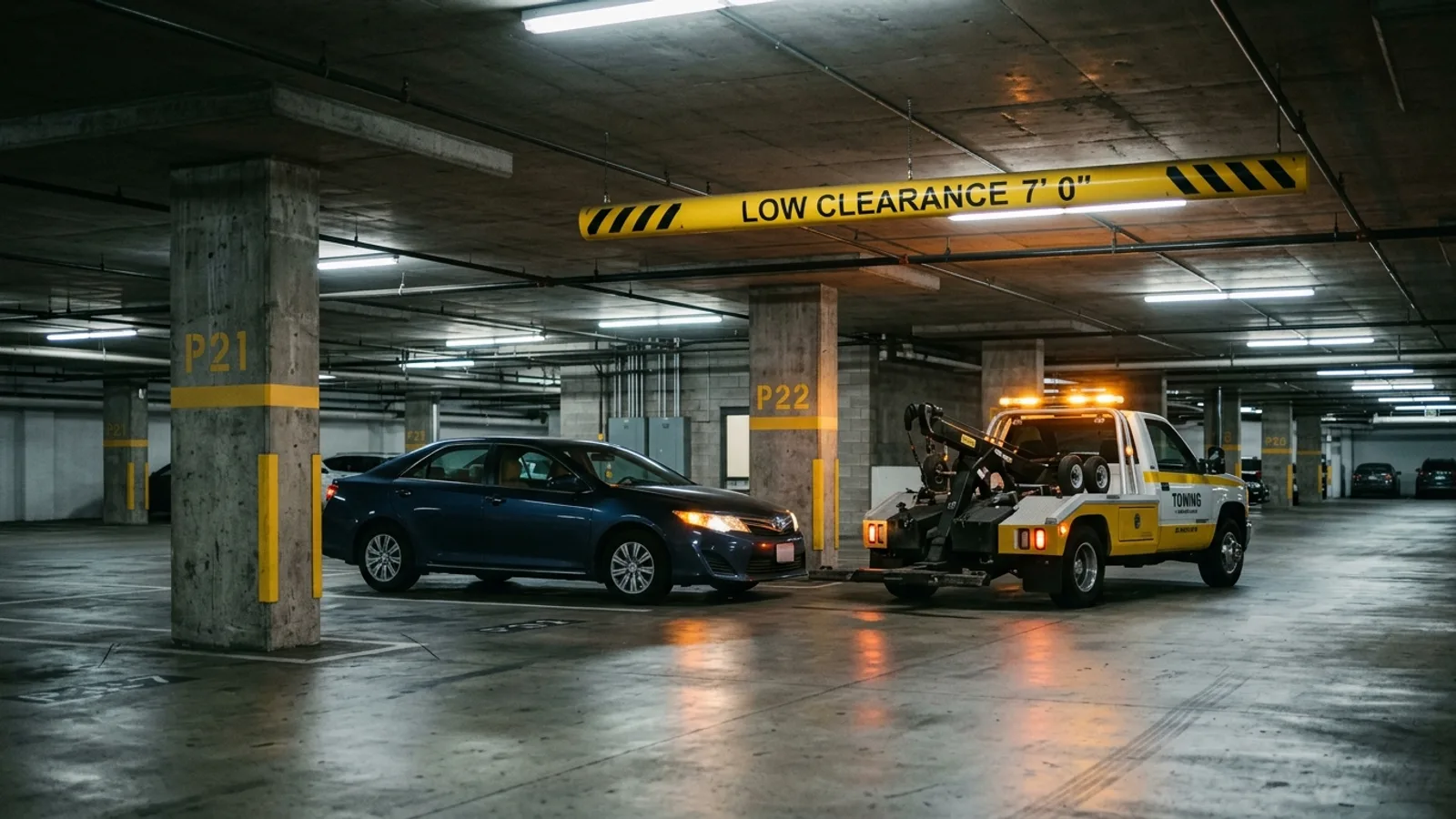
Why does a rental car get towed in San Diego
A rental gets towed for the same reasons any car does: an expired meter, a blocked driveway, an expired registration tag the rental company forgot to renew, or parking somewhere marked private property. San Diego International Airport’s rental car center and the downtown hotel corridor around the Gaslamp Quarter see a steady run of this, mostly visitors who don’t know the local signage or misjudge how strict a private lot really is. A car parked overnight near Balboa Park or Old Town without checking posted hours can end up on a hook by morning, rental agreement or not.
Private lots in San Diego operate under California Vehicle Code 22658, which lets a property owner have a car towed for trespass once proper signage is posted at every entrance. That rule doesn’t bend for a rental. If the signage is up and the space is marked, the tow is legal whether the driver owns the car or picked it up at the counter an hour earlier.
What makes a rental car towed in San Diego different from an owned car
The tow itself works the same way. What’s different is the billing. Get your rental car towed and you’re dealing with two separate bills: the tow and storage fee from the yard, and whatever the rental company adds once the car shows up missing or late. Most rental agreements make the renter responsible for any fee tied to how the car was used while it was in your possession, and a tow from a no-parking zone counts.
The rental company may also charge a late fee or a replacement-vehicle fee if getting the car back takes longer than your rental period. We don’t have a verified figure for what any specific rental company charges here. Check your actual rental agreement or call the counter directly, since that number varies by company and by contract.
If a police tow (not a private-property tow) is involved, San Diego works through AutoReturn, the city’s official towing and impound contractor. Their fee schedule is public: a regular-duty tow currently runs $178, daily storage is $41, and there’s a flat $54 Tow/Impound Cost Recovery Fee on top, plus a $47 flatbed fee if the vehicle needed one. After-hours release adds $48. Always confirm the current number against the City of San Diego’s published fee schedule before you pay, since schedules do change.
The practical steps to get a towed rental car back
Start with the paperwork the rental counter gave you and the tow sticker on the windshield or the sign at the lot entrance. Both usually list the yard’s name and phone number. That’s your first call, not 911, unless there’s an actual emergency involved.
A few things to have ready before you go:
- Your rental agreement (paper copy or the confirmation email/app screen)
- A valid driver’s license matching the renter’s name on the agreement
- A credit or debit card for the yard’s release fee
- The rental company’s roadside or customer service number, in case the yard needs to verify the account
Once the car’s released, call the rental company before you drive off. Tell them what happened and ask directly whether any additional charge is coming for the tow, the delay, or a replacement vehicle. Getting that answer while you’re still standing in the lot beats finding out on your final receipt.
If the tow happened from a private lot and you think the signage wasn’t posted correctly, or you were never actually blocking anything, California law gives you the right to request a post-storage hearing within 10 days of the mailed notice. That hearing has to happen within 48 hours of your request, not counting weekends or holidays. Our guide on knowing your rights during a San Diego tow and our breakdown of CVC 22658 private-property towing both walk through that process in more detail.
What it costs to get a rental car out of impound in San Diego
The dollar amount depends entirely on whether it’s a city impound or a private-lot tow, and how long the car sits before you get to it. Our full cost breakdown for getting a car out of impound in San Diego covers the fee structure in detail, but the short version: storage fees add up daily, so the sooner you find the car and settle the account, the less you owe on both sides of the bill, the yard and the rental company.
If you’re not sure where the car went, our guide to finding a towed car in San Diego covers the lookup tools, including AutoReturn’s own locator for city-ordered tows. Leaving a rental sitting in a yard too long carries its own risk. Our post on what happens if you don’t pick up a car from a tow yard in California explains what the yard can eventually do with an unclaimed vehicle, which is worth reading if the rental company is slow to respond and the clock is running on storage fees.
Where this comes up most in San Diego
Airport-adjacent rental returns near the San Diego rental car center and hotel parking downtown account for a lot of these calls, along with private garages near Mission Valley’s hotel corridor, where event traffic from Snapdragon Stadium fills lots fast and enforcement follows close behind. Metered street parking near the harbor and private lots by tourist stops like Old Town or Balboa Park are the other repeat spots, mostly because out-of-town drivers don’t expect San Diego’s private-property signage to be enforced as strictly as it is.
Once the car’s released and it won’t drive, or you just need it moved somewhere the rental company can inspect it, call (858) 923-5787 and we’ll dispatch a tow operator from our San Diego network to handle it.
Frequently asked questions
Who pays if a rental car gets towed
The renter pays first. The tow yard bills whoever comes to claim the car, and the rental agreement typically makes the renter responsible for any charge tied to how the car was used during the rental period, which includes a tow. The rental company may add its own fee separately; check your specific agreement for that figure.
Does travel or rental insurance cover a tow
It depends on the policy. Some rental damage waivers and travel insurance plans cover towing tied to a breakdown or accident, but a tow caused by a parking violation is a different category and often isn’t covered. Call your insurance provider or read your policy’s exclusions before assuming either way.
Can I be charged for returning the rental late because it was towed
Possibly, since most rental agreements charge a late fee regardless of the reason the car is late. Ask the rental company directly whether they’ll waive it given the circumstances. Some do case by case; there’s no verified universal policy here.
What do I bring to the tow yard to release a rental car
Bring the rental agreement, a valid driver’s license matching the renter’s name, and a card for the release fee. Some yards also want to verify the account by phone with the rental company, so have that number handy.
Will the rental company know the car was towed before I tell them
Not always right away. Some rental companies track vehicles by GPS and get an alert if the car sits somewhere it shouldn’t. Others only find out when you call or when the car’s due back. Calling first, before they find out on their own, generally makes the conversation easier.
Is a rental car towed the same way as an owned car
Yes. The tow yard, the city, and any private property owner treat a rental exactly like any other vehicle. The only difference is the second layer of billing between you and the rental company once the car’s back in their hands.